Quick Answer
For baby bottles and tableware, a dedicated unscented baby dish soap is the safer choice because it avoids added fragrances and dyes that can linger on surfaces and irritate sensitive skin. Regular dish soap can work in a pinch, but it often contains synthetic scents and harsher ingredients that leave more room for residue.
What Actually Makes Baby Dish Soap Different?
The main difference between baby dish soap and regular dish soap comes down to formulation philosophy. Baby-specific products are designed with minimal, gentler ingredients, often skipping fragrances, dyes, and other additives that serve no cleaning purpose. Regular dish soaps, on the other hand, prioritize grease-cutting power and pleasant scents, which can mean more synthetic chemicals and a higher chance of leaving a film on dishes.
For a baby who puts everything in their mouth, that film matters. Even if you rinse thoroughly, trace amounts of fragrance or dye can remain on bottles, pacifiers, and teething toys. Over time, repeated exposure can irritate a baby's delicate skin or digestive system.
The Trade-Off: Cleaning Power vs. Gentle Ingredients
Regular dish soap often wins on raw grease-cutting ability because it can include stronger surfactants and solvents. But that extra power isn't necessary for baby bottles, which mainly need to remove milk residue and light food soils. A baby-specific formula, like one with 97% naturally derived ingredients, is tough enough for everyday baby messes while being gentler on both the dishes and your baby's skin.
If you regularly wash heavily greasy family cookware in the same sink, you might miss the extra boost of a conventional degreaser. In that case, you could keep a regular dish soap for adult dishes and use a baby-specific one for bottles and tableware—or simply choose a baby formula that also handles grease well.
What to Look for in a Baby-Safe Dish Soap
When choosing a dish soap for baby items, check the label for these features: unscented (no added fragrances), no dyes, naturally derived ingredients, and ideally third-party verification like EWG VERIFIED™. Fragrance is the most common irritant, so an unscented formula is a smart starting point. Vegan certification is a bonus if that aligns with your values.
Also consider the format. An eco-refill, like a 2 L pouch, reduces plastic waste and is often more economical per ounce—useful if you're washing bottles multiple times a day.
How to Choose: Baby Dish Soap vs. Regular Dish Soap
- If your baby is under 12 months or has sensitive skin: Use a dedicated baby dish soap that is unscented, dye-free, and made with naturally derived ingredients. This minimizes the risk of residue and irritation on items your baby mouths. Check the label for 'unscented' and 'no dyes'—not just 'baby' on the front.
- If you wash only adult dishes and cookware: Regular dish soap is fine and often more economical. You don't need a baby-specific formula for items that won't touch a baby's mouth.
- If you share a sink for both baby and adult dishes: You can use a baby dish soap for everything, but be aware it may require a bit more effort on heavy grease. Alternatively, keep both on hand: baby soap for bottles and tableware, regular soap for greasy pots. Consider an eco-refill format to save money and reduce plastic when using baby soap more often.
Product Facts
-
Baby Dish Soap Unscented-Eco-Refill 67.6 FL. OZ.: ATTITUDE™ Unscented baby bottle & dishwashing liquid is formulated with 97% naturally derived ingredients and contains no added dyes or fragrances. This means fewer potential irritants on your baby's bottles and tableware, and no perfumed residue that could affect taste or skin.
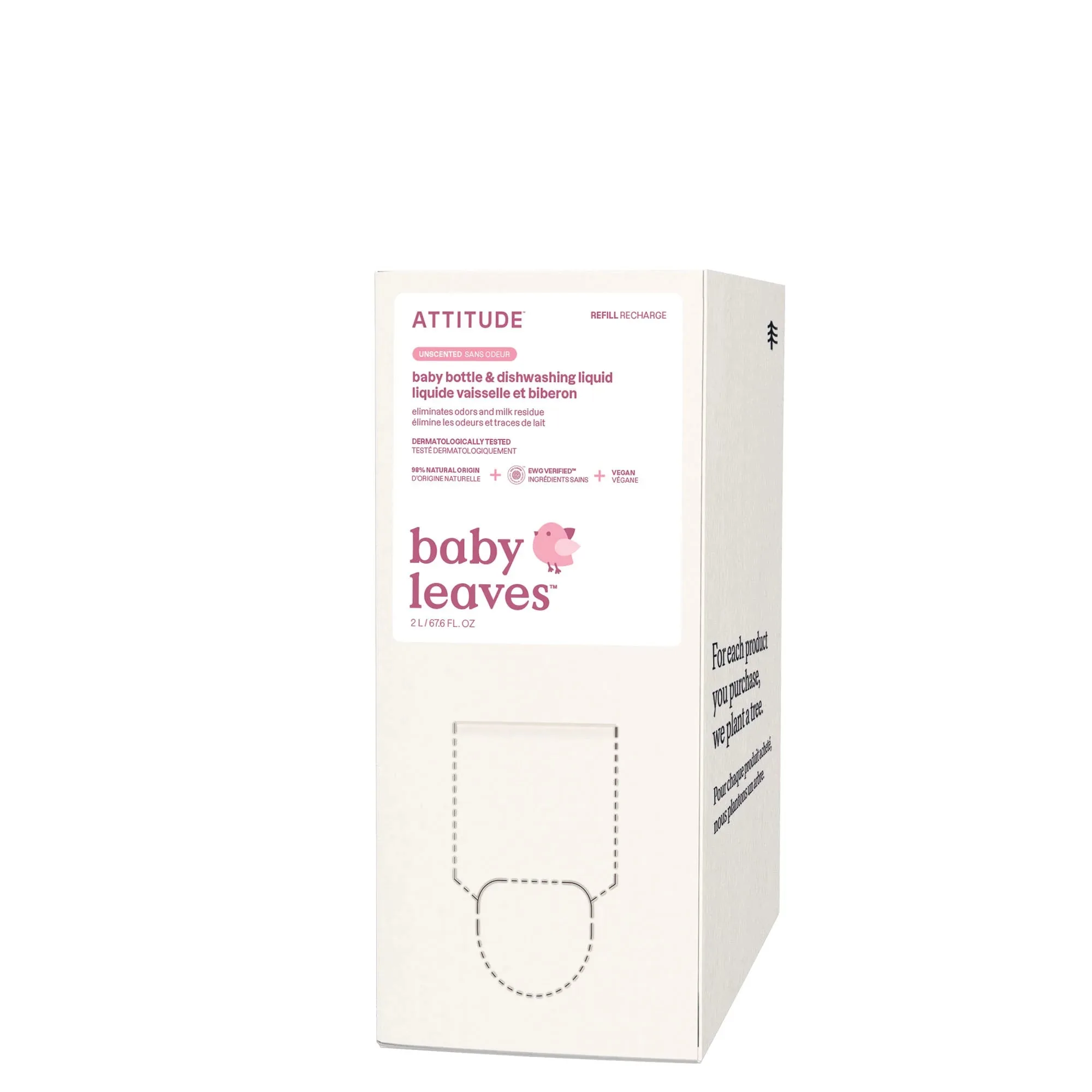
Baby Dish Soap Unscented-Eco-Refill 67.6 FL. OZ.
Who Should Use Baby Dish Soap?
Best for
- Parents of infants and toddlers who put bottles, pacifiers, and toys in their mouths
- Households with sensitive skin or fragrance allergies
- Eco-conscious families who prefer naturally derived, vegan, and EWG VERIFIED™ products
Not for
- Households without babies or young children that only wash adult dishes
- Those who prioritize maximum grease-cutting power over ingredient gentleness and don't mind synthetic additives