Quick answer
You do not need a separate baby dish soap for every load, but it is worth keeping one for bottles, nipples, and sippy cups if you want a formula with no added dyes or fragrances. Regular dish soap can clean baby items effectively when you rinse thoroughly, yet an unscented baby dish soap removes one worry: lingering perfume or dye on a surface your child puts in their mouth. If you already use a gentle, fragrance-free dish liquid for the whole kitchen, you can skip the second bottle.
Claim: Every household needs a dedicated baby dish soap
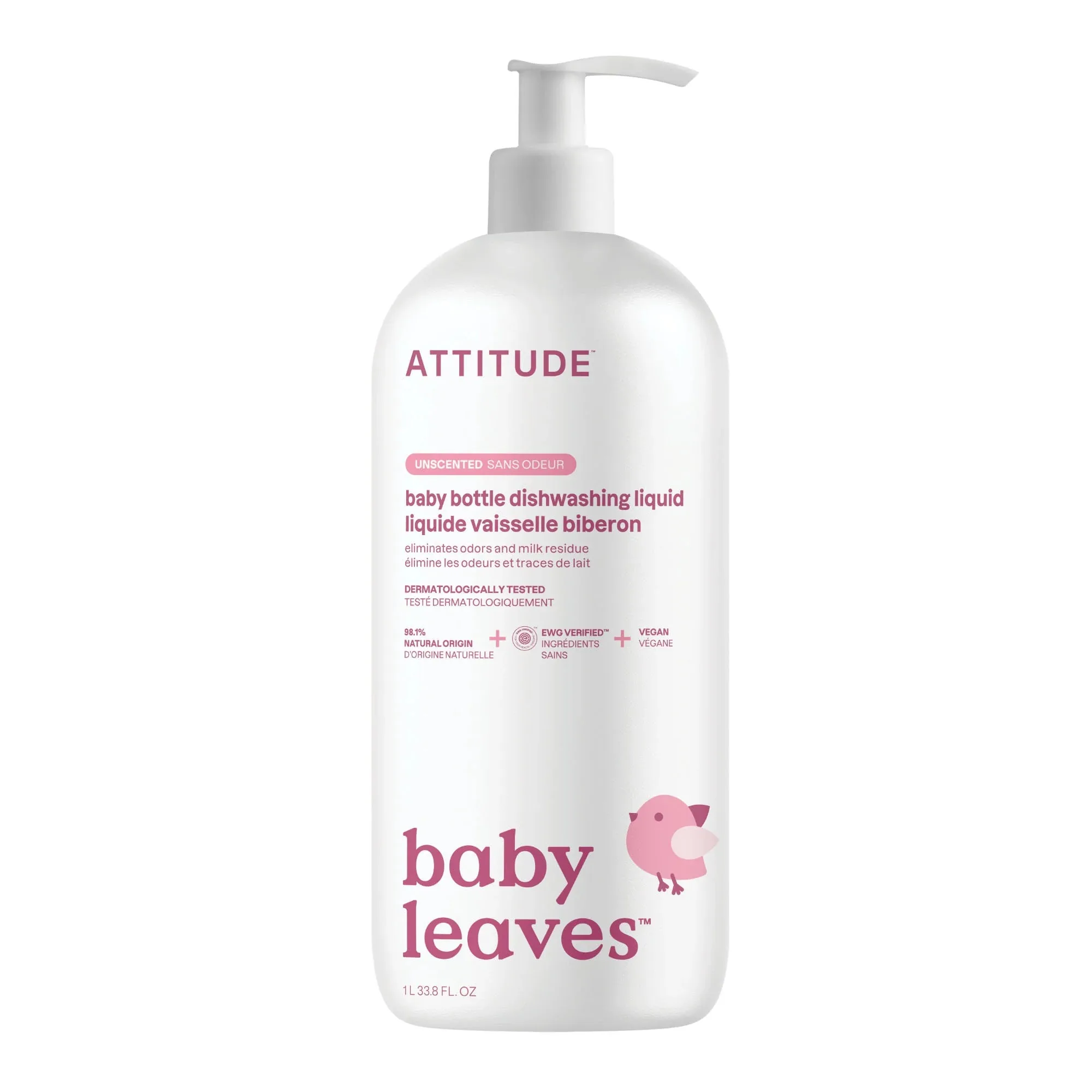
This is the most common myth, and it survives because it sounds cautious. The truth is simpler: what matters is the formula and the rinse, not the label. A dish soap earns its place on your counter if it handles milk fat and grease without leaving a scent or dye behind on items your baby uses. Attitude's Baby Dish Soap Unscented is built around that idea—97% naturally derived ingredients, no added dyes or fragrances, and a formula described as tough on dirt and grease but soft enough for a little one's dishes. If you wash bottles and pump parts daily, having that bottle within reach is practical. If you already keep a fragrance-free dish liquid you trust, you are not doing anything wrong by using it on baby items.
Claim: Regular dish soap leaves harmful residue on bottles
Residue is real, but it comes from washing habits more than from the soap category. Any dish liquid—baby or regular—can leave a film if you skip the hot rinse or let bottles air-dry with suds still clinging to the threads. The practical fix is mechanical: scrub with a bottle brush, rinse under running warm water, and pay extra attention to nipple crevices, collar threads, and the inside of the vent. If a soap is heavily perfumed, that scent can linger on silicone and plastic even after rinsing, which is why many parents prefer an unscented baby dish soap for bottles. Attitude's unscented baby bottle and dishwashing liquid is formulated without added dyes or fragrances, so there is less to rinse away and less to notice on the next feed.
Claim: Baby dish soap is just a smaller, pricier bottle
Sometimes it is, and that is worth saying plainly. A dedicated baby dish soap makes sense when the formula is genuinely different—no added fragrance, no added dye, and a concentration that cuts milk residue without a heavy scent. It makes less sense if the ingredients read like your regular dish soap with a baby label. Compare what you already own: if your everyday dish liquid is already fragrance-free and you rinse well, you can use it for bottles and save the counter space. If your regular soap is strongly scented, keep it for pans and use an unscented baby dish soap for feeding gear. Attitude's unscented baby dish soap comes in a 33.8 fl. oz. bottle made from HDPE #2 plastic, which is among the easier plastics to recycle—a small but real difference if you are trying to reduce what you throw away.
When a separate baby dish soap earns its spot
Keep a dedicated baby dish soap if your baby has shown sensitivity to scented products, if you pump and wash parts several times a day, or if your household regular dish soap is heavily fragranced. Skip it if you already use a gentle, unscented dish liquid for everything and your rinse routine is solid. A middle path works well for many families: one unscented baby dish soap for bottles, nipples, and sippy cups, and a scented dish soap like Attitude's Coriander & Olive for adult dishes and greasy pans. That way the fragrance you enjoy in the sink stays away from the items your baby drinks from.
Verdicts on common baby dish soap claims
- You need a separate baby dish soap for every wash: Not true. A gentle, fragrance-free dish liquid used with a thorough hot rinse can clean bottles safely. A dedicated unscented baby dish soap is a convenience and a preference, not a requirement. Verdict: optional, not mandatory.
- Regular dish soap always leaves harmful residue: Residue comes from incomplete rinsing more than from the soap itself. Scrub threads and nipple crevices, rinse under warm running water, and let pieces air-dry separately. Fragrance-free formulas simply give you less scent to chase. Verdict: rinse technique matters more than the label.
- Baby dish soap is just a marketing gimmick: It depends on the formula. A baby dish soap that is genuinely unscented and dye-free offers something a perfumed dish soap does not. If the ingredient list mirrors your regular soap, you can skip it. Verdict: check the formula, not the word baby.
- You can use dish soap as baby wash: Dish soap is designed to cut grease on dishes, not to clean skin. For bath time, use a product made for kids, like a dermatologically tested and EWG Verified bubble wash, and keep the dish soap at the sink. Verdict: keep dish soap for dishes.
Product facts that matter here
- Baby Dish Soap Unscented-33.8 FL. OZ.: Formulated with 97% naturally derived ingredients and no added dyes or fragrances. Fewer added ingredients means less scent and color to rinse from bottle threads and nipples, which is the main reason parents reach for a separate baby dish soap.
- Baby Dish Soap Unscented-33.8 FL. OZ.: Bottle is made from HDPE #2 plastic, described as the easiest plastic to recycle. If you are cutting down on household waste, a bottle that recycles easily is a small practical advantage over mixed-material packaging.
- Dish Soap -23.7 FL. OZ.: Infused with coriander and olive aromas and formulated with 97% naturally derived ingredients. This is a good everyday dish soap for adult dishes and greasy pans when you want a scent in the sink, but its fragrance makes it a less obvious choice for bottles you would rather keep unscented.
- Kids Bubble Bath Watermelon & Coco-16 FL. OZ.: Vegan kids bubble wash with 97.7% naturally sourced ingredients, dermatologically tested and EWG Verified, in Watermelon & Coco. Bath time is a different job from dishwashing, and this is the kind of product to reach for when you want a gentle, tested wash for kids rather than using dish soap on skin.