Quick answer
Choose socks by heel fit first, then material, then size range. A sock that matches your child's foot length but has a shallow heel will slide off during crawling or running. For most toddlers and kids, a ribbed crew sock with a defined heel and a size range that actually covers their foot measurement stays on best. If your child is learning to walk on smooth floors, add a non-slip option; otherwise, prioritize fit and fabric that survives repeated washing.
Why socks slide off (and what to check before buying)
Most socks fall off because the heel pocket sits too high or too low on the foot. When the heel seam doesn't cup the actual heel, the sock rotates and works its way down. Before buying, measure your child's foot from heel to longest toe, then compare that number to the sock's stated size range. If the range starts well above their measurement, the heel will sit wrong even if the toe area looks fine.
A second cause is a loose cuff. Socks with a narrow band of elastic or a very stretchy opening lose grip after a few washes. Look for a ribbed cuff that stays snug without leaving deep marks. If you can slide the sock on without any resistance, it is probably too loose for a crawling baby or an active toddler.
Sizing: how to read baby sock sizes without guessing
Baby sock sizes usually appear as age ranges (0-6M, 6-12M, 12-24M) or as shoe sizes. Age ranges are a starting point, not a guarantee. A 10-month-old with long feet may need the 12-24M size. When a product lists a range like 2/3 to 8/12, that covers a wide span; check the lower and upper end against your child's current foot length and leave a little room for growth.
If your child is between sizes, size up only if the heel pocket still lines up. A sock that is too long bunches at the toe and can trip a new walker. A sock that is too short pulls the heel up toward the ankle and slides off. The best fit is when the heel seam sits directly under the heel bone and the toe seam sits at the tip of the longest toe without excess fabric.
Materials: what holds up to crawling, walking, and washing
Cotton blends are breathable and soft, but a small amount of spandex or elastane helps the sock keep its shape. All-cotton socks can stretch out and lose grip after a few washes. A blend with cotton for comfort and a bit of stretch fiber for recovery is usually the most practical for daily wear. If your child has sensitive skin, look for a smooth interior with minimal loose threads.
For colder months, a thicker knit adds warmth but can make shoes fit tighter. For warmer months, a lighter crew sock reduces sweat. The material list matters more than the name on the label: check for a soft hand feel and enough stretch to hug the foot without squeezing.
Non-slip vs. regular socks: when each makes sense
Non-slip socks have grippy dots or treads on the sole. They help babies and toddlers who are pulling up, cruising, or walking on smooth floors. If your child wears socks inside a crib or playpen, non-slip adds traction. If your child mostly wears socks inside shoes, regular socks are fine and often less bulky.
Non-slip grips can wear down over time, especially after repeated washing and drying. If you rely on them for safety on stairs or hardwood, check the soles regularly and replace them when the grip feels smooth. For outdoor use, non-slip socks are not a substitute for shoes.
Crew socks for kids: why the height matters
Crew socks sit above the ankle, which keeps them from slipping into the shoe and protects the ankle from rubbing. For kids who are active or wear boots, a crew height stays put better than a low-cut sock. The trade-off is that crew socks can feel warmer in summer. If your child runs hot, choose a lighter crew or a lower-cut sock for warm days.
When buying crew socks for kids, check the cuff height against your child's shoe. A cuff that sits right at the shoe collar can bunch. A cuff that rises a bit above the collar stays smooth. Also check that the heel pocket is deep enough; a shallow heel in a crew sock will still slide down.
Decision rules for buying kids socks that stay on
- Measure first, then match the heel: Measure your child's foot from heel to longest toe. Compare that number to the sock's size range. The heel seam should sit directly under the heel bone, not above or below it. If the heel seam does not cup the heel, the sock will slide off no matter how cute it is.
- Choose a ribbed cuff for active kids: A ribbed cuff with moderate stretch stays snug through crawling and running. Avoid cuffs that leave deep marks or slide down easily when you tug them. If the cuff feels loose before washing, it will be looser after.
- Match material to season and shoe use: Cotton blends with a small amount of stretch fiber hold shape and breathe well. Thicker knits add warmth but can make shoes tight. Lighter crews reduce sweat in summer. Buy for the way your child actually wears socks, not for an ideal forecast.
- Add non-slip only where traction matters: Non-slip socks help on smooth floors and during early walking. They are not needed inside shoes and can wear down over time. Check the grips regularly if you rely on them for safety.
- Size up only if the heel still lines up: Sizing up gives room to grow but can bunch at the toe and trip a new walker. If the heel pocket sits too low, the sock will slide off. A slightly snug fit that stays on beats a roomy fit that ends up in the crib.
Product facts
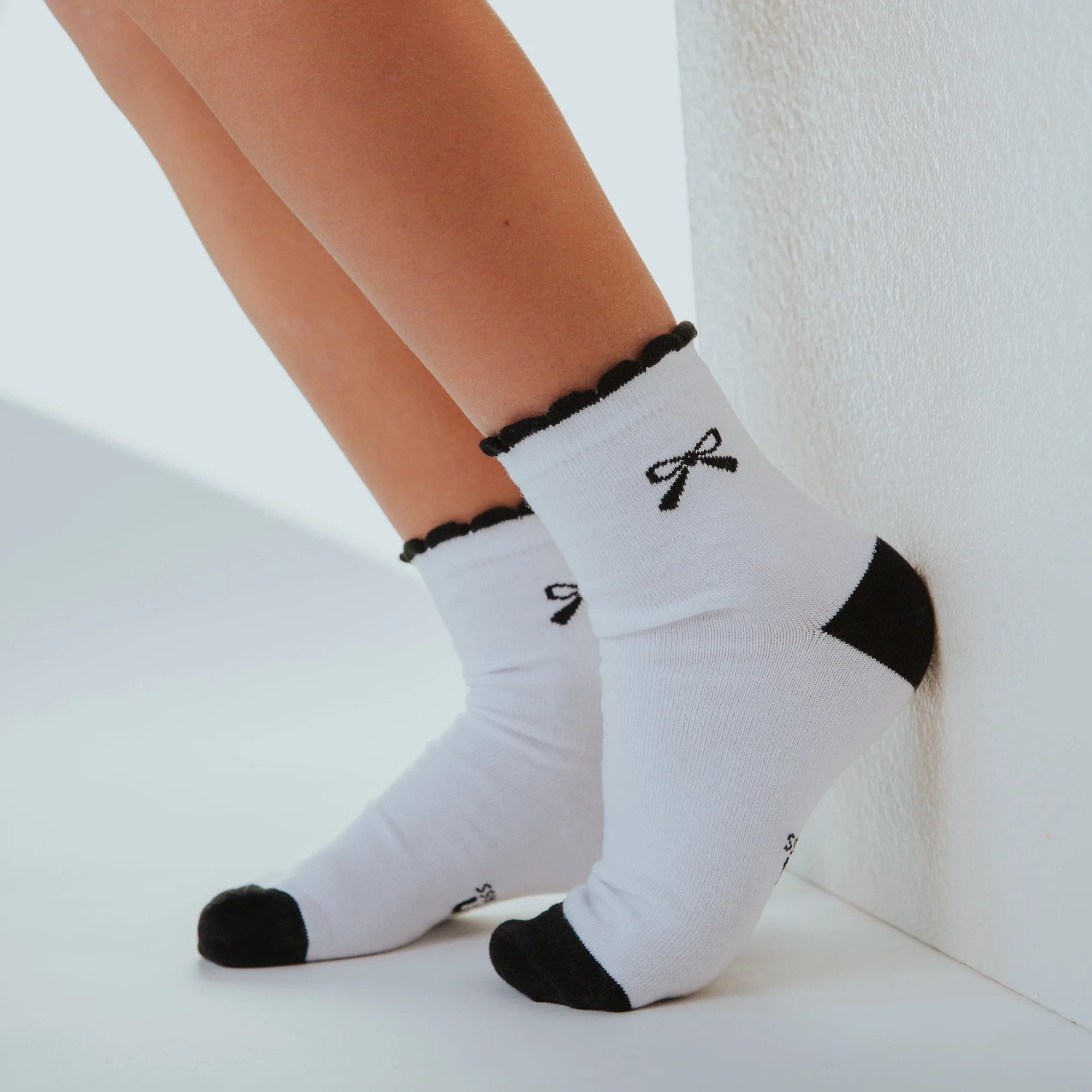
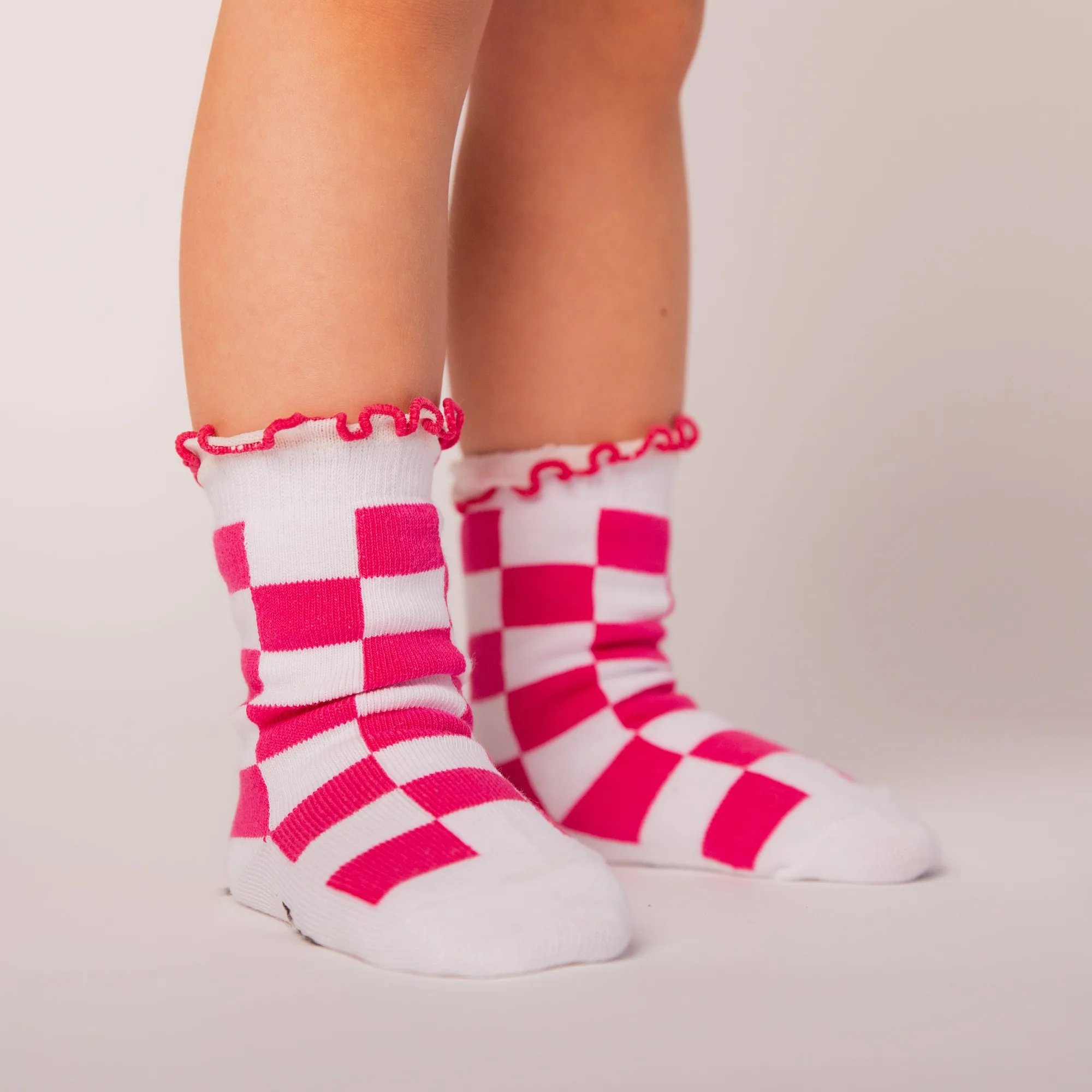
- Crew Socks - Pink Check: Crew Socks - Pink Check are available in sizes 2/3 through 8/12 and are described as cute, stylish, and comfortable for completing a RAGS outfit. The wide size range means you can size up or down as your child's feet grow, but you still need to check the heel fit against their actual foot length.
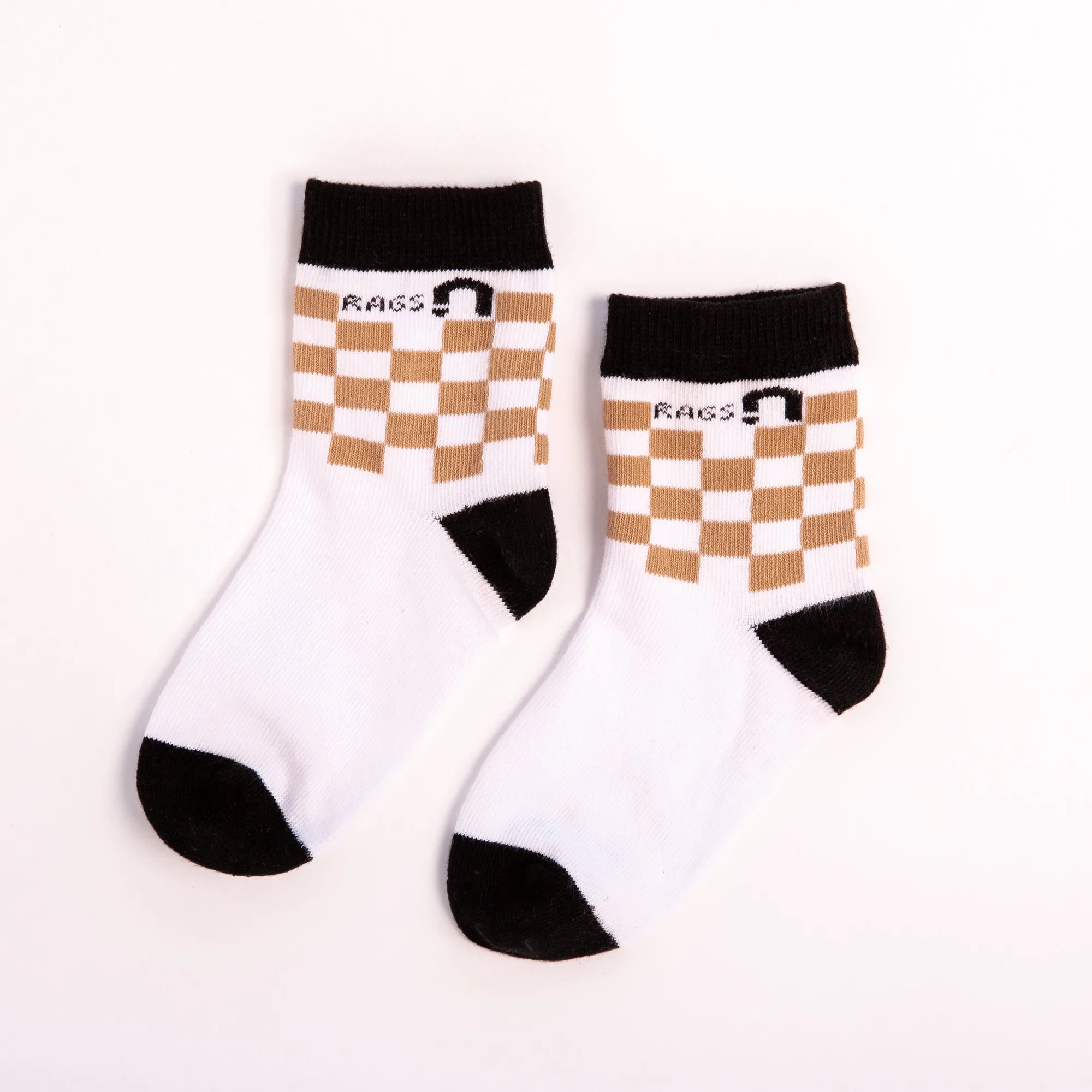
- Crew Socks - Camel Check: Crew Socks - Camel Check are available in sizes 2/3 through 8/12 and are described as comfy for all-day wear. A neutral check pattern works with many outfits, and the crew height helps the sock stay above the ankle during active play.
- Essentials Rag Romper - 'Honey': Essentials Rag Romper - 'Honey' is part of the #1 best-selling collection and features a patented dynamic stretchy neckline plus henley placket. The stretchy neckline makes dressing easier, which matters when you are pairing a romper with socks and trying to get out the door quickly.
- Essentials Rag Romper - Faded Rose: Essentials Rag Romper - Faded Rose has a snap placket for fast diaper changes and is available in sizes 3-6M through 5/6Y. The snap placket reduces dressing time, so you can focus on getting socks on correctly instead of wrestling with a full outfit.
Who these socks are best for
Best for
- Babies and toddlers who pull socks off during crawling or cruising
- Kids who need crew socks that stay above the ankle during active play
- Parents who want a wide size range to cover growth spurts
Not for
- Children who need compression socks or medical-grade support
- Kids who only wear socks inside tight shoes and prefer no-show styles
- Parents looking for waterproof or insulated winter socks