Quick answer
Buy a crib sheet sized to the standard crib mattress — roughly 28 by 52 inches — and judge it by how it behaves after a wash, not on the shelf. A sheet that still pulls tight at all four corners, with elastic that stays under the mattress edge, is the one to keep. If you are choosing between prints, pick two: one on the crib, one clean and folded.
Start with your mattress, not the sheet label
Measure the mattress you actually own before you shop. Standard crib mattresses sit around 28 by 52 inches, but depth varies, and a sheet that fits a 5-inch mattress will fight a 6-inch one. Write down length, width, and depth, then compare that to the sheet's stated fit range rather than trusting the word crib on the package.
If your mattress is a mini crib, portable crib, or oval shape, a standard sheet will not work at all. Those need their own sizing, and no amount of stretching makes a rectangular sheet safe on a non-rectangular mattress.
What tight actually means on a fitted crib sheet
A properly fitted sheet pulls the fabric taut across the sleep surface with no loose folds a baby could grab or bunch under. Run your palm across the middle: if you can pinch more than a small amount of fabric, it is too loose. Then check the corners — the elastic should sit fully underneath the mattress, not creep up the side.
Depth matters here. A sheet with generous depth on a thin mattress will have slack underneath; a shallow sheet on a deep mattress will pop off the corner the first time your baby rolls. Match depth to your mattress, then confirm the elastic runs the full perimeter rather than only at the corners.
Why muslin and bamboo change the fit conversation
Muslin woven with bamboo viscose behaves differently from a stiff cotton sheet. It starts soft, drapes more, and can relax slightly with washing — which is exactly why you judge fit after the first wash, not before. Tanboocel® bamboo viscose is the fiber used in the sheets below, and the blend is what gives them their drape and quick-drying behavior.
The practical upside is drying speed. A sheet that dries fast enough to be back on the crib the same day is what makes a two-sheet rotation realistic instead of aspirational.
Decision rules for choosing a crib sheet
- Measure before you buy: Note your mattress length, width, and depth, then match it to the sheet's stated fit range. Standard crib mattresses run about 28 by 52 inches, but depth is where most fit problems start. If the depth is not listed, treat that as a limitation and check the return policy before ordering.
- Test fit after one wash: Wash and dry the sheet once, then re-fit it. Muslin and bamboo viscose can relax slightly, so the post-wash fit is the one your baby will actually sleep on. If it still pulls taut at all four corners with elastic tucked under, it passed.
- Buy two, not one: A leak at midnight is inevitable; whether you are stripping the crib in ninety seconds is a choice you make when you buy. Two sheets keep one on the crib and one clean. Pick two prints you can live with, since they will alternate for years.
- Match fabric to your drying reality: Quick-drying bamboo viscose muslin is what makes a two-sheet rotation work without a backup dryer load. If your laundry runs slow, this matters more than the print. Fast drying is a fit feature, not just a convenience.
Two sheets that fit the rotation
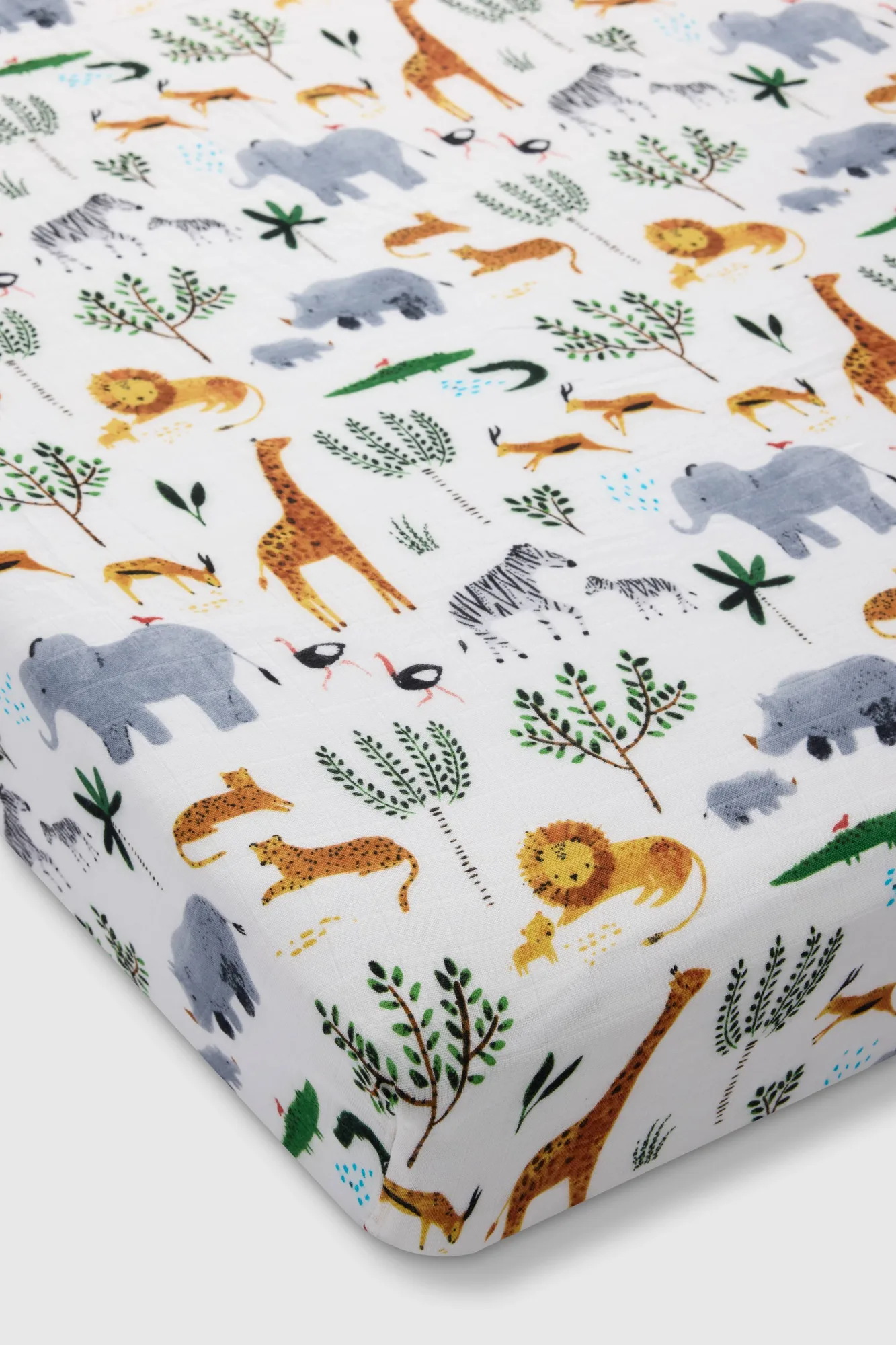
- Baby Muslin Fitted Crib Sheet in Tanboocel® Viscose from Bamboo - Safari Jungle: Tanboocel® bamboo viscose muslin crib sheet in a Safari Jungle print with lions, elephants, giraffes, zebras, cheetahs, and gazelles. A busy animal print hides the small stains that show up on pale sheets, so it works well as the sheet that stays on the crib most nights.
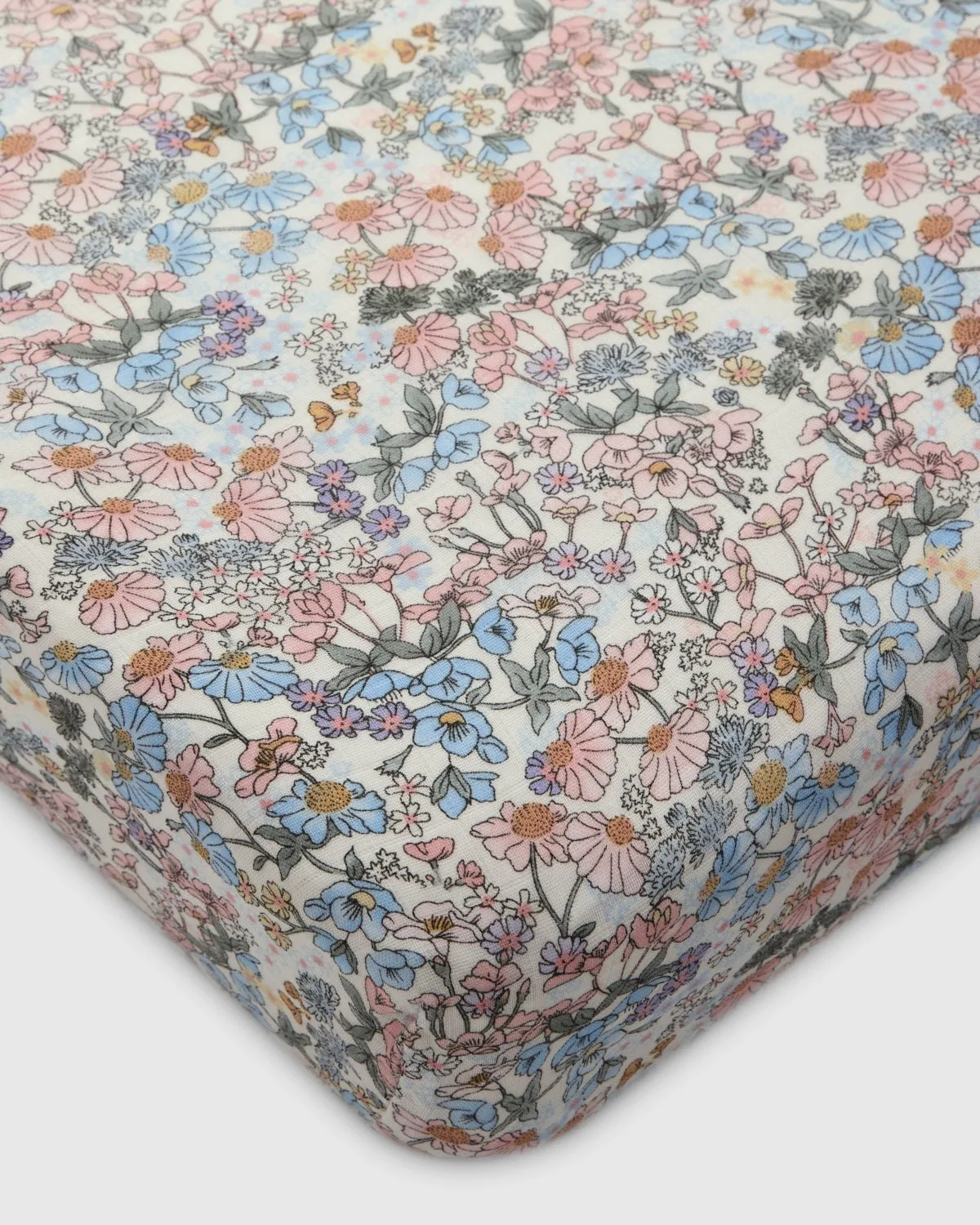
- Baby Muslin Fitted Crib Sheet in Tanboocel® Viscose from Bamboo - English Garden: Tanboocel® bamboo viscose muslin crib sheet in an English Garden ditsy floral of daisies and wildflowers. A softer, classic print suits a nursery that is already patterned elsewhere, and it gives you a second sheet so a midnight change does not mean doing laundry at midnight.
Who these sheets fit best
Best for
- Parents with a standard rectangular crib mattress who want a tight, quick-drying sheet
- Anyone building a two-sheet rotation so a midnight change does not require shopping
- Nurseries that want a print on the crib without committing to a full themed room
Not for
- Mini crib, portable crib, or oval mattress owners, who need dedicated sizing
- Buyers who have not measured their mattress depth and cannot confirm the fit range