Quick answer
A gentle, organic baby oil is ideal for newborn massage and daily moisture because it hydrates without synthetic additives. Focus on a few drops warmed in your hands, then use slow, firm strokes on your baby's arms, legs, back, and belly. Always do a patch test first and avoid the face and hands until your baby is older.
Why a Nutrient-Dense Baby Oil Matters
Newborn skin is thinner and more permeable than adult skin, so it absorbs whatever you apply. A baby oil made with organic, cold-pressed carrier oils and healing herbs can restore hydration and calm inflammation without exposing your baby to synthetic fragrances or preservatives. This is especially important for babies with eczema-prone or sensitive skin.
What to Look for in a Baby Oil
Choose a product with a short, recognizable ingredient list. Organic oils like coconut, jojoba, or sunflower are gentle and mimic the skin's natural sebum. Avoid mineral oil, parabens, phthalates, and artificial fragrances. A nutrient-dense blend that includes herbs like calendula or chamomile can further soothe and protect delicate skin.
How to Use Baby Oil for Newborn Massage and Moisture
- Step 1: Do a patch test first: Apply a small drop of baby oil to your baby's inner arm or thigh and wait 24 hours. Check for any redness, bumps, or irritation. This is crucial even with gentle oils because every baby's skin is different. Common mistake: skipping the patch test. Always test before the first full massage.
- Step 2: Warm the oil in your hands: Pump or pour 2–3 drops of baby oil into your palm and rub your hands together for a few seconds. Cold oil can startle a newborn; warm oil feels soothing and helps the massage strokes glide smoothly. Checkpoint: If the oil feels hot, let it cool slightly. Never microwave the bottle.
- Step 3: Start with the legs and feet: Place your baby on a soft towel in a warm, draft-free room. Use firm but gentle strokes from the thigh down to the foot. Gently squeeze and release each toe. This helps relax the lower body and improves circulation. Common mistake: using too much oil. A few drops are enough; excess can make the skin slippery and hard to grip.
- Step 4: Move to the arms and hands: Support your baby's arm with one hand and stroke from the shoulder to the wrist with the other. Open the palm and gently rub each finger. Repeat on the other arm. This can help with muscle relaxation and bonding. Checkpoint: Keep the oil away from your baby's hands if they tend to put them in their mouth.
- Step 5: Massage the chest, belly, and back: Use clockwise circles on the belly to aid digestion, then gentle outward strokes on the chest. Flip your baby over and stroke the back from the neck down to the buttocks. Avoid the spine and use flat, even pressure. Common mistake: pressing too hard on the belly. Always use light, circular motions and stop if your baby seems uncomfortable.
- Step 6: Finish with a gentle wipe and dress: After the massage, let the oil absorb for a minute or two. If any excess remains, gently pat with a soft cloth. Dress your baby in loose, breathable cotton clothing. The oil will continue to moisturize throughout the day. Checkpoint: Avoid applying oil to the face or scalp for newborns under 3 months, as it can clog pores or cause irritation.
Product Spotlight
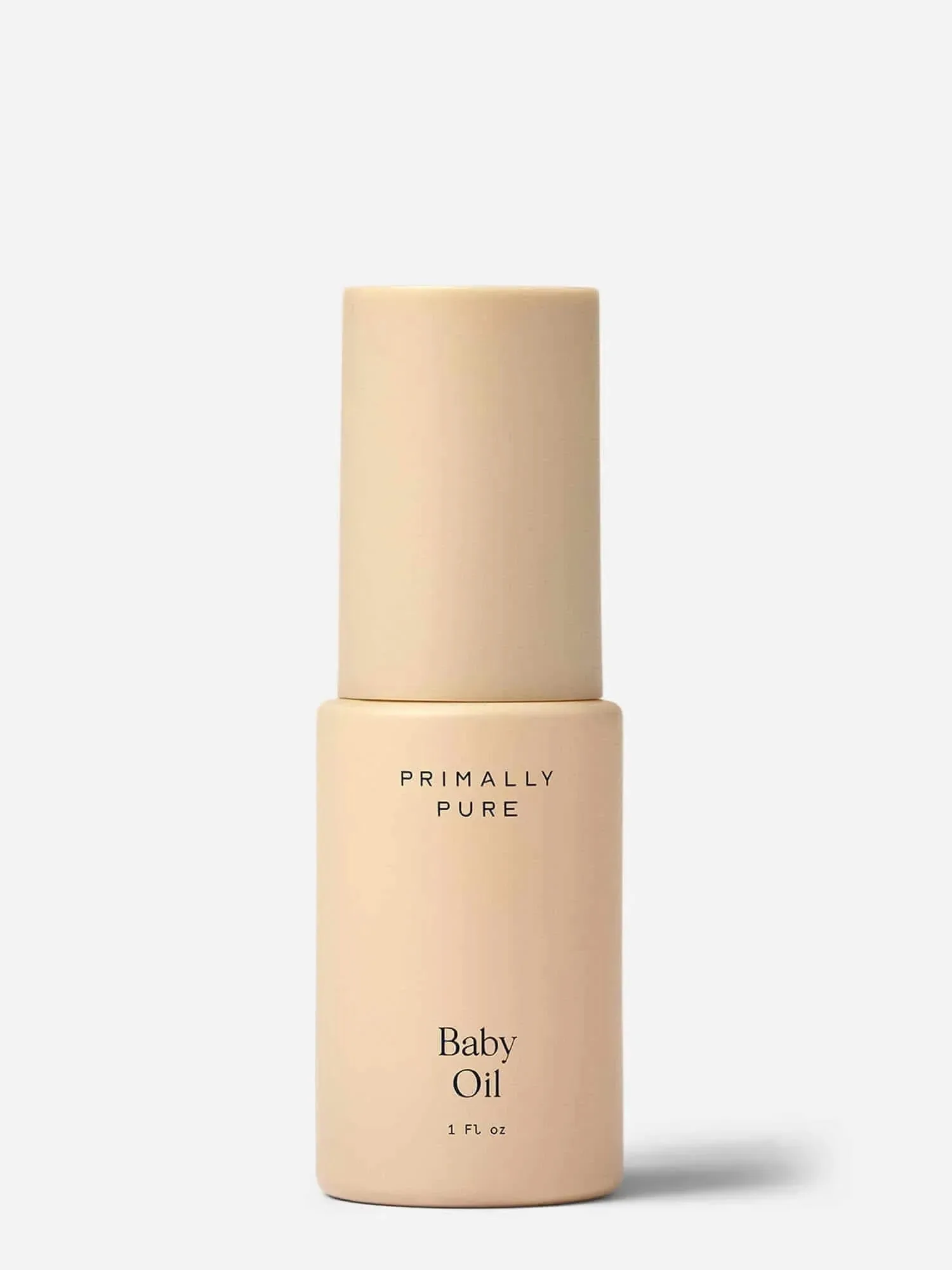
- Baby Oil (1 oz): Redefine Baby Oil with this nutrient-dense, nourishing and non-toxic oil blend made with only organic ingredients to deeply moisturize delicate skin. Cold-pressed carrier oils infused with healing herbs restore hydration, calm inflammation and improve baby’s microbiome. This means you get a pure, effective moisturizer that supports your baby's skin barrier without any synthetic additives. The herb-infused oils can help reduce redness and irritation, making it a smart choice for daily massage and moisture.