Quick Answer
For accurate baby scale readings at home, place the scale on a hard, level surface, zero it before each use, and weigh your baby at the same time each day—ideally in the morning before feeding and after a diaper change. If readings still seem off, check the scale's calibration and your technique. Consistent baby weight tracking matters more than a single number, so focus on the trend over weeks, not day-to-day fluctuations.
Common Causes of Inaccurate Baby Scale Readings
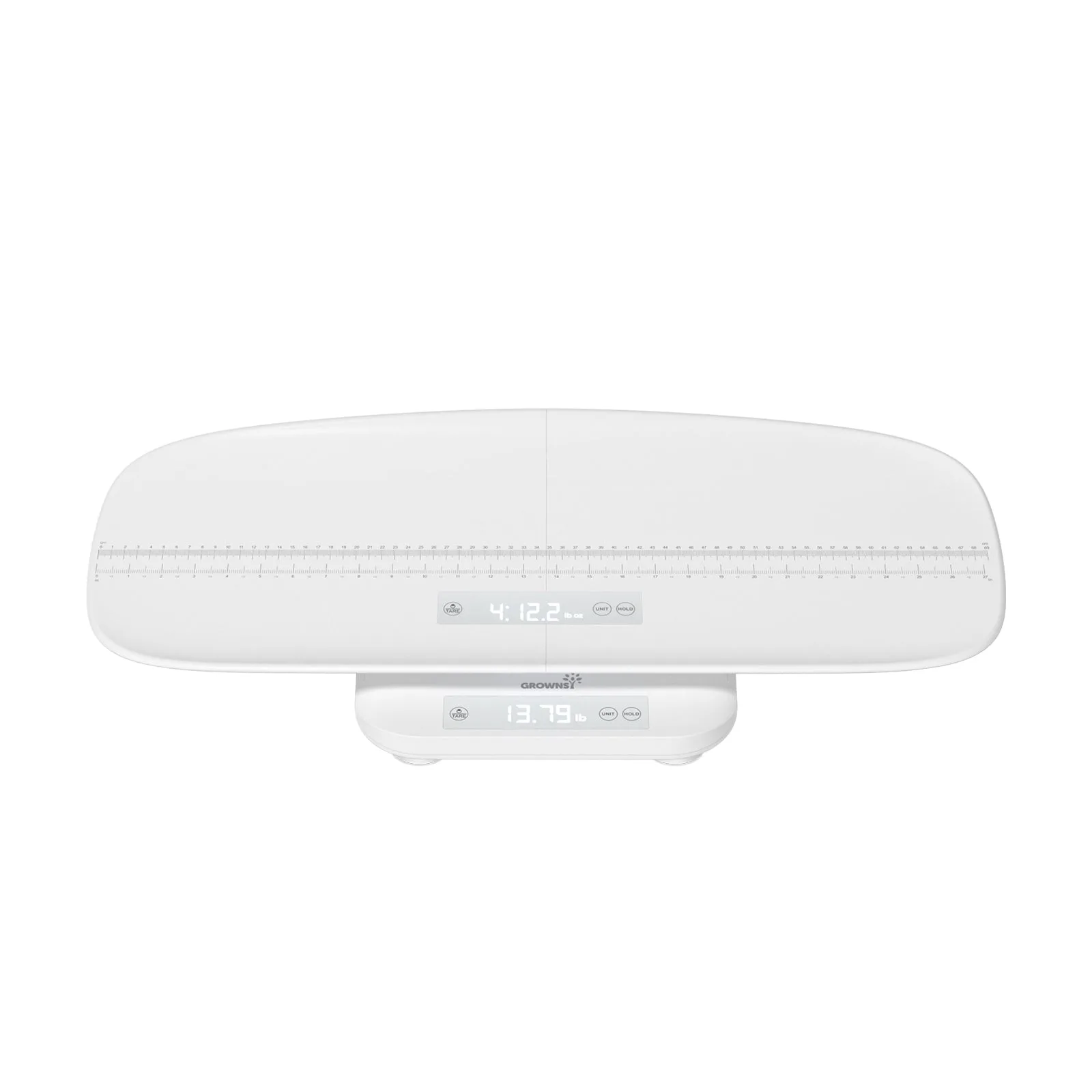
Most home scale errors come from three sources: an unlevel or soft surface, a scale that hasn't been zeroed or calibrated, and inconsistent weighing conditions. Carpet, uneven floors, and even a slightly tilted table can throw off sensitive sensors. Always use a hard, flat surface like a countertop or hardwood floor. If your scale has a hold function, use it to capture the weight after your baby settles, reducing motion errors. For scales with a height measurement platform, ensure the sliding headpiece touches the crown of the head without pressing down.
Step-by-Step: How to Weigh a Baby at Home
1. Prepare the scale: Place it on a hard, level surface. Turn it on and wait for it to zero. If it doesn't zero, use the tare function or recalibrate if your model allows. 2. Undress your baby completely—diapers and clothing add weight that skews tracking. 3. Lay your baby gently on the scale tray or platform. Keep a hand hovering just above for safety, but don't press down. 4. Wait for the reading to stabilize. If your baby is fussy, use the hold function to lock the weight. 5. Record the weight immediately, along with the date and time. 6. For height, lay your baby flat against the height measurement platform, straighten the legs gently, and slide the headpiece to the top of the head. Note the length.
When and How Often to Weigh Your Baby
Newborns typically lose up to 10% of birth weight in the first few days, then regain it by about two weeks. After that, most babies gain about 1 ounce (30 grams) per day in the first month. Weighing once or twice a week is enough for home tracking; daily weighing can cause unnecessary worry over normal fluctuations. Always weigh at the same time of day—morning is best, after a diaper change and before a feed. Use a baby weight tracking chart from your pediatrician or a trusted health app to plot the trend. If you're combination feeding or tracking a preemie, your doctor may recommend more frequent checks.
Calibrating Your Digital Baby Scale
Not all home baby scales offer user calibration. Check your manual: some have a calibration mode that requires a known weight (like a 5 lb bag of flour). If yours doesn't, you can still verify accuracy by weighing a known object—a 5 lb dumbbell, for example—and seeing if the scale matches. If it's off by more than an ounce, contact the manufacturer. For scales with a smart chip and high-precision sensor, like the Grownsy Multifunctional Baby Scale, calibration is typically done at the factory, but you can still test with a known weight. Never attempt to open the scale or adjust internal components yourself.
Using the Height Measurement Feature Correctly
An infant scale height measurement feature is only as accurate as your technique. Lay your baby flat on the platform, with the head against the fixed stop. Gently straighten the legs—don't force them—and slide the movable footpiece until it touches the heels. Read the measurement at eye level to avoid parallax error. For babies who curl their legs, measure length twice and average the results. Remember that home length measurements are less precise than weight; your pediatrician's office uses a stadiometer for a reason. Use home height tracking as a rough guide, not a diagnostic tool.
Diagnosis: Why Your Baby Scale Reading Seems Off
- Symptom: Weight fluctuates by more than 2 ounces from one day to the next: Likely cause: Normal hydration changes, different time of day, or inconsistent clothing/diaper. Corrective action: Weigh at the same time each day, fully undressed, and track weekly averages instead of daily numbers. If fluctuations continue beyond a week or you see a downward trend, consult your pediatrician.
- Symptom: Scale shows a reading even when nothing is on it: Likely cause: Scale needs to be zeroed or recalibrated, or it's on an uneven surface. Corrective action: Move to a hard, level surface, turn off and on again, and use the tare/zero function. If the problem persists, test with a known weight. If the scale won't zero after multiple attempts, contact the manufacturer—do not use it for tracking.
- Symptom: Height measurement doesn't match the pediatrician's reading: Likely cause: Home measurement technique (leg position, head placement) differs from a clinical stadiometer. Corrective action: Ensure your baby's head touches the top stop, legs are gently straightened, and you read at eye level. Measure twice and average. A difference of up to 0.5 inches is common; rely on your pediatrician's measurement for official growth charts.
Product Facts to Support Accuracy
- Electronic Infant Scale with Height Measurement: The Grownsy Multifunctional Baby Scale provides precise weight and height measurements with its high-precision sensor and smart chip. It supports five units of measurement (lb: oz, oz, lb, g, kg) and accommodates weights up to 330 lbs, making it suitable for babies, pets, and adults. The scale features a 27-inch height measurement platform and a non-slip design for safety. Its hold function captures accurate readings even when your baby moves. The hold function is especially useful for wiggly babies, and the 27-inch height platform allows you to track length as your baby grows. The non-slip design adds safety, and the wide weight range means the scale can be used beyond infancy.