Quick answer
Choose sleepwear that fits snugly, breathes well, and has no loose ties, buttons, or scratchy tags near the face. For most babies, a simple onepiece in a soft natural fabric is the easiest safe default, and you should size up only when the garment still stays close to the body.
How should baby sleepwear fit?
Sleepwear should sit close to the body without pinching. Loose fabric can ride up over the face or wrap around limbs, while tight elastic can leave red marks and wake your baby. Check the neckline first: if you can fit more than two fingers under it, the garment is likely too loose. Then check the legs and cuffs, which should stay in place when your baby kicks.
- Snug at the chest and neck, roomy enough at the hips for a nappy.
- No more than two fingers of slack at the neckline.
- Cuffs that stay put without leaving deep marks.
- If in doubt between two sizes, choose the one that stays close to the body.
Which fabrics are safest for sleep?
Natural, breathable fabrics are the safest starting point because they help regulate temperature and reduce the risk of overheating. Organic cotton is a common choice for this reason. If a garment lists a blend, check the label rather than assuming: the Organic Cotton Tallulah Dress, for example, is 95% organic cotton and 5% something else, so the exact composition matters. Avoid heavy synthetic fabrics next to the skin for long stretches, and skip any fabric that feels plasticky or traps heat.
- Cotton and other breathable natural fibres for most nights.
- Check the blend percentages on the care label, not just the front tag.
- Skip fabrics that feel hot or non-breathable against the skin.
- Wash new sleepwear before the first wear to remove finishes and soften fibres.
What should I check before putting my baby to bed?
Do a quick two-minute check each night: nothing loose around the neck, no dangling cords or ties, no small detachable parts, and no tags scratching the back of the neck. If your baby is rolling or standing, also check that the legs won't trip them when they move in the cot. A garment that passed last month may not pass now, so recheck as your baby grows.
- No loose ties, cords, or ribbons near the neck or waist.
- No small buttons or embellishments a baby could pull off.
- Tags and seams flat and comfortable against the skin.
- Recheck fit every few weeks as your baby grows.
Do hats belong in the cot?
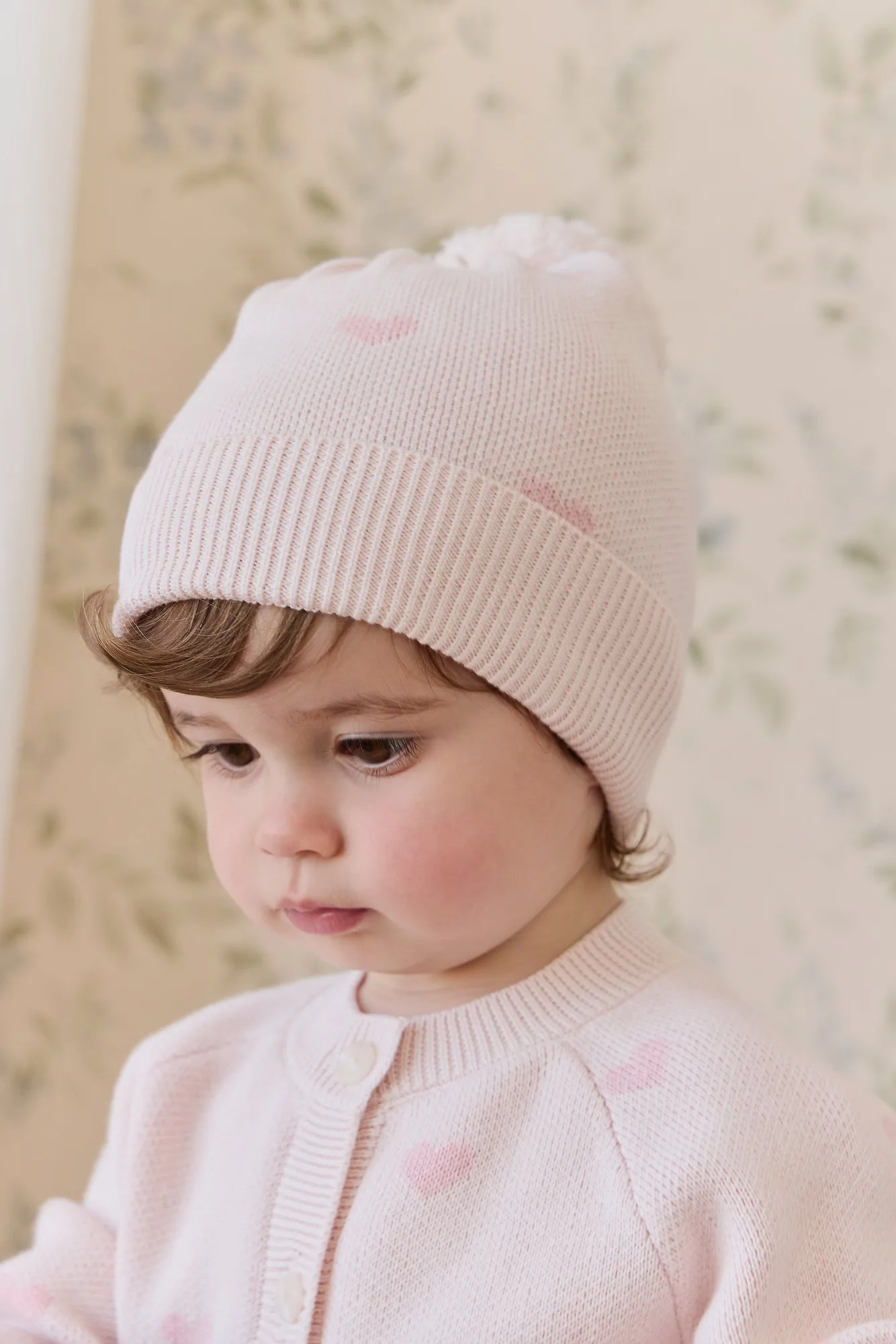
A hat is for warmth outdoors or during a supervised outing, not for sleep. Once your baby is in the cot, remove hats, headbands, and any other accessory so nothing can slip over the face. The Kate Hat is designed as a cosy accessory for wearing out and about, so treat it as daywear rather than part of a sleep setup.
- Hats off before sleep, every time.
- Use hats for prams, walks, and cooler rooms while awake.
- Keep the cot clear of accessories, toys, and loose bedding.
How many sleep outfits do I actually need?
Most families manage well with three to five sleep outfits per size, plus a couple of spare options for leaky nights. That is enough to rotate through washes without overbuying, and it lets you retire a garment as soon as the fit stops working. If you are building a simple set, a soft onepiece and one warmer layer cover most seasons.
- Three to five sleep outfits per size is a practical baseline.
- Add one warmer layer for cooler rooms.
- Retire any piece that no longer fits snugly, even if it still looks new.
Quick sleepwear safety FAQ
Should sleepwear be tight or loose?
Snug is safer. Aim for close-fitting at the chest and neck with enough room at the hips for a nappy, and no more than two fingers of slack at the neckline. If it slides off the shoulders or bunches around the face, size down or switch styles.
Is a onepiece better than separates for sleep?
A onepiece keeps fabric in one place and removes the gap at the waist where tops can ride up. It also makes night changes simpler when it has snap closures. One well-fitting onepiece is the simplest safe default for most babies.
Can my baby sleep in daywear?
Only if the daywear fits snugly, has no loose ties or small detachable parts, and is made from a breathable fabric. Dresses with flowing skirts and accessories like hats are not sleepwear. If you would not feel comfortable leaving your baby unsupervised in it, it is not sleepwear.
How do I know when to size up?
Size up when the neckline gapes, the cuffs leave marks, or the legs ride up during the night. Always recheck that the larger size still fits closely at the chest. Fit matters more than the number on the label.
Sleepwear details worth knowing
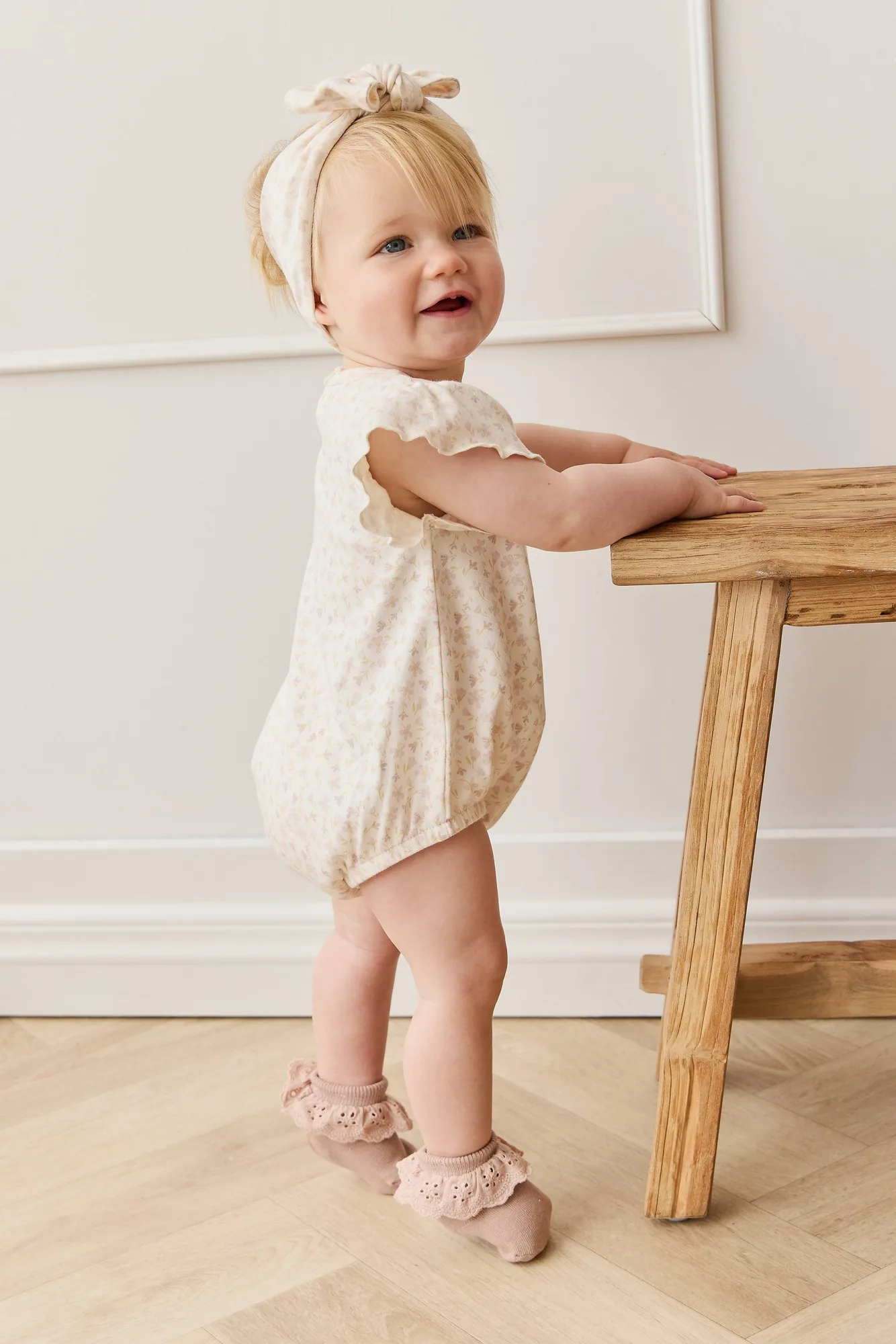
- Organic Cotton Sage Onepiece - Aries Mauve: The Organic Cotton Sage Onepiece in Aries Mauve has short ruffled sleeves, a round neckline, and elasticated leg openings with snap closures. Snap closures make night changes faster, and the round neckline gives you a clear fit checkpoint without tight elastic.
- Kate Hat-Kate Heart Jacquard Cotton Candy: The Kate Hat in Kate Heart Jacquard Cotton Candy is made from 100% cotton with a soft pink hue, heart jacquard detailing, and a pom pom. It is a breathable daywear accessory for outings, not a sleep item, so remove it before your baby goes into the cot.