Quick answer
For most families, the simplest no-spill setup is a snack cup with a soft slatted silicone lid plus a separate seal lid for storage, such as the Snack on the Go. If your child prefers drinking to snacking, a straw cup with a hygiene cover like the Sippy Straw covers the same travel job. Buy one cup per bag you actually use, not a set, so you always have a clean one ready.
What a snack cup actually needs to do
A snack cup has three jobs: let small hands reach food without tipping it all out, survive being dropped in a bag, and come apart far enough to clean properly. A soft slatted silicone lid does the first job by letting a toddler pull food through the slats while blocking a full spill. A fresh seal lid does the second by closing the cup for storage and travel. Easy-grip handles and a shape that fits a pram cup holder or side pocket handle the third, because a cup that rolls around gets left at home.
Skip cups with narrow necks or deep, hard-to-reach bases. If you cannot get a bottle brush or your fingers into every corner, crumbs and puree residue build up in the slats. Look for a lid that lifts off without tools and a cup that stands up when empty.
Match the cup to the snack, not the other way round
Soft fresh fruit, oat bars broken into pieces, and dry cereal work well in a slatted-lid cup because they are light enough to pull through the slats. Sticky or crumbly snacks, such as banana slices or a handful of grated cheese, are easier in a small lidded pot you open at the table, because they clog the slats and need a wipe afterwards.
For baby-led weaning snacks out and about, pack two textures: one dry, pull-through snack for the pram, and one softer item in a separate lidded container for a sit-down stop. That way you are not relying on a single cup to do everything, and you are not cleaning slats in a cafe bathroom.
Cleaning and drying rules that save you time
Rinse the lid slats and the cup as soon as you get home, before residue dries. Warm soapy water and a small brush through each slat is enough for everyday use; follow the manufacturer's sterilising guidance if you sterilise other feeding items. Dry parts fully before you stack them, because trapped moisture in a closed cup is what makes the next snack smell stale.
Keep a spare cup in rotation rather than buying a large set. Two cups let one air-dry while the other is in the bag, and a two-pack is usually better value than buying singles twice. Check the slats and seal lid regularly for stretching, tears or a loose fit, and replace the cup when the lid no longer grips, since a worn slat is the main cause of leaks.
Capacity and packing for a day out
A 350ml cup is a sensible middle size for a toddler: enough for a snack portion without encouraging you to overfill it. Overfilling is the most common cause of spills, because food sits above the slats and pushes out when the cup tips. Fill to roughly two-thirds and top up later.
Pack the cup empty and add the snack when you arrive if the food is perishable, or fill it at home for dry snacks. Put the cup upright in a pram pocket or a bag with a flat base, and keep a wipe in the same pocket for hands and lid. If you are also carrying a drink, a straw cup with its own hygiene cover keeps the straw clean between stops.
Decision rules for buying a snack cup
- If your child tips cups upside down: Choose a slatted silicone lid rather than an open bowl or a hard flip lid, and fill only two-thirds full. A controlled opening beats a sealed one for toddlers who are still learning to reach in.
- If you need one cup for storage and outings: Pick a cup that includes both a soft slatted lid and a fresh seal lid, so the same container holds food in the fridge and in the bag. Two lids on one cup replaces two separate containers.
- If your child mostly drinks on the move: Choose a straw cup with a hygiene cover instead of a snack cup, and add a snack cup only when they reliably eat finger foods. Do not buy a snack cup before your child can pull food through a slat without help.
- If you are packing for baby-led weaning: Take one dry, pull-through snack in a slatted-lid cup and one softer snack in a separate lidded pot. Two textures, two containers, fewer clean-ups.
- If you are unsure how many to buy: Start with a single cup or a two-pack, keep one clean at home, and add more only if you regularly use more than one bag. Buy for your busiest day, not your cupboard.
Product facts that affect your choice
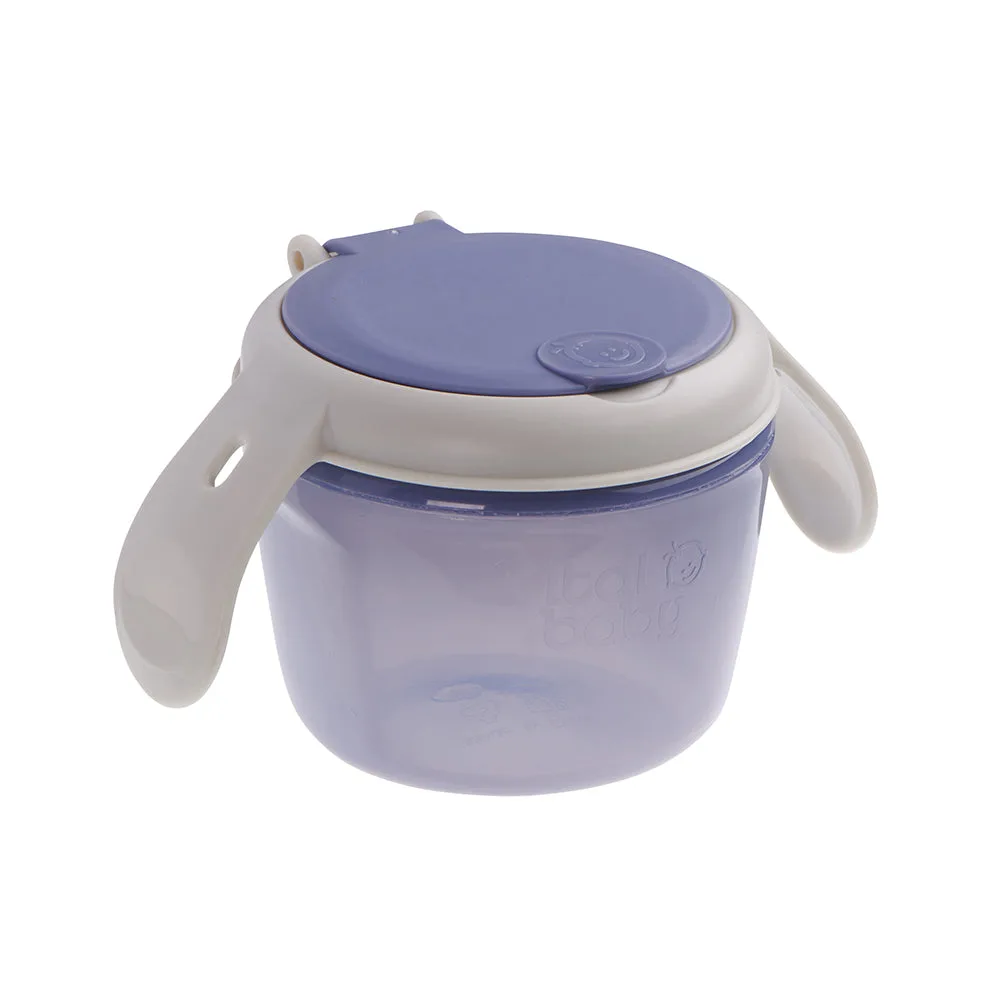
- snack on the go™: Super-soft slatted silicone lid for easy access without spills, comfortable handles, and a fresh seal lid for hygienic storage. This is the closest match to a no-spill snack cup for pram use: the slatted lid controls how much comes out, and the second lid turns the same cup into a storage container for travel.
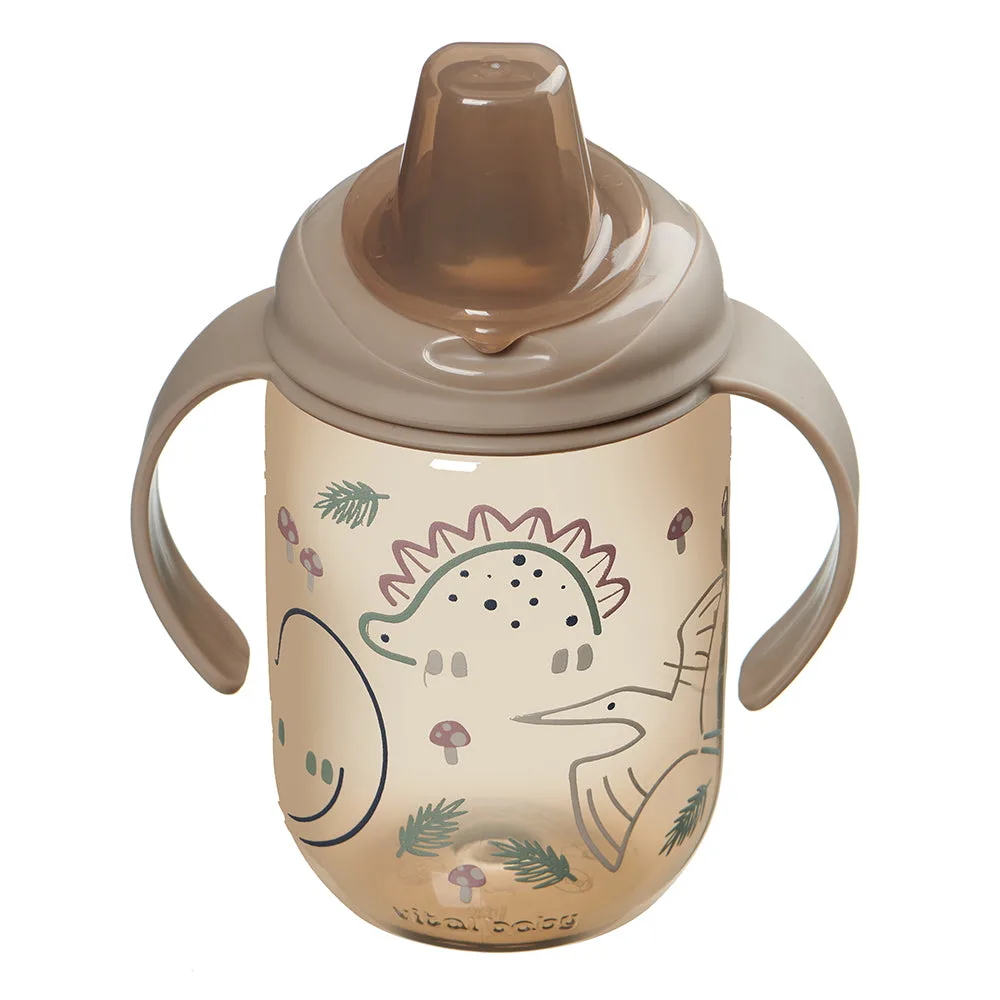
- easy sipper: 100% soft silicone spout with a mouth-activated, non-spill valve, disassembles easily for cleaning, removable handles and a spout cover. Choose this instead of a snack cup if your child drinks more than they nibble; the spout cover keeps the drinking surface clean in a bag, and the removable handles suit smaller hands.
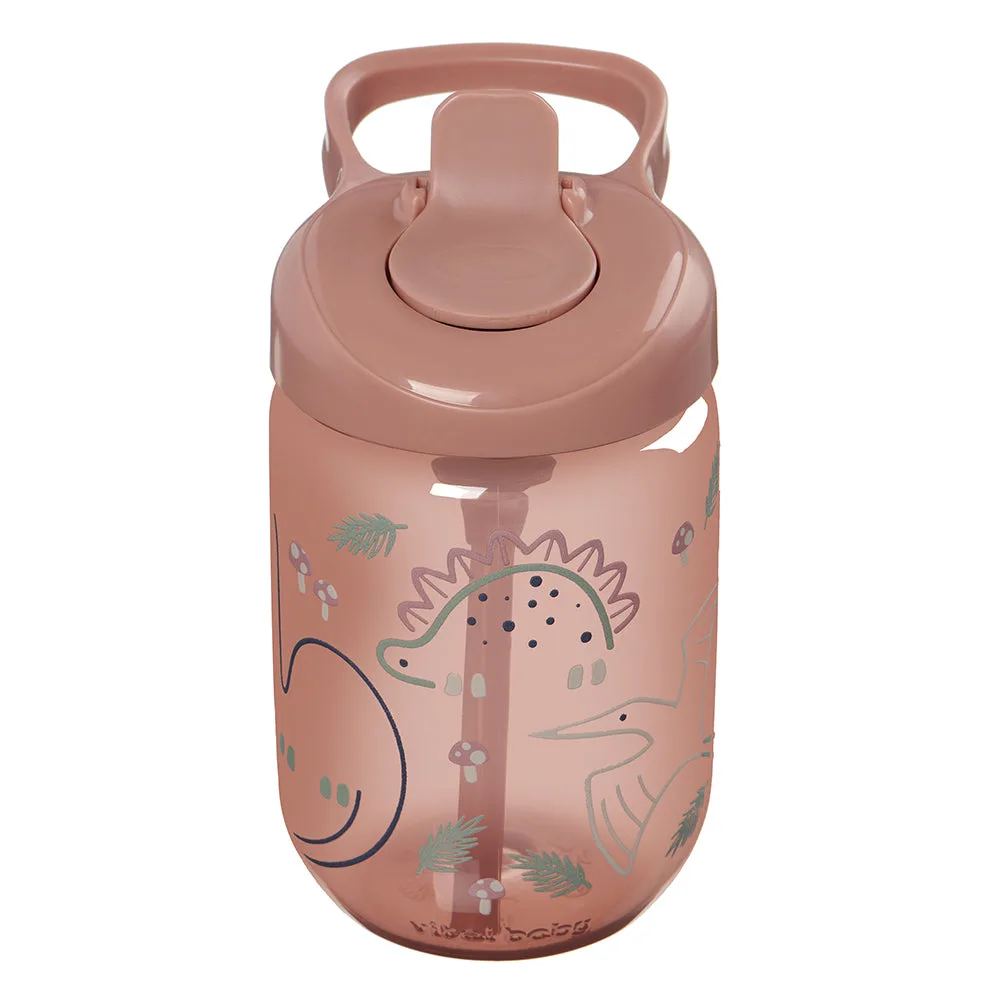
- sippy straw: 100% soft silicone non-spill straw, a hygiene cover and a grab-and-go handle, with a generous 350ml capacity. The 350ml capacity and hygiene cover make it a practical drink companion on the same outing as a snack cup, so you are not packing two different cup systems.
Who each option suits
Best for
- Toddlers who eat finger foods and need a no-spill snack cup for the pram or car
- Parents who want one container that stores snacks at home and travels with a seal lid
- Families packing baby-led weaning snacks out and about who want a controlled opening
Not for
- Babies who are not yet eating finger foods and still need milk or puree only
- Children who need a fully sealed, shake-proof container for liquids rather than a slatted lid
- Parents looking for a cup that can be sterilised in a microwave without checking the manufacturer's guidance