Quick answer
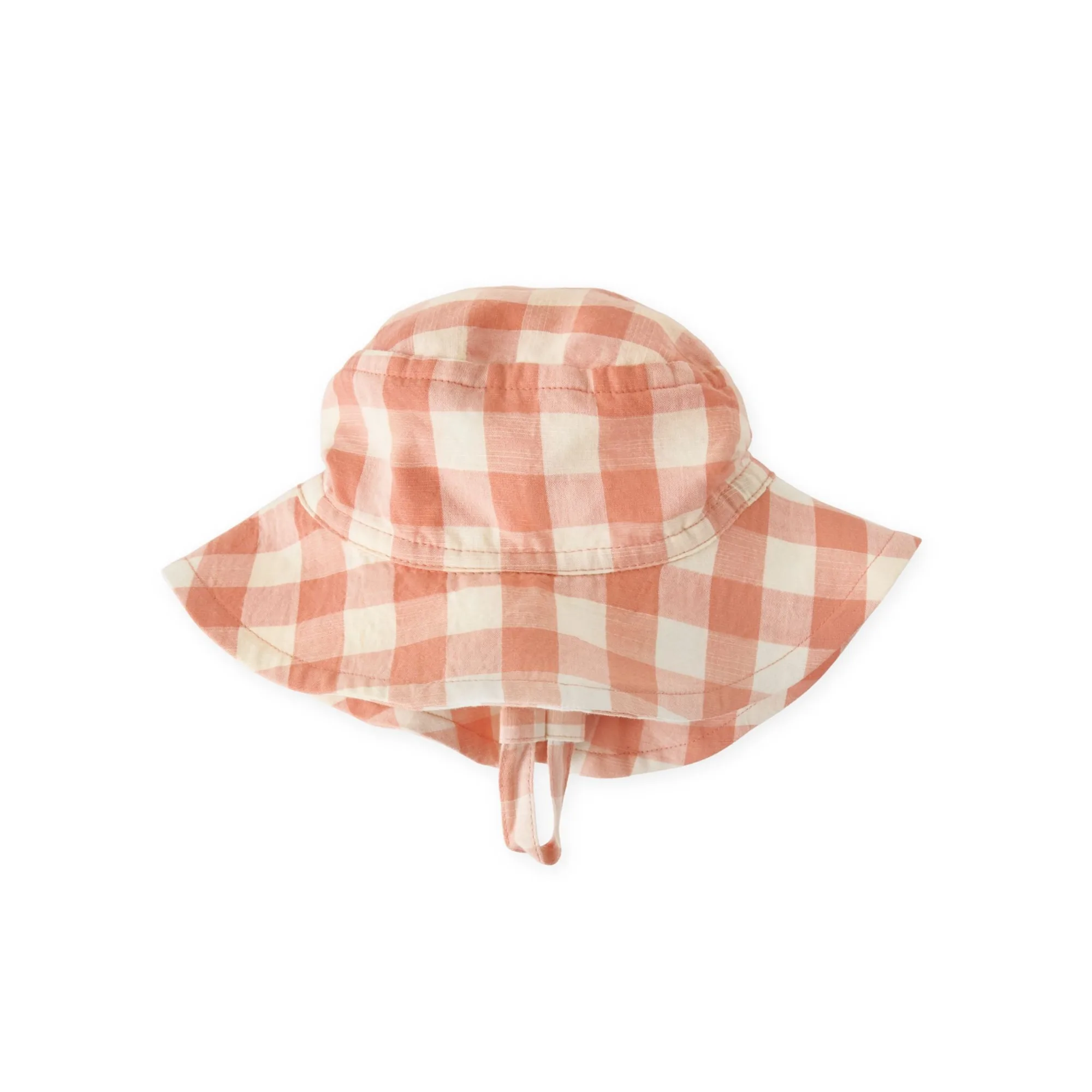
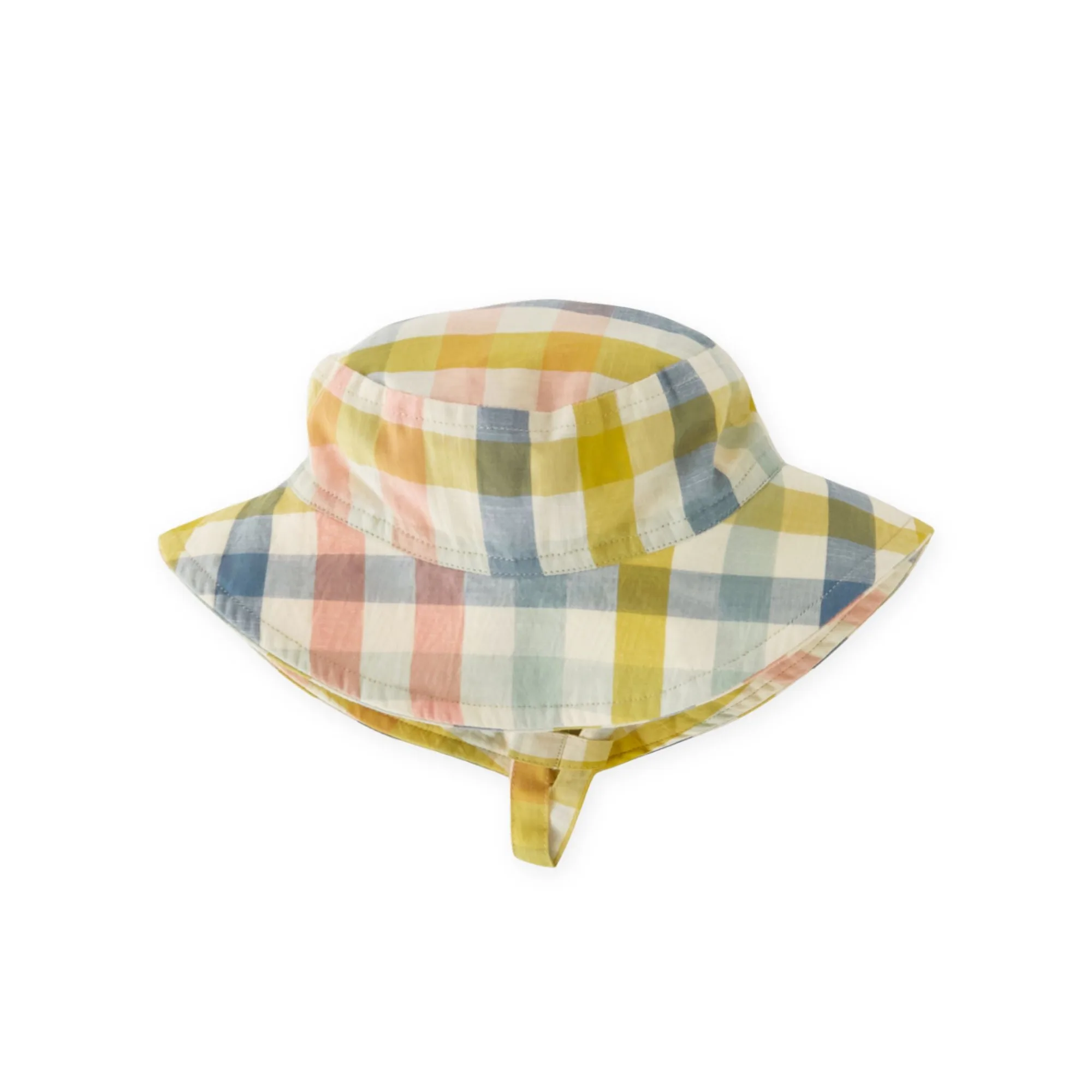
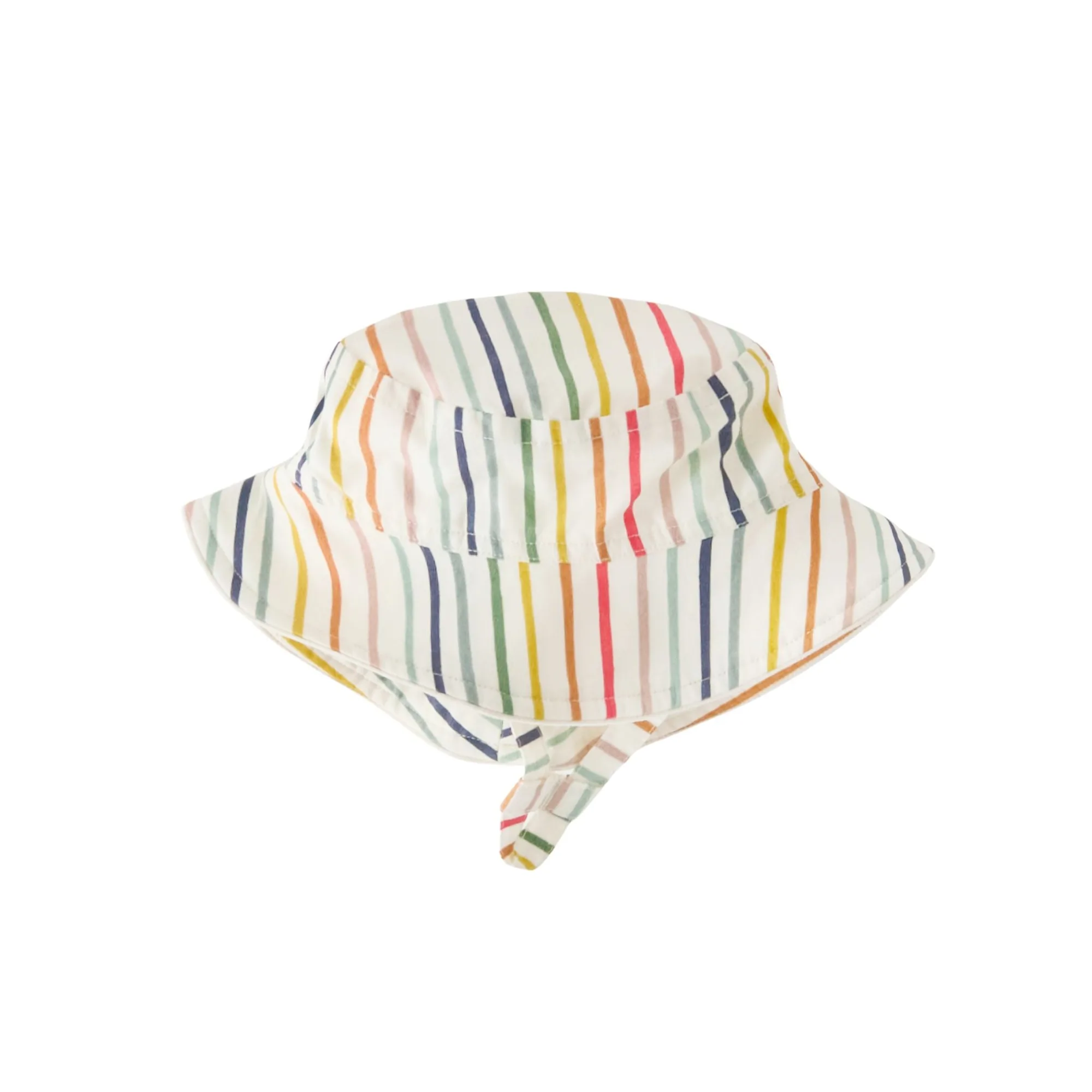
Buy a baby bucket hat with a soft, floppy brim that shades the face and neck, a chin strap you can adjust snugly without pinching, and a fabric that breathes in heat. A chin strap hat stays on through crawling, stroller naps, and wind, which matters more than any print. Fit the hat to your child's current head circumference, not the size they will grow into, and re-check the strap every few weeks.
Brim depth is the sun protection decision
A shallow fashion brim shades the forehead but leaves the cheeks and neck exposed when the sun sits low in the morning or late afternoon. A deeper, slightly floppy brim covers more skin and folds back when your child leans into a carrier or car seat. The trade-off is visibility: a very deep brim can block a toddler's downward view on stairs or uneven ground. For early walkers, a medium brim that clears the eyebrows but still reaches past the ears is the safer middle ground. For babies mostly in a stroller or carrier, a wider brim gives more coverage with less downside.
Chin strap fit and safety
The chin strap is what separates a hat that stays on from one you keep retrieving. Look for an adjustable strap, usually a toggle or hook-and-loop closure, so you can tighten it as the hat relaxes with wear. It should sit under the chin, not across the throat, and you should be able to slide one finger between the strap and the skin. A strap that is too loose lets the hat tip back and expose the neck; one that is too tight leaves marks and becomes a tug-of-war. If your child pulls hats off constantly, a strap with a quick-release closure is easier to undo one-handed than a knot.
Bucket hat sizing: measure, then re-measure
Head circumference is the only reliable measure for bucket hat sizing. Run a soft tape around the widest part of the head, just above the ears and across the forehead, and compare it to the brand's size chart rather than your child's clothing size. A hat that fits correctly sits low enough to stay put but does not press a red line across the forehead. Because babies' heads grow quickly in the first year, check the fit monthly; a hat that fit in spring may be tight by midsummer. If your child is between sizes, size up only if the strap can be tightened enough to compensate.
Fabric and heat: what to weigh
Breathable natural fibers and loose weaves release heat, while tightly woven or coated fabrics block more sun but trap warmth. For a toddler summer hat worn all day, prioritize airflow and accept that you may need to reapply sunscreen at the edges of the brim. UPF ratings are useful when stated by the brand, but if a hat has no stated rating, treat it as shade rather than full protection and pair it with sunscreen on exposed skin. A hat that is too hot gets pulled off, which defeats the purpose.
How to test a hat before you commit
Put the hat on your child, tighten the strap, then have them look down, shake their head, and lean forward. If the brim drops over their eyes or the hat slides back, adjust the strap or try a different size. For babies, test the fit in a stroller and in a carrier, since the headrest can push a hat forward. Wash the hat according to the care label before relying on it, because some fabrics shrink slightly and change the fit you tested.
Decision rules for choosing a baby or toddler sun hat
- If your child is mostly in a stroller or carrier: Choose a wider, floppy brim for more face and neck coverage, and check that the brim does not collide with the headrest. Coverage wins when they are not walking.
- If your child is an active early walker: Choose a medium brim that clears the eyebrows and a strap you can tighten snugly, so the hat stays put without blocking their view of the ground. Visibility and stay-put matter more than maximum brim.
- If your child pulls hats off constantly: Prioritize an adjustable chin strap with a quick-release closure and a breathable fabric, then test the fit in the stroller and in a carrier. A hat that comes off protects nothing.
- If you are between sizes: Size up only when the chin strap can be tightened enough to keep the hat from tipping back; otherwise stay with the smaller size. The strap decides whether a larger size is workable.
Pehr pieces that pair with sunny days
- Ribbed Baby Footless Sleeper - Rush Hour Mist: Ribbed Baby Footless Sleeper is made from GOTS certified organic cotton in a soft, stretchy rib knit with a full-length zipper and footless design. A breathable footless layer under a sun hat keeps a baby comfortable in warm weather and makes diaper changes quick when you are already juggling a hat and sunscreen.
- Picnic Sandal - Sprout: Picnic Sandal is a baby and toddler leather sandal made in Spain with a durable cork sole, a glossy patent leather finish, and an adjustable metal buckle. An adjustable buckle lets the sandal fit growing feet through the season, so the footwear stays secure while your child is running in and out of shade.
- Tennis Dropped Shoulder T-Shirt - Court Side: Tennis Dropped Shoulder T-Shirt is made from GOTS-certified 100% organic cotton jersey that is lightweight, breathable, and washed for a soft feel, with a relaxed boxy fit and dropped shoulders. A lightweight, breathable top reduces heat buildup on the walk to the park, so a toddler is less likely to yank off the hat because they are overheating.
Who this hat approach fits
Best for
- Babies and toddlers who need shade during stroller walks, park trips, and everyday errands
- Parents who want a chin strap hat that stays on through crawling, walking, and wind
- Caregivers willing to measure head circumference and re-check fit as the season goes on
Not for
- Children who need a helmet-compatible or structured hat for specific sports or safety requirements
- Families looking for a single hat to last multiple years, since head growth changes the fit quickly
- Situations where full sun protection is required without sunscreen on exposed skin