Quick answer
Buy for the stage your baby is in, not the age on the box. A 6-month-old who is just sitting needs light, easy-to-grip toys that stay within reach; a 10-month-old who is pulling up and crawling needs toys that move with them or invite chasing. Choose one open-ended toy per stage, check it against the safety rules below, and rotate rather than pile up.
What changes between 6 and 12 months
Between 6 and 12 months, the biggest shift is from holding to moving. Early on, babies sit with support and bat at objects; later they sit steadily, transfer toys hand to hand, drop and retrieve, then crawl, pull up, and cruise. A toy that is perfect in month 6 can be boring by month 10, and a toy that is too advanced gets ignored or used unsafely.
This is why developmental baby toys work best when they match one of three jobs: something to hold and mouth, something to reach for and knock over, and something to chase or carry. You do not need all three on day one. Add the next job when you see the matching skill appear.
Match the toy to the skill you actually see
Use the milestone, not the calendar, as your trigger. If your baby is not yet sitting independently, skip toys that require a stable lap or tray. If your baby is already lunging forward on hands and knees, a toy that stays put will lose attention fast.
- Sitting with support: choose lightweight toys that fit in one hand, with no long straps.
- Sitting independently: add a tray or floor toy that stays in place while both hands explore.
- Reaching and grabbing: pick toys with a clear grab point, not a smooth ball.
- Transferring hand to hand: offer two similar objects so one can be dropped and the other kept.
- Crawling: choose a toy that rolls, slides, or can be pushed a short distance.
- Pulling up: clear low shelves and use toys that are safe to lean on, not tip over.
Safety checks that matter more than the label
Age labels are a starting point, not a guarantee. For this age group, the practical risks are choking, tipping, and entrapment. Check the toy yourself against the current rules for your country, and re-check anything that has been chewed, dropped, or left in the sun.
A simple rule: if a piece fits fully inside a toilet paper tube, keep it away from a baby who still mouths everything. If a toy is heavy enough to hurt when dropped from sitting height, it is not a lap toy. If it has a strap, cord, or loop longer than about 7 inches, it is a strangulation risk in a crib or playpen.
How many toys, and how to rotate
More toys do not create more development. A small set that matches the current skill gets used more than a full bin. Keep 4 to 6 toys accessible, store the rest out of sight, and swap one or two when you notice your baby losing interest or mastering a skill.
Rotation also keeps safety manageable. Fewer toys in play means fewer pieces to inspect for cracks, loose parts, or worn paint. Wash hard toys with warm soapy water and air-dry; check fabric toys for loose seams before they go back in the bin.
Decision rules for buying at this age
- If your baby still mouths everything: Choose one-piece toys with no small parts, no loose paint, and no detachable eyes or buttons. Skip miniature sets until mouthing slows. Mouthing stage: one-piece only.
- If your baby is sitting but not crawling: Pick a tray puzzle or a floor toy that stays in place so both hands are free. Avoid toys that roll away and frustrate. Sitting stage: tray or floor toy.
- If your baby is crawling or pulling up: Choose toys that move a short distance or can be carried. Clear low shelves and anchor furniture; a toy that invites pulling up should not be the thing they pull on. Moving stage: chase-and-carry toys.
- If you are buying a gift for an unknown stage: Buy for the younger end of the range. A toy that is slightly too simple gets used; a toy that is too advanced gets stored. Unknown stage: buy younger.
Toys that fit this stage
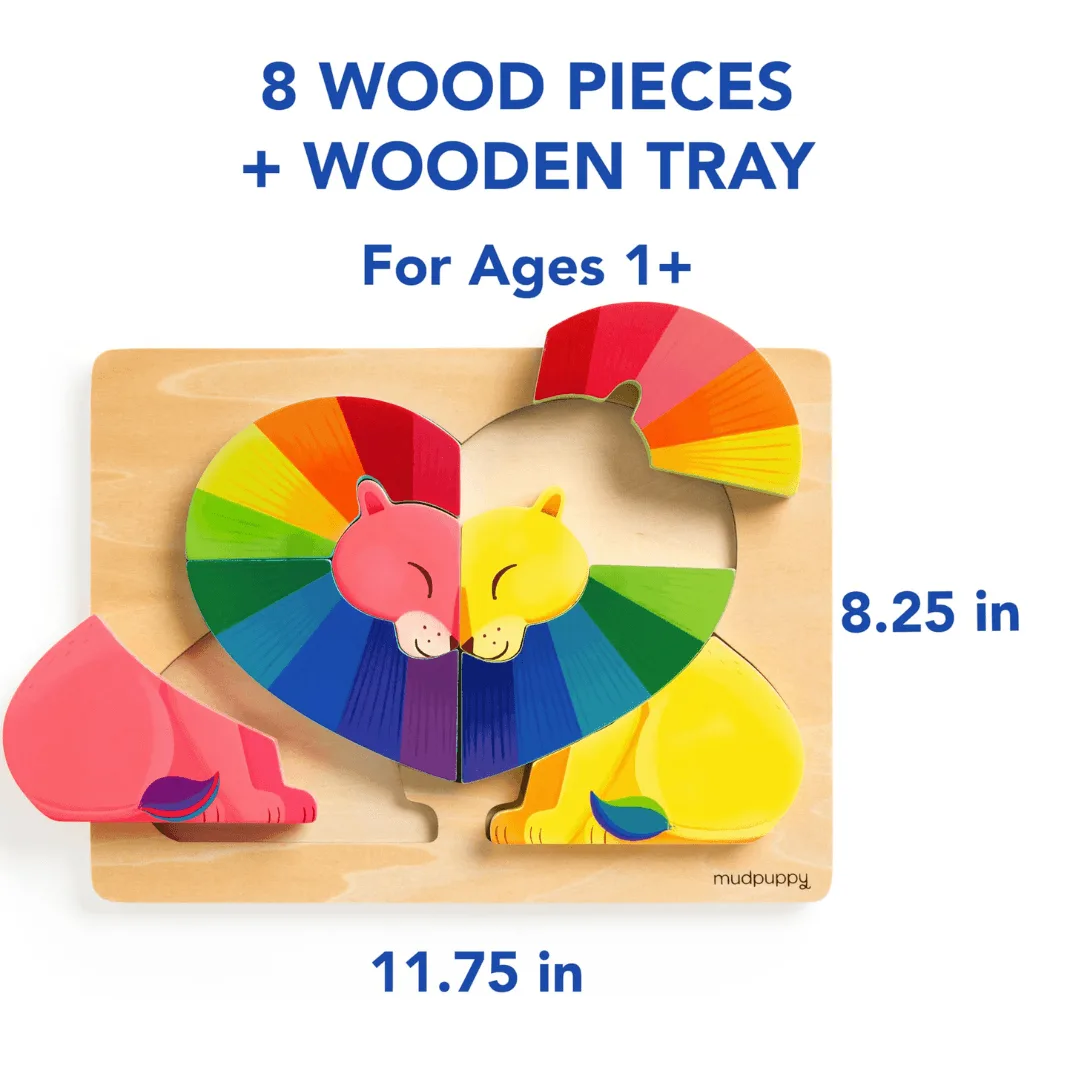
- Puzzle Wood Love in the Wild (Mudpuppy): The Love in the Wild Wooden Tray Puzzle by Mudpuppy has 6–8 large wooden pieces that fit into a strong plywood tray, with artwork from Katy Tanis's Love in the Wild board book. The large pieces and tray make it a good first puzzle for a baby who is sitting and grabbing; the tray keeps pieces from scattering across the floor.
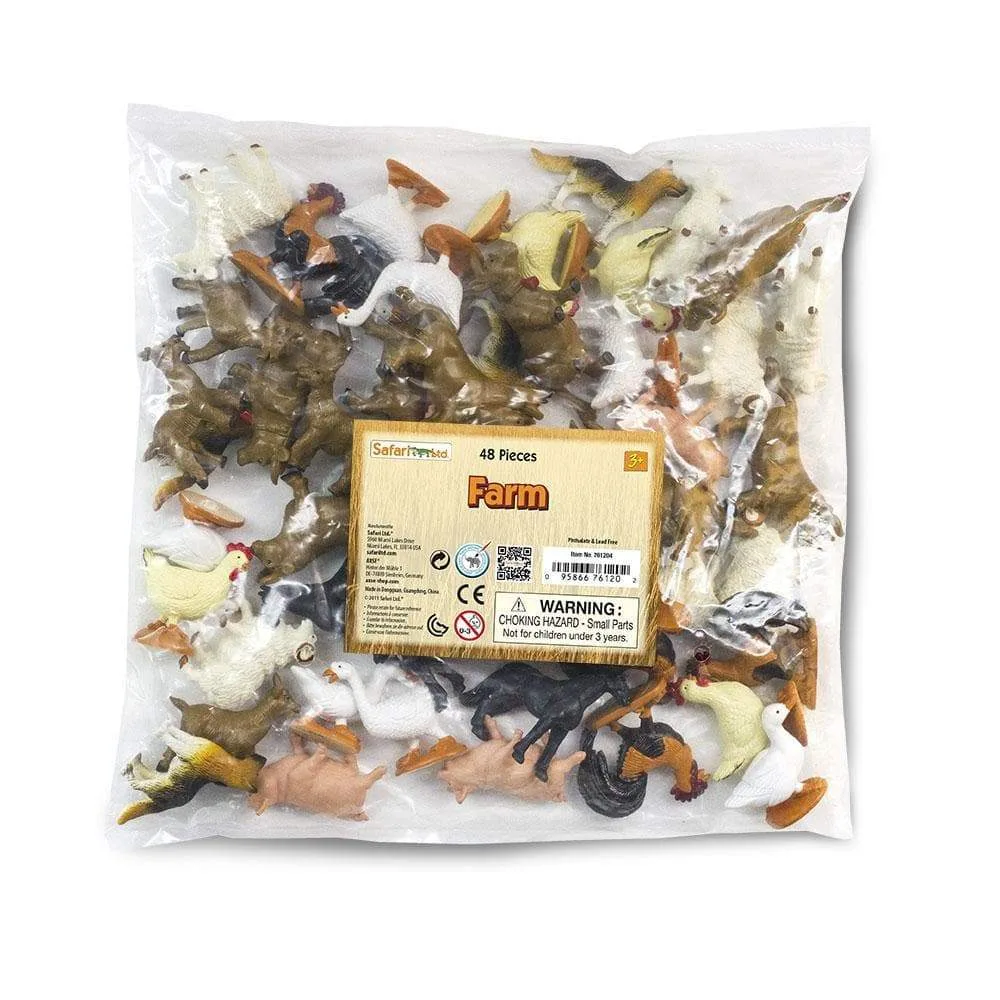
- Farm Bulk Bag: The Farm Bulk Bag contains 48 total figures in 12 unique designs. A larger set supports naming, sorting, and pretend play as your baby moves from mouthing to pointing and carrying; it is not a teething toy, so keep it for supervised play with an older baby or toddler.
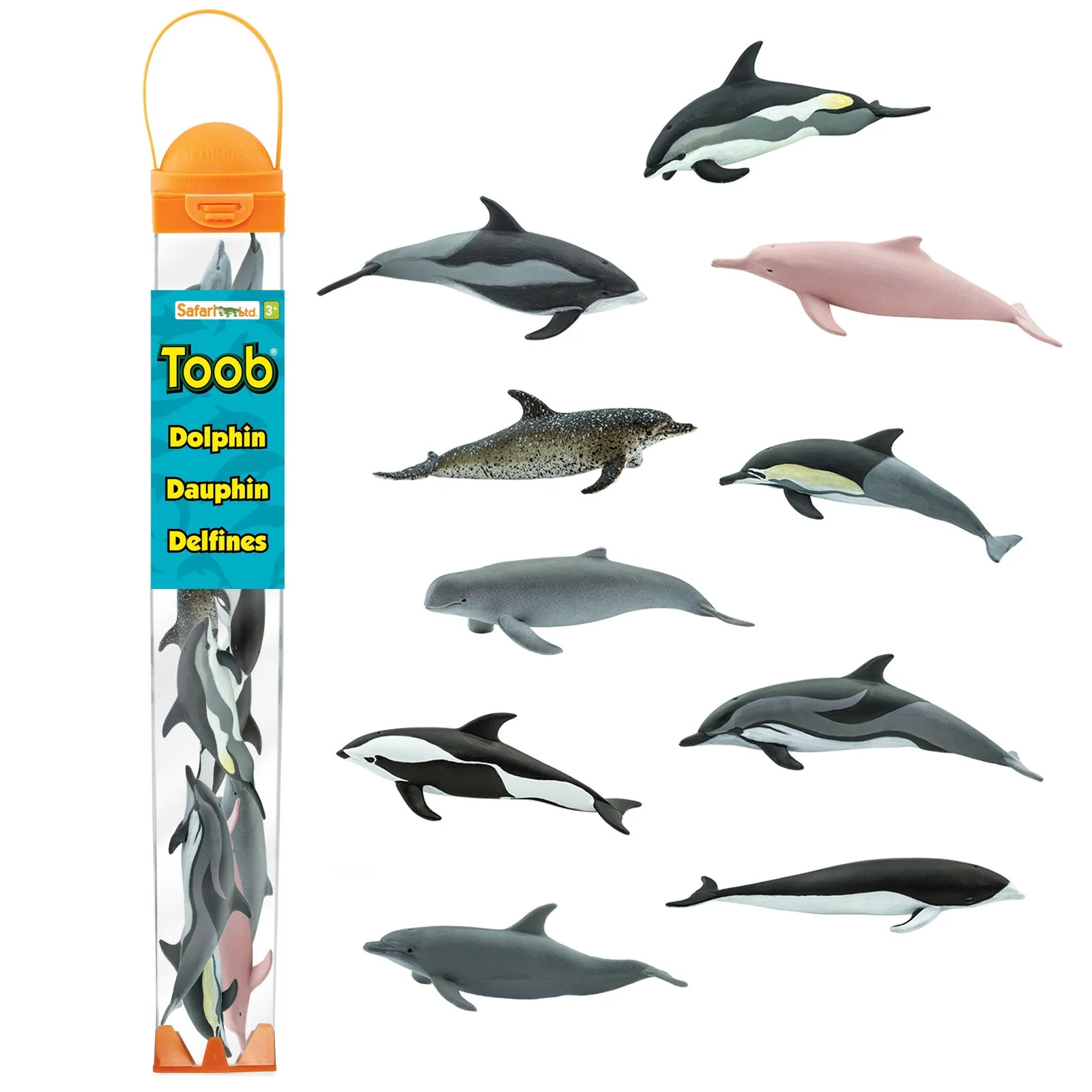
- Dolphin TOOB®: The Dolphin TOOB® features 10 highly detailed dolphin figures, including a bottlenose dolphin, striped dolphin, Atlantic spotted dolphin, long-beaked dolphin, Irrawaddy dolphin, and Atlantic white-sided dolphin. Small, detailed figures are best for older babies who no longer mouth everything; use them for pointing, naming, and later matching games rather than as a first teether.
Who this approach fits
Best for
- Parents and caregivers who want a small, rotating set instead of a full toy bin
- Buying a first toy for a baby who is sitting, reaching, or starting to crawl
- Gift-givers who know the baby's current skill but not the exact month
Not for
- Buyers looking for electronic toys with lights and sounds; this guide focuses on open-ended, non-electronic play
- Households that will not supervise play with small parts; choose one-piece toys only
- Anyone shopping for a newborn under 6 months; the milestone triggers here start later