Quick Answer
Buy a baby walker if your child is still mastering sit-to-stand, pulling up, and those wobbly first steps. Buy a ride-on toy only after your toddler walks confidently and can climb on and off without help. If you want one purchase that covers the longest stretch, start with a walker and add a ride-on truck later.
The Stage Test: Walk First, Ride Second
The single most useful question isn't which toy looks better in the nursery, it's what your child can already do. A walker is a support tool: the child grips a handle, leans forward, and pushes while their legs learn the pattern. That only works if they can bear weight on their feet and take some steps with a hand held. A ride-on is a mobility toy for a child who has already solved walking and now wants speed, steering, and pretend play.
If your child is not yet standing with support, neither purchase is urgent. Wait, or choose a push-along that also works as a sit-and-play station. Buying a ride-on early usually means the toy sits unused for months while the child grows into it, and a walker used too late gets ignored because walking is already solved.
- Not standing yet: wait, or pick a walker that doubles as a floor play station.
- Pulling up and cruising furniture: this is prime baby walker territory.
- Walking independently but unsteady: a light push truck bridges the gap.
- Walking, running, and climbing: a ride-on truck now earns its space.
Why Weight and Size Decide More Than Color
A walker that is too light tips when a child leans on it; one that is too heavy frustrates a small pusher who can't move it. This is where the catalog facts matter more than the product photos. Moover's CLASSIC Baby Walker line is described as a sturdy, dependable platform for sit-to-stand, roll, push, and first steps, which is exactly the job description you want from a first walker. The ESSENTIAL Push truck is described as a slightly smaller, lighter stroller option, which suits a child who is already mobile and needs something easy to steer.
Check the floor surface too. Thick carpet slows any wheeled toy and makes pushing harder, so a heavier walker on carpet can feel stuck. Hard floors reward lighter toys but punish anything with hard, uncovered wheels if you have downstairs neighbors. Neither the walker nor the truck listings specify wheel material, so if noise matters in your home, that is a genuine unknown to confirm before buying rather than a spec you can assume.
Push, Don't Sit: A Safety Habit Worth Building
Traditional sit-in walkers with a seat and tray are a different product from the push walkers discussed here, and they carry well-known safety concerns around stairs and hip positioning. The Moover walkers are push-behind designs: the child stands, holds the handle, and drives the toy forward. That means your job is supervision and stair management, not strapping a child in.
Set one hard rule before the box is opened: the walker lives on one floor, away from the top of any staircase, and the child never uses it unsupervised. The same rule applies to a ride-on truck, which rolls faster and further than a walker ever will. If your home has open stairs, a baby gate is part of the purchase, not an optional extra.
Where the Ride-On Truck Actually Fits
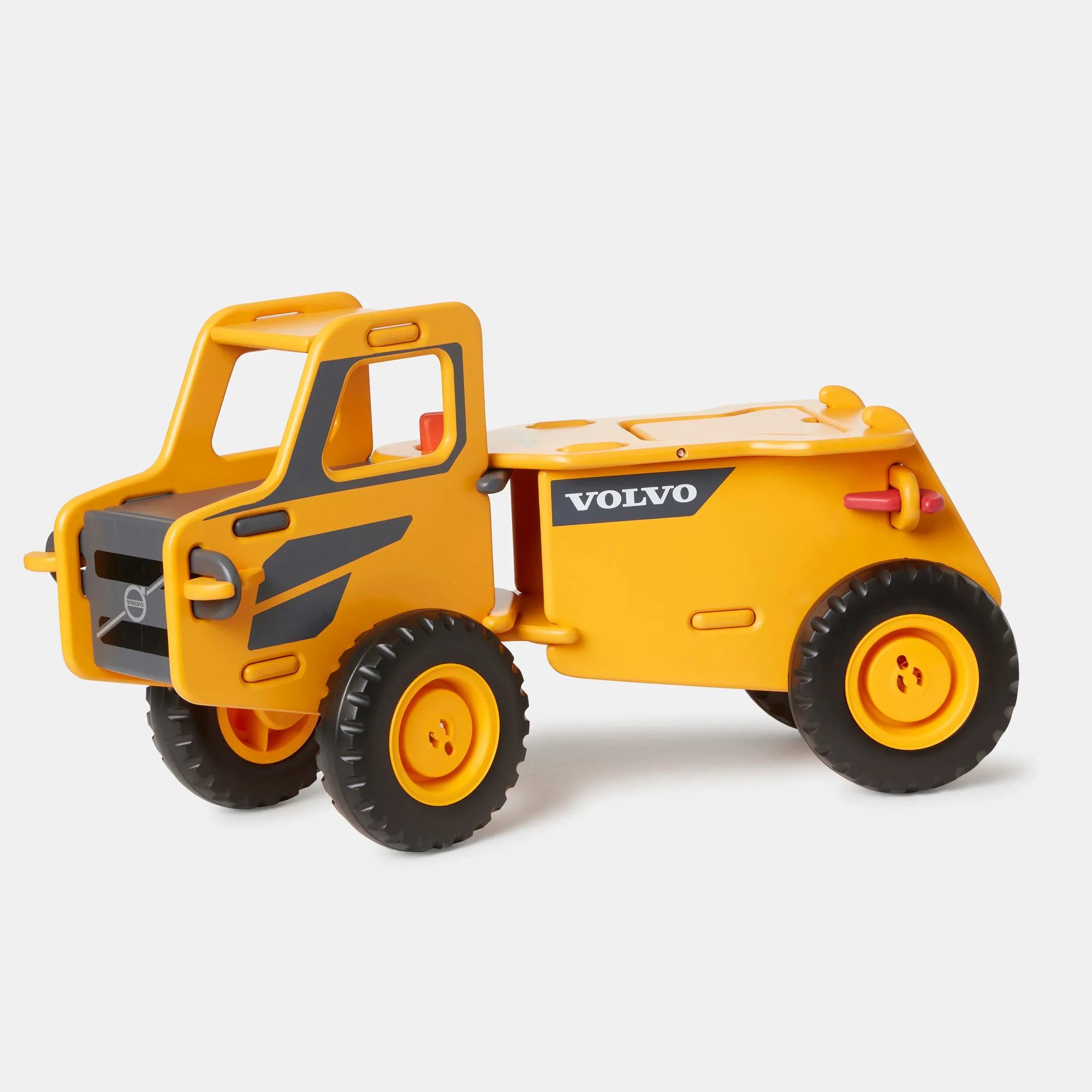
The Volvo Ride-On Truck is a licensed Moover Partners model from the original, highest-quality line of wooden mobility toys, and it is rated for children 18 months and up. Two details separate it from a plain push toy: it is designed to promote mobility while staying sturdy and dependable, and it includes a hidden storage compartment. That compartment is the quiet reason this toy survives past the novelty phase, because a toddler who has stopped caring about pushing will still load toys into it.
The listing also notes the vehicle operates with no noise, which matters in apartments and in homes where a loud toy gets retired early by parents. The trade-off is honest: this is a ride-on for a child who is already walking, not a walking aid. If you buy it at 12 months hoping it teaches walking, you will likely store it for half a year.
Decision Rules: Choose in Under a Minute
- Rule 1: Child can't stand with support yet: Do not buy a walker or a ride-on. Neither teaches standing, and both will sit unused. Wait, or buy a floor-level play toy instead.
- Rule 2: Child pulls up and cruises furniture: Choose a push walker such as the CLASSIC Baby Walker. Stability matters more than light weight at this stage. Buy the walker now.
- Rule 3: Child walks independently but still wobbly: A lighter push truck like the ESSENTIAL model is easier to steer and less likely to be abandoned once walking is confident. Push truck over ride-on.
- Rule 4: Child walks, runs, and climbs confidently: Move to a ride-on such as the Volvo Ride-On Truck, which adds steering, pretend play, and hidden storage. Ride-on now earns its floor space.
- Rule 5: You only want to buy once: Start with the walker at the cruising stage and add the ride-on truck around 18 months. Buying the ride-on first usually means months of storage. Sequence beats a single compromise purchase.
Product Facts That Change the Decision
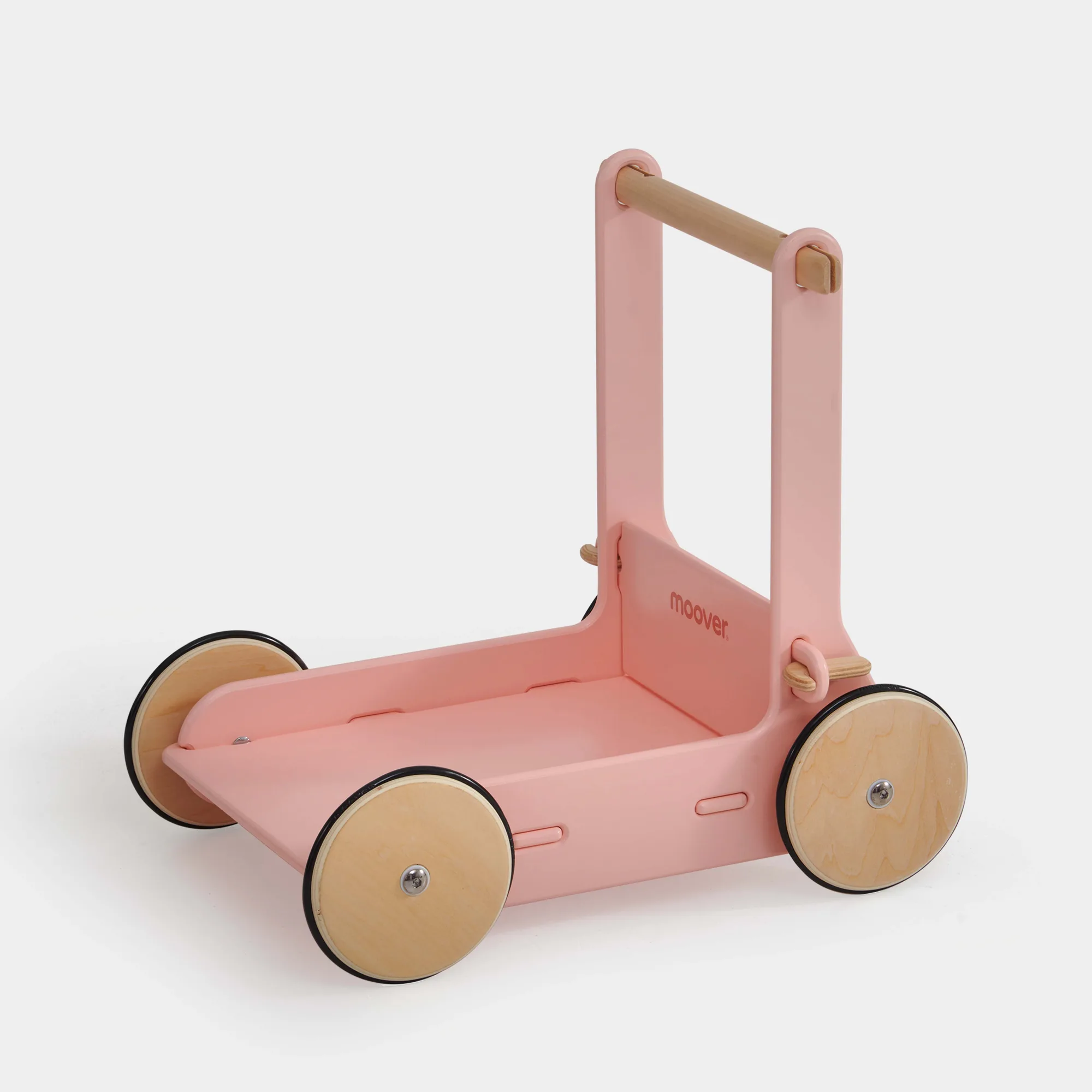
- Baby Walker Pink 2337: Moover CLASSIC Baby Walker, designed in Denmark, supports sit-to-stand, roll, push, and first steps on a sturdy, dependable platform. This is the correct first purchase for a child still building standing balance and early steps.
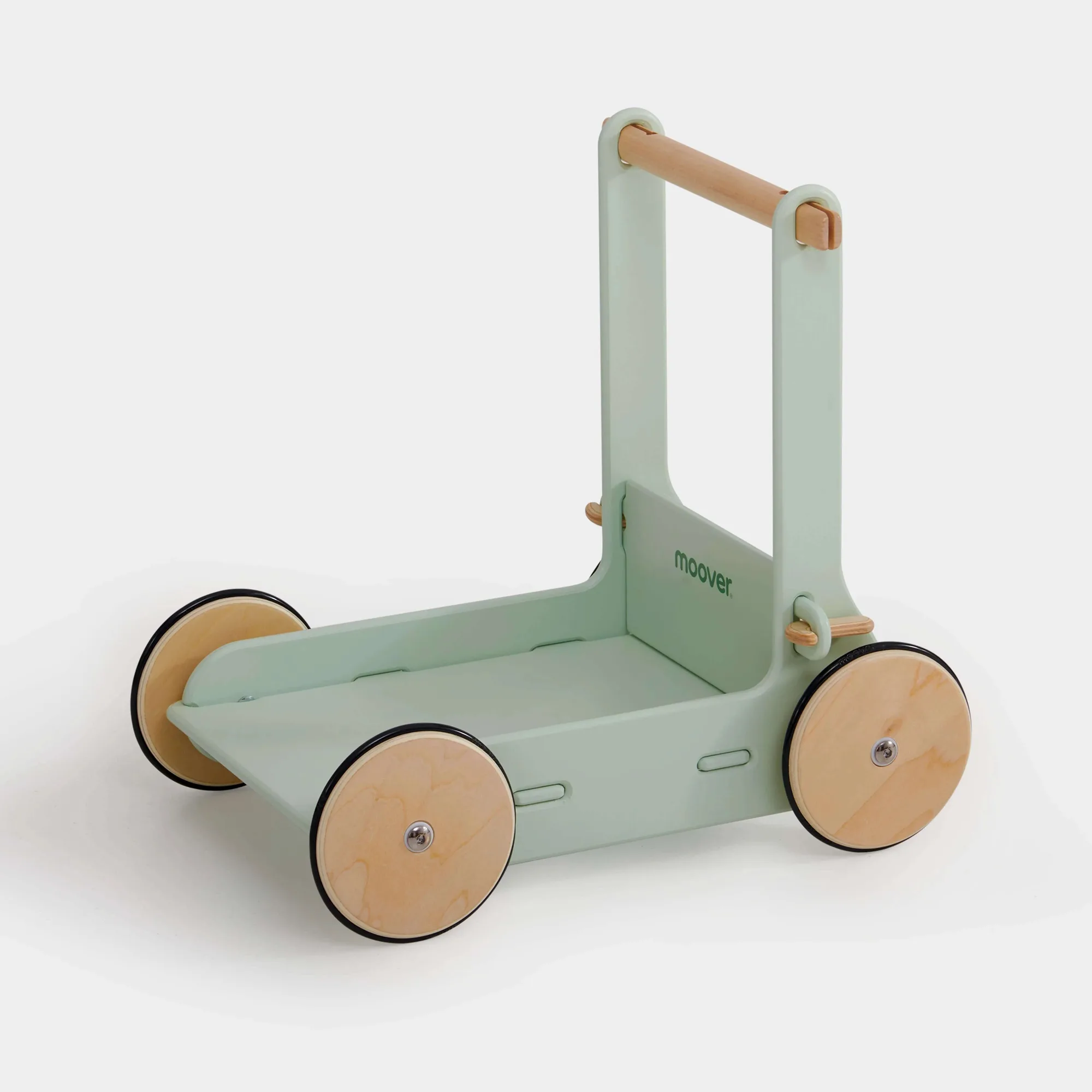
- Baby Walker Green: The Baby Walker Green is the same CLASSIC walker design in a different colorway. Color is the only meaningful difference, so pick on availability or room palette, not on performance.
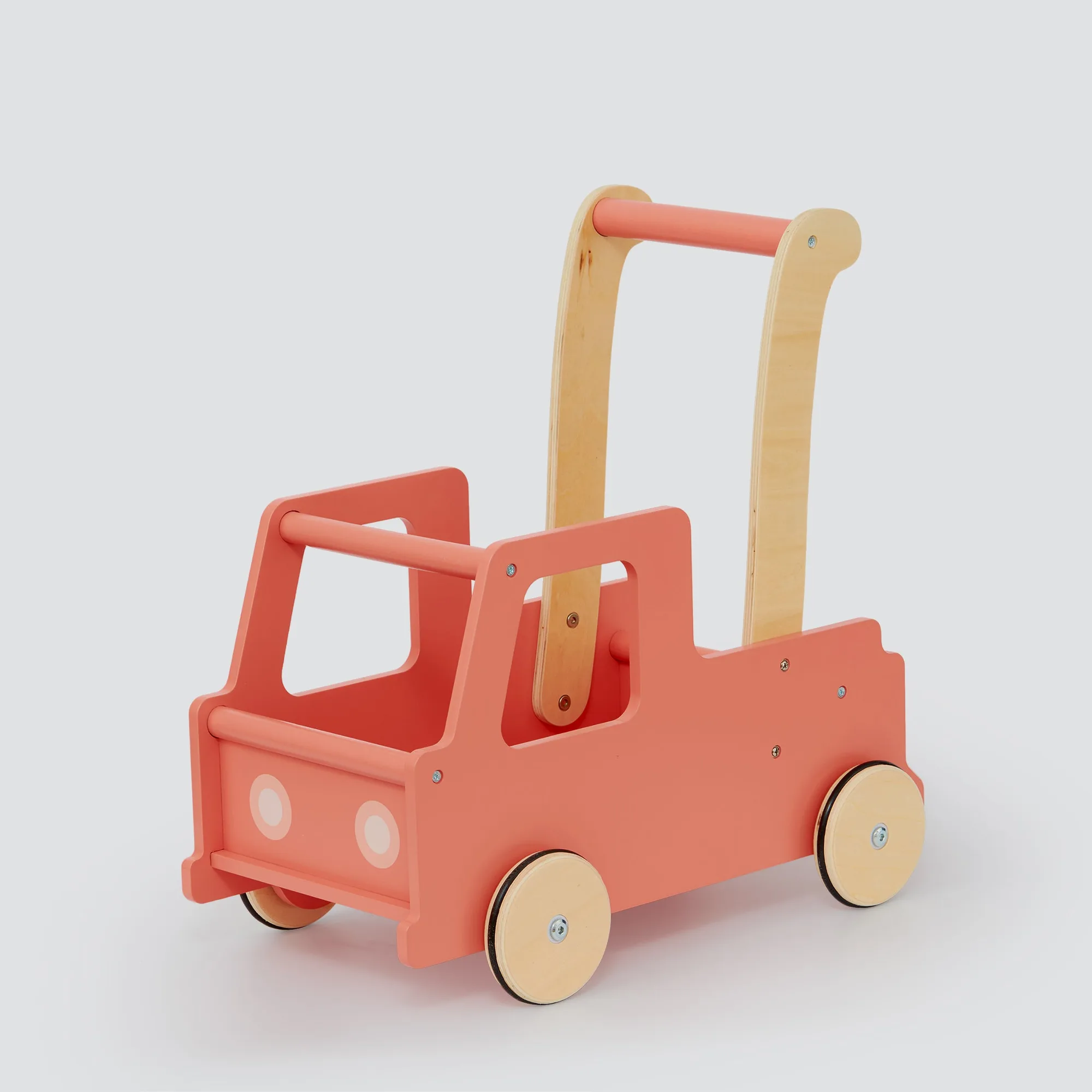
- Push truck Pink flatpacked: Moover ESSENTIAL Push truck, designed in Denmark, is a smaller, lighter stroller option at a lower price point, rated 18+ months, with FSC-certified material. The lighter build suits a newly walking toddler who needs easy steering rather than maximum stability.
- Volvo Ride-On Truck - Yellow: Volvo Ride-On Truck, a licensed Moover Partners model rated 18+ months, includes a hidden storage compartment and operates with no noise. Storage extends the toy's useful life past the pushing phase, and quiet wheels keep it welcome indoors.
Who Each First Mover Suits
Best for
- Babies pulling up, cruising furniture, and taking first supported steps
- Parents who want a sturdy, dependable platform rather than a sit-in walker
- Toddlers 18 months and up who already walk and want to push, steer, and carry toys
- Small homes where a quiet, no-noise ride-on is easier to live with
Not for
- Babies who cannot yet bear weight on their legs
- Homes with open stairs and no gate, where any wheeled toy is a supervision burden
- Parents expecting a ride-on truck to teach walking
- Buyers who need confirmed wheel material or noise specs before purchase, since those details are not listed
Before you order, do one test with your child today: hold both hands and see whether they step forward. If they do, buy the walker. If they let go and walk to the sofa on their own, skip ahead to the ride-on truck.