Quick Answer
Use a baby walker only under strict supervision, on a flat and clear surface, and only when your baby meets the age and developmental milestones recommended by the manufacturer.
Why Baby Walker Safety Matters
Baby walkers give your little one a new sense of freedom, but they also come with risks. According to safety experts, most walker-related injuries happen when babies move into areas they normally can't reach, such as near stairs, hot surfaces, or sharp corners. Understanding these risks is the first step to using a walker safely.
Always check the manufacturer's guidelines for age and weight limits. Some walkers are designed for babies who can already sit up unaided, while others may have specific requirements. Never use a walker if your baby is not developmentally ready, as this can delay motor skill development.
Choosing a Safe Walkers
When selecting a baby walker, look for features that enhance safety, such as anti-tip pads, a wide base, and a sturdy frame. Some walkers also offer interactive elements that can keep your baby engaged while they move, but these should never replace adult supervision.
The My Child Walk N Rock Unicorn - Rainbow includes anti-tip pads and a padded seat, which help prevent tipping and provide comfort. The Little Bird Told Me Mishka Dog Baby Walker doubles as a ride-on toy, giving your baby extra play value while they practice walking.
Step-by-Step Safe Baby Walker Use
- Check Age and Development: Only place your baby in a walker if they are at least the minimum age and meet the developmental milestones specified by the manufacturer, such as sitting up with support. Using a walker too early can strain their legs and delay walking skills. If your baby cannot hold their head up steadily, wait a few more weeks before trying a walker.
- Supervise at All Times: Stay in the same room and keep your eyes on your baby the entire time they are in the walker. Common mistake: leaving the room 'just for a second' can lead to accidents like reaching for a hot cup or pulling a tablecloth. Never use a baby monitor as a substitute for in-person supervision.
- Clear the Area: Remove obstacles such as cords, rugs, sharp furniture edges, and small objects that could cause trips or falls. Ensure the floor is flat and free of steps or thresholds. Block access to stairs with a safety gate, even if you think your baby can't reach them.
- Dress Your Baby Appropriately: Dress your baby in comfortable, non-slip footwear or bare feet to ensure good grip on the floor. Avoid loose clothing that could get caught in the walker's wheels. Check that the walker's seat is snug but not too tight, allowing free movement of the legs.
- Limit Walker Time: Keep each session to 15-20 minutes, and no more than an hour per day. Extended use can delay muscle development and encourage toe-walking. Use other floor play activities like tummy time to strengthen muscles without the walker.
Products Mentioned
-
Little Bird Told Me Mishka Dog Baby Walker: The Little Bird Told Me Mishka Dog Baby Walker functions as both a baby walker and a ride-on toy, with a soft coat and sensory features. This dual-purpose design offers extended play value, but always supervise your baby when using it as a ride-on to prevent falls.
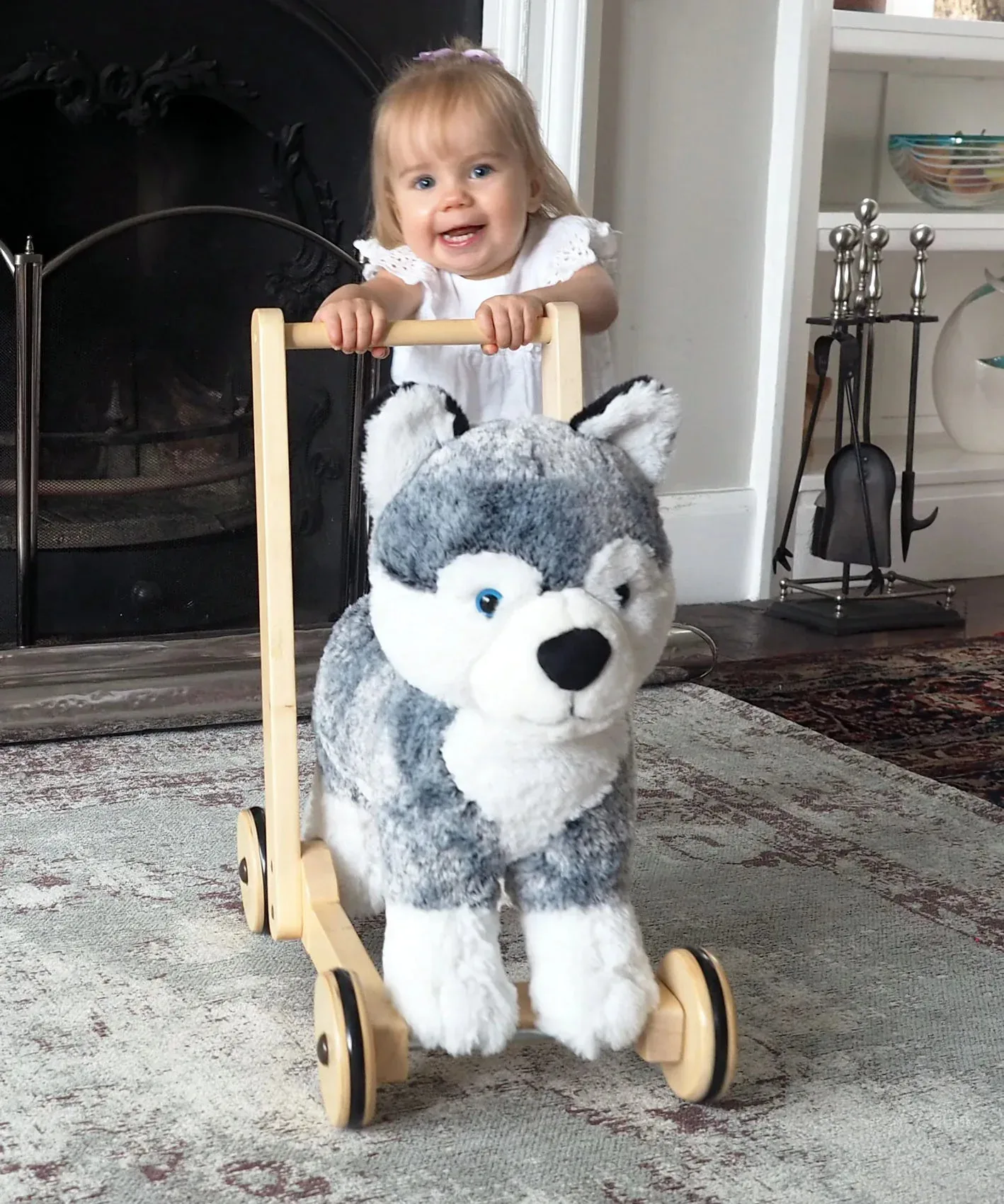
Little Bird Told Me Mishka Dog Baby Walker
-
My Child Walk N Rock Unicorn - Rainbow: The My Child Walk N Rock Unicorn - Rainbow features a soft padded seat and anti-tip pads. Anti-tip pads and a padded seat increase stability and comfort, reducing the risk of tipping during use.
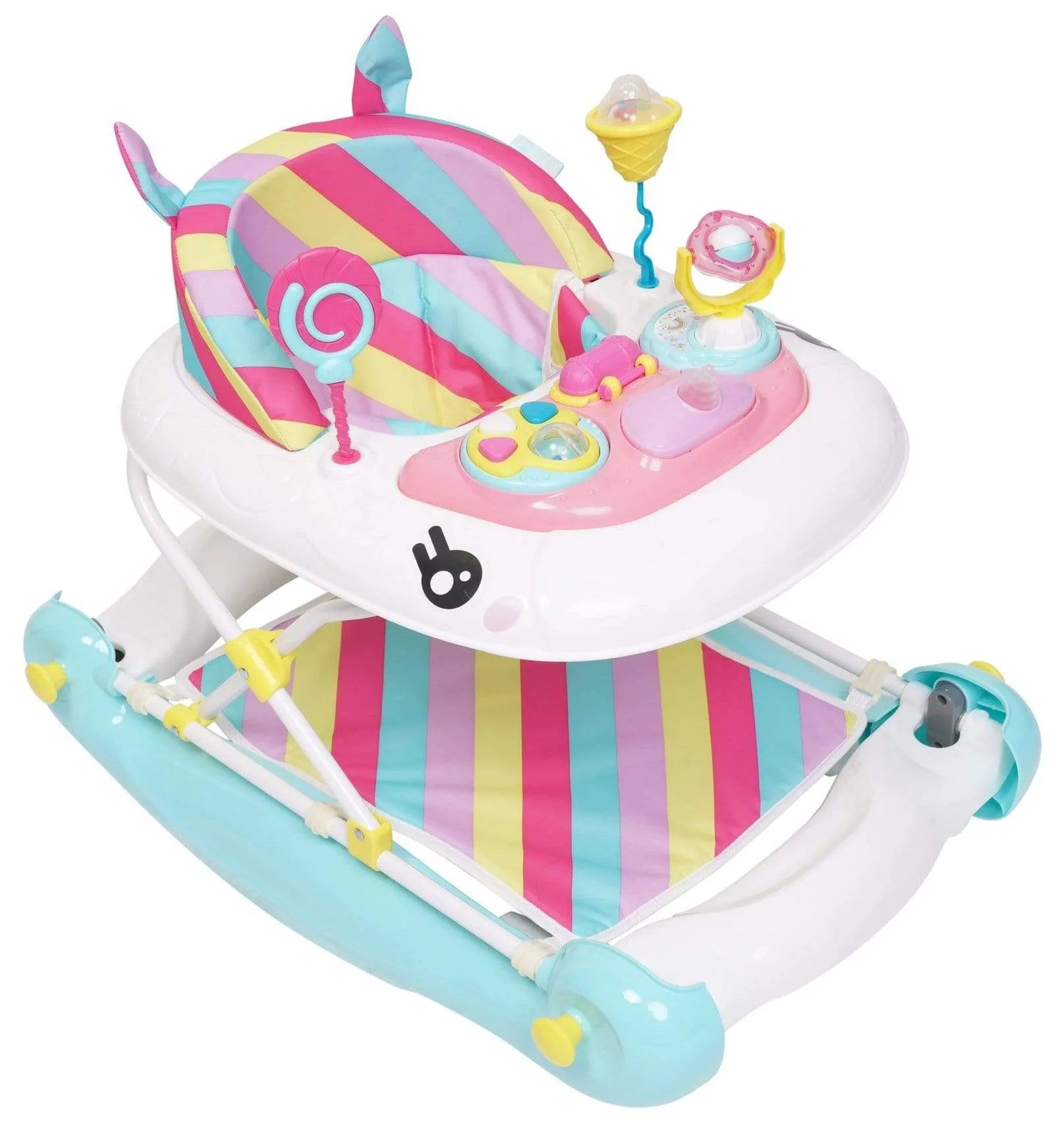
My Child Walk N Rock Unicorn - Rainbow