Quick answer
A baby wrap carrier that feels loose is almost always a tightening issue, not a sizing issue. Re-tie the wrap so the fabric hugs your torso like a fitted t-shirt before you put your baby in, then tighten each pass again once your baby is settled. If the wrap still sags after two re-ties, stop adjusting and switch to a structured carrier or a different size.
Check the wrap before your baby goes in
Most looseness starts before your baby is even in the wrap. Tie the fabric so it sits snug against your ribcage and waist, not loose enough to slide a hand under. A wrap that feels comfortable but roomy on an empty body will feel saggy the moment it carries weight. Tighten the passes so the fabric forms a firm, even panel across your chest and back, then test by leaning forward slightly. If the fabric pulls away from your body, it is still too loose. Re-tie before you pick up your baby.
Tighten after your baby is settled, not before
Even a well-tied wrap loosens as your baby settles into it. After your baby is in and positioned, reach under each pass and pull the fabric snug, working from the bottom pass upward. Tighten the shoulder passes last so the wrap pulls evenly across your back. You want the fabric to feel like a gentle hug, not a squeeze. If you can fit more than two fingers between the wrap and your baby's back, it needs another pull. If your baby's chin is pressed into their chest or their face is covered, loosen immediately and reposition.
Match the wrap to your body and your baby's stage
A wrap that slips repeatedly may be too stretchy for your baby's current weight, or too long for your frame. Cotton-spandex blends offer gentle support and a secure fit, but they can feel looser as your baby grows heavier. If your baby is older or heavier and the wrap keeps sagging no matter how you tie it, a structured carrier may hold the fit better. Also check that the wrap is not twisted at the shoulders or bunched at the waist, since both create uneven tension that reads as looseness.
When to stop adjusting and choose another option
Stop re-tying and switch carriers if the wrap slips after two full re-ties, if your baby's position changes every time you move, or if you feel pressure points on your shoulders or lower back. A wrap that will not stay tight is a safety issue, not a comfort issue. If you are between sizes or your baby is in a heavier range, a carrier with adjustable straps and buckles may give you a more reliable fit. Do not add extra knots or tuck fabric into the wrap to compensate, since that changes the structure and can create new pressure points.
Loose wrap diagnosis
- Symptom: Wrap sags at the front within minutes: The wrap was tied too loose on an empty body, so the fabric stretches as soon as your baby's weight settles into it. Re-tie the wrap so it hugs your torso like a fitted t-shirt, then test by leaning forward before you pick up your baby.
- Symptom: Shoulder passes slide down or dig in: The fabric is twisted or bunched at the shoulders, creating uneven tension that pulls one side tighter than the other. Untwist and spread each shoulder pass flat across your back, then tighten from the bottom pass upward.
- Symptom: Wrap still slips after two re-ties: The wrap may be too stretchy for your baby's current weight or too long for your frame, so it cannot hold the fit you need. Stop adjusting and switch to a structured carrier or a different size. Do not add extra knots to compensate.
Product facts
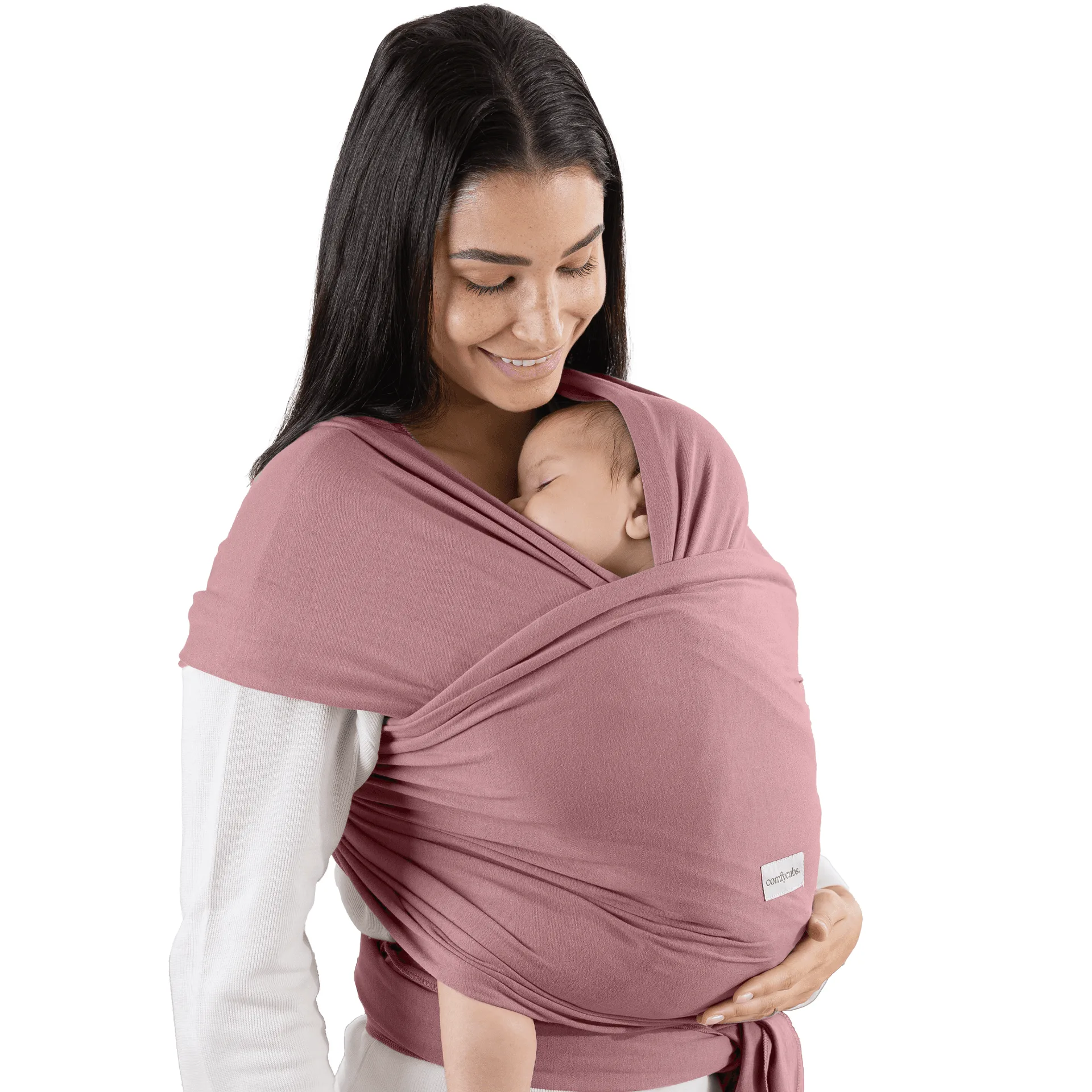
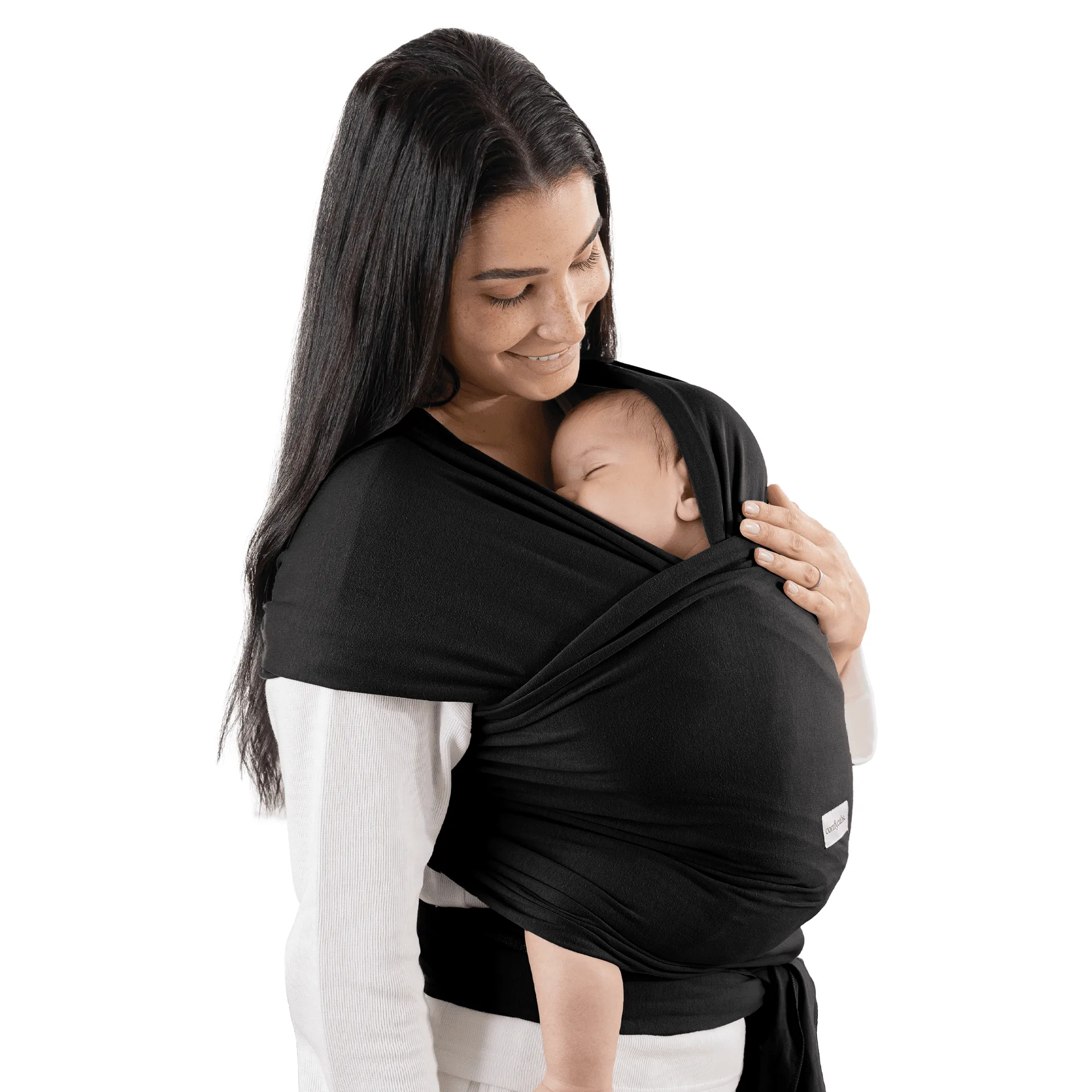
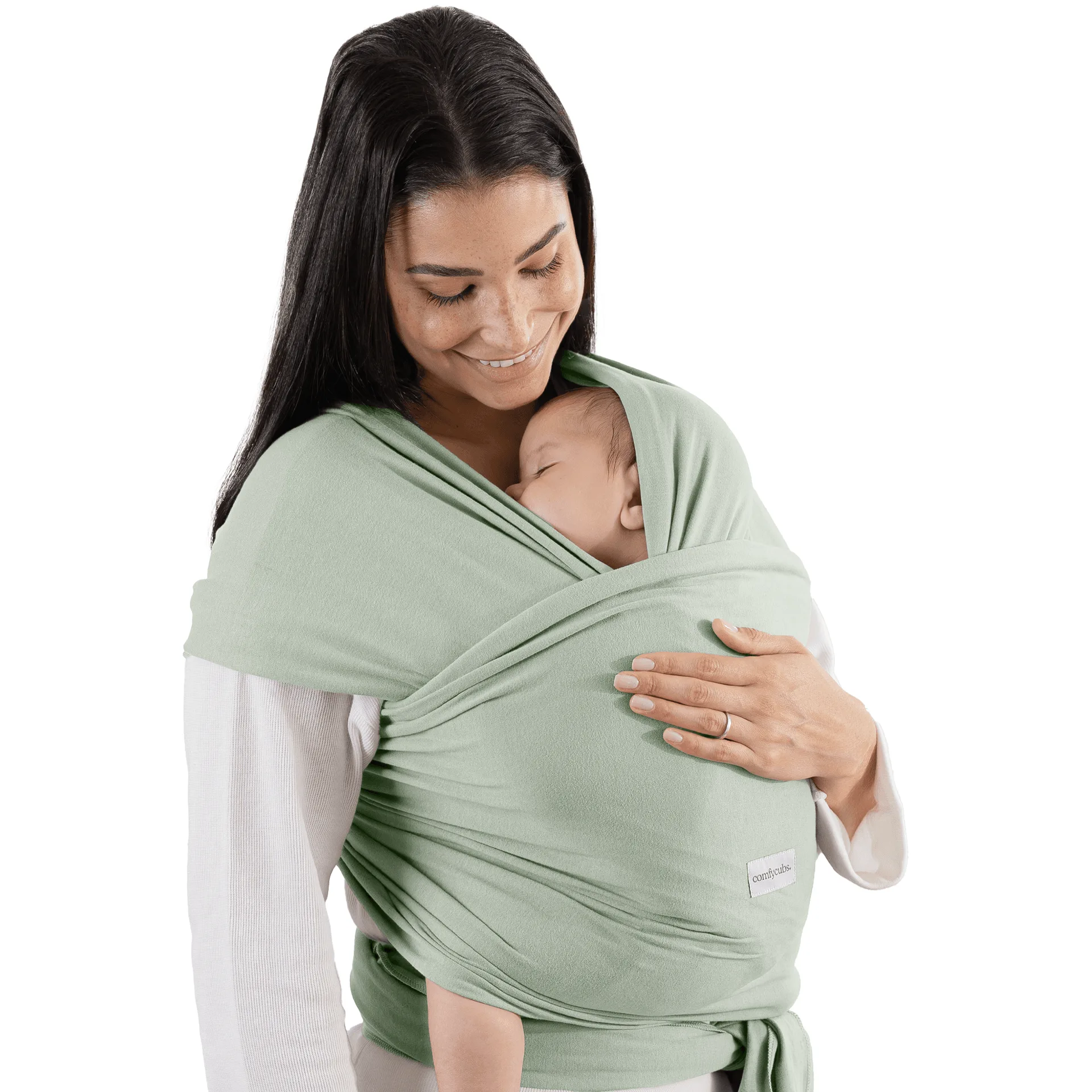
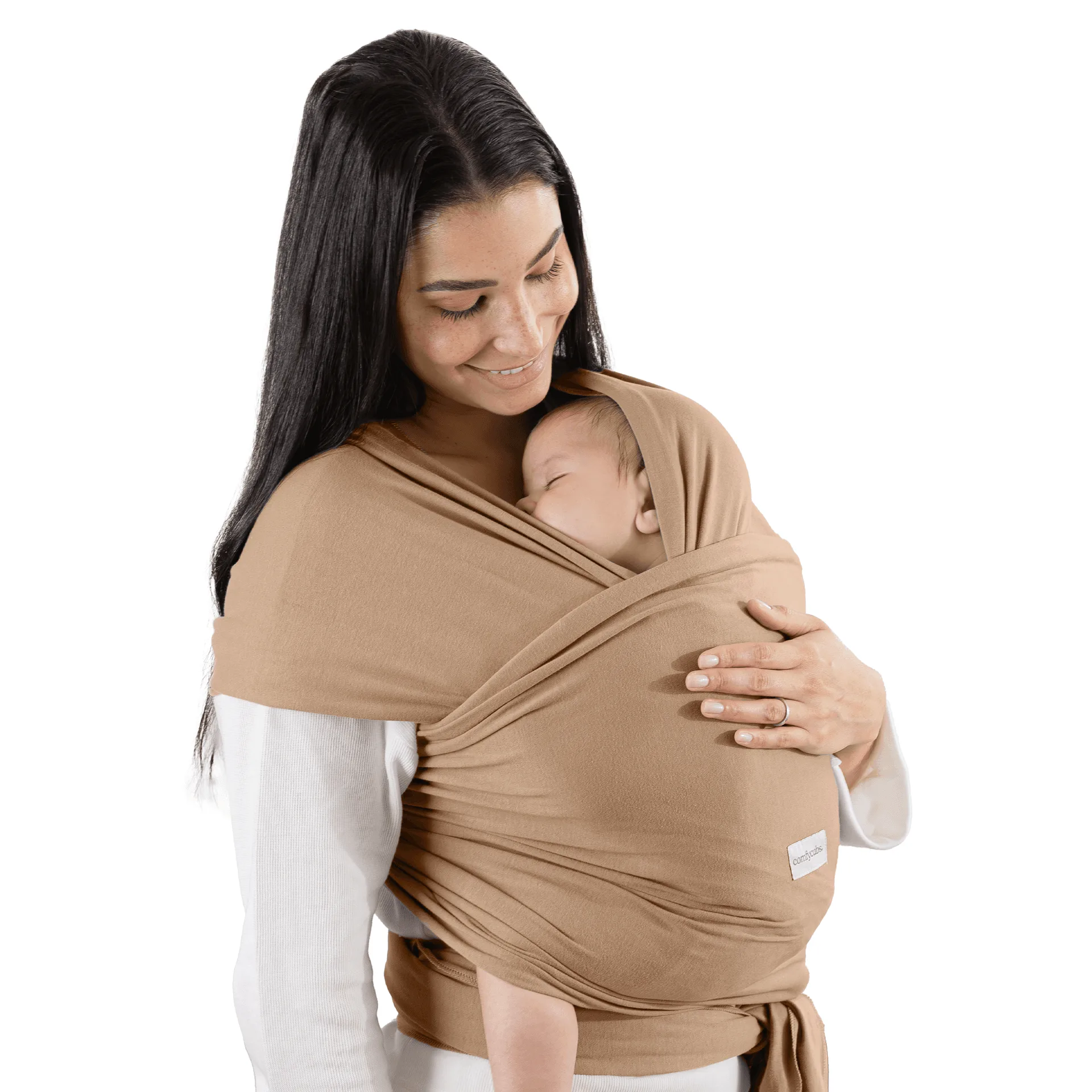
- Baby Wrap Carrier in Cedar: Comfy Cubs Baby Wrap Carrier in Cedar is made from a soft and breathable cotton-spandex blend and is designed to fit all baby body types. The cotton-spandex blend gives gentle support and a secure fit, but it can feel looser as your baby grows heavier, so re-tighten after your baby settles.
- Baby Muslin Blanket in Mauve: Comfy Cubs Baby Muslin Blanket in Mauve is made with high-quality muslin cotton and offers a larger, more versatile size. A muslin blanket is useful for a quick nap or floor play, but it is not a substitute for a wrap carrier when you need hands-free carrying.