Quick answer
For most first-time parents, a stretchy baby wrap is the easier newborn carrier. It needs no sizing, wraps snugly around a floppy newborn, and keeps the head supported with a simple cross-and-tuck. A ring sling is faster to put on once you have practiced, but its learning curve is steeper, and getting a secure, high seat for a newborn takes more trial and error.
How each option handles a newborn's floppy head
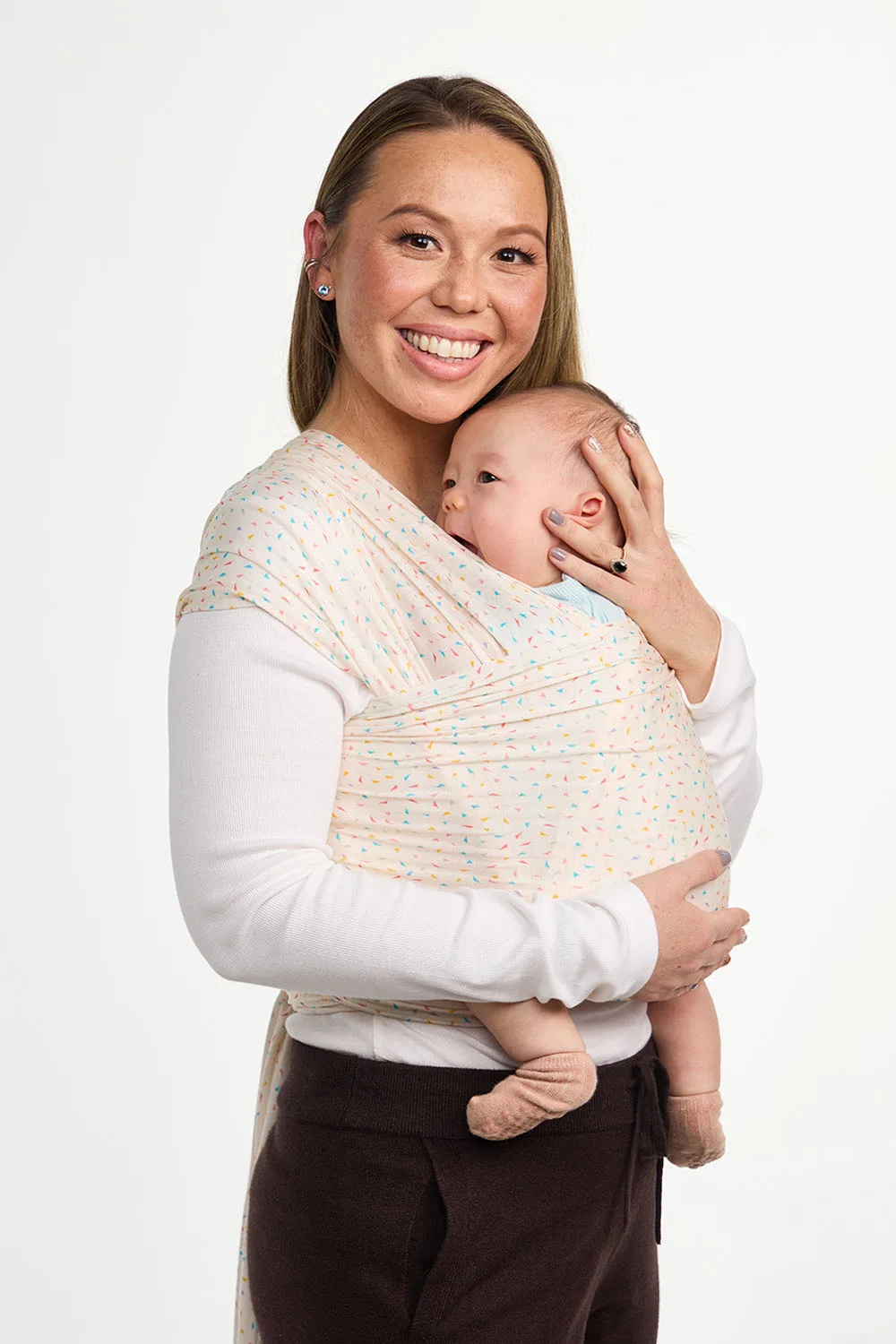
A stretchy wrap gives you two wide bands of fabric that cross over your back and chest, so the fabric itself supports the back of the head and neck. You can spread the fabric from shoulder to shoulder and tuck the head under a pass, which is why many parents find it forgiving in the first weeks. A ring sling uses one length of fabric threaded through rings; you create a pouch and tighten it with the tail. It can support a newborn well, but you need to tighten the top rail enough to hold the head and keep the seat high. That tightening is the part most parents need to practice.
Learning curve and daily speed
The ring sling learning curve is real but short: most parents can get a basic carry after a few tries, and it becomes quick once the fabric is pre-threaded. The catch is that a newborn needs a high, snug seat, and a loose sling lets the baby slump. A stretchy wrap takes longer to tie at first, but the steps are the same every time, so it becomes routine. If you are deciding between a stretchy wrap vs ring sling for a newborn, choose the wrap if you want a repeatable process; choose the sling if you value speed and will practice the tighten-and-adjust step.
Fit and positioning checks that matter most
For either carrier, the newborn should be high enough to kiss the top of the head, with the chin off the chest and the face visible. In a wrap, aim for the fabric to support the back of the head and the knees to sit higher than the bottom. In a ring sling, the seat should be a deep pouch with the fabric spread across your shoulder and the rings sitting high on your chest. Check these points every time, because a sling that was snug an hour ago can loosen as you move.
What a wrap does not solve
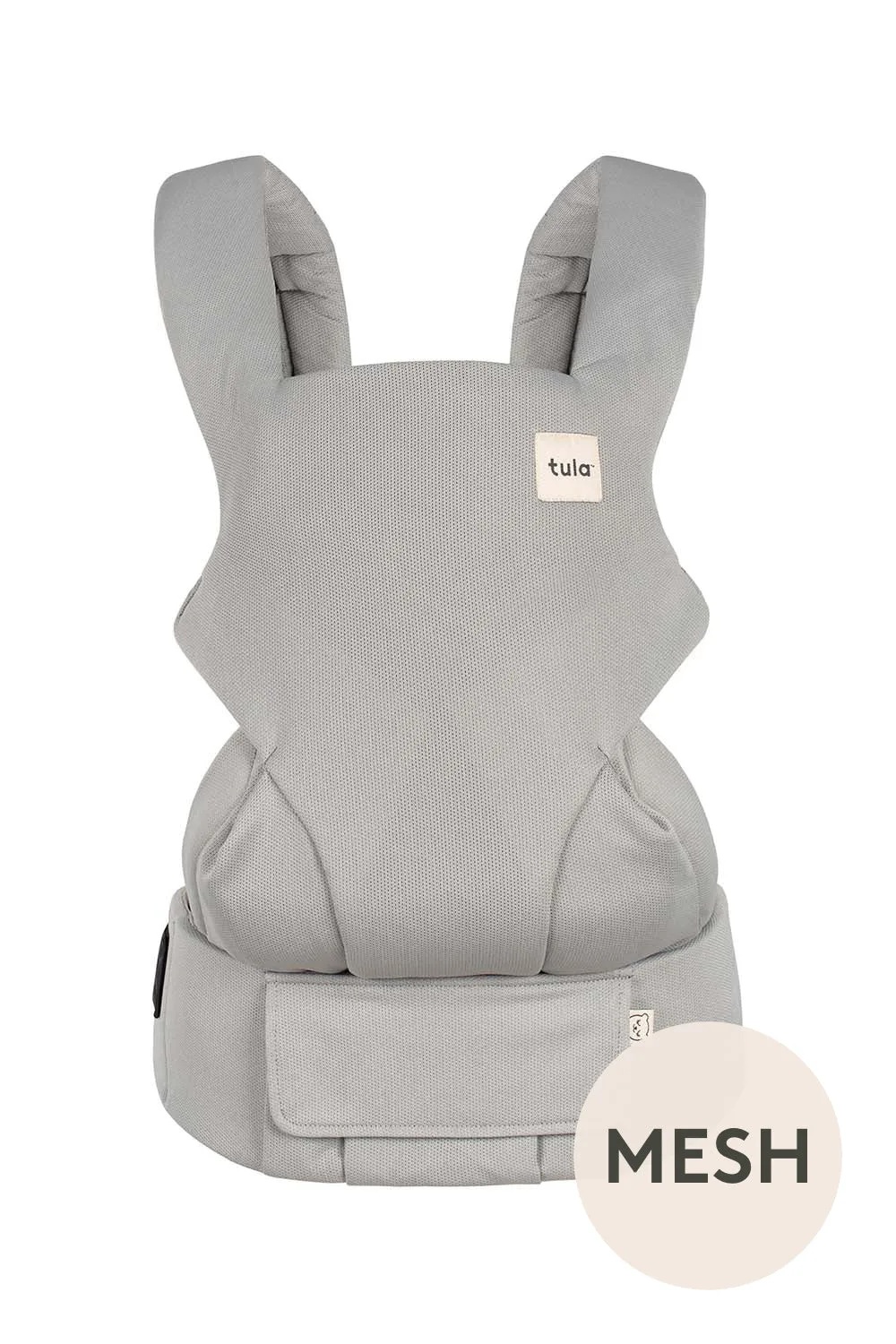
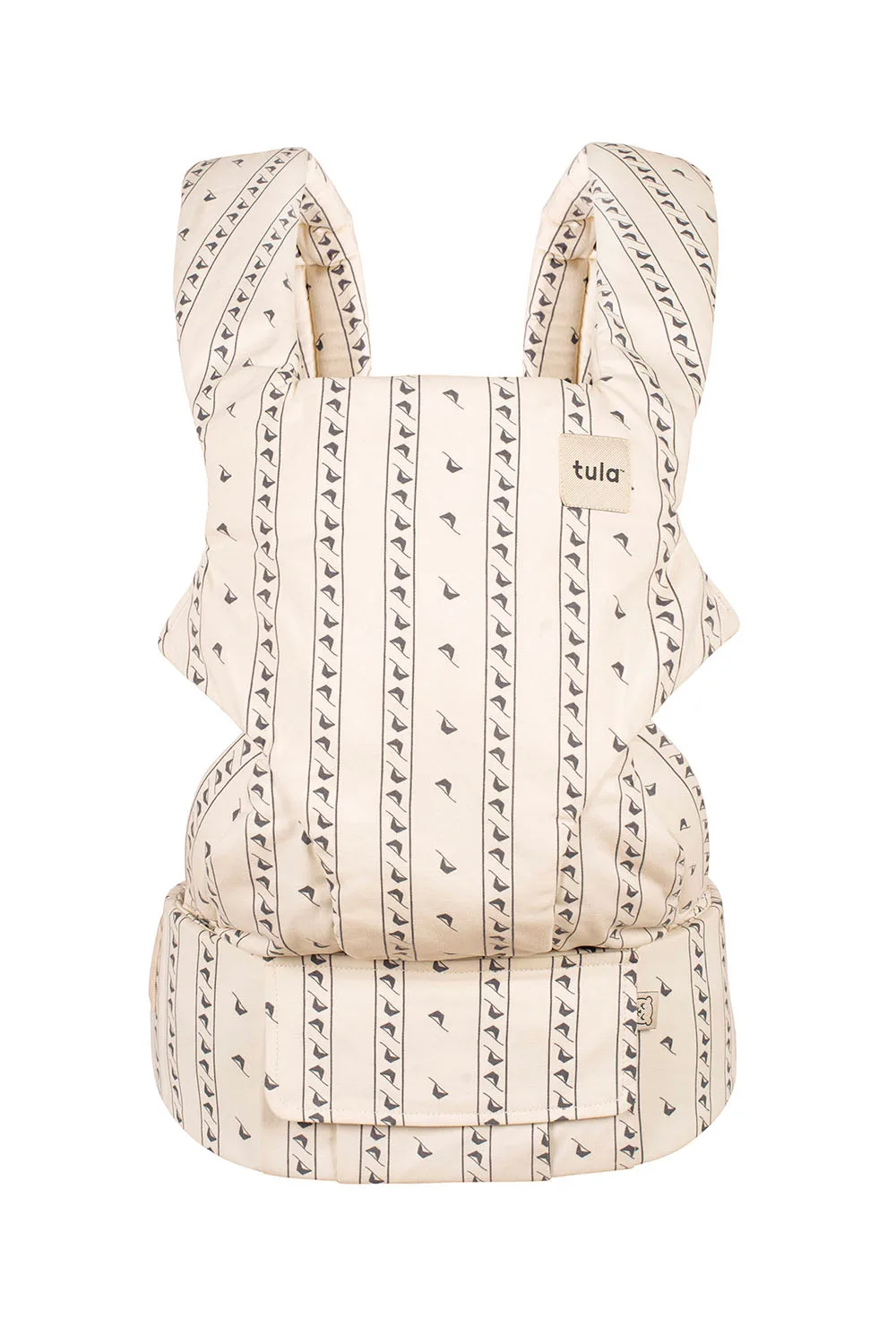
A stretchy wrap is not the fastest option for quick errands, and it is not ideal once your baby wants to be up and down frequently. It also has a limited window: as your baby grows heavier, many parents move to a structured carrier. That is where a carrier like the Folklore - Cotton Explore Baby Carrier fits in: it is a soft cotton carrier with a black block print, and it gives you buckles instead of long fabric tails. The trade-off is that a structured carrier is less moldable around a tiny newborn than a stretchy wrap, so many parents use the wrap first and the carrier later.
Trade-offs to weigh before you buy
- Newborn head support: A stretchy wrap lets you spread fabric over the back of the head and tuck it in place. A ring sling relies on a tight top rail and a high seat to keep the head secure. If you are nervous about head support, start with the wrap.
- Speed of putting on: A ring sling can be pre-threaded and slipped on in seconds once you have practiced. A wrap must be tied each time, which takes longer at first. Choose the sling if you will practice the tighten step and want speed.
- Learning curve: The ring sling learning curve is mostly about tightening evenly and keeping the seat high. The wrap learning curve is about tying consistently and getting the fabric snug. Both are learnable; the wrap is more forgiving for a first-timer.
- Long-term use: A stretchy wrap has a shorter useful life as your baby grows heavier. A structured carrier like the Folklore - Cotton Explore Baby Carrier takes over for longer walks and older babies. Plan for a wrap now and a structured carrier later if you carry daily.
Product facts that affect the decision
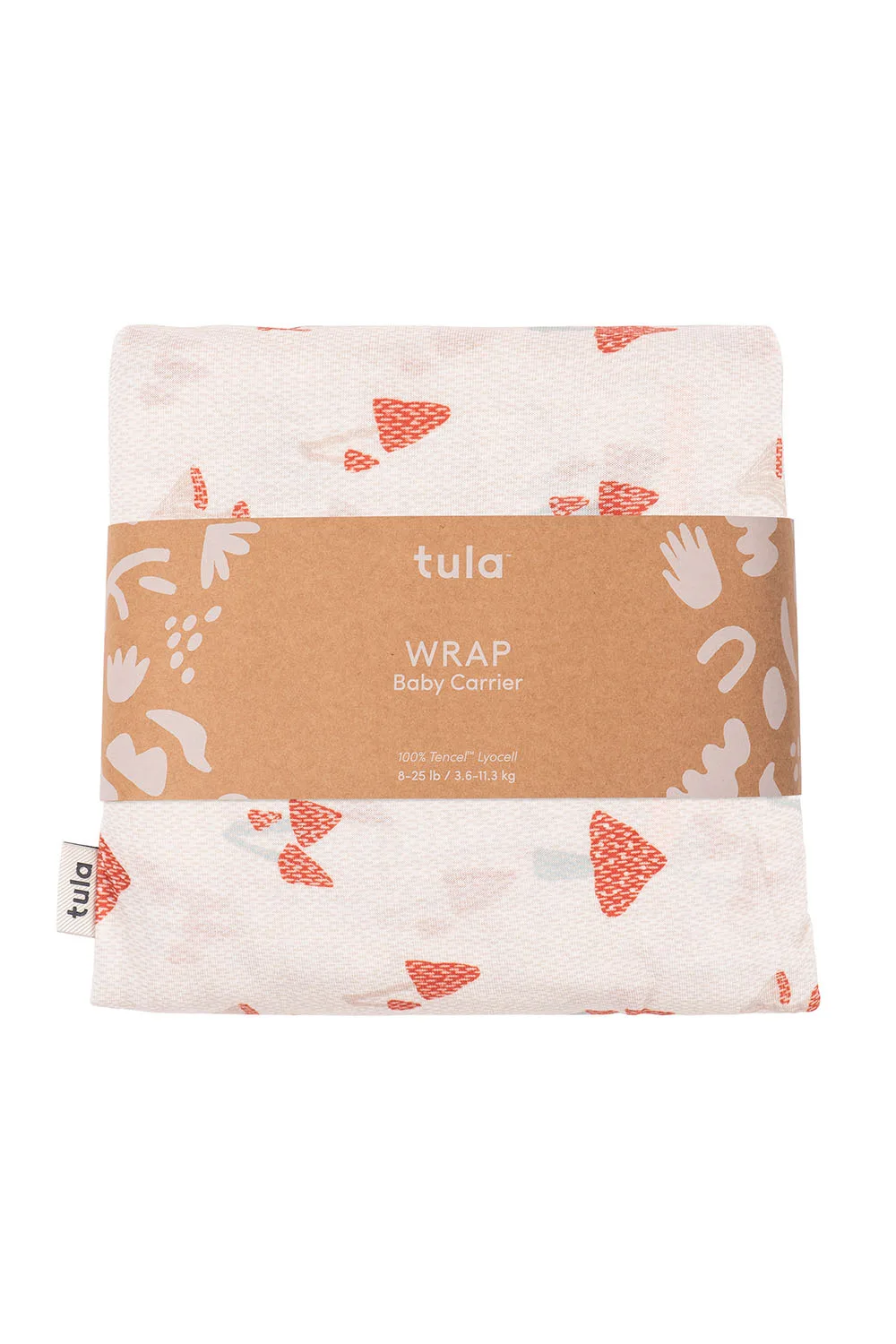
- Warped Stretchy Baby Wrap: Warped Stretchy Baby Wrap is a black-and-white stretchy wrap designed to keep baby snuggled close while giving you hands-free freedom. The stretchy fabric molds around a newborn and supports the head without sizing, which is why it is the easier first carrier for many parents.
- Folklore - Cotton Explore Baby Carrier: Folklore - Cotton Explore Baby Carrier is a soft cream cotton carrier with a black block print, part of the Explore Carriers category. A structured cotton carrier is a practical next step once your baby outgrows the wrap stage, though it is less moldable for a floppy newborn.
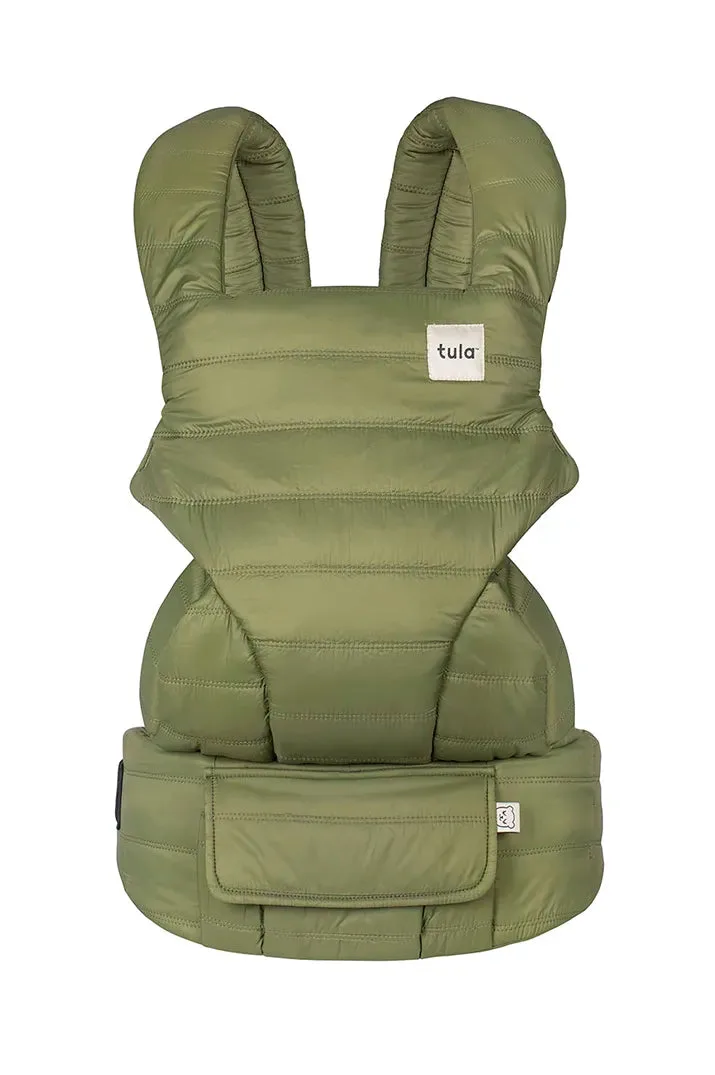
- White - Puffer Explore Baby Carrier: White - Puffer Explore Baby Carrier is a clean, neutral carrier with a soft, padded appearance, described as suitable for colder months. If you plan to carry through winter, a padded carrier adds warmth and structure that a thin wrap or sling does not.
Which should you choose?
Best for
- First-time parents who want a forgiving, size-free carrier for a newborn
- Parents who want maximum head and neck support in the first weeks
- Caregivers who prefer a repeatable tying routine over speed
Not for
- Parents who need to put the carrier on in seconds for frequent errands
- Families looking for one carrier to last through toddlerhood
- Anyone who will not practice tightening a ring sling before use