Quick answer
To care for your Baking Steel Dough Cutter, hand wash it with mild soap and warm water, dry it immediately, and store it in a dry place with the blade protected. Never put it in the dishwasher or soak it, because moisture and heat can dull the 304 stainless steel blade and damage the oak handle. A quick wipe after each use and a light mineral oil treatment on the wood every few months will keep it performing like new.

Baking Steel
Why 304 Stainless Steel and Oak Need Different Care
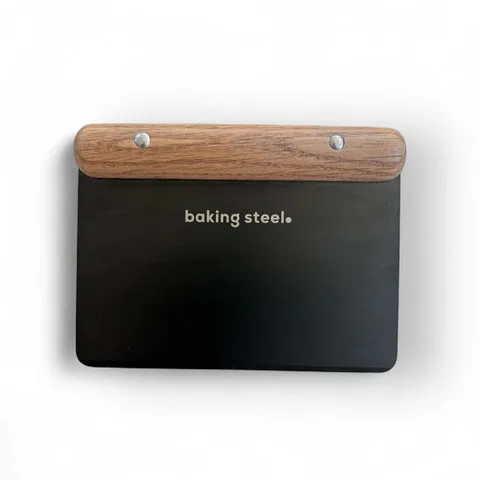
The Baking Steel Dough Cutter combines a 304 stainless steel tapered blade with an oak handle. Stainless steel resists rust but can still be affected by prolonged moisture and acidic doughs, while oak is a natural wood that swells, cracks, or dries out if exposed to too much water or heat. Treating the two materials separately during cleaning and storage prevents the most common problems: a sticky blade, a loose handle, or a dull edge.
Daily Cleaning Without Damaging the Blade or Handle
After cutting dough, wipe the blade with a damp cloth or rinse it under warm running water. Use a small amount of mild dish soap and your fingers or a soft sponge—never steel wool or abrasive pads. Pay attention to the area where the blade meets the handle, as dough can trap there. Dry immediately with a towel, then let it air-dry completely before storing. If you used the cutter on sticky dough, a quick spritz of white vinegar can help remove residue without harming the steel.
How to Store Your Dough Cutter for Long-Term Safety
Store the cutter in a dry drawer or on a magnetic strip where the blade cannot knock against other tools. If you keep it in a drawer, use a blade guard or a dedicated slot. Avoid leaving it in a sink or on a wet counter, and never store it with the blade touching other metal utensils, which can nick the edge. For the oak handle, a dry environment prevents warping and keeps the wood smooth.
When and How to Sharpen a Dough Cutter
A sharp dough cutter separates dough cleanly without dragging. If you notice the blade tearing or requiring extra pressure, it is time to sharpen. Use a fine diamond stone or a honing rod designed for kitchen knives. Hold the cutter at a shallow angle—about 15 degrees—and make a few light passes along the full length of the blade. Wipe the blade clean afterward. For the 304 stainless steel blade, avoid aggressive grinding that removes too much metal; a few strokes are usually enough. If you are unsure, practice on an old knife first.
Step-by-Step Dough Cutter Care
- Rinse promptly after each use: Rinse the blade under warm water within 10 minutes of cutting dough. Do not let dough dry on the blade, as it becomes harder to remove and may encourage you to scrub too hard. Checkpoint: If dough has dried, soak only the blade in warm water for 2–3 minutes—never submerge the handle.
- Wash with mild soap and a soft sponge: Apply a drop of mild dish soap to a soft sponge and wipe both sides of the blade. Avoid abrasive scrubbers that can scratch the 304 stainless steel. Rinse thoroughly. Common mistake: Using a scouring pad on the blade, which creates micro-scratches where dough can stick.
- Dry immediately and completely: Use a clean towel to dry the blade and handle. Pay attention to the joint between blade and handle. Let it air-dry for a few minutes before storing. Checkpoint: Any visible moisture left on the blade can lead to water spots or rust over time.
- Oil the oak handle every 2–3 months: Apply a small amount of food-grade mineral oil to the oak handle with a cloth. Let it soak in for 10 minutes, then wipe off excess. This prevents drying and cracking. Common mistake: Using cooking oil (like olive oil) which can turn rancid; stick to mineral oil.
- Store safely with blade protection: Place the cutter in a dry drawer with a blade guard, or hang it on a magnetic strip. Ensure the blade does not touch other metal tools. Checkpoint: A simple blade guard or a dedicated slot prevents nicks and keeps the edge sharp.
- Sharpen lightly when needed: When the blade starts dragging, use a fine diamond stone or honing rod at a 15-degree angle. Make 3–5 light passes per side, then wipe clean. Common mistake: Over-sharpening or using a coarse stone, which can ruin the tapered profile. If unsure, practice on a less expensive knife first.
Product facts
- Baking Steel Dough Cutter – 304 SS, Tapered Blade, Oak Handle: The Baking Steel Dough Cutter features a tapered blade made from 304 stainless steel and a comfortable oak handle. This combination means you need to clean and dry the blade carefully to prevent rust, while the oak handle should be kept dry and occasionally oiled to avoid cracking.
- Baking Steel Artisan Dough Cutter: The Baking Steel Artisan Dough Cutter is built from 304 stainless steel with a tapered electroplated blade and a white oak handle, sized at 5 7/8" wide by 4 1/2" long. The electroplated blade offers extra smoothness for cutting sticky dough, but the white oak handle still requires the same moisture protection as any natural wood.