Quick Answer
Most lost pieces come from three causes: no designated home between sessions, open play on soft or cluttered surfaces, and travel without a sealed container. Fix the home first, then the surface, then the transport. If your set has no container and no magnetic surface, no storage habit will fully solve it, so choose a set that includes both.
You finish a round, sweep the pieces into a pile, and a week later the set is two pieces short. That is the usual pattern with balance games and magnetic play sets, and it rarely has anything to do with careless kids. It is almost always a storage and surface problem wearing a discipline costume.
The good news is that the fix is mechanical, not motivational. Once you know which of the three common causes is draining your set, the right habit takes about ten seconds per session. This guide walks through the symptoms, the likely cause behind each one, and the point where you should stop patching and pick a different set instead.
Symptom: Pieces Vanish Between Sessions
If pieces disappear while the game sits on a shelf, the problem is that the set has no single closed home. Loose pieces migrate to couch cushions, under rugs, and into the vacuum path. A balance game with dozens of small parts is especially vulnerable because each piece is individually easy to lose and hard to notice missing.
The corrective action is a dedicated container that closes, lives in one spot, and is small enough that a full sweep takes seconds. A tin, a zip pouch, or the original box with a rubber band works. The test is simple: can a child put every piece away without an adult sorting afterward? If not, the container is the wrong size or shape for the set.
- Do a full piece count once, write the number on the container, and recheck monthly.
- Store the container at kid height so putting pieces away is easier than leaving them out.
- Keep one spare zip pouch in the car for sets that travel.
Symptom: Pieces Slide Off Mid-Game
Pieces that fall during play usually mean the surface is working against you. Carpet swallows small parts. A glossy table lets them skid. A wobbly tray turns every bump into a spill. Balance games depend on a stable, flat, slightly grippy surface, so the play area matters as much as the game.
Move play to a firm table with a shallow rimmed tray or a nonslip mat. For magnetic sets, confirm the pieces are actually contacting the magnetic surface rather than the table beside it. When a magnetic play set is used correctly, the pieces hold their position, which removes most of the mid-game loss.
- Use a rimmed tray or baking sheet as a play boundary for small parts.
- Skip play on beds, couches, and deep carpet for balance games.
- Check that magnetic pieces sit flat against the board, not on top of each other.
Symptom: Pieces Disappear Only on Trips
If the set is complete at home but short after a car ride or restaurant visit, transport is the leak. Open boxes tip, pouches slide under seats, and small pieces end up in seat crevices. Magnetic game storage works best when the container itself is the play surface, so nothing has to be transferred in and out.
The fix is a self-contained set or a sealed travel pouch that never opens until you are seated. Before you leave, do a quick count in the car and again before you head home. Two counts take under a minute and catch nearly every travel loss.
- Choose travel sets where the tin or case doubles as the play board.
- Keep a small pouch clipped to the bag rather than loose in it.
- Count pieces at the destination before packing up.
When to Stop Patching and Choose a Different Set
Some sets are structurally hard to keep together: no container, no magnetic surface, and a piece count high enough that a single loss goes unnoticed. If you have tried a closed home, a stable surface, and a travel pouch and pieces still go missing, the set is fighting you. At that point, replacing it costs less than the ongoing frustration.
When you shop for a replacement, look for two features: a container that seals and a play surface built into the set. Magnetic play sets and tin-based games tend to hold up best because storage and play are the same object. For balance games, favor versions with a tray or a bounded base so pieces cannot roll away.
- Prioritize sets where the case is also the play surface.
- Prefer lower piece counts for younger kids so a missing piece is obvious.
- If a set has no container and no magnetic surface, treat it as a table-only game.
Diagnosis: Find Your Leak Before You Buy Another Container
- Pieces vanish on the shelf: No closed, single home for the set. Pieces migrate to cushions, rugs, and vacuum paths between sessions. Fix with one sealed container at kid height and a monthly piece count.
- Pieces fall during play: The surface is too soft, too slick, or too wobbly for small parts, or magnetic pieces are not contacting the magnetic surface. Move to a firm table with a rimmed tray or nonslip mat and check magnet contact.
- Pieces vanish only on trips: Open boxes and loose pouches tip and slide in cars and restaurants. Use a self-contained tin or sealed travel pouch and count before leaving and before returning.
- Pieces still vanish after all three fixes: The set has no container and no magnetic or bounded surface, so storage habits cannot compensate. Stop patching. Replace with a set where the case is also the play surface.
Sets That Solve the Storage Problem by Design
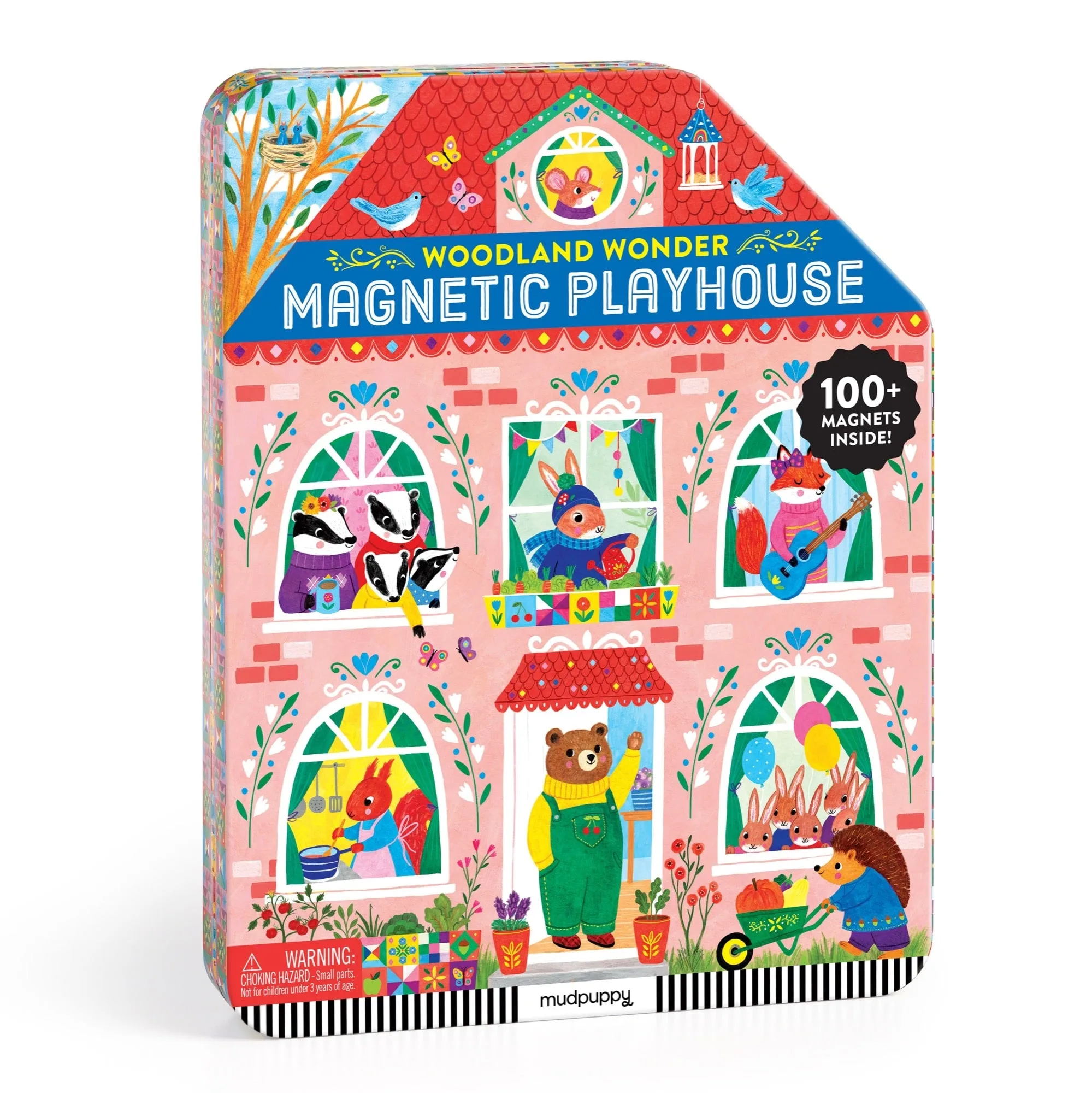
- Woodland Wonder Magnetic Playhouse: Features over 100 colorful magnets that stick to the tin container's magnetic surface, and the durable tin keeps all pieces organized and portable. The tin is both the storage case and the play surface, so there is no transfer step where pieces get lost, and it travels without a separate bag.
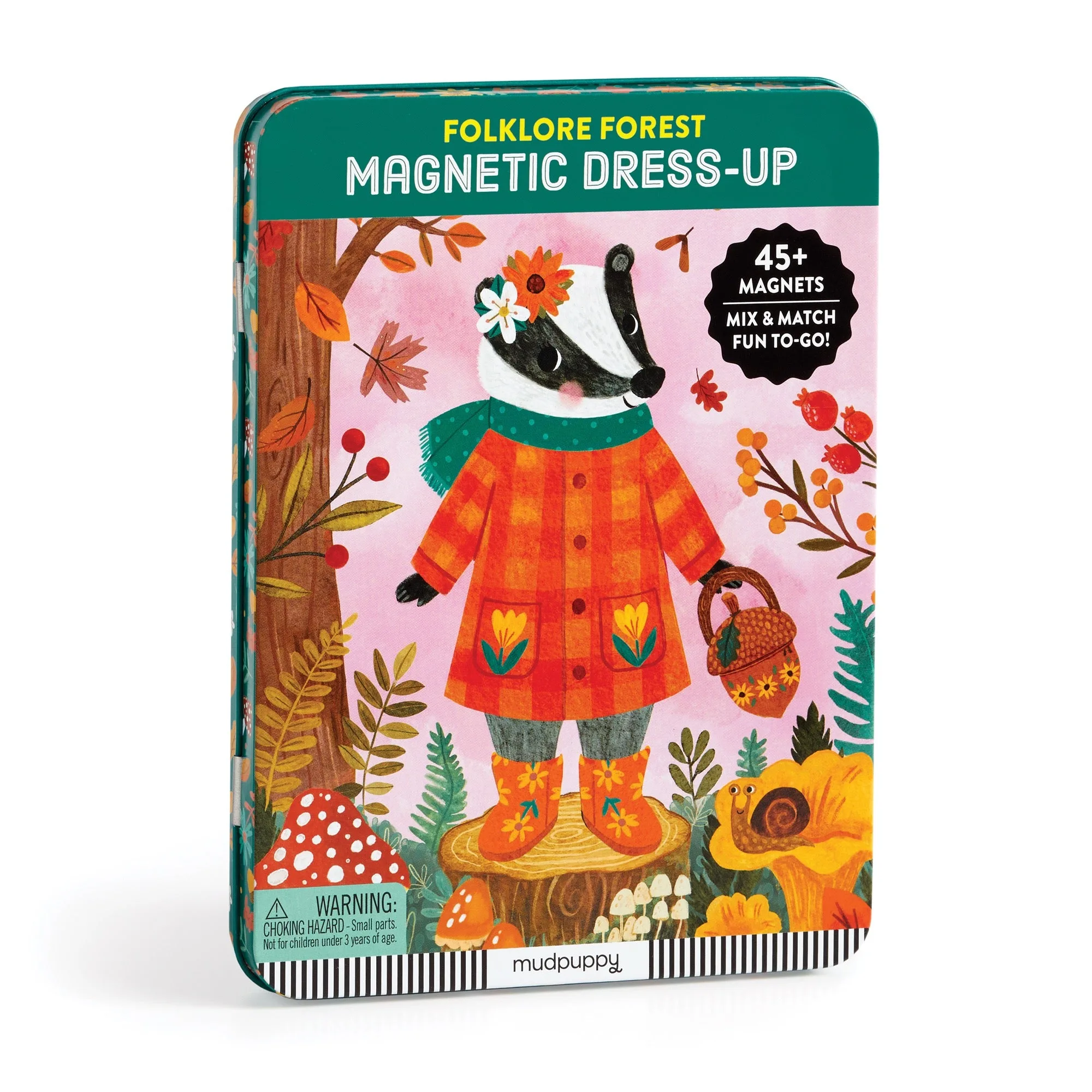
- Folklore Forest Magnetic Dress-up Play Set: Magical characters are transformed with whimsical woodland outfits and fairy tale accessories that stick to the included board. Because the pieces stick to the included board, play stays contained on one surface instead of spreading across the table and floor.
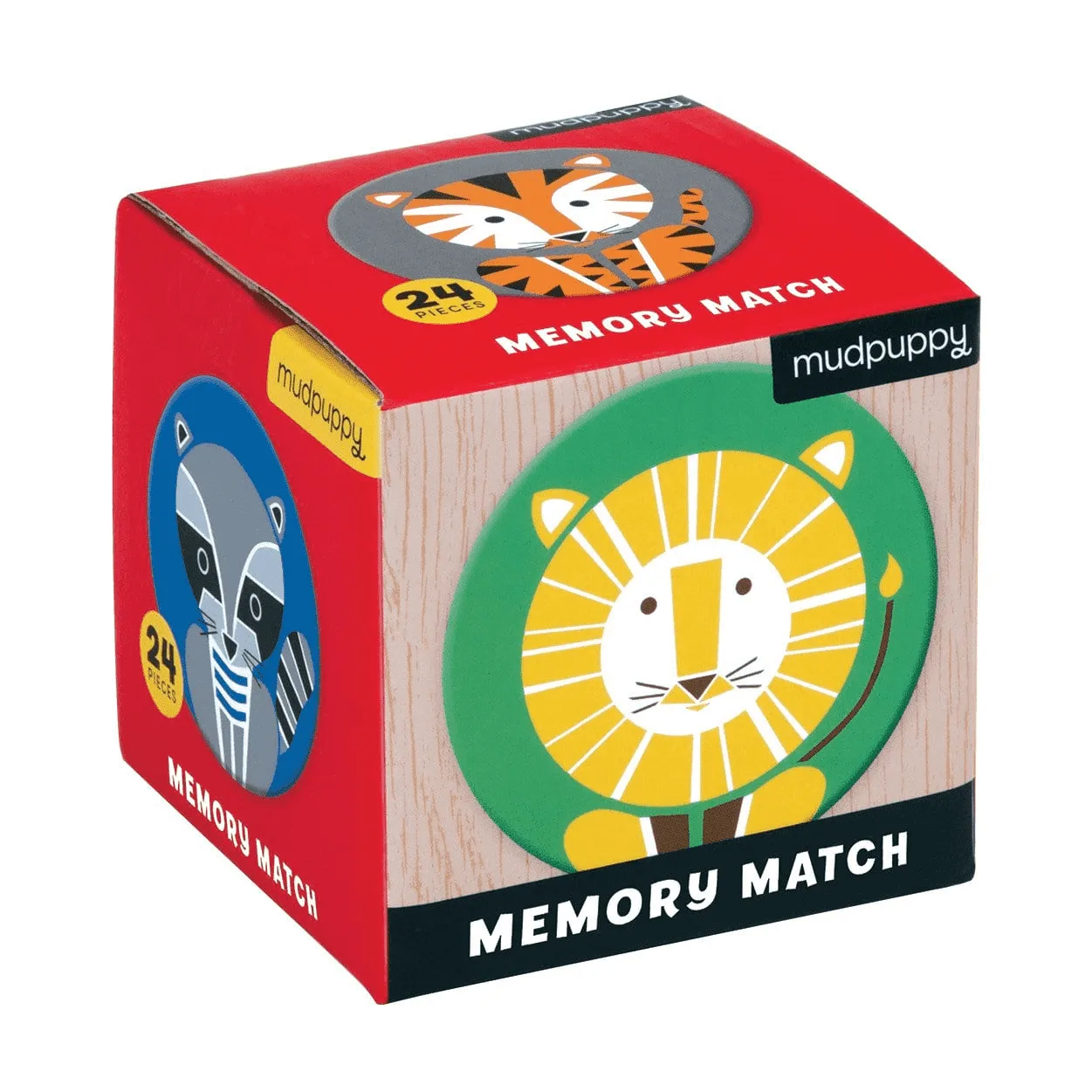
- Geometric Animals Mini Memory Match Game: Includes 12 pairs (24 pieces) in a small cube box measuring 2.75 x 2.75 x 2.75 inches, sized for stocking stuffers, party favors, or on the go. A low piece count in a compact closed box makes a full count fast, so a missing piece is caught immediately rather than weeks later.
Lost pieces are usually a design and habit problem, not a discipline problem. Give every set one closed home, one stable surface, and one travel container, and most of the leaks stop. If a set offers none of those, replace it with one that does, like a magnetic play set where the tin is the board.