Quick answer
For visual planetary and lunar observing on a budget, a standard Barlow is the practical choice: it multiplies magnification cheaply and works with almost any eyepiece. Choose a Powermate (a telecentric amplifier) when you need stable eye relief at high power, a flatter field across the whole view, or a consistent magnification factor for imaging. If your telescope already reaches high power with short eyepieces, neither is mandatory.
How each one multiplies magnification
A Barlow lens is a negative lens that sits before the eyepiece and increases the effective focal length of the telescope. A 2x Barlow turns a 25mm eyepiece into roughly a 12.5mm eyepiece, and a 3x Barlow pushes it further. The magnification factor is nominal: it changes with the eyepiece's field stop position and the spacing between the Barlow and the eyepiece, so a 2x Barlow may behave like 2.1x or 1.9x in practice.
A Powermate is a telecentric amplifier. Instead of a simple negative lens, it uses a lens group that makes the light cone nearly parallel as it leaves the amplifier. That design holds the magnification factor close to the marked value and keeps the exit pupil and eye relief behavior more consistent across different eyepieces. The trade-off is cost and physical length.
Eye relief and comfort at high power
This is where the two designs separate for lunar and planetary work. With a standard Barlow, eye relief changes with the eyepiece and often grows as magnification increases, which can be comfortable but can also push your eye too far back. With a telecentric Powermate, eye relief is preserved more predictably, so a long-eye-relief eyepiece stays comfortable when you push to 200x or more.
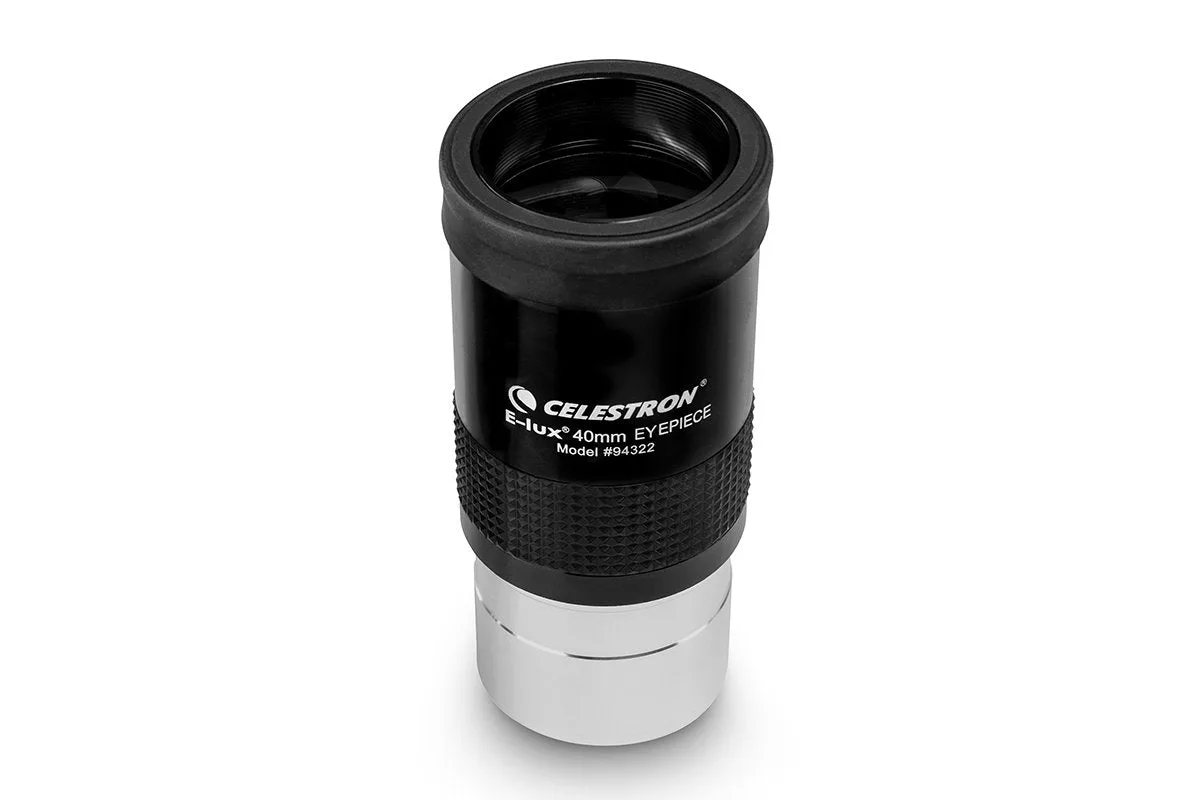
For long observing sessions on the Moon, comfort matters more than a small difference in sharpness. If you wear glasses, a design that preserves eye relief will let you keep them on. The E-lux 40mm Eyepiece - 2" (94322) lists 36mm of eye relief, and a 2" Barlow or Powermate in front of it will change that figure in different ways, so test the combination before a long session.
Edge sharpness and field flatness
A simple Barlow can introduce field curvature and vignetting, especially with wide-field eyepieces. That shows up as soft stars near the edge of the field, which is distracting when you are tracking a planet across a wide apparent field. A telecentric amplifier reduces those edge effects because the light cone stays more parallel through the eyepiece.
For planetary viewing, the planet usually sits near the center of the field, so edge performance is less critical. For lunar observing, where you may scan the terminator across the whole field, edge sharpness becomes more noticeable. If your eyepiece already has a wide apparent field, a telecentric design is the more consistent match.
Imaging: why telecentric matters
For lunar and planetary imaging with a camera, the amplifier must keep the light cone controlled. A telecentric Powermate is the safer choice because it holds magnification and reduces off-axis aberrations that a simple Barlow can introduce at the sensor. A standard Barlow can work for imaging, but you may need to adjust spacing and accept a different effective magnification than the label suggests.
If you are building an imaging train, the mechanical connection matters as much as the optics. The STL Thread Adapter for QSI WSG Cameras (TCD0774) connects a QSI WSG series camera spacer to the STL thread, which is the kind of interface you need when the amplifier and camera must sit at a fixed distance. The 36.5mm Long 69 mm Male to 48 mm Male Extension (SFE-M69M48-036.5) adds 36.5mm of spacing with 69mm male to 48mm male threads, useful when you need to set the amplifier-to-sensor distance precisely.
What to check before you buy
First, confirm your focuser can reach focus with the extra optical length. A Barlow or Powermate changes the focus point, and some Newtonians and refractors run out of inward or outward travel. Second, check the barrel size: a 2" amplifier needs a 2" focuser or adapter, while 1.25" models fit smaller focusers but may vignette wide eyepieces.
Third, match the magnification to your seeing. A 2x amplifier on a 10mm eyepiece gives 5mm equivalent, which may exceed what the atmosphere supports on a given night. Keep a lower-power option ready. Finally, if you use a robotic focuser, make sure the added weight and length do not exceed its travel or torque limits.
Trade-offs at a glance
- Cost and simplicity: A standard Barlow costs less and works with nearly any eyepiece, but the magnification factor varies with spacing and edge sharpness can suffer with wide-field eyepieces. Choose a Barlow if budget and versatility matter more than exact magnification.
- Eye relief and field consistency: A telecentric Powermate holds magnification and eye relief more consistently and reduces edge aberrations, but it costs more and adds length to the optical train. Choose a Powermate if you observe or image at high power often and want predictable comfort.
- Imaging compatibility: A Powermate is the safer optical match for lunar and planetary cameras because it controls the light cone; a Barlow can work but may need spacing adjustments and can introduce off-axis aberrations. Match the amplifier to your sensor size and back-focus budget before buying.
Products that support this comparison
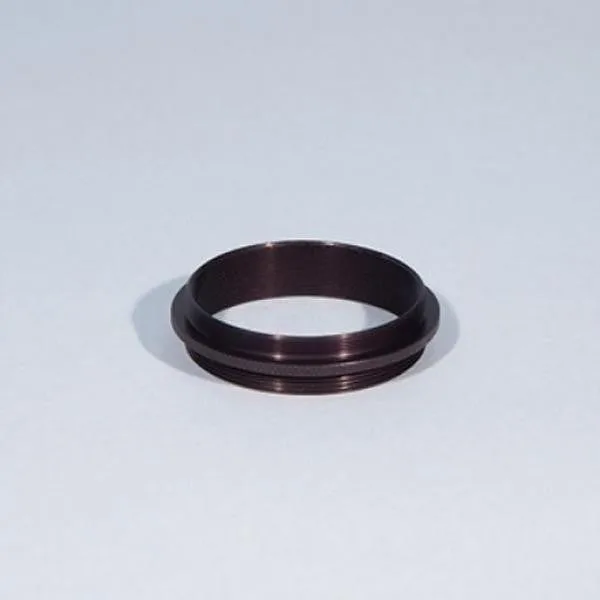
- STL Thread Adapter for QSI WSG Cameras (TCD0774): Takahashi STL Thread adapter designed for QSI WSG series cameras. Connects the QSI WSG series camera spacer to the STL thread. If you image with a QSI WSG camera and a telecentric amplifier, this adapter gives you the threaded interface needed to hold the correct spacing instead of relying on compression rings.
- E-lux 40mm Eyepiece - 2" (94322): 40mm Kellner eyepiece designed for 2" focusers, 3-element lens design with fully multi-coated optics, 56° apparent field of view, 36mm eye relief, threaded to accept most 2" filters. A long-eye-relief 2" eyepiece like this is a comfortable low-power starting point; adding a 2" Barlow or Powermate changes both magnification and the eye relief you actually get.
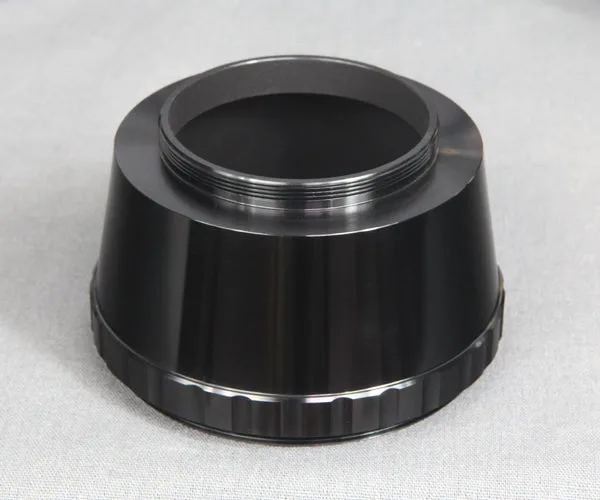
- 36.5mm Long 69 mm Male to 48 mm Male Extension (SFE-M69M48-036.5): 36.5 mm extension with 69 mm male to 48 mm male threads. The 69 mm male thread is 4 mm long and the 48 mm male thread is 5 mm long. Useful when you need a specific spacing between a Powermate or Barlow and a camera, since the magnification factor and edge correction depend on that distance.
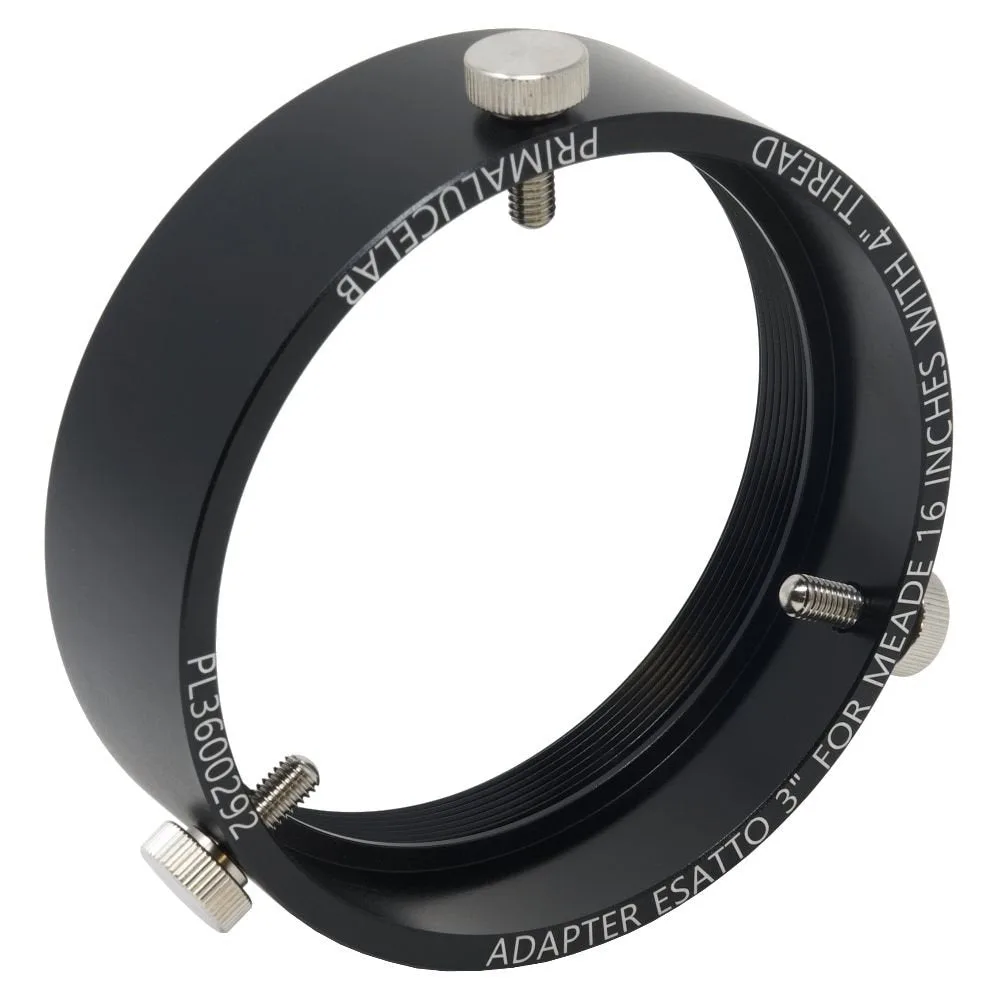
- Adapters for 3" ESATTO Microfocuser: À la carte telescope and camera adaptors for the 3" ESATTO Robotic Microfocuser. You can purchase a pair of camera and telescope adapters, only a camera adapter, or only a telescope adapter. If your imaging train uses a 3" ESATTO focuser, the right adapter keeps the amplifier and camera aligned and at the correct back focus without custom machining.
Which should you choose?
Best for
- Visual observers on a budget who want to double or triple magnification with existing eyepieces
- Beginners who want one inexpensive accessory to reach higher power on the Moon and planets
- Imagers who already have a telecentric amplifier and need adapters to set correct spacing
Not for
- Observers who already reach high power with short focal length eyepieces and do not need extra magnification
- Imagers who need a flat, controlled field across a large sensor and should use a dedicated telecentric amplifier instead of a simple Barlow
- Telescopes with limited focus travel that cannot accommodate the extra optical length