Quick answer
To keep basketball glasses secure and protective, focus on frame width and nose pad adjustment. Acetate frames like the Saul or Ledger offer a durable, customizable fit for the court.
Why fit matters for basketball eyewear
Basketball involves quick lateral movements, jumps, and contact. Glasses that slip or pinch can distract you, affecting your game. A proper fit ensures your eyewear stays put and protects your eyes from impact and UV rays.
Acetate frames are a popular choice for basketball because they are lightweight and can be adjusted for a snug fit. They also offer good impact resistance compared to some metal frames.
How to get the right fit and protection
- Measure your face width: Use a soft measuring tape to measure the distance between your temples. Compare this to the frame width of the glasses. For basketball, aim for a frame that is slightly narrower than your face to create a secure grip. Common mistake: Choosing frames that are too wide, causing them to slide when you sweat or move.
- Adjust the nose pads: If your glasses have adjustable nose pads, gently press them inward or outward to match the bridge of your nose. The glasses should sit level on your face without pinching. For acetate frames without adjustable pads, look for a frame with a low bridge fit or use adhesive nose pads. Checkpoint: After adjustment, shake your head gently. If the glasses shift, the nose pads need more tweaking.
- Choose the right temple length: The temple (arm) should curve behind your ear without pressing into your head. A temple length of 250-260 mm is standard for basketball glasses. If the temples are too long, they may slip; if too short, they can cause pressure points. Common mistake: Ignoring temple length leads to glasses that fall off during a jump or sprint.
- Verify UV protection: Check that your basketball glasses offer 100% UV protection. This is essential for outdoor courts where sun exposure is high. Most sports eyewear, including acetate basketball glasses, provide this protection, but always verify the label. Checkpoint: If you play both indoors and outdoors, consider interchangeable lenses for different light conditions.
- Test for stability during movement: Wear the glasses during a practice session. Perform a few quick lateral movements and a jump. If the glasses stay in place without needing constant adjustment, the fit is correct. If not, revisit the previous steps or consider a different frame width. Common mistake: Assuming a static fit test is enough. Real movement reveals slipping issues.
Product facts
-
Saul Rectangle Acetate Basketball Glasses: The Saul Rectangle Acetate Basketball Glasses have a lens width of 51 mm and a frame width of 150 mm. A narrower frame width (150 mm) suits smaller faces, ensuring the glasses don't slide during rapid head movements.
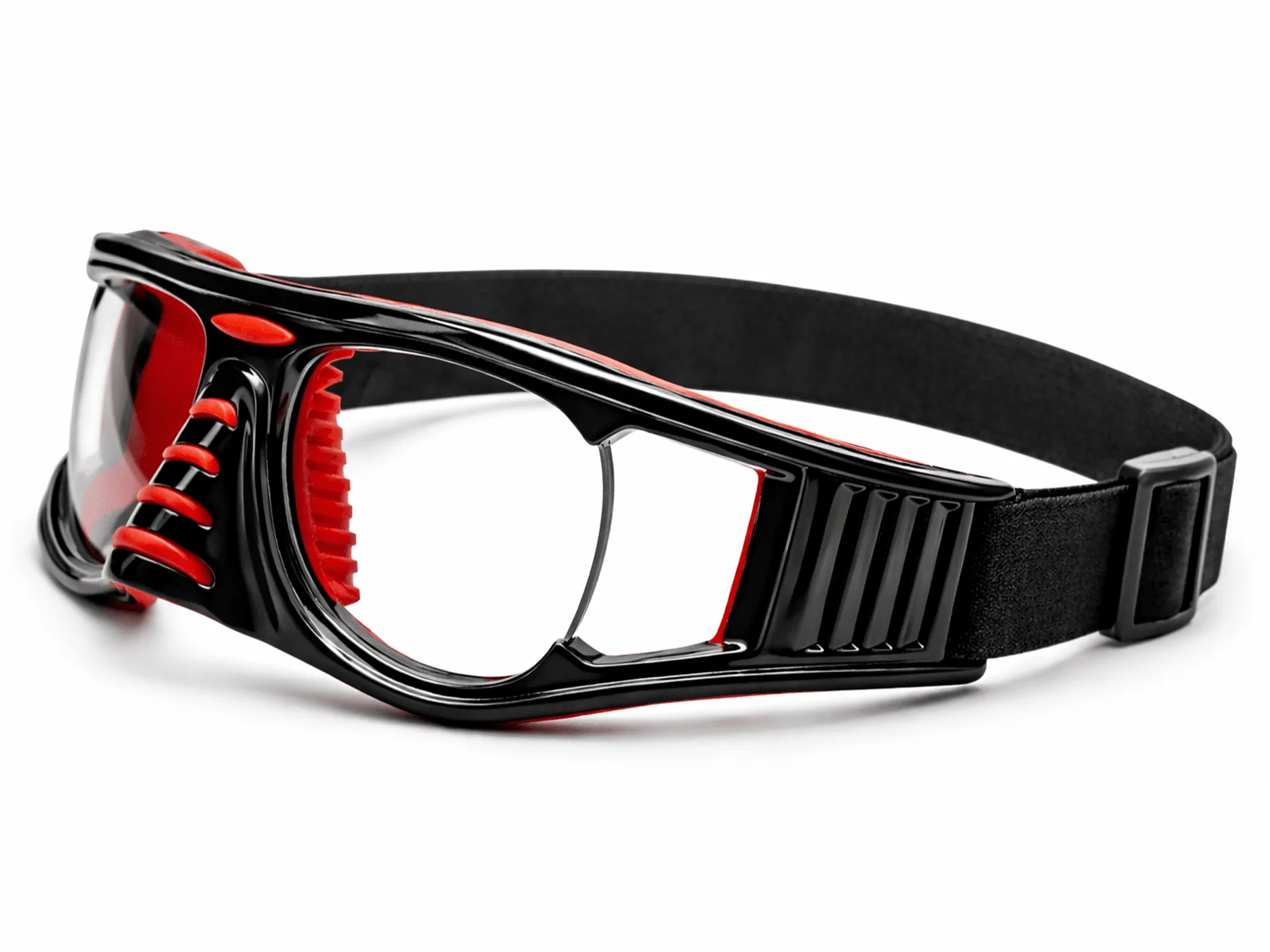
Saul Rectangle Acetate Basketball Glasses
-
Ledger Rectangle Acetate Basketball Glasses: The Ledger Rectangle Acetate Basketball Glasses have a lens width of 63 mm and a frame width of 170 mm. The wider frame (170 mm) provides a broader field of view and a more secure fit for larger faces.
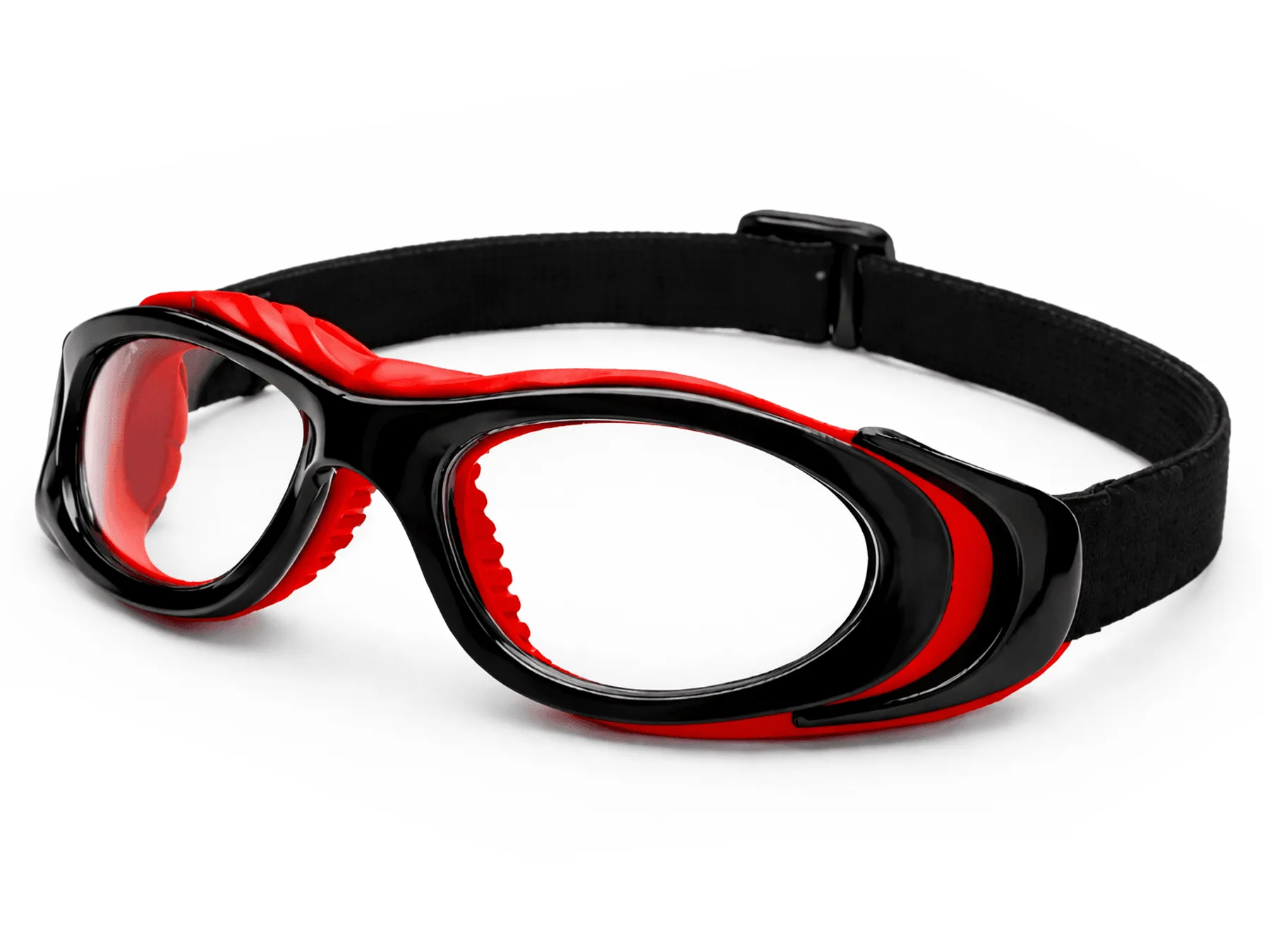
Ledger Rectangle Acetate Basketball Glasses