Quick answer
Buy bath toys that either drain fully or let you open and dry them. Squeeze every toy in the store or at home: if water goes in and stays in, mold will follow. Check the age rating against your child's stage, and treat material, drainage, and drying speed as the three things that decide whether a bath toy stays safe for months or turns into a science project.
Most bath toy problems start before the toy ever gets wet. A toy that traps water inside has no way to dry, and a warm, dark, damp interior is exactly where mold and mildew settle in. Bath toy safety is less about a single label and more about how the toy behaves after the tenth bath.
This guide walks through the decisions that actually matter: what the toy is made of, whether water can escape, how it is rated for age, and how to test it in under a minute. You will also see how a few real products handle these questions, so you can compare instead of guessing.
Start with the material, because it sets the rules
Bath toy materials fall into a few practical groups. Soft plastics and vinyl are flexible and squeaky, which babies love, but they are also the most likely to hide water inside. Hard plastics and silicone hold their shape, dry faster, and are easier to inspect. Foam is soft and light, but it absorbs and holds water unless it is a closed-cell type made for wet play.
You do not need a lab test to judge this. Press the toy, look at the seams, and check whether openings are sealed or open. If a toy has a small hole and no second hole for air to escape, water that enters has no easy way out. That single design detail predicts more mold problems than any marketing claim.
- Prefer toys you can open, unscrew, or squeeze dry completely.
- Avoid any toy where you cannot see or reach the inside.
- If a toy is labeled waterproof, that tells you about the outside, not the inside.
Water trap bath toys: how to spot them in seconds
A water trap bath toy is any toy that takes in water and cannot fully release it. Squeaky toys are the classic example: water goes in through the squeaker hole, and air cannot push it back out. Over days, that trapped water stays warm and still, which is the condition mold needs.
The fix is not to ban every squeaky toy. It is to choose toys with drainage holes, removable parts, or sealed bodies that never take on water at all. If you already own a water trap toy, squeeze it after every bath, shake it, and let it dry somewhere with airflow. If it still smells musty after a week, it is done.
- Squeeze the toy underwater. If bubbles come out, water can get in.
- Shake it next to your ear. Sloshing means water is still inside.
- Smell it. A musty or sour odor means it is time to replace it.
Mold free bath toys are a design choice, not a coating
No coating makes a toy permanently mold free. Mold free bath toys are simply toys designed so water cannot sit inside them. That usually means one-piece molded bodies, open drainage channels, or parts that come apart for drying. The design does the work, not an additive.
When you shop, look for toys that can be fully air dried within a few hours. If a toy needs to be taken apart, make sure you will actually do it. A toy that is easy to clean but annoying to dry will still grow mold in a busy household.
- Choose one-piece toys for the bath and keep squeeze toys for dry play.
- Store bath toys in a draining basket, not a closed bin.
- Rotate toys so each one gets a full dry day between baths.
Age ratings tell you about the child, not the water
A bath toy age rating is about developmental readiness, not water safety. A toy rated 0+ months is built for a baby who is not yet sitting up or grabbing strongly. A toy rated 12+ months assumes a toddler who can stand, throw, and put things in their mouth with force.
Match the rating to your child's current stage, not the stage you expect next month. If two children share a bath, buy for the younger one and keep small parts out of reach. A toy that is safe for a toddler can still be a choking risk for a baby, and the rating is the fastest way to check.
- Check the rating before you check the price.
- For mixed-age baths, choose toys with no small detachable parts.
- If a toy has no stated rating, treat it as unsuitable for mouthing babies.
What to check before you buy, in order
Run this sequence every time. First, material: can it dry? Second, drainage: does water have a way out? Third, age rating: does it fit your child now? Fourth, cleaning: can you wipe or wash it without trapping water? Fifth, storage: will it dry where you actually keep it?
This order matters because a cheap toy that dries fully beats an expensive toy that traps water. Price and brand are not safety signals on their own. The physical design is. If a toy fails at step two, stop there and move on.
- Material, drainage, age rating, cleaning, storage — in that order.
- If it fails drainage, no other feature makes up for it.
- Buy one toy first, test it for a week, then buy more.
Decision rules for buying bath toys
- If the toy has one hole and no drainage: Treat it as a water trap. Water will enter and stay. Choose a version with two openings, a removable plug, or a sealed body instead. Skip it unless you will squeeze and dry it after every single bath.
- If your child is under 12 months: Buy only toys rated for their stage, with no small detachable parts, and keep the total number of bath toys small so each one dries fully. Fewer toys, fully dried, beat a full tub of wet ones.
- If two children share the bath: Buy for the younger child's age rating and remove any small parts a baby could mouth. Keep toddler-only pieces in a separate basket. One shared bin is a choking risk; two bins are safer.
- If a toy already smells musty: Cleaning will not reach the inside of a water trap toy. Replace it rather than trying to rescue it. A sour smell is the signal to let it go.
- If you are unsure between two toys: Pick the one you can open, wipe, and air dry fastest. Drying speed is the best predictor of long-term safety. Choose the toy that dries, not the toy that looks best wet.
How real products handle these decisions
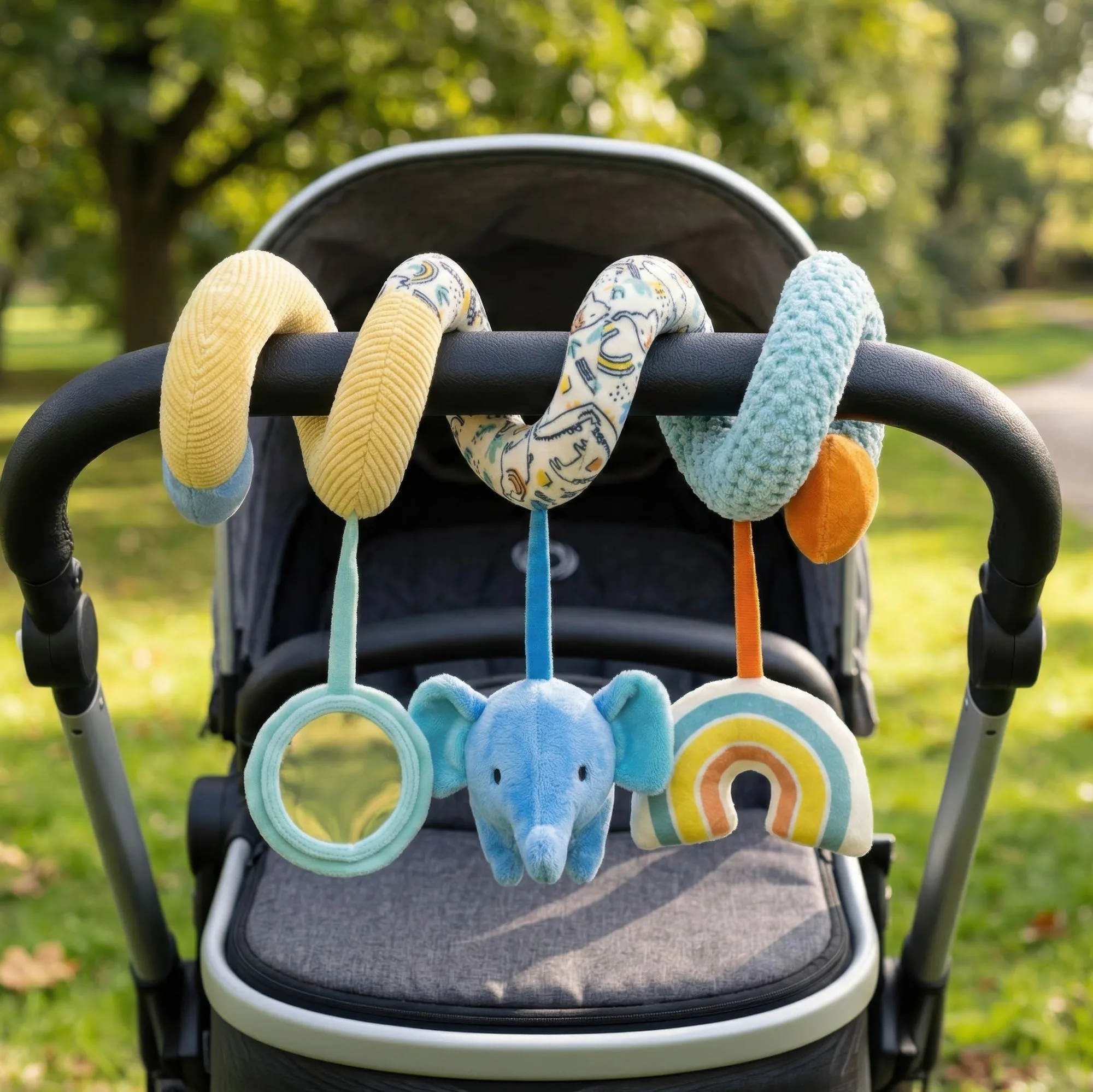
- Animal Adventures Spiral Activity Toy | Elephant: Attaches easily to any stroller or car seat handle, with soft plush characters, squeaks, crinkles, and rattles, and is rated 0+ months. It is built for dry, on-the-go play rather than the tub, so it sidesteps the water trap problem entirely. Use it as the travel toy and keep bath toys separate.
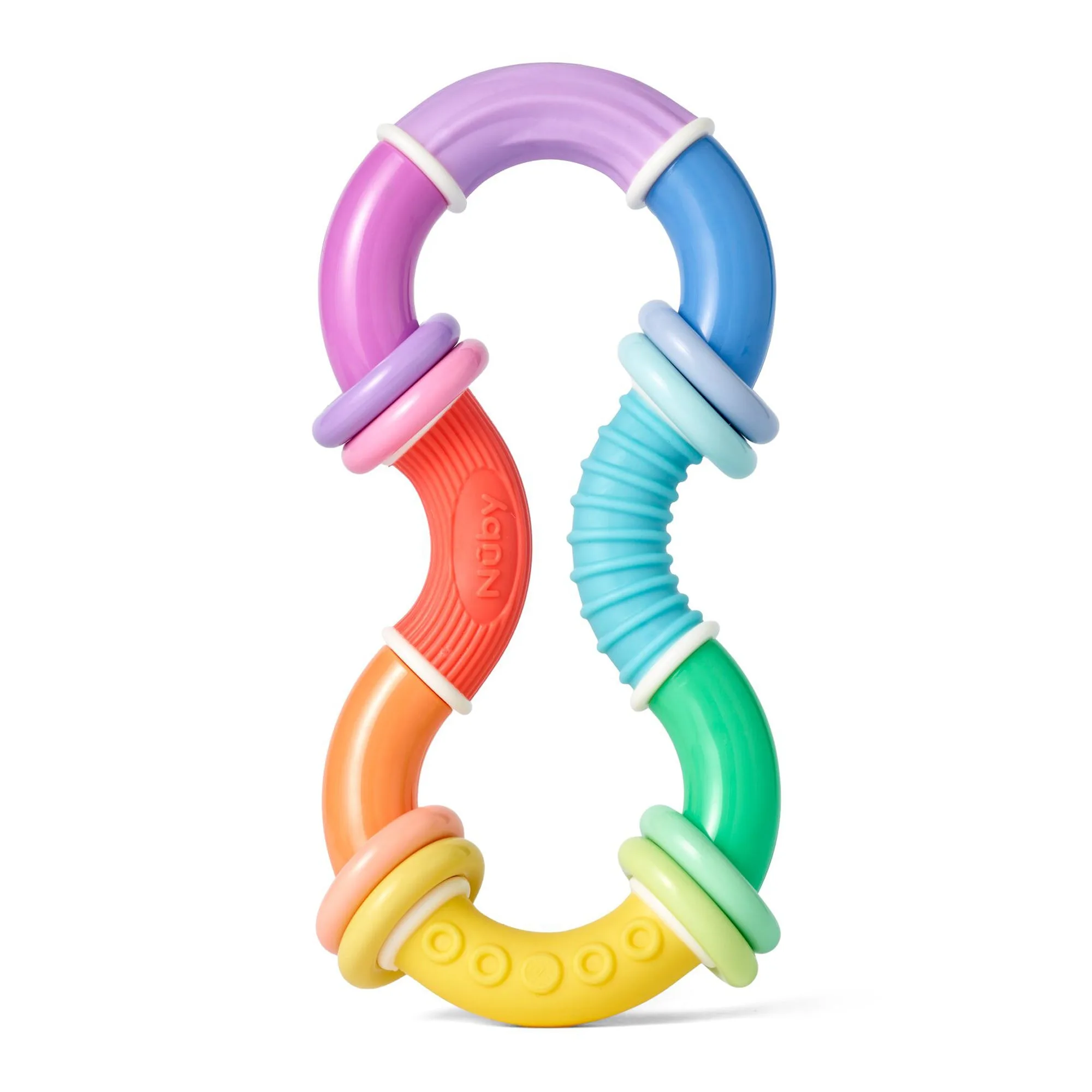
- Twista Rattle Teether Toy | Colorful Rings: Features bright colors and fun sounds, textured surfaces for teething relief, and is designed to develop dexterity and hand-eye coordination. Textured teethers are easy to wipe and air dry, which makes them a lower-risk choice than hollow squeeze toys. Keep them out of standing water and dry them fully.
- Kids' Ball Pit for Home with 200 Balls | Aqua: Soft but sturdy walls offer security when babies sit upright, and the pit is light and easy to move. This is a dry-play item, not a bath toy. If you use balls near water, dry each one, because a ball pit that stays damp becomes the same mold problem in a different shape.
Who this approach fits
Best for
- Parents buying their first set of bath toys and wanting to avoid mold from the start
- Households with a baby under 12 months who needs age-rated, easy-to-dry toys
- Families who have already thrown away moldy squeeze toys and want a better system
Not for
- Shoppers looking for a decorative bath toy set where appearance matters more than drainage
- Parents who want to keep using hollow squeaky toys without a drying routine
- Buyers who need a single toy to serve both bath time and dry floor play
Bath toy safety comes down to three checks you can do in the aisle: what it is made of, whether water can escape, and whether the age rating matches your child right now. Get those right, dry toys fully between baths, and replace anything that smells musty. That routine prevents more problems than any label ever will.