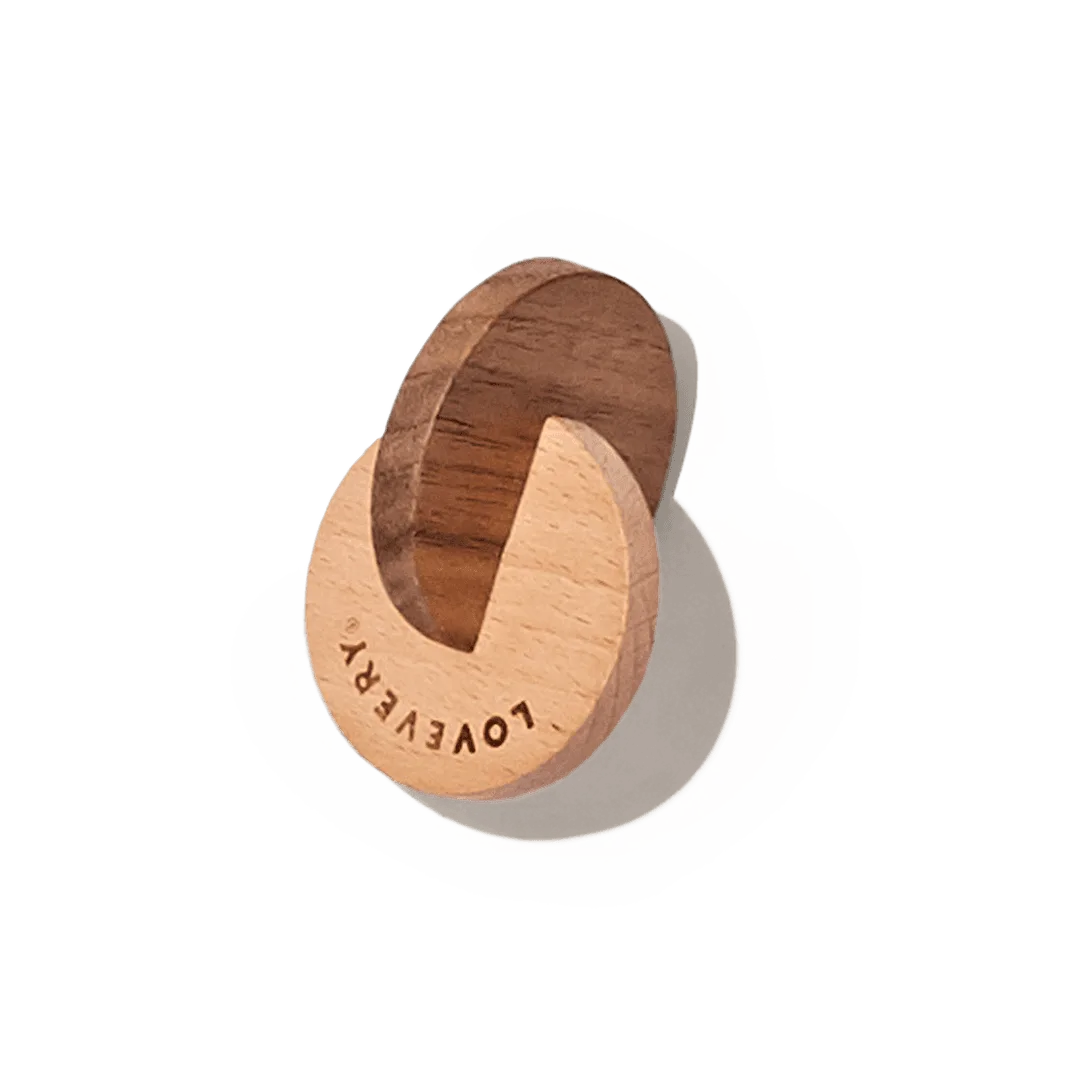
Quick Answer
For most toddlers, the Lovevery Bead Threader offers a more structured, frustration-free introduction to threading, while traditional stringing beads provide open-ended variety. If your child is new to threading or easily discouraged, the Bead Threader's design helps build confidence. If they crave creative freedom and already have basic threading skills, traditional beads offer more flexibility.

Bead Threader
When it comes to building fine motor skills, few activities are as classic as threading beads. But with so many options, parents often wonder whether a specialized tool like the Lovevery Bead Threader is worth it compared to a simple set of traditional stringing beads. Both can help your child develop the pincer grasp, hand-eye coordination, and focus they need for writing and self-care.
In this comparison, we'll look at the differences between the Lovevery Bead Threader and traditional stringing beads, focusing on what matters most for your child's development. We'll weigh the trade-offs so you can choose the right tool for your toddler's age, skill level, and temperament.
What Makes the Lovevery Bead Threader Different?
The Lovevery Bead Threader is designed as part of Lovevery's play system, which emphasizes purposeful, developmentally appropriate play. While we don't have the exact specifications of the Bead Threader product itself, Lovevery's approach typically includes a sturdy, child-friendly design that reduces frustration. For example, the bead may have a larger hole or a stiffened tip on the threader, making it easier for small hands to guide the string through.
Traditional stringing beads, on the other hand, come in a wide range of shapes, sizes, and materials. They often include a simple lace or string that can be more flexible and harder to control. While this offers more variety and creativity, it can also be more challenging for beginners. The key difference is that the Bead Threader is purpose-built for the activity, while traditional beads are a more generic toy.
- Look for a threader with a stiffened tip or a bead with a larger hole to ease the first attempts.
- Choose beads with a diameter that fits your child's hand comfortably—too small can be frustrating, too large may not challenge them.
Fine Motor Skills: What Each Option Develops
Threading any kind of bead requires your child to use a pincer grasp, coordinate both hands, and visually track the movement of the string. The Lovevery Bead Threader, with its design focused on success, helps a child practice these skills without the added difficulty of a floppy string. This can be especially beneficial for younger toddlers (around 18 months to 2 years) who are just developing the necessary hand strength and coordination.
Traditional stringing beads, especially those with varied shapes and holes, can offer a more complex challenge. As your child grows, they'll need to rotate the bead to find the hole, adjust the angle of the string, and manage a longer lace. This builds more advanced problem-solving and fine motor control. The trade-off is that it may be too difficult for a child who isn't ready, leading to frustration and giving up.
- If your child is new to threading, start with a single bead and gradually increase the number.
- Encourage your child to use their non-dominant hand to hold the bead steady—this builds bilateral coordination.
Engagement and Longevity: Which Keeps Kids Interested?
The Lovevery Bead Threader is often part of a larger play kit, so it comes with a purpose and a parent guide that suggests activities. This can help you engage your child in a structured way, making the activity feel like a game rather than a chore. The design is likely to be high-quality and durable, lasting through multiple children.
Traditional stringing beads, however, offer endless variety. You can mix and match colors, shapes, and even use them for sorting, counting, or making patterns. This open-ended nature means the toy can grow with your child, providing new challenges as they develop. The downside is that without guidance, some children may lose interest quickly or use the beads in unintended ways (like throwing them).
- Rotate traditional beads by introducing new shapes or colors to reignite interest.
- Use a tray or shallow container to keep beads contained and make clean-up a game.
Trade-Offs at a Glance
- Structured vs. Open-Ended: The Lovevery Bead Threader is likely part of a structured play system with guided activities, while traditional beads allow for free-form creativity. If your child thrives with direction, the threader may be better; if they love to explore, traditional beads offer more. Consider your child's play style: do they prefer following a task or inventing their own?
- Ease of Use vs. Challenge: A well-designed threader may have features that make the first attempts easier, reducing frustration. Traditional beads with varied shapes and flexible strings provide a greater challenge that can build more advanced skills once the basics are mastered. Match the difficulty to your child's current skill level to keep them in the 'just right' challenge zone.
- Longevity vs. Novelty: A single threader might be outgrown quickly, but if it's part of a kit, other activities can extend its use. Traditional beads can be used in many ways (sorting, patterning, counting) and can last for years, but may need to be rotated to maintain interest. Think about whether you want a tool for a specific stage or a toy that can adapt over time.
Related Lovevery Products to Consider
- Coins (set of 5): This set of 5 Coins is designed as a replacement part for the Lovevery Coin Bank component, helping to keep your child's play experience complete. Each coin is crafted to fit the coin lid and bank, supporting fine motor skill development through simple sorting and dropping activities. If you're looking to build fine motor skills beyond threading, the Coin Bank activity offers a similar pincer grasp practice but with a different motion—dropping coins into a slot. This variety can keep your child engaged while reinforcing the same underlying skills.
- https://loveveryshop.com/products/play-guide-59405https://loveveryshop.com/products/play-guide-59580Play Guide: The Lovevery Play Guide is a replacement part designed to support your child's developmental play experience. This guide helps you make the most of your Lovevery play kit, offering insights and activity ideas tailored to your child's stage of growth. If you choose the Lovevery Bead Threader as part of a play kit, the Play Guide can help you understand how to introduce the activity and what to watch for as your child develops. It's a practical tool for parents who want to maximize the learning potential of each toy.
Choosing the Right Threading Toy for Your Toddler
Best For
- Toddlers around 18–24 months who are new to threading and need a forgiving introduction to build confidence.
- Parents who prefer a guided, developmentally sequenced approach and appreciate having activity ideas provided.
Not For
- Older preschoolers (3+) who already have solid threading skills and are ready for more open-ended, creative challenges—traditional beads may offer more variety.
Both the Lovevery Bead Threader and traditional stringing beads have their place in a toddler's toy box. The best choice depends on your child's age, skill level, and how they like to play. If you want a structured, success-oriented start, the Bead Threader is a smart pick. If you prefer a flexible toy that can grow with your child and inspire creativity, traditional beads are a classic option. Whichever you choose, the key is to join in, encourage, and celebrate the small victories along the way.