Quick answer
Buy the bed first, then add a dresser, chest, and nightstand only if your floor plan and storage needs justify each piece. A complete bedroom set works best when you measure the room, confirm the bed size, and choose a matching finish that you can live with for years. If you are furnishing a guest room or a first apartment, a bedroom package often costs less and removes the guesswork; if you already own a bed or dresser, buy individual pieces instead.
Start with the bed, not the matching finish
The bed dictates the rest of the room. Measure the wall where the headboard will sit, then add at least 24 to 30 inches of walking space at the foot and 18 to 24 inches on the sides you use to get in and out. A queen bed is the default for most adult rooms, but a full or twin is a better fit in small guest rooms or youth bedrooms. Once the bed size is fixed, the dresser, chest, and nightstand widths become easier to judge because you know how much wall space remains.
Decide between a bedroom package and individual pieces
A bedroom package usually groups the bed, dresser, mirror, and nightstand in one finish, which saves time and often costs less than buying each piece separately. The trade-off is flexibility: you accept the included sizes and cannot swap a wide dresser for a narrow chest. Buying piece by piece costs more in total but lets you match an existing bed or fit an awkward wall. If you need a chest with more drawers than the package offers, plan to add one separately rather than forcing the package to do everything.
Match finishes and hardware without overdoing it
Matching bedroom furniture does not mean every surface must be identical. A warm charcoal bed frame can sit beside a warm brown chest if the undertones agree, and two-tone pieces can break up a heavy look. Pay attention to hardware: antiqued pewter, dark pewter, and chrome-tone pulls read very differently in the same room. If you add a nightstand later, check the drawer pull style and finish first, because hardware is the detail that makes mismatched pieces look intentional.
Storage math: dresser, chest, and nightstand
Count what you actually store before you choose drawer counts. A dresser typically holds folded clothes for one or two people, while a chest adds vertical storage for sweaters, linens, or overflow. A nightstand needs only a drawer or two plus a surface for a lamp, phone, and water glass. If you use a CPAP machine or charge devices overnight, look for a nightstand with charging options so you do not add a power strip behind the bed.
Youth bedroom set vs. adult bedroom set
Youth sets are sized for smaller rooms and shorter reach, often with a twin or full bed and lower drawer heights. Adult sets assume a queen or king bed and taller case pieces. The practical difference is longevity: a youth set may need replacing as a child grows, while an adult set in a neutral finish can move from a guest room to a primary bedroom. If the room will change hands in a few years, choose a finish and silhouette that reads adult rather than themed.
Decision rules for your bedroom set
- If the room is under 10 by 10 feet: Choose a full or queen bed, one nightstand instead of two, and a chest rather than a wide dresser. Skip the mirror if it blocks a closet door. Small rooms gain more from vertical storage than from matching every piece.
- If you already own a bed frame: Buy the dresser, chest, and nightstand separately and match undertones rather than exact finishes. Check drawer pull style before you commit. Piece-by-piece buying protects the bed you already like.
- If two people share the room: Plan one nightstand per sleeper and at least one wide dresser plus a chest. Confirm both sides of the bed have 18 to 24 inches of clearance. Storage and clearance matter more than a perfect finish match.
- If the room doubles as a guest or youth room: Choose a twin or full bed and a neutral adult-leaning finish. Add a chest with integrated handles so there is no hardware to replace later. Neutral finishes survive the transition from child to guest room.
Product facts to compare
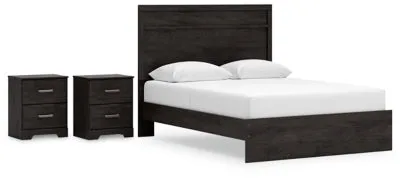
- Belachime Bedroom Package: Belachime Bedroom Package: clean-lined look with a warm charcoal hue over replicated oak grain, smooth drawer fronts, antiqued dark pewter-tone handles, two smooth-gliding drawers, assembly required, and a bed compatible with an adjustable base. A coordinated charcoal package suits buyers who want one finish and an adjustable-base-ready bed; assembly and the two-drawer count are the main trade-offs to plan for.
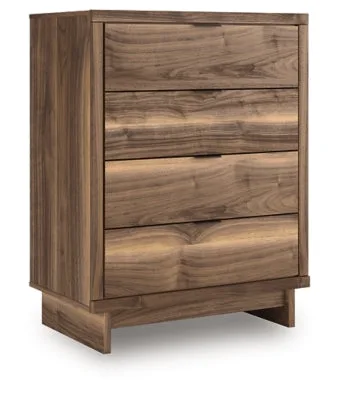
- Chirason Chest of Drawers: Chirason Chest of Drawers: warm brown tones with mid-century vibes, an angular base, and integrated drawer handles. A good add-on when you need vertical storage and want a retro-cool piece that still reads modern; integrated handles mean no hardware to match.
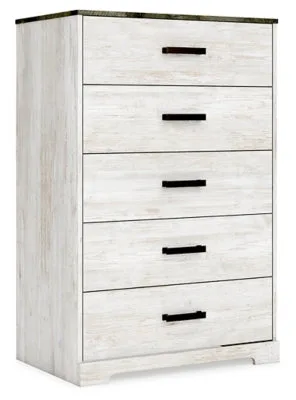
- Shawburn Chest of Drawers: Shawburn Chest of Drawers: two-tone finish with a distressed whitewashed body and warm pewter-tone hardware, casual style, and assembly required. A lighter, homespun option for rooms that feel dark or heavy; the two-tone body pairs best with white, gray, or natural wood beds rather than dark charcoal.
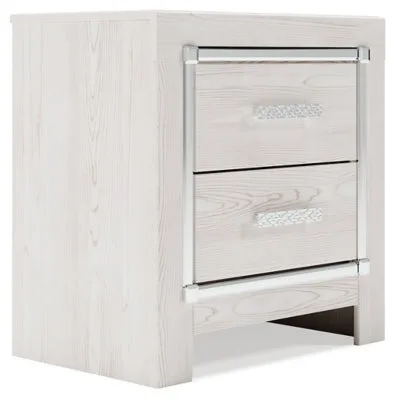
- Altyra Nightstand: Altyra Nightstand: pearlized finish, shiny chrome-tone accents, mosaic pulls, and wireless and plug-in charging options. Charging options remove the need for a separate bedside power strip, while the glam finish works as a deliberate contrast piece rather than a strict match.
Who this bedroom set advice fits
Best for
- Shoppers furnishing a primary or guest bedroom from scratch
- Buyers who want a coordinated bed, dresser, chest, and nightstand without hiring a designer
- Anyone comparing a bedroom package against buying individual pieces
Not for
- Shoppers who need custom-built or wall-to-wall fitted cabinetry
- Buyers who already have a complete matching set and only need one replacement drawer pull
- Rooms where the bed must fit a non-standard or antique frame size