Quick Answer
For a first DIM bra, start with one well-fitting everyday style rather than a drawer full of options. Measure your underband and bust, then try a soft-cup or lightly lined style in your usual clothing size. If you want natural shape and gentle support, an underwired cotton bra is a solid starting point; if you prefer minimal hardware, choose non-wired.
Your first real bra purchase can feel like a test with no study guide. There are cups, bands, wires, straps, and a wall of styles that all claim to be comfortable. The good news is that you only need a few clear rules to make a smart first choice.
This beginner's guide walks you through how to buy a bra at DIM: what to measure, which styles to consider, and how to judge fit in the fitting room. You'll also find decision rules for underwire vs non-wired and everyday vs special-occasion bras. No jargon, no guesswork.
Start With Your Size, Not the Style
Before you fall for a color or a lace detail, get your measurements right. Use a soft tape measure around your ribcage, directly under your bust, keeping it level and snug. That number is your band size. Then measure around the fullest part of your bust, keeping the tape relaxed. The difference between the two measurements helps determine your cup size.
DIM bras are sold by size, so knowing your band and cup makes online shopping much less risky. If you're between sizes, size down in the band and up in the cup, because a band that's too loose won't support you and a cup that's too small will dig in. When in doubt, check the product page's size options before ordering.
- Measure at the end of the day when your body is at its natural size.
- Wear a non-padded bra or no bra while measuring for accuracy.
- Write down both numbers and re-measure once to confirm.
Underwire vs Non-Wired: What Actually Changes
The biggest practical decision for a first bra is whether to go underwired or non-wired. Underwired bras use a shaped wire under each cup to lift and separate. They tend to give more defined shape and support, which is why they're common in everyday and fuller-cup styles. Non-wired bras rely on fabric and seams for shape, and they often feel lighter and less structured.
Neither is universally better. If you want a natural silhouette with gentle lift, an underwired style like a soft-cup bra can work well. If you're sensitive to pressure under the bust or prefer a softer feel, non-wired is the calmer choice. Many people keep one of each: underwired for outfits that need shape, non-wired for relaxed days.
- Underwire: more shape and support, but check the wire sits flat against your ribcage.
- Non-wired: lighter feel, less lift, often better for lounging or sleeping.
- If a wire pokes or floats, the cup or band size is likely wrong, not the style.
Match the Bra to Your Daily Routine
Think about what you'll actually be doing in the bra. If you're mostly at a desk, commuting, or running errands, prioritize a smooth, comfortable everyday bra that disappears under clothes. If you're active, look for moisture-friendly fabrics and a fit that stays put when you move. If you're dressing for an occasion, you can choose based on neckline and back detail.
A first bra doesn't need to cover every scenario. One reliable everyday bra plus one comfortable non-wired option covers most of the week. Add special styles later once you know which sizes and shapes work for you.
- Everyday: smooth cups, neutral colors, no visible lines under t-shirts.
- Active: breathable fabric and a band that doesn't ride up.
- Occasion: choose based on the outfit first, comfort second.
How to Judge Fit in the Fitting Room
A well-fitting bra should feel snug but not tight. The band should sit level all the way around your ribcage, and you should be able to fit two fingers under it comfortably. The center panel between the cups should lie flat against your chest. If it lifts away, the cup is often too small or the band too loose.
Check the straps too. They should stay in place without digging into your shoulders. If they slip, tighten them slightly; if they leave marks, loosen them or try a smaller band size. Finally, move around: raise your arms, bend forward, and twist gently. A good bra stays in place through normal movement.
- Band level and snug: two fingers should slide under easily.
- Center panel flat against the chest.
- Cups smooth, no gaping or spilling.
- Straps stay put without pressure marks.
Decision Rules for Your First DIM Bra
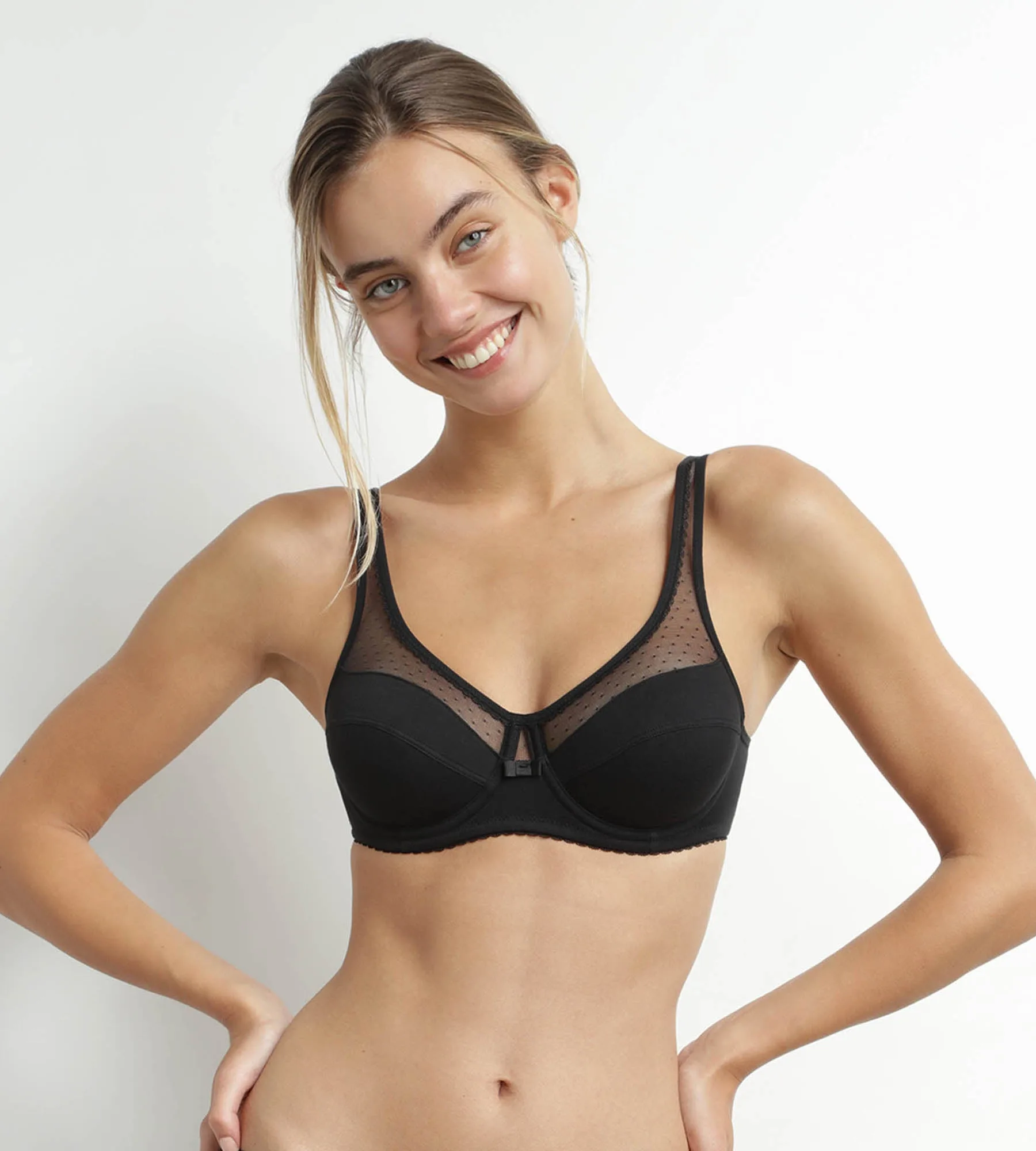
- If you want shape and support: Choose an underwired style with soft cups, like the Generous Coton Bio, and make sure the wire sits flat against your ribcage. Best first pick for everyday wear under fitted clothes.
- If you want minimal structure: Choose a non-wired bra or a soft-cup style without wire. Prioritize a band that stays level and straps that don't slip. Best for lounging, sensitive skin, or days when you want to forget you're wearing a bra.
- If you're active: Look for moisture-friendly, thermoregulating fabric and a close fit that won't shift during movement, such as the Dim Move range. Don't wear a lace everyday bra for workouts; choose function first.
- If you're between sizes: Size down in the band and up in the cup. A band that's too loose is the most common cause of riding up and strap slipping. Re-measure before ordering, and check the product's available sizes.
DIM Bras Worth Knowing for a First Purchase
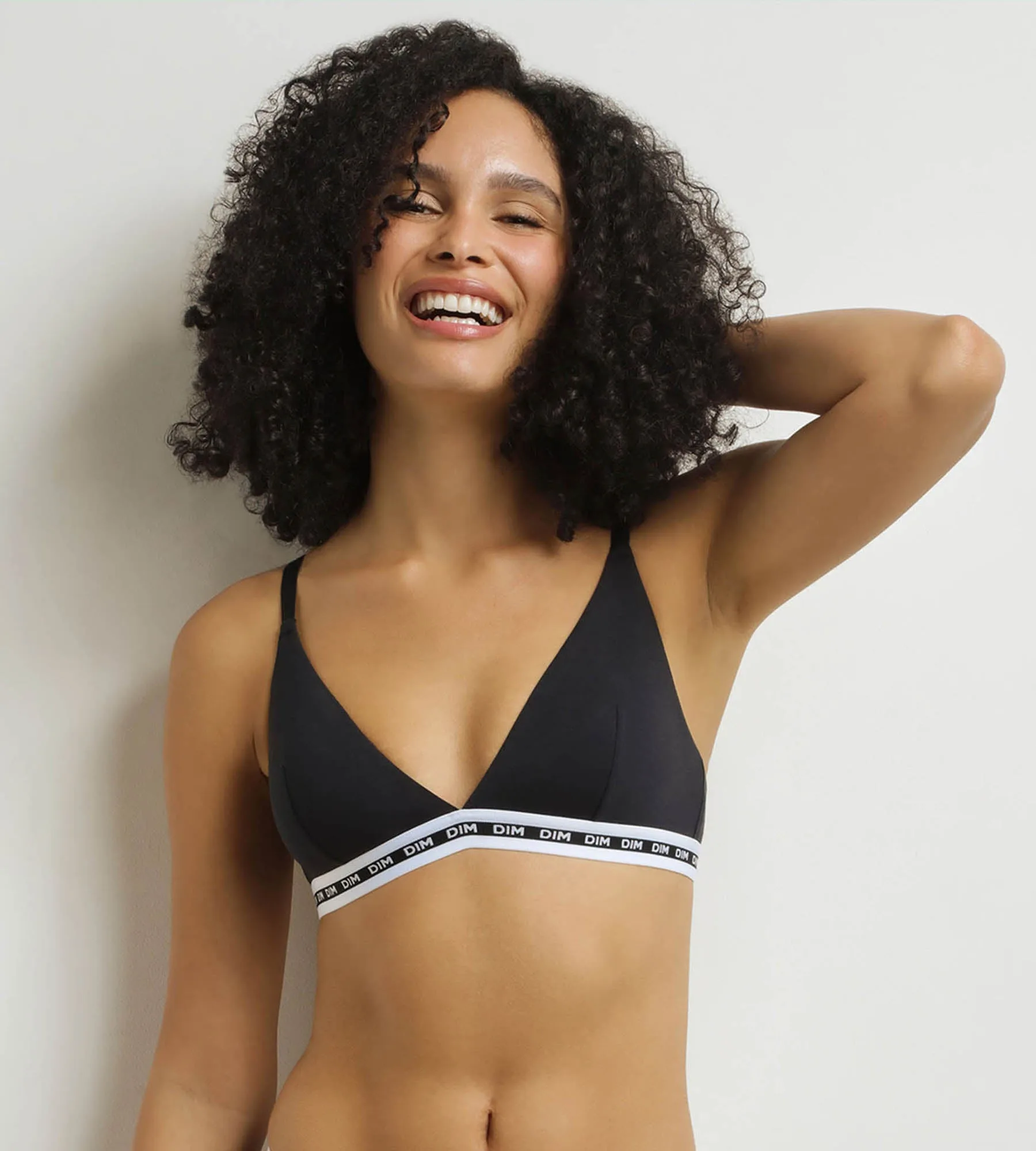
- Soutien-gorge emboîtant avec armatures Noir Generous Coton Bio Dim: Underwired soft cups in organic cotton with airy tulle at the neckline, available up to an E cup. A good first underwired option if you want natural shape, breathable cotton, and a size range that includes fuller cups.
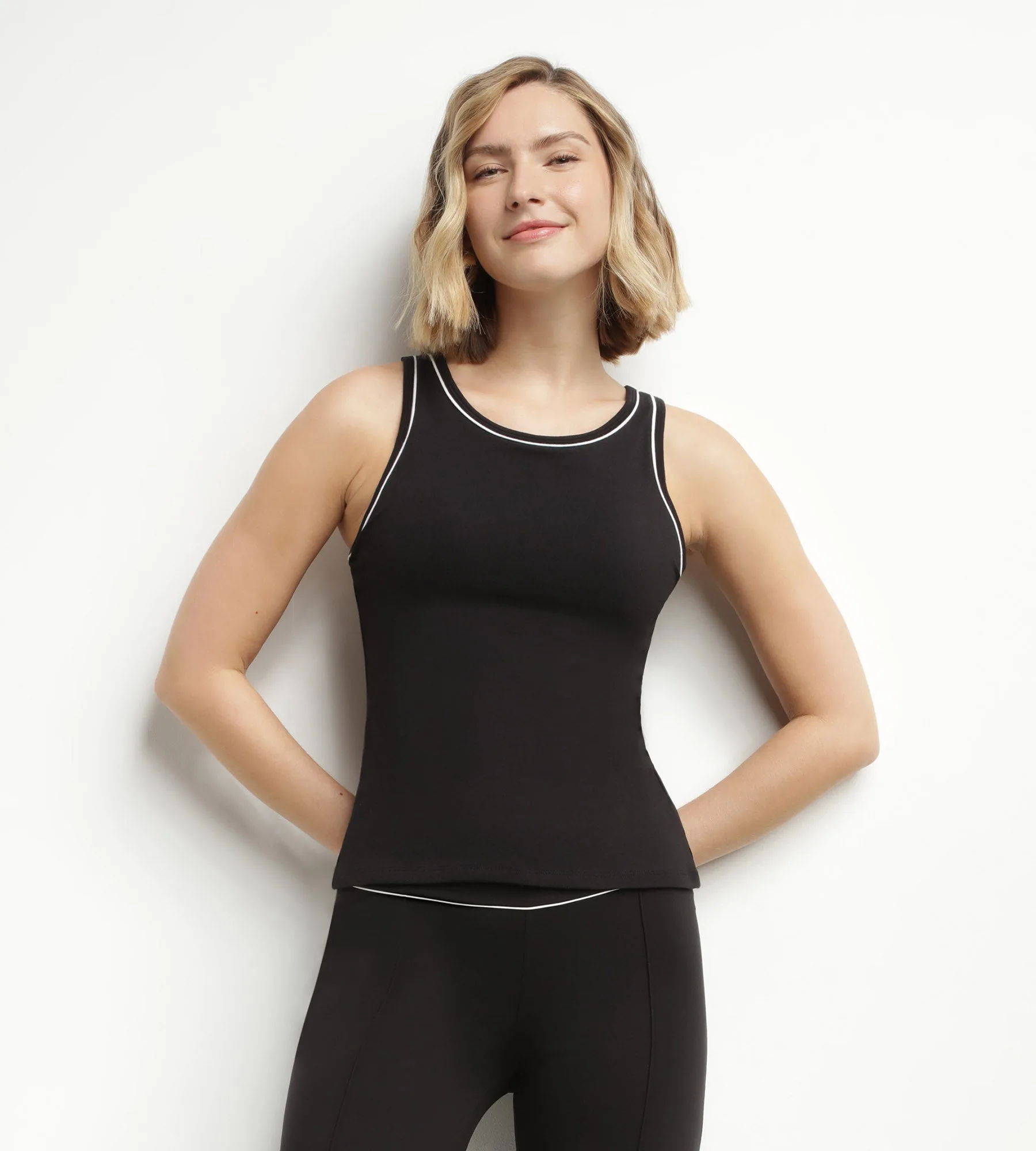
- Débardeur de sport femme thermorégulateur en jersey Noir Dim Move: Thermoregulating jersey fabric that stays dry and cool during intense effort, with a close-fitting cut and contrast piping at the neck and shoulders. Useful as a first active layer if your routine includes workouts, since it manages temperature and moisture rather than just covering.
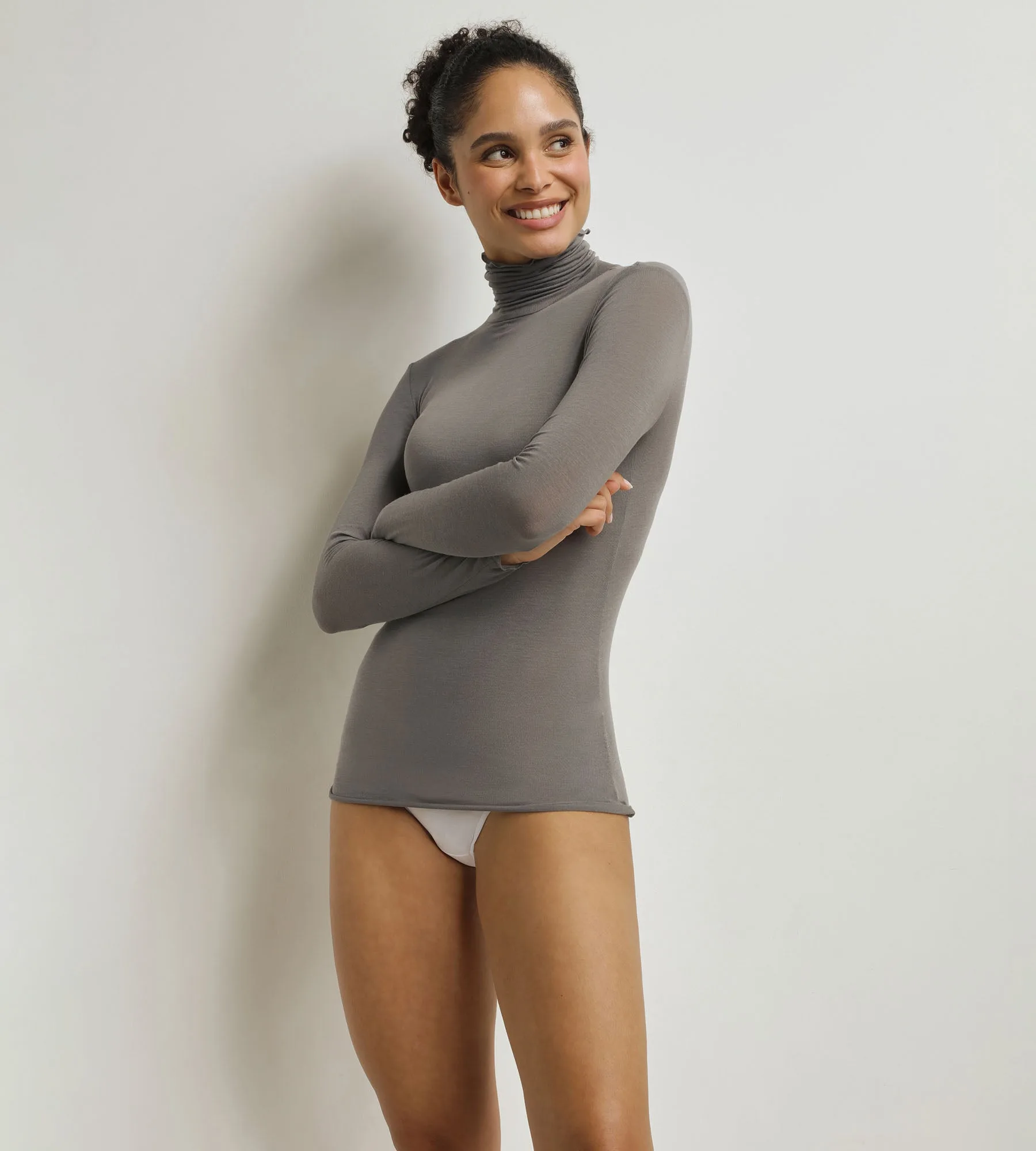
- T-shirt femme à col montant Gris Dim Thermal: Modal and cashmere blend that retains warmth, with a fine texture and fitted line for layering, plus a high neck and long sleeves. A smart layering piece over a first bra in cold weather, adding warmth without bulk under sweaters.
Who This First-Bra Approach Is For
Best for
- First-time bra buyers who want one reliable everyday style
- Anyone unsure whether to start with underwire or non-wired
- Shoppers who prefer to measure at home and buy online
Not for
- Shoppers looking for a strapless or specialty bra as their only purchase
- Anyone who needs a professional fitting for medical or post-surgery reasons
- People who want a single bra to cover sports, formal, and everyday use
Your first DIM bra doesn't have to be perfect, it just has to fit well and suit your day. Start with one everyday style in your measured size, add a non-wired option for comfort, and adjust as you learn what you reach for. That's how a beginner becomes a confident bra shopper.