Quick answer
Start by choosing one format you will actually display or wear: hoop art for wall or shelf presence, iron-on patches for wearable pieces, or postcards for low-cost collecting. Set a budget per piece, buy one-of-a-kind work when you want a focal point, and check the care and attachment details before you buy.
Collecting embroidery art gets easier when you treat it like building a small, personal collection rather than shopping for a single item. The format you choose changes how you store it, display it, and care for it, so the first decision is not which design looks best but where the piece will live.
This guide gives you decision rules for buying hand embroidery, from one-of-a-kind hoop art to hand-stitched patches and printed postcards. Use the rules to compare pieces honestly, including the trade-offs around care, display, and budget.
Choose the format before the design
Hoop art is the wall-and-shelf format. It is the right pick when you want a finished piece that hangs or rests on a surface without extra work. Because each hoop is a one-of-a-kind piece, you are buying the specific artwork shown, not a design that can be reproduced later.
Patches are the wearable format. They let you carry embroidery on a jacket, bag, or flat garment, and they cost less than a large hoop. Postcards are the entry format: low cost, easy to store, and simple to mail or frame. Decide which of these three you want before you fall for a specific design.
- If you have wall or shelf space, start with a hoop.
- If you want to wear the art, start with a patch.
- If you are testing whether you enjoy collecting, start with a postcard.
What to check before buying hand embroidery
For hoop art, check the hoop size and the stated handiwork time. A larger hoop gives more wall presence, while a smaller hoop fits tighter spaces and shelves. The listed hours tell you how much hand stitching went into the piece, which helps you judge value beyond the design alone.
For patches, check the backing and the care instructions. Iron-on backing is convenient, but heat-activated adhesive can degrade over time, so plan to add a few stitches for security. For postcards, check the paper weight and size; a heavyweight matte cardstock holds up better in the mail and in a frame.
- Hoop art: confirm hoop diameter and handiwork time.
- Patches: confirm backing type and wash instructions.
- Postcards: confirm size and paper weight before mailing.
Set a realistic budget and pace
A useful rule is to spend more on the piece you will see every day and less on the pieces you are still testing. One-of-a-kind hoop art sits at the top of the range, hand-stitched patches sit in the middle, and postcards sit at the bottom. That spread lets you collect consistently without stretching your budget.
Pace yourself by format rather than by count. Buying one hoop you love usually beats buying several small items you feel neutral about, because the hoop becomes a permanent part of your space. Patches and postcards are better for experimenting with styles before you commit to a larger piece.
- Buy the focal piece first, then fill in with smaller formats.
- Use postcards to test a style before buying a hoop in that style.
- Do not buy a patch unless you have a specific garment or bag in mind.
Display and care decisions that affect value
Hoop art can hang on a wall or rest on a shelf, so it needs less handling than a patch. Keep it out of direct sun and away from damp areas to protect the fabric and painted details. Patches need more attention because they live on clothing that gets washed and worn.
For iron-on patches, follow the wash instructions and add a few stitches after ironing. That extra step keeps the patch in place even if the adhesive weakens. Postcards are the easiest to store: keep them flat, dry, and out of direct light, whether you mail them or keep them.
- Hang or rest hoop art away from direct sun and moisture.
- Stitch patches in addition to ironing them on.
- Store postcards flat and dry to avoid bending.
Decision rules for buying hand embroidery
- Rule 1: Pick the format first: Choose hoop art for display, patches for wearing, or postcards for low-cost collecting. The format determines care, storage, and how often you handle the piece. If you cannot decide, start with a postcard.
- Rule 2: Match size to your space: An 8 inch hoop suits shelves and smaller walls, while a 9 inch hoop gives more wall presence. Measure the spot before you buy. Buy the size that fits the wall or shelf you already have.
- Rule 3: Check the backing and care notes: For patches, confirm the backing type and plan to add stitches even with iron-on adhesive. For hoop art, keep it out of direct sun and damp areas. If care instructions are missing, treat that as a reason to ask before buying.
- Rule 4: Spend more on the piece you see daily: Put more budget into a hoop you will display every day and less into pieces you are still testing. One-of-a-kind work is a focal point, not a bulk purchase. Buy one piece you love before buying three you feel neutral about.
Product facts to compare
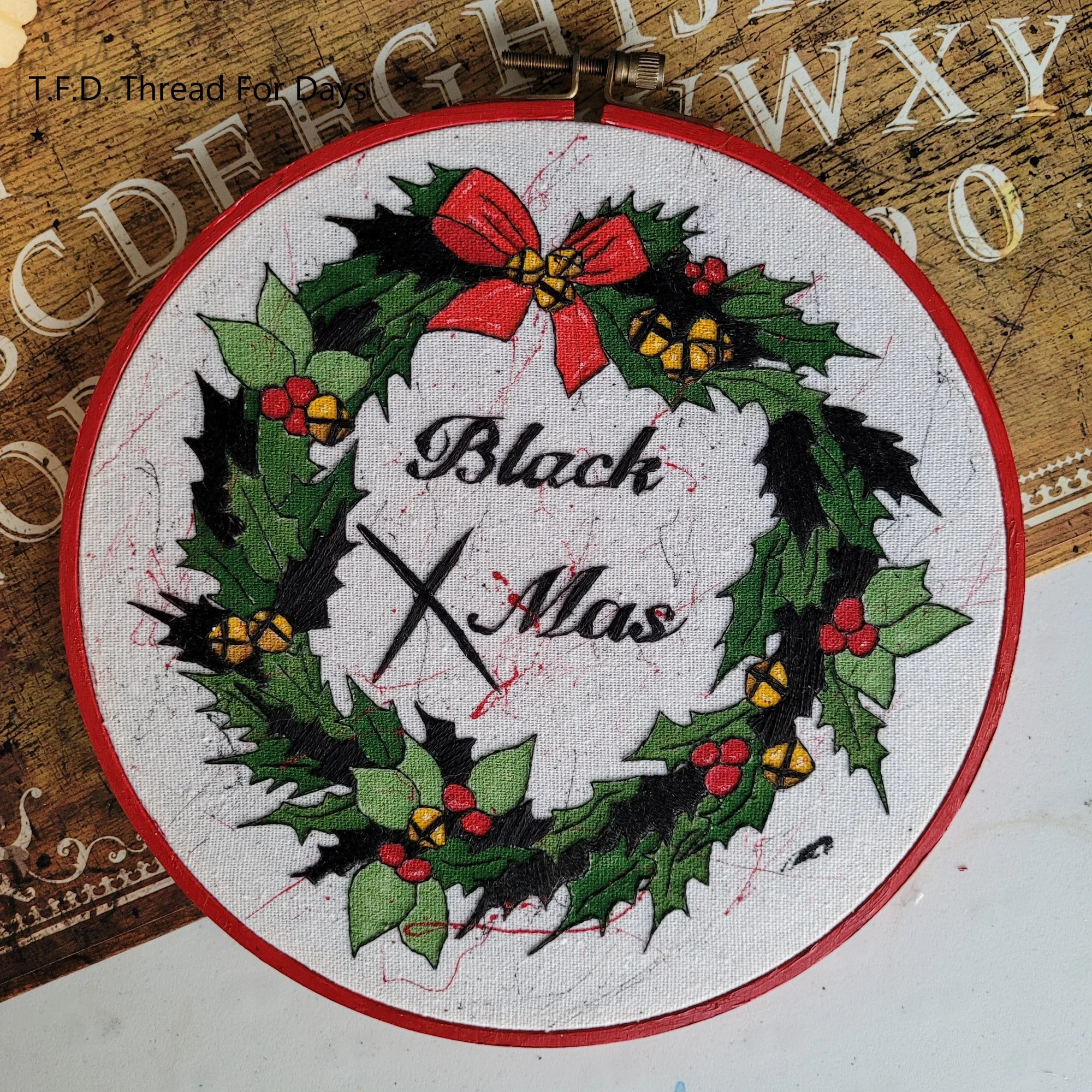
- Black Xmas | 8 inch Embroidery Hoop: One-of-a-kind hoop art in an 8 inch hoop, digitally drawn, hand stitched, and painted with acrylic and fabric paint, containing about 22 hours of handiwork. The 8 inch size fits shelves and smaller walls, and the stated 22 hours helps you judge the handwork behind the price.
- Dead Silence 9 inch Embroidery Hoop: One-of-a-kind hoop art in a 9 inch hoop, digitally drawn, hand stitched, and painted with acrylic and watercolours, containing about 22 hours of handiwork. The larger 9 inch hoop gives more wall presence, so compare it with the 8 inch option based on the space you have.
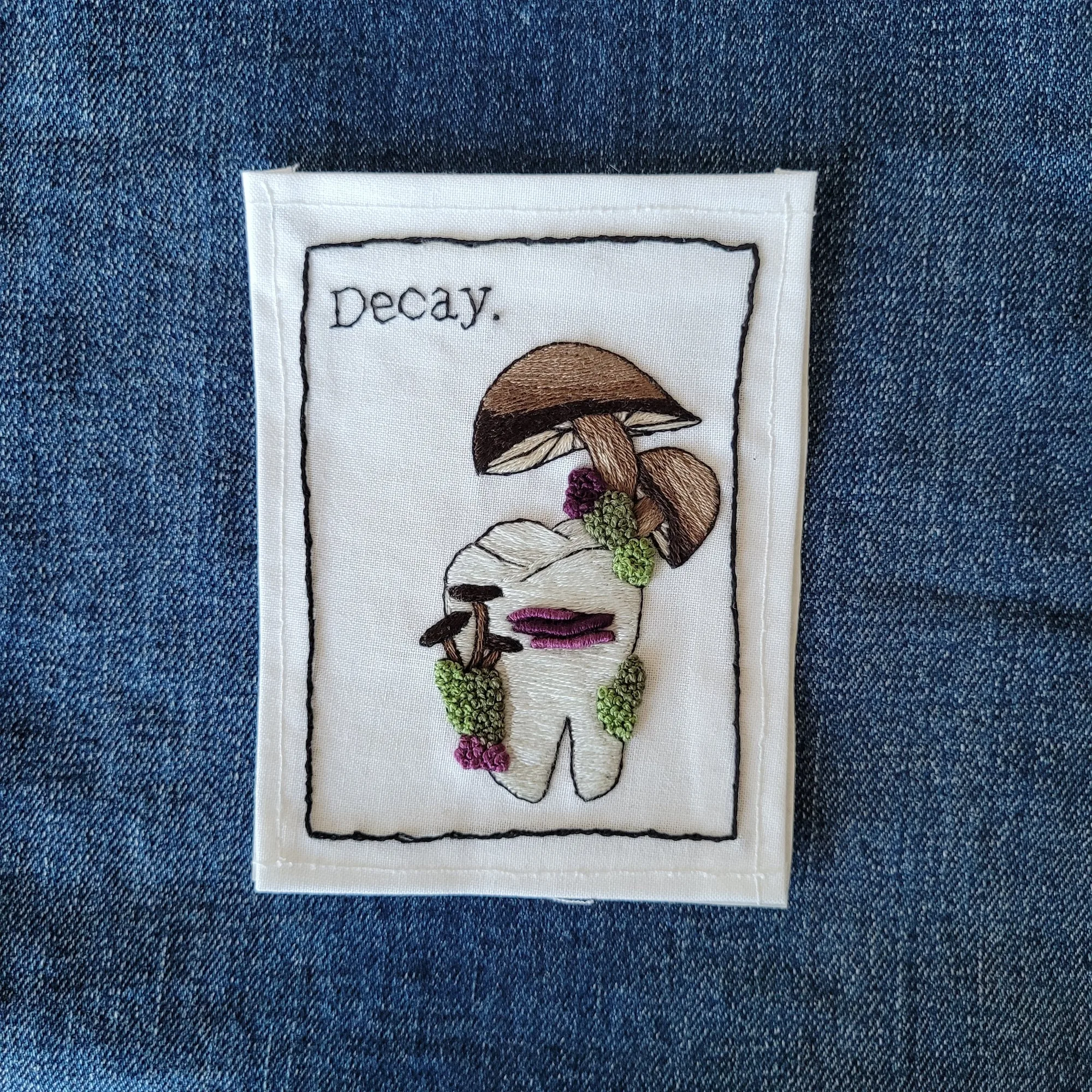
- Decay | Hand Embroidered Iron-on Patch: Hand stitched on off white cotton fabric with Heat-n-Bond ultra-hold backing; the maker recommends adding a few stitches because the adhesive may degrade over time. The backing makes application easy, but the stitching recommendation is the practical step that keeps the patch secure through wear and washing.
- Sexy and Chubby | 4x6 Postcard: A 4 x 6 double-sided postcard printed on durable 110lb matte heavyweight cardstock paper. The heavyweight matte stock holds up better in the mail and in a frame, making it a low-cost way to start collecting.
Who should buy which format
Best for
- Collectors who want a one-of-a-kind focal piece for a wall or shelf
- Buyers who want wearable embroidery on a jacket, bag, or flat garment
- Beginners who want a low-cost way to test a style before buying a hoop
Not for
- Shoppers who need a reproducible, identical item in multiple quantities
- Buyers who want a machine-made product with no hand-stitched variation
- Anyone who will not follow wash or display care instructions
Start with the format that matches how you will display or wear the piece, then use the decision rules to compare size, backing, and care before you buy. Collecting embroidery art works best when each purchase has a clear place to live.