Quick answer
Start with the wall or shelf space you actually have, then pick a hoop size that fits it: 9–10 inch hoops suit small walls and shelves, while 12 inch hoops anchor larger spaces. Buy one piece you love rather than several cheap ones, and confirm the hanging method and care instructions before checkout. If you want a handmade, one-of-a-kind piece, expect to pay for the hours stitched into it.
Embroidery hoop art is a hand-stitched piece stretched in a hoop and hung as wall art. Unlike mass-produced prints, each piece is usually designed and stitched by one maker, so no two are identical. That makes buying one less about comparing specs and more about matching a piece to your space, your budget, and how much care you're willing to give it.
This guide walks you through the decisions that actually change what you get: hoop size, materials, hanging method, and how to judge whether a price reflects the work. You'll also see how specific pieces from T.F.D. Thread For Days compare so you can apply the rules to real options.
Start with the space, not the hoop
Measure the wall or shelf area where the piece will live before you browse. A 9 inch hoop reads as a small accent; a 12 inch hoop becomes a focal point. If you're unsure, cut a paper circle to the hoop size and tape it to the wall for a day. This five-minute step prevents the most common beginner mistake: falling for a piece that overwhelms or disappears in the room.
Shelf styling changes the math. A hoop resting on a shelf needs clearance above it and a stable base, while a wall-hung piece only needs a nail or hook. If you rent and can't drill, plan for adhesive hooks rated well above the piece's weight, or choose a lighter hoop.
- Trace a paper circle at the hoop's diameter and test it on the wall before buying.
- Leave at least 2–3 inches of breathing room around a hoop on a shelf.
- For rentals, check the weight rating on removable hooks before committing.
Read the materials and construction
Hoop art is often multimedia: the fabric carries the stitching, and the hoop itself may be painted. Acrylic paint on the bamboo hoop and watercolour or fabric paint on the fabric are common combinations. Painted hoops can chip if knocked, and watercolour on fabric is not waterproof, so keep pieces out of steamy bathrooms and direct sun.
Look for how the piece is finished. A hoop that hangs flush against the wall protects the back; one that sits proud on a shelf shows more of the rim. Neither is better, but they suit different display spots. If the listing doesn't state the hanging method, treat that as a question to ask before buying.
- Painted hoops: handle by the rim, not the painted face.
- Watercolour on fabric: avoid damp rooms and prolonged direct sunlight.
- If hanging hardware isn't listed, ask the maker before you buy.
Judge price by hours, not inches
Hand-stitched hoop art is priced by labour as much as size. A 9 inch piece with 22 hours of work and a 12 inch piece with 30 hours of work are not interchangeable, even if the price gap looks large. When you compare two hoops, divide the price by the stated hours to get a rough sense of the maker's rate, then decide whether the design justifies it for you.
One-of-a-kind means exactly that: once a piece sells, it's gone. If you're drawn to a specific design, don't wait for a sale that may never come for that exact hoop. If you want flexibility, choose a smaller piece now and add a larger one later as your space evolves.
- Ask for the stitched hours if the listing doesn't state them.
- Compare price-per-hour across pieces, not just total price.
- One-of-a-kind pieces won't restock, so buy the design you love.
Care and longevity before you commit
Dust is the main enemy of displayed hoop art. A soft brush or a low-suction vacuum attachment used gently once a month keeps stitching crisp. Never submerge a multimedia hoop in water; spot-clean only if the maker explicitly says the materials allow it. If care instructions aren't supplied, assume dry dusting only.
Sunlight fades fabric paint and watercolour over time. Rotate pieces away from windows every few months, or place them on a wall that gets indirect light. These habits cost nothing and add years to a piece you've paid a handmade price for.
- Dust monthly with a soft brush; avoid wet cloths on painted or watercolour areas.
- Rotate pieces out of direct sun every few months.
- No care instructions? Default to dry dusting only.
When to buy a patch instead of a hoop
If your budget is under $30 or you want something wearable, an iron-on patch is the better entry point. Patches let you test whether you enjoy hand-stitched textile art before committing to a display piece. They also travel well on jackets and bags, which hoop art does not.
The trade-off is durability. Iron-on backing can degrade over time, and makers often recommend adding a few stitches to secure the patch. If you want zero maintenance, a hoop that simply hangs is easier. If you want to wear the art, accept the occasional re-stitch.
- Under $30 and wearable: choose a patch.
- Display-only and low-maintenance: choose a hoop.
- Expect to reinforce iron-on patches with a few stitches over time.
Decision rules for buying hoop art
- If your wall space is under 12 inches wide: Choose a 9 or 10 inch hoop. A 12 inch piece will feel cramped and leave no margin. Measure first; size mismatch is the most common beginner regret.
- If your budget is under $80: Look at 9 inch hoops or the Vervain patch. Larger hoops with 25–30 hours of work will exceed this range. Decide whether you want display art or wearable art before browsing.
- If you want zero maintenance: Choose a hoop that hangs on the wall and skip iron-on patches, which may need reinforcing stitches over time. Patches are wearable but not maintenance-free.
- If you're buying a gift: Pick a smaller hoop unless you know the recipient's wall space. A 9 inch piece is easier to place than a 12 inch one. When in doubt, go smaller and let the recipient scale up later.
- If you fall in love with a one-of-a-kind design: Buy it when you see it. These pieces don't restock, and waiting for a discount usually means losing the piece. One-of-a-kind means one chance.
How specific pieces compare
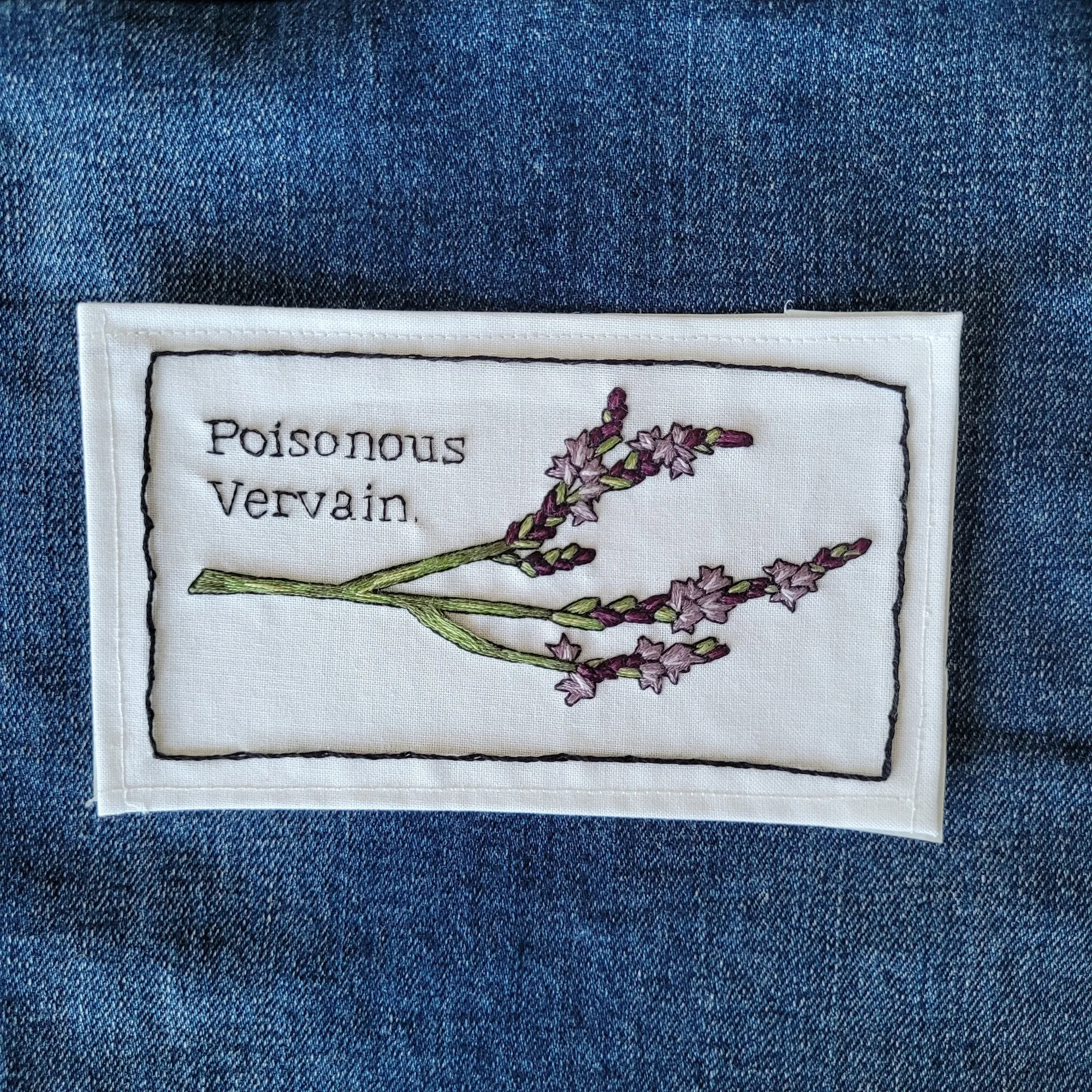
- Vervain | hand Embroidered iron-on Patch: Part of the Death and Nature collaboration series, designed and hand stitched on off-white cotton with Heat-n-Bond ultra-hold backing; the maker recommends adding a few stitches because ultra hold may degrade over time. A low-commitment way to try hand-stitched textile art, but plan for periodic re-stitching if you wear it often.
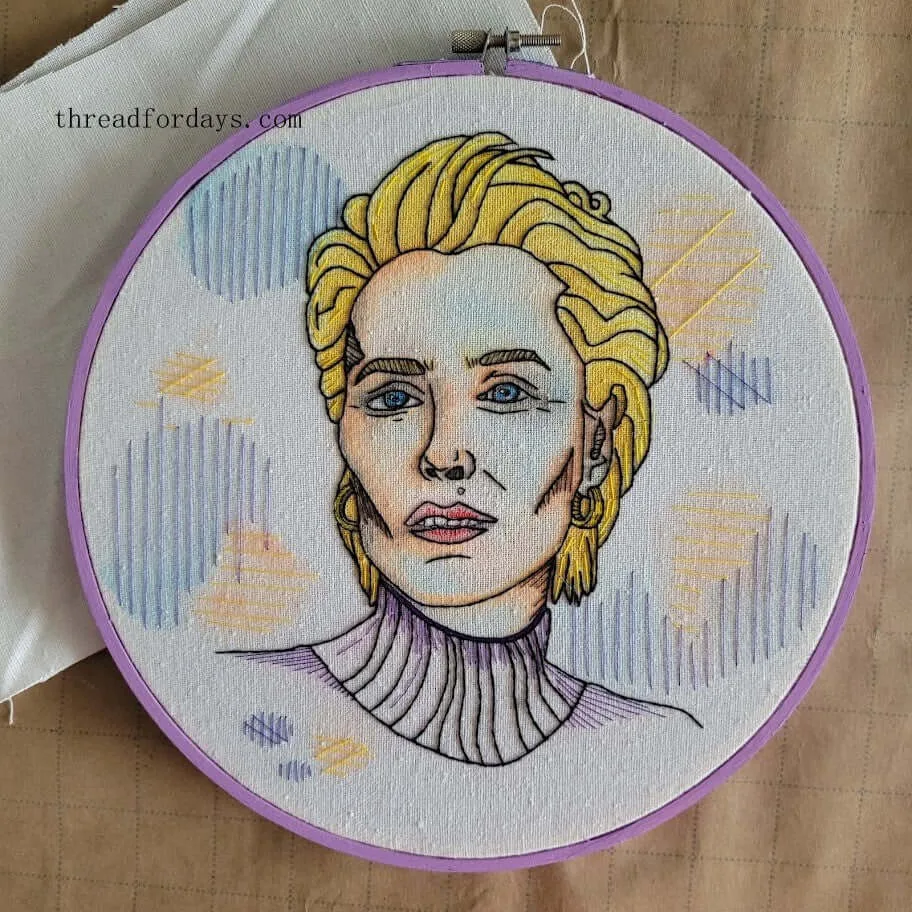
- Gillian Anderson | 9inch Embroidery Hoop: One-of-a-kind 9 inch hoop, digitally drawn, hand stitched, and painted with acrylic on the hoop and watercolours on the fabric; about 22 hours of handiwork. A small-wall or shelf piece where the price reflects roughly 22 hours of labour, not just the 9 inch size.
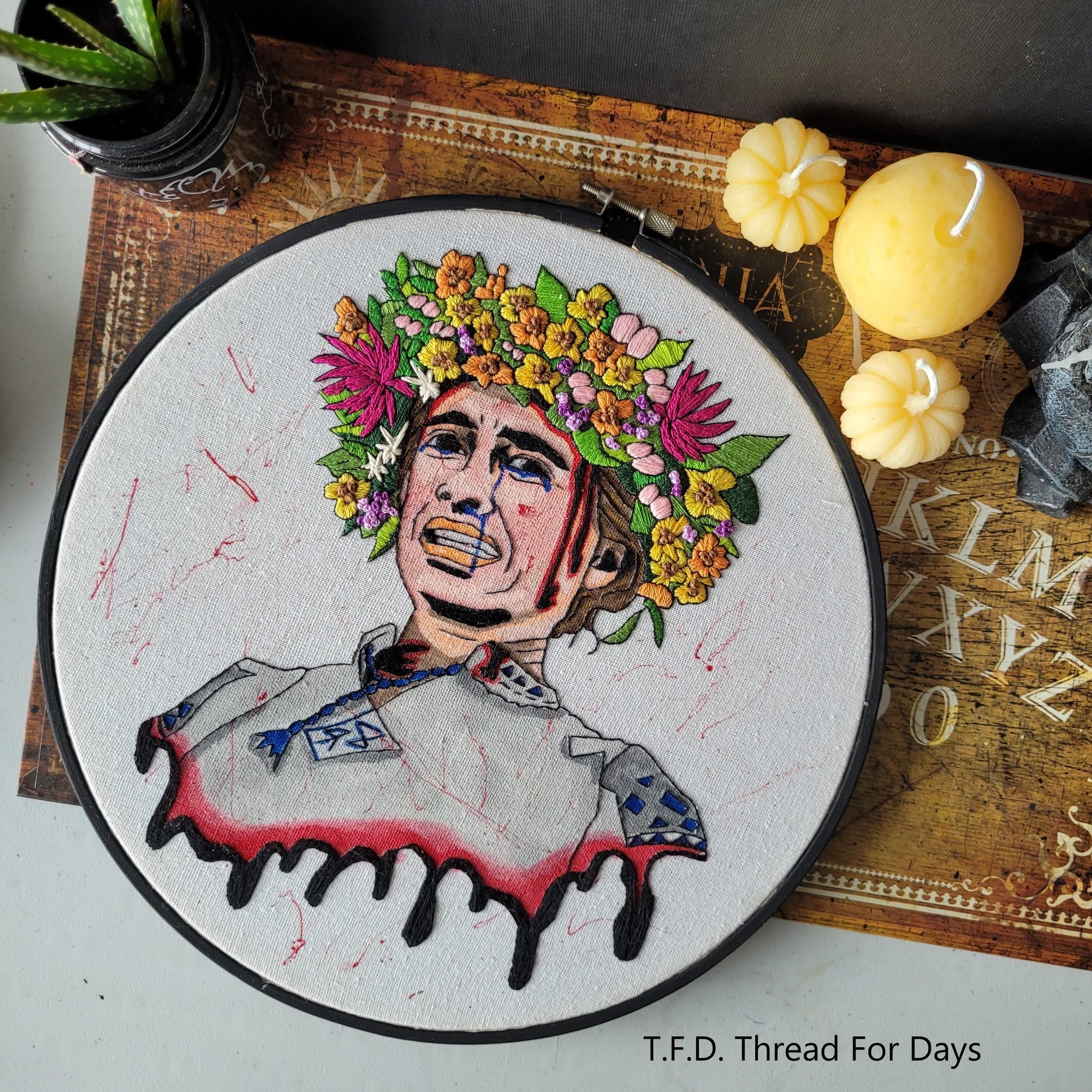
- Midsommar | 10 inch Embroidery Hoop: One-of-a-kind 10 inch hoop, digitally drawn, hand stitched, and painted with acrylic on the bamboo hoop and fabric paint on the fabric; about 25 hours of handiwork. A middle size that suits a small gallery wall; fabric paint is more forgiving than watercolour but still not waterproof.
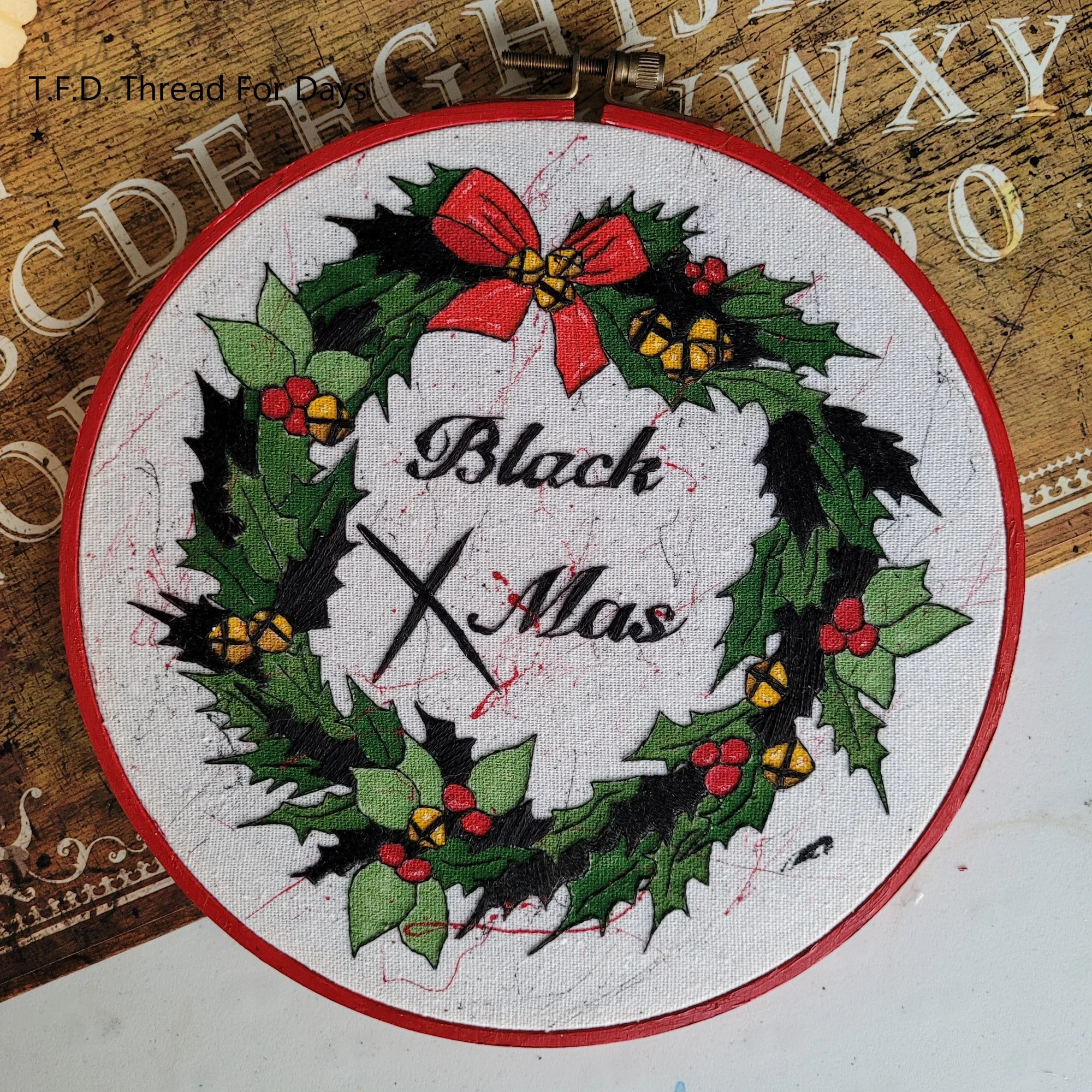
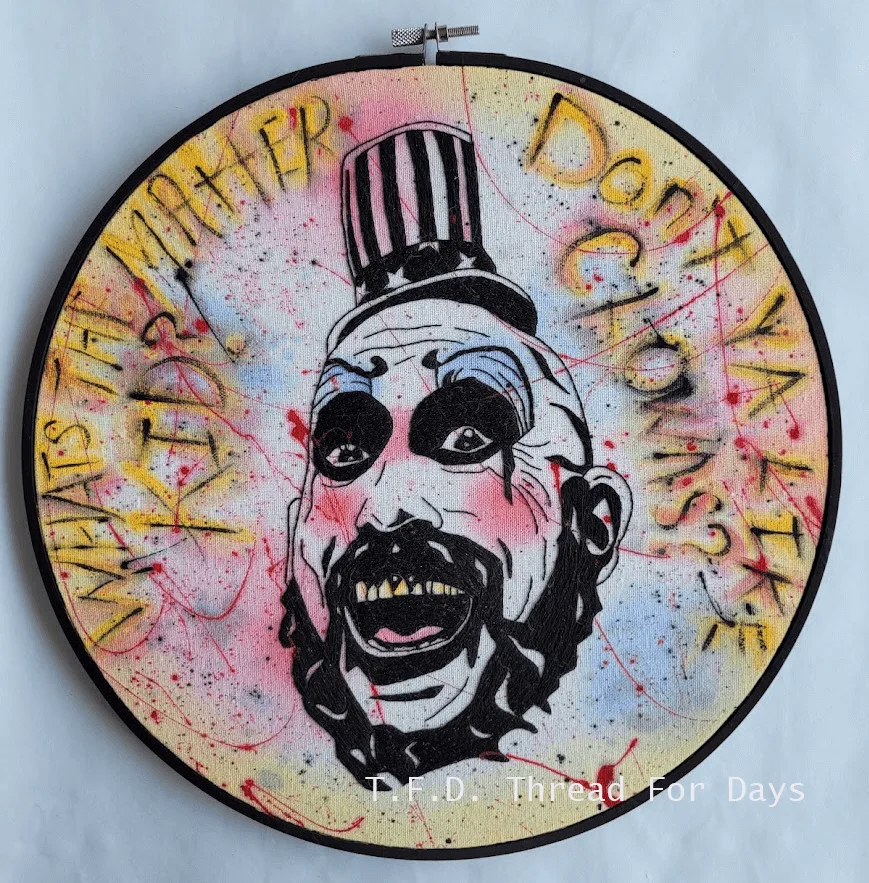
- Captain Spalding 12 inch Embroidery Hoop: One-of-a-kind 12 inch hoop, digitally drawn, hand stitched, and painted with acrylic and watercolours; about 30 hours of handiwork; can hang on a wall or rest on a shelf. The largest option here, best for a focal wall; the dual display method gives you flexibility if you rearrange.
Who this guide is for
Best for
- First-time buyers who want a handmade display piece and need help choosing a size
- Shoppers comparing one-of-a-kind hoops and trying to judge price fairly
- Gift buyers who need a piece that fits an unknown wall or shelf
Not for
- Buyers who want a mass-produced print at a low price
- Shoppers who need a waterproof or outdoor-safe decoration
- Anyone unwilling to dust and keep the piece out of direct sun
Buying embroidery hoop art comes down to three checks: does the size fit your space, do the materials match where you'll display it, and does the price reflect the hours stitched into it. Apply those rules to the pieces above, and you'll choose a hoop you still love a year from now.