Quick Answer
Glow-in-the-dark puzzles can turn the frantic pre-bed hour into a calm, screen-free ritual that still sparks curiosity. Look for puzzles with large, durable pieces and educational themes so kids wind down while learning something real.
If your child's bedtime routine has become a battle against glowing screens and endless excuses, you're not alone. Many parents struggle to find activities that are both calming and engaging enough to pull kids away from devices.
Glow-in-the-dark puzzles offer a clever solution: they transform a familiar quiet-time activity into something magical that only works when the lights are low. That built-in constraint naturally signals 'wind down time' while keeping little hands and minds busy.
Why Glow-in-the-Dark Puzzles Work for Bedtime
The key to a successful bedtime routine is consistency and a clear transition from high-energy play to rest. Glow-in-the-dark puzzles excel here because they require dimmed lights, which cues the brain to produce melatonin. The focused, repetitive motion of fitting pieces together also has a meditative quality that lowers heart rate and anxiety.
Unlike passive screen time, puzzles engage fine motor skills and problem-solving without blue light exposure. When the puzzle is educational—like one showing the human heart or a tiger's anatomy—kids absorb facts effortlessly, turning 'just playing' into a stealth learning session.
- Set a 'puzzle time' 20 minutes before lights-out to create a predictable routine.
- Keep the puzzle on a tray so it can be saved for the next night if not finished.
What to Look For in a Glow-in-the-Dark Puzzle
Not all glow puzzles are equal. For younger kids, large pieces and sturdy cardboard are essential—they're easier to grip and survive being dropped. Double-sided puzzles that show a realistic animal or organ on one side and a labeled diagram on the other add extra educational value.
Consider the theme. If your child is into animals, a cat or dog puzzle might be more motivating than a human anatomy one. But if they're curious about how their body works, an anatomy puzzle can spark conversations about health and biology at bedtime.
- Check piece count: 100 pieces is ideal for ages 4–7; 500+ for older kids.
- Look for '100% accurate' or 'medically accurate' if you want real science, not cartoonish approximations.
Diagnosing Your Bedtime Puzzle Strategy
- Symptom: Child resists going to bed, asks for 'just one more video,' or seems wired when lights go out. Recognize that the issue is often a lack of a calming, engaging offline activity.
- Likely Cause: Screen time before bed stimulates the brain and delays melatonin production, making it hard to settle down. Replace screens with a low-light, hands-on activity that signals 'sleep mode.'
- Corrective Action: Introduce a glow-in-the-dark puzzle as part of a 20-minute pre-bed routine. Choose a theme your child loves, and keep the lighting dim to enhance the glow effect. If your child is under 5, choose a 100-piece floor puzzle with large pieces. For older kids, a more detailed anatomy puzzle adds challenge and learning.
- When to Stop or Choose Another Option: If your child shows no interest in puzzles after a few tries, don't force it. Consider other calming activities like audiobooks or drawing. Also, if the puzzle pieces are too small or frustrating, switch to a simpler version to avoid bedtime tears. The goal is a calm, happy transition to sleep—not a perfect puzzle completion.
Puzzles That Fit the Bill
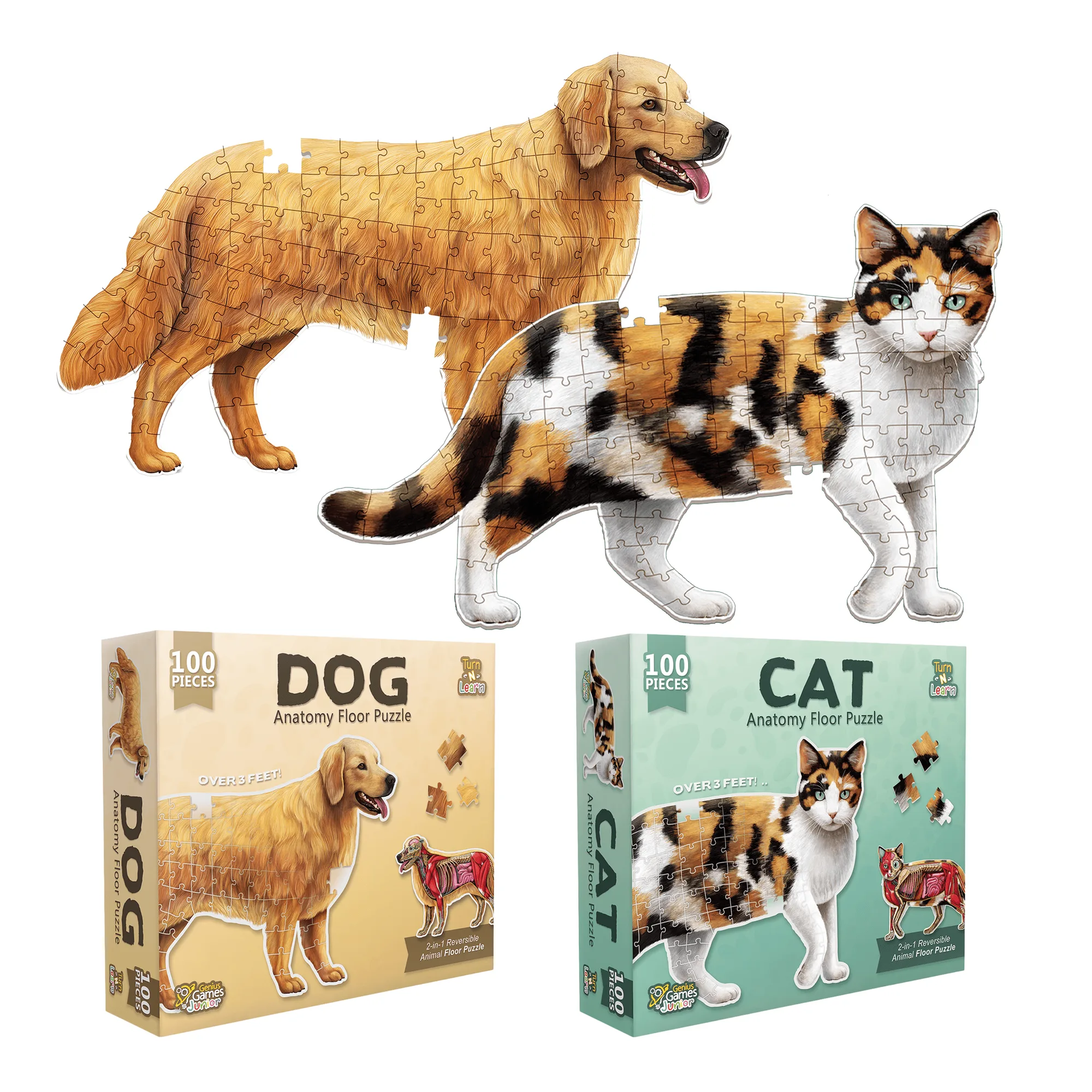
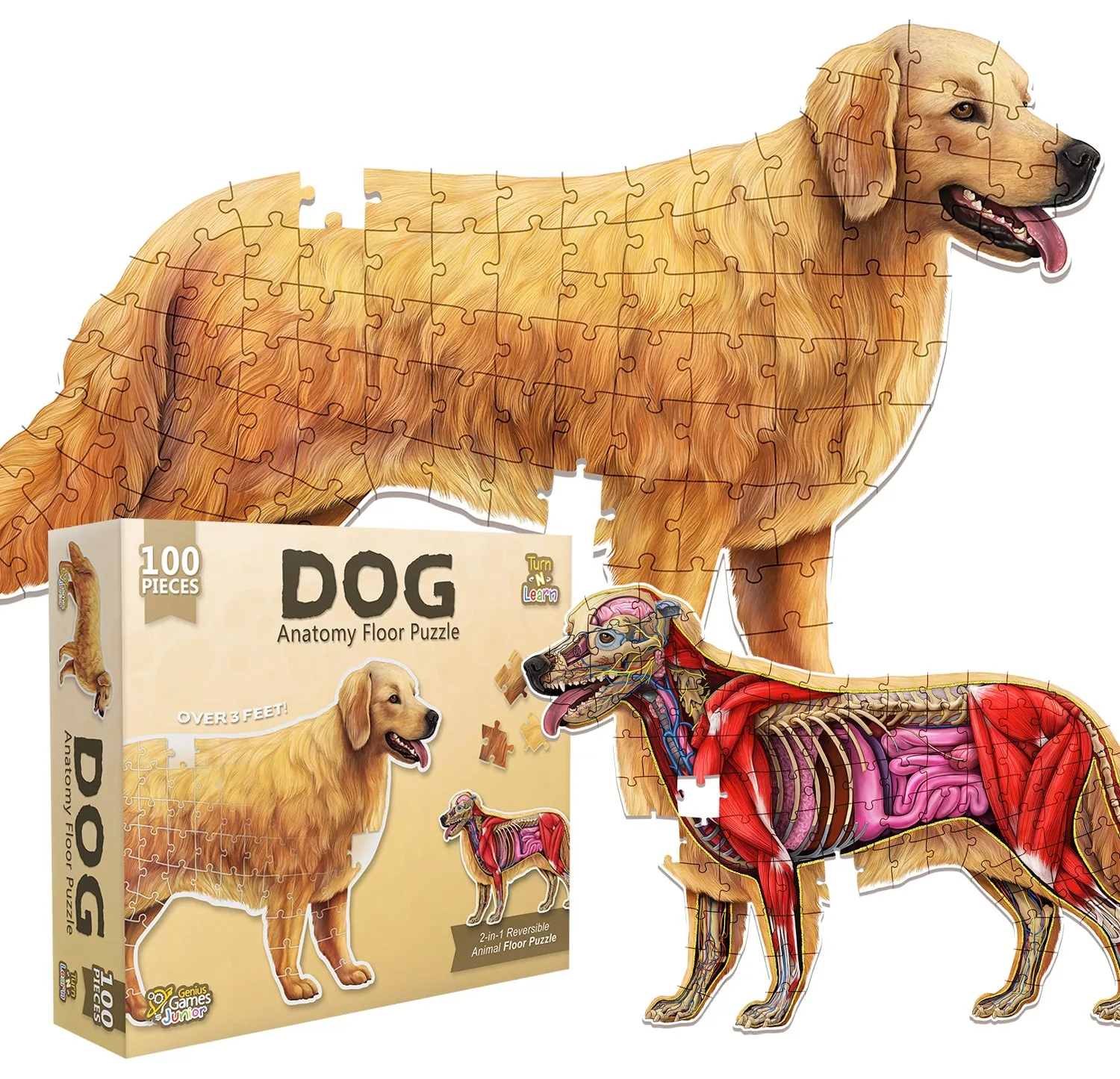
- Bundle - Cat and Dog Jigsaw Puzzle - 4FT Double Sided Floor Puzzle: This bundle of double-sided Animal Puzzles combines stunning animal artwork and scientifically accurate anatomy illustrations, featuring the Calico Cat and a Golden retriever Dog. Each puzzle spans over 3 feet with large, safe pieces ideal for young children. The double-sided design lets kids admire a beautiful animal, then flip to explore its skeleton and organs—perfect for curious minds. Large pieces are easy for small hands, and the 4-foot size makes it a fun floor activity that can be done together before bed.
- Human Heart Anatomy Jigsaw Puzzle | Dr. Livingston's Unique Shaped Science Puzzles: Assemble the human heart at 600% magnification! Each piece is custom cut, making for a unique puzzle to put together. Illustrated by Mesa Schumacher, a Certified Medical Illustrator from Johns Hopkins University. This puzzle is a conversation starter about how the heart works, turning bedtime into a mini biology lesson. The unique shaped pieces add an extra challenge that keeps older kids engaged without screens.
Glow-in-the-dark puzzles are more than a novelty—they're a practical tool for easing kids into sleep while feeding their curiosity. By choosing a puzzle that matches your child's age and interests, you can turn bedtime into a moment they actually look forward to.