Material Matters in Bi-Convex Lenses
When selecting a bi-convex lens for finite conjugate imaging over a narrow spectral range, the substrate material directly affects performance, cost, and durability. Esco Optics offers two popular options: G1 Commercial Grade Fused Quartz and N-BK7 Optical Glass. Both are pitch polished and edge-finished, but their material properties suit different priorities.
Surface Quality and Material Differences
-
Bi-Convex Lenses, G1 Commercial Grade Fused Quartz: Bi-Convex Lenses, G1 Commercial Grade Fused Quartz — pitch polished to provide superior surface quality and excellent low-cost imaging performance with a variety of light sources. Superior surface quality is critical for applications where minimal scatter and high transmission across UV to IR are needed. Fused quartz handles broader spectral ranges and thermal stress better than standard glass.
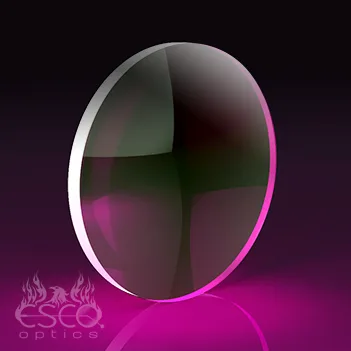
Bi-Convex Lenses, G1 Commercial Grade Fused Quartz
-
Bi-Convex Lenses, N-BK7 Optical Glass*: Bi-Convex Lenses, N-BK7 Optical Glass* — pitch polished to provide precision surface quality and excellent low-cost imaging performance with a variety of wavelength applications. Precision surface quality at a lower price point makes N-BK7 an excellent choice for visible-light systems where cost is a primary concern. N-BK7 offers good transmission in the visible and near-IR.
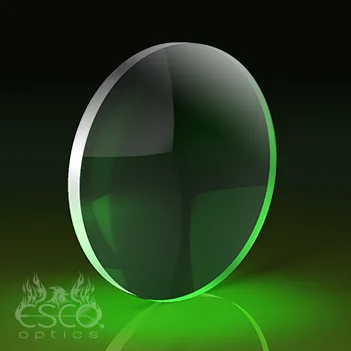
Bi-Convex Lenses, N-BK7 Optical Glass*
G1 Fused Quartz vs N-BK7: Key Tradeoffs
- Spectral Range: G1 fused quartz transmits well from UV through IR, making it suitable for broadband or UV applications. N-BK7 is optimized for visible and near-IR, with lower UV transmission.
- Surface Quality: G1 fused quartz is described as providing 'superior surface quality,' while N-BK7 offers 'precision surface quality.' For applications demanding the lowest scatter, G1 is the better choice.
- Cost: N-BK7 lenses start at a lower catalog price (USD 19.54) compared to G1 fused quartz (USD 29.52). If budget is tight and your source works in the visible spectrum, N-BK7 delivers excellent performance per dollar.
- Thermal Stability: Fused quartz has a very low coefficient of thermal expansion, making G1 lenses more stable in environments with temperature fluctuations. N-BK7 glass is more susceptible to thermal expansion.
Choosing the Right Variant for Your Setup
Both lens families are available in multiple diameter and focal length combinations. Select the variant that matches your optical path constraints. For UV or broadband work, or where thermal stability matters, choose G1 fused quartz. For visible-light systems on a budget, N-BK7 provides precision at a lower cost. Note that if you order N-BK7, you should indicate in order notes if N-BK7 is specifically required, as equivalent glass may be substituted.