Two Different Ways to See a Threat
A standard 4K security camera captures visible light in high detail, making it ideal for identifying faces, license plates, and daytime activity. A bi-spectrum thermal camera like the Defender Pro 4MP AI POWERED Bi-Spectrum Thermal PoE Turret Camera adds a second imaging channel that detects heat rather than light. This changes what the camera can see and when it can see it.
If your main concern is color detail in well-lit conditions, a standard 4K camera is the straightforward choice. If you need to detect people, animals, or vehicles in total darkness, through fog, or across long distances without relying on visible light, the bi-spectrum thermal approach offers capabilities a visible-light camera cannot match.
What the Defender Pro Bi-Spectrum Thermal Camera Provides
The Defender Pro 4MP AI POWERED Bi-Spectrum Thermal PoE Turret Camera combines two imaging sensors in one unit. The 4MP visible-light sensor provides clear, detailed video footage during the day. The thermal sensor detects heat signatures, giving you visibility in both the visible and thermal spectrums. This means the camera can identify a warm object moving through a scene even when there is no light at all.
AI-powered analytics on this camera help reduce false alarms by distinguishing between real threats (a person or vehicle) and harmless triggers like swaying branches or small animals. The turret design allows flexible mounting and field-of-view adjustments, and Power over Ethernet (PoE) simplifies installation by carrying power and data over a single cable.
Defender Pro 4MP AI Bi-Spectrum Thermal Camera at a Glance
-
Defender Pro 4MP AI POWERED Bi-Spectrum Thermal PoE Turret Camera: 4MP resolution delivers clear, detailed video footage. Provides enough detail for daytime identification while the thermal sensor handles low-light or zero-light detection.
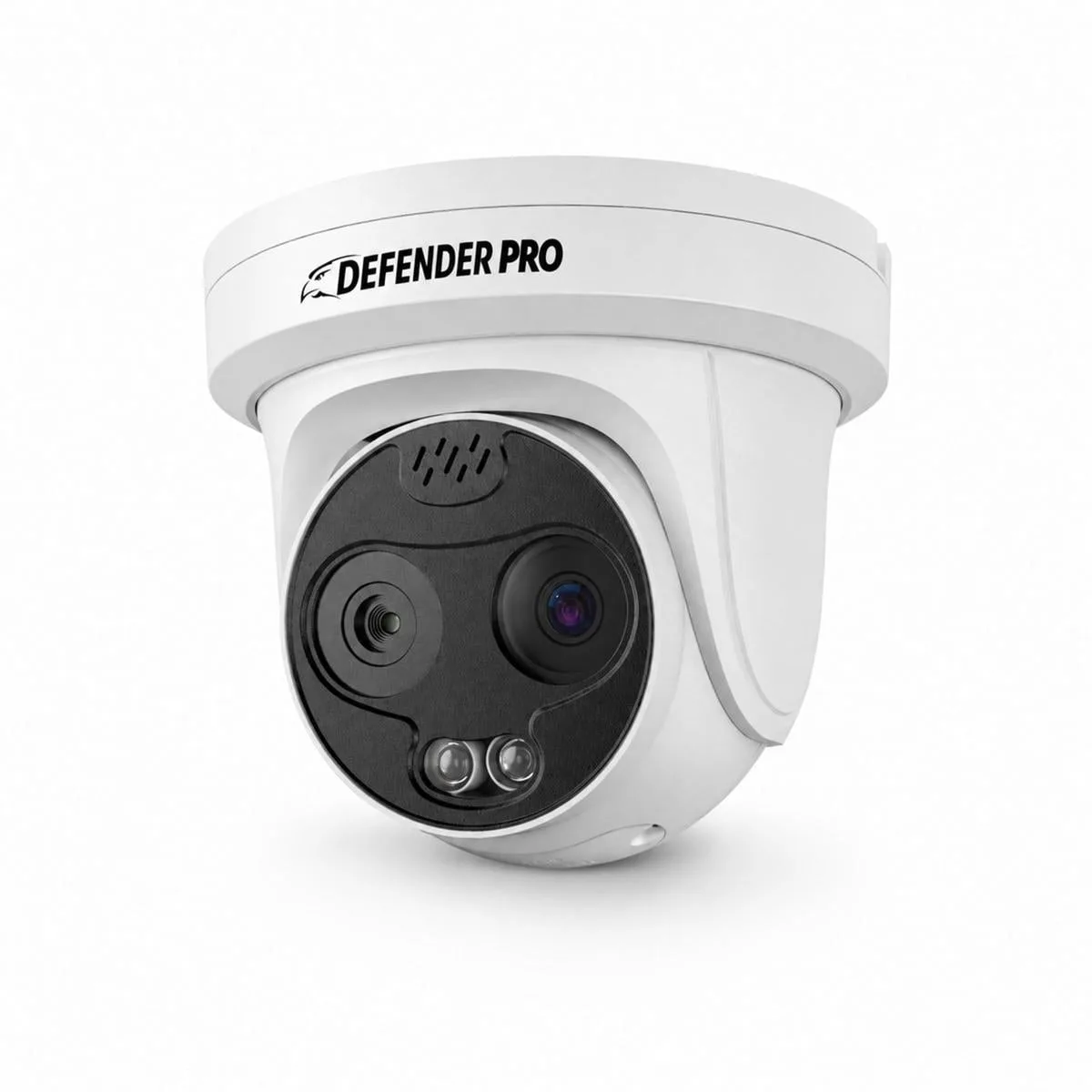
Defender Pro 4MP AI POWERED Bi-Spectrum Thermal PoE Turret Camera
-
Defender Pro 4MP AI POWERED Bi-Spectrum Thermal PoE Turret Camera: Bi-spectrum thermal technology provides visibility in both visible and thermal spectrums. This is the defining feature: you get a conventional video feed plus a heat-sensing overlay, so you can spot intruders that standard 4K cameras would miss in darkness.
-
Defender Pro 4MP AI POWERED Bi-Spectrum Thermal PoE Turret Camera: AI-powered analytics enhance detection accuracy and reduce false alarms. Thermal cameras can pick up heat from any warm object; AI helps the camera ignore non-threatening heat sources and alert you only when a person or vehicle is detected.
-
Defender Pro 4MP AI POWERED Bi-Spectrum Thermal PoE Turret Camera: PoE (Power over Ethernet) connectivity simplifies installation with a single cable for power and data. No separate power outlet needed at the camera location, which makes installation cleaner and more flexible, especially for outdoor or remote mounting.
Bi-Spectrum Thermal vs Standard 4K Camera: When to Choose Each
- Lighting conditions: Standard 4K cameras need visible light (or an integrated IR illuminator) to produce a usable image. The bi-spectrum thermal camera sees heat, so it works in complete darkness without any light source.
- Detection vs identification: A standard 4K camera excels at identifying a person's face or a license plate in good light. The thermal camera is better at detecting that someone is there, even through smoke, fog, or foliage, but the thermal image may not show facial features.
- False alarm reduction: Both camera types can trigger on motion, but the Defender Pro's AI analytics are designed to distinguish heat sources that match a person or vehicle from non-threatening heat (e.g., a warm car engine cooling down). Standard 4K cameras rely on motion or pixel-change detection, which can be triggered by light changes, shadows, or animals.
- Installation and power: Both types can use PoE, but the bi-spectrum thermal camera does not need additional IR illuminators or floodlights. This can simplify cabling and reduce overall power draw compared to a standard 4K camera that relies on IR LEDs for night vision.
What the Supplied Information Does Not Confirm
The supplied records do not specify the thermal sensor's resolution, temperature range, or detection distance. If you need to compare exact thermal performance metrics (such as maximum detection range for a human-sized target), those details are not available in the provided information. Similarly, the standard 4K camera used for comparison is not a specific model in this article, so general statements about its resolution and night vision capabilities are based on common knowledge rather than a specific Defender product record.
For the Defender Pro 4MP AI Bi-Spectrum Thermal PoE Turret Camera, the evidence confirms PoE connectivity, 4MP visible resolution, AI analytics, and bi-spectrum imaging. Any claim about battery life, wireless range, or specific temperature thresholds would exceed the supplied facts.