A first puzzle that starts with the pieces, not the picture
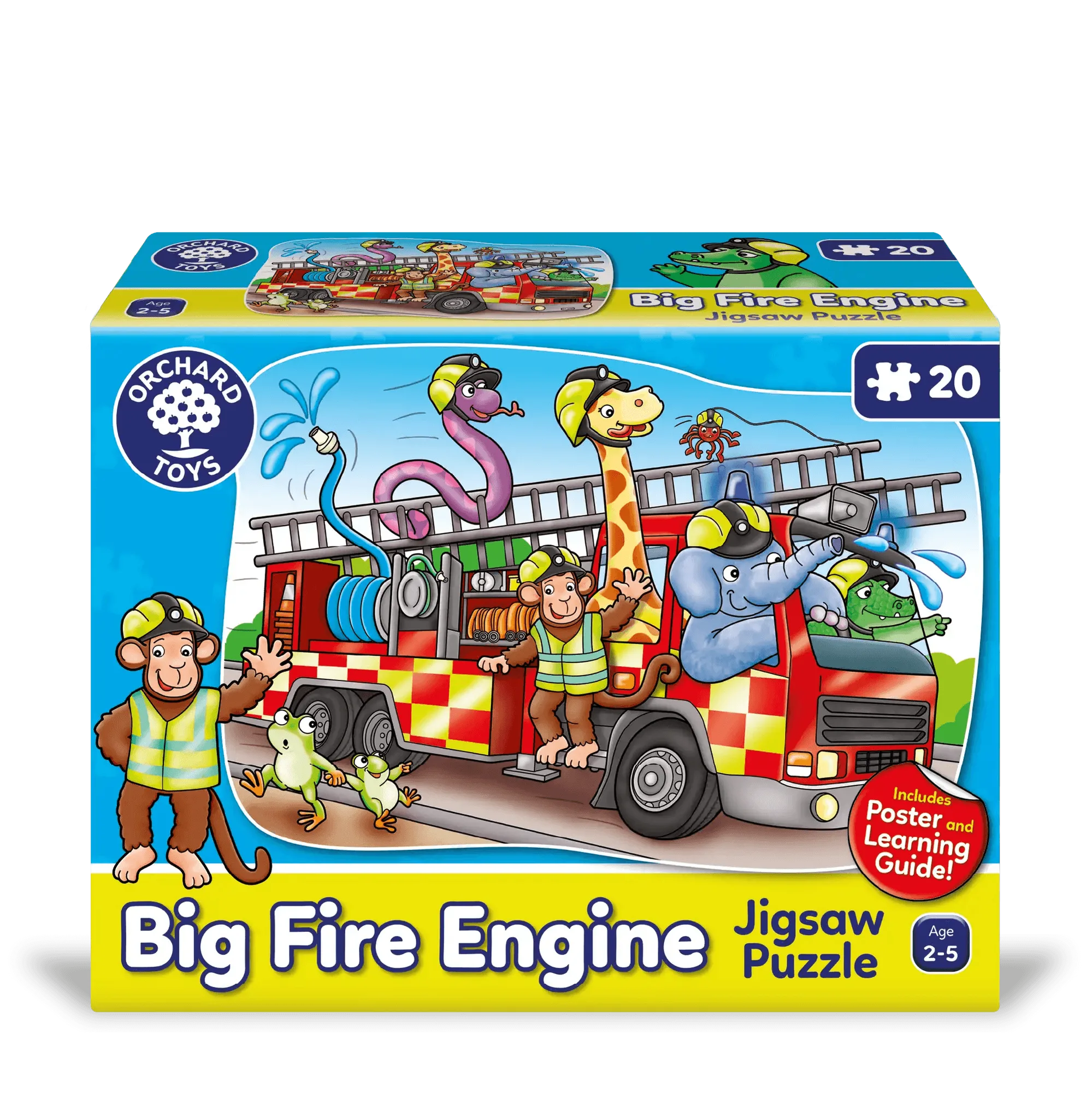
The Big Fire Engine Jigsaw Puzzle is a 20-piece scene with a jolly animal firefighting crew, and it comes with a bright poster and a learning guide. For a toddler’s first build, the poster is the real starting point: it shows the finished picture without the pressure of assembling it. Lay out the 20 pieces face up, put the poster where your child can see it, and let them explore the pieces before you try to connect anything.
This is a fire engine puzzle for toddlers, but it is also a first jigsaw puzzle, so the goal is not speed. The supplied information does not include an age recommendation, piece size, or manufacturer building steps, so treat the routine below as general first-jigsaw guidance rather than a set of official instructions.
What comes in the box
-
Big Fire Engine Jigsaw Puzzle: Contents: 20 puzzle pieces, 1 poster, 1 learning guide. Knowing the three components helps you set up a first build: pieces for hands, poster for reference, guide for conversation.
Big Fire Engine Jigsaw Puzzle
-
Big Fire Engine Jigsaw Puzzle: The 20-piece scene features a fun and quirky firefighting crew with lots to see and talk about. A busy scene gives you natural pause points and conversation starters while your child builds.
A simple first-build routine
Use these steps as a flexible rhythm. Stop when your child loses interest and come back later; short, happy sessions build more confidence than long ones.
- 1. Set out the poster and the pieces: Place the poster flat where your toddler can see it. Tip the 20 pieces out face up and give them a minute to pick up and turn the pieces. Name what you see: a wheel, a helmet, a green hose.
- 2. Sort by what stands out: With a toddler, sorting by colour or shape can be too abstract. Instead, ask them to find pieces with a wheel, a face, or a hose. The supplied scene description mentions a green hose and helmets, so those are concrete things to search for together.
- 3. Build one connection at a time: Choose two pieces that clearly fit and let your child try them. If they struggle, turn the pieces so the connection is easier to see. Celebrate the click, then look at the poster to decide what to add next.
- 4. Use the poster as a map: When your child is unsure where a piece goes, point to the matching area on the poster. This keeps the poster useful without doing the puzzle for them.
- 5. Pause and talk: The learning guide suggests finding the green hose, counting the helmets, and asking why we need fire engines. Use one question when your child needs a break from building, then return to the pieces.
How to help without taking over
- Offer a choice, not a correction: Instead of saying a piece is wrong, ask, “Does this one go here or here?” and point to two spots on the poster.
- Let them turn the pieces: Rotating a piece is part of learning how jigsaws work. Give your child time to try before you adjust it.
- Keep the talk concrete: The learning guide’s examples—finding the green hose and counting the helmets—are easy to spot in the scene. Use those before moving to bigger questions like why fire engines exist.
- Finish on a high note: If the last few pieces are frustrating, build them together or leave the puzzle out to finish later. A completed puzzle is less important than a child who wants to come back.
Making the learning guide part of the build
The learning guide is not a separate lesson; it is a set of prompts you can use while the pieces are out. Try one question during a natural pause: “Can you find the green hose?” or “How many helmets can you count?” These keep hands and eyes working together. The question “Why do we need fire engines?” is a bigger conversation, so save it for when the puzzle is finished or when your child is ready for a talk rather than a search.
If your child is more interested in the poster than the pieces, that still counts as puzzle play. The poster is a bright, colourful reference, and talking about the scene builds the same vocabulary and observation skills you will use during the build.
What the supplied information does not tell you
The product record does not include an age recommendation, piece dimensions, or manufacturer care instructions. It also does not confirm whether the pieces are wipe-clean or how the puzzle should be stored. For those details, check the packaging or the retailer’s product page before buying. The routine above focuses on what is confirmed: 20 pieces, a poster, a learning guide, and a scene designed for looking and talking.