Quick answer
Build one repeatable routine: fit the helmet properly, run an ABC check before every ride, ride the first block together to read traffic, and teach the rules in the order your child can actually use them. Consistency matters more than any single piece of gear. Repeat the same sequence every ride until your child can run most of it without you.
Most kids bike safety advice fails because it arrives all at once: a helmet, a list of rules, a busy street, and a nervous parent. Children learn safety the same way they learn to pedal, in small steps they repeat until the steps become automatic.
This is the order that works. Start with fit and visibility, move to the pre-ride check, then teach traffic rules only as fast as your child can demonstrate them. Each step below includes the mistake parents make most often so you can skip it.
Start with the helmet, not the bike
A helmet only works when it sits level and stays put. Put it on your child, then press down at the front: the rim should sit about two fingers above the eyebrows, not tipped back like a sun visor. Tighten the dial until the helmet moves the scalp when your child shakes their head, then adjust the side straps so they form a V just under each ear.
The common mistake is buying a size to grow into. A loose helmet slides back on impact and leaves the forehead exposed. Check the fit every few weeks, because a helmet that fit in spring can be too tight by fall. Replace any helmet after a hard crash, even if it looks fine.
- Do the two-finger test at the front rim and the V-check at the ears every ride
- Hair in a low ponytail or bun sits under the helmet, not on top of the straps
Run the ABC check before every ride
The ABC check takes under a minute and catches most problems before they become crashes. Air: squeeze both tires, they should feel firm. Brakes: roll the bike forward and pull each lever, the wheel should stop before the lever reaches the grip. Chain and quick releases: spin the cranks, look for a dry or rusty chain, and confirm the wheels and any quick-release levers are closed.
Make your child part of the check rather than doing it for them. A nine-year-old can squeeze tires and test brake levers while you watch. By the time they ride independently, the habit is theirs. If a brake lever pulls all the way to the bar, fix it before the ride, not after.
- Tires feel firm, brakes stop the wheel, chain runs quiet
- Anything that fails the check means the ride waits
Teach hand signals and road rules in order
Teach signals in the sequence your child will actually use them: stop, left turn, right turn. Practice in a driveway or empty lot until the signal is automatic, because a child who has to think about the arm movement cannot also watch for cars. Then add the rules that matter most: ride with traffic, stop at every driveway and intersection, and make eye contact with drivers before crossing.
The mistake is teaching the full rulebook on day one. Pick one rule per ride. A child who reliably stops at driveways is safer than one who knows ten rules and follows none under pressure. Add complexity only after the previous rule holds without reminders.
- Ride on the right with traffic, never against it
- Walk the bike across busy intersections instead of riding through
Match the ride to your child's real skill level
Safe cycling for kids depends less on the route than on whether your child can handle it. A bike that is too big or too heavy makes every skill harder: stopping, turning, and starting again. If your child struggles to reach the ground or the brake levers, the bike is the problem, not their confidence. Adjust the saddle so they can touch the ground with both feet while learning, then raise it as skills improve.
Start on quiet paths and light trails, then add distance and traffic gradually. Watch how your child handles a sudden stop or a curb before moving to a busier street. One honest assessment of their skills prevents most close calls.
- Both feet should reach the ground while your child is still learning
- Brake levers should be reachable without shifting the hand off the grip
Make your child visible and predictable
Drivers see movement and contrast, not small figures. Bright colors, a front light, and a rear light or reflector make a real difference at dusk. Teach your child to ride in a straight, predictable line rather than weaving, and to look back only after checking that the path ahead is clear. Predictability is a safety skill, not a style choice.
The common mistake is riding at the edge of the road where drivers pull out. Give your child a visible position in the lane on quiet streets and ride behind them so you can see what they see. On shared paths, teach them to call out or ring a bell before passing.
- Lights on for any ride near dusk, not just after dark
- Ride in a straight line and pass on the left with a warning
Keep the bike maintained and the gear simple
A well-kept bike is a safer bike. Check tire pressure monthly, replace worn brake pads before they wear through, and keep the chain clean and lightly lubricated. If your child has graduated to a geared bike, confirm the derailleur shifts cleanly so they are not distracted by a skipping chain in traffic. Loose bolts on handlebars, seats, and pedals are worth a quick check with a tool every few weeks.
Keep safety gear simple enough that your child puts it on without a fight: a helmet, closed-toe shoes, and nothing loose that can catch in a chain or wheel. Gloves help with grip and protect hands in a fall, and knee pads are a reasonable choice for trail riding or learning new skills.
- Closed-toe shoes, no flip-flops or loose laces near the chain
- Check handlebar, seat, and pedal bolts every few weeks
Your 7-step kids bike safety routine
- Fit the helmet: Level the helmet two fingers above the eyebrows, tighten the dial until the scalp moves, and form a V under each ear with the side straps. Checkpoint: the helmet should not slide back when your child looks down.
- Run the ABC check: Squeeze the tires, test both brake levers, and spin the cranks to check the chain and quick releases before every ride. Checkpoint: if a brake lever reaches the grip, the ride waits.
- Practice hand signals: Teach stop, left turn, and right turn in an empty lot until your child signals without looking at their own hand. Checkpoint: one signal at a time until it is automatic.
- Set the bike fit: Adjust the saddle so your child can touch the ground with both feet while learning, and confirm the brake levers are reachable from the grips. Checkpoint: if the bike is too big, fix the fit before adding distance.
- Add one rule per ride: Choose a single rule such as stopping at every driveway, and repeat it until your child follows it without a reminder. Checkpoint: no new rule until the last one holds.
- Make visibility a habit: Use bright colors and lights near dusk, ride in a straight predictable line, and pass on the left with a warning. Checkpoint: lights on for any ride near dusk.
- Maintain the bike weekly: Check tire pressure, brake pads, chain lubrication, and the handlebar, seat, and pedal bolts every few weeks. Checkpoint: a quiet, well-tuned bike keeps your child focused on the road.
Gear that supports the routine
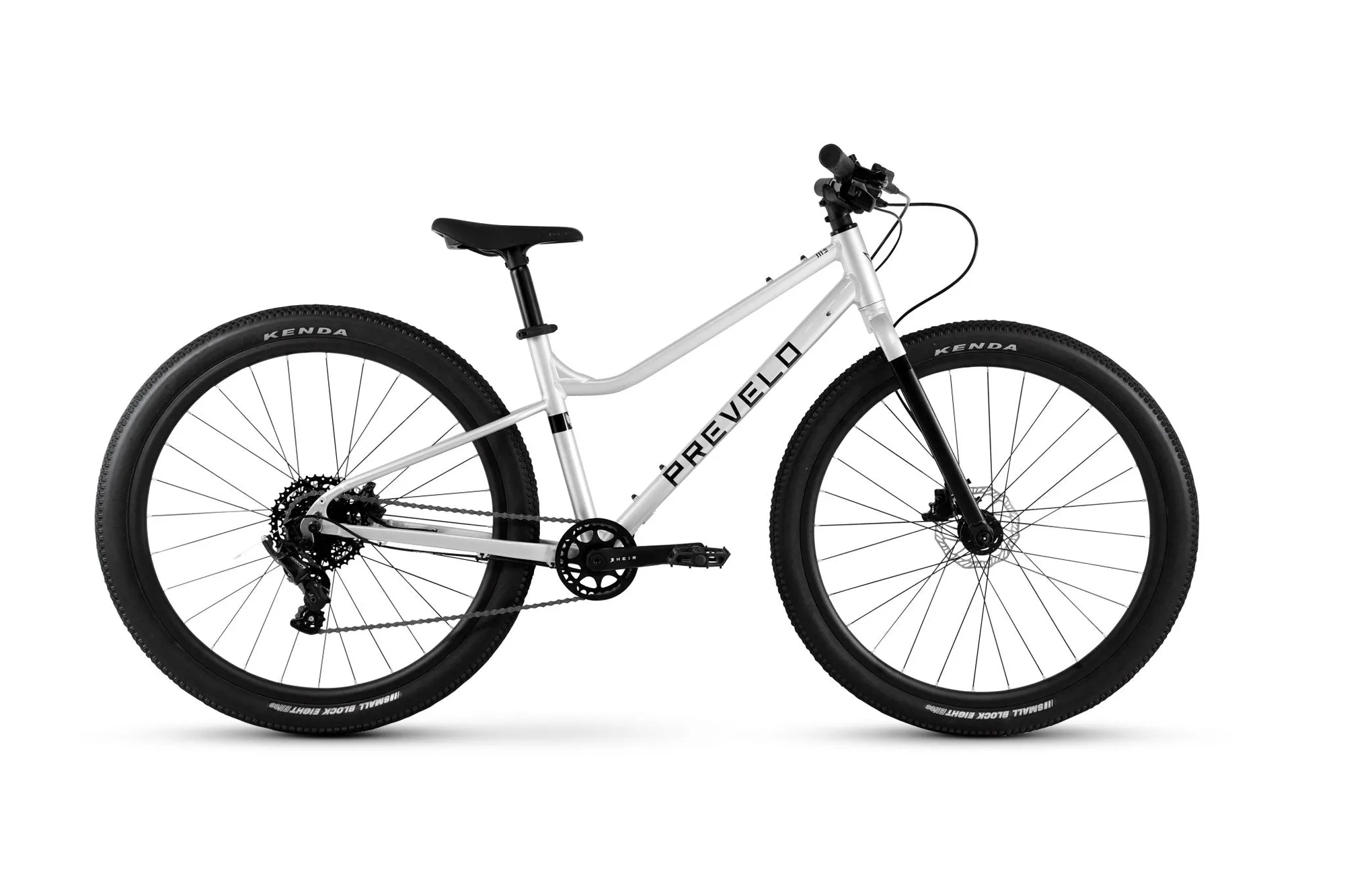
- Alpha Five: The Alpha Five Mk III is a 26-inch geared bike for riders ages 9 to 13, with an 8-speed Microshift Acolyte drivetrain, an 11-38T cassette, a clutched derailleur, and Promax hydraulic disc brakes. Hydraulic disc brakes give consistent stopping power in wet or dusty conditions, and the wide gear range keeps a growing rider in control on hills instead of grinding in one gear.
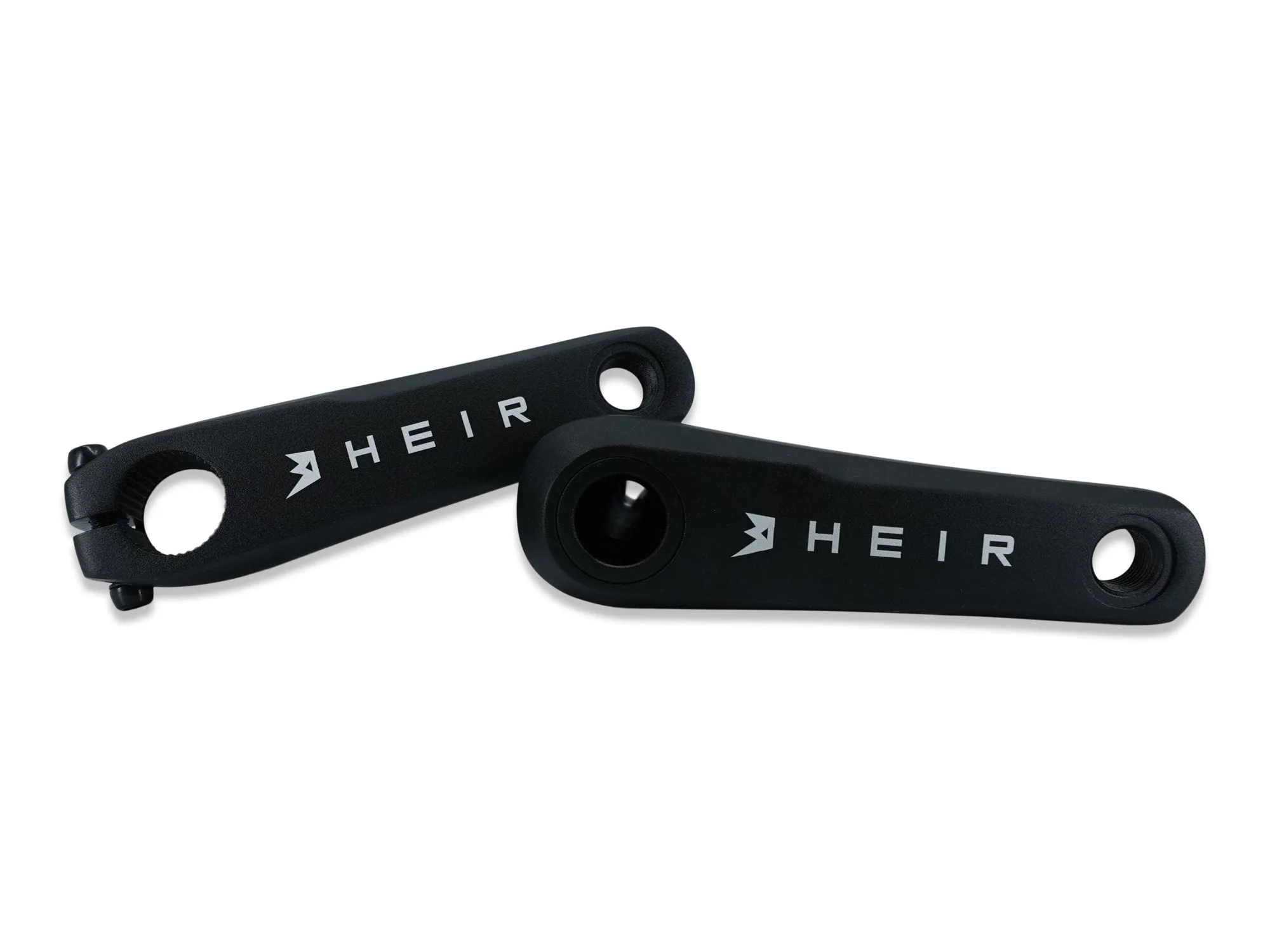
- HEIR Crank: The HEIR Direct Mount Crank comes in 110mm, 130mm, and 152mm lengths, with weights of 454g, 470g, and 509g, and is compatible with 3-bolt direct mount chain rings. Crank length that matches your child's leg length makes pedaling smoother and reduces the chance of the pedals striking the ground during a turn.
- Prevelo Rider's License: The Prevelo Rider's License is a customized, dual-sided card printed with your rider's name and picture, sized 3.375 by 2.125 inches. A tangible license gives kids a clear milestone to earn, which makes it easier to reinforce the safety rules they had to demonstrate first.
Safety for young riders is a routine, not a lecture. Fit the helmet, run the ABC check, teach one rule at a time, and match every ride to the skills your child has already shown you. Do that consistently and the habits will outlast the training wheels.