Quick answer
For safe biking with your dog, use a dedicated dog bike harness that sits low on the chest, a shock-absorbing leash, and a bike attachment that keeps the line away from the front wheel. Start with short, low-distraction rides and build distance gradually. If you plan to let your dog pull, choose a bikejoring setup with a longer line and a harness designed for pulling; if your dog runs beside you, a shorter leash and a control harness work better.
Understand the difference between bikejoring and canicross
Canicross and bikejoring both involve a dog pulling, but the mechanics differ. In canicross, you run behind your dog with a waist belt and a bungee line; the dog sets a steady pulling pace. In bikejoring, your dog pulls a bicycle, which is faster and requires more precise control. The harness and line length that work for canicross may not be suitable for biking because the bike’s wheels and frame create new hazards. If you are new to dog-powered sports, start with canicross on foot before adding a bike.
Choose a harness that fits your biking style
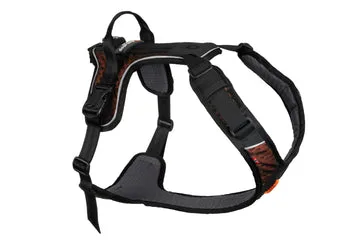
A dog bike harness should distribute pressure across the chest and shoulders without restricting movement. For pulling, look for a harness with a low attachment point and padding; for casual rides where your dog trots beside you, a harness with a back attachment point gives you more control. The Rock Harness from Nonstopdogwear is a durable option for everyday walks, training, or outdoor adventures, and its sturdy construction and secure fit can work for biking if your dog is not a hard puller. However, it is not specifically designed for bikejoring, so if your dog pulls strongly, consider a purpose-built pulling harness. Always check that the harness does not rub behind the front legs after a short test walk.
Pick a leash and attachment for safe biking
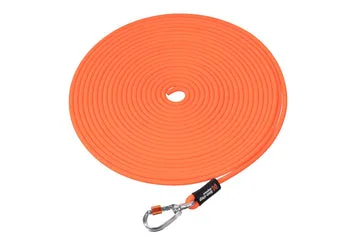
A standard leash is risky on a bike because it can tangle in the wheel or jerk your dog if you brake suddenly. Use a shock-absorbing line designed for dog sports, or a long line like the Protector Round Long Line from Nonstopdogwear, which offers freedom for your dog to explore while maintaining control. Its round profile reduces tangling and is comfortable to hold, but for biking you should attach it to a bike-specific attachment rather than holding it in your hand. A bike attachment (often called an antenna) keeps the line elevated and away from the front wheel. If you use a long line, shorten it so your dog stays beside or slightly ahead of the bike, not crossing in front.
Check and maintain your gear before every ride
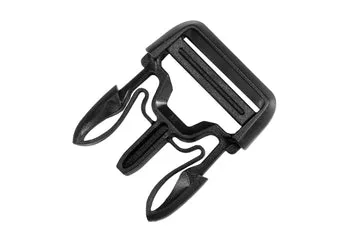
Biking puts extra stress on buckles and stitching. Inspect your harness and leash for wear before each ride, and replace any damaged parts immediately. The Harness Buckle from Nonstopdogwear is a compatible replacement part for Nonstopdogwear harnesses, so you can keep your dog’s gear functioning properly. A secure fit is critical: a buckle that pops open mid-ride could cause a serious accident. Carry a spare buckle or a backup leash on longer rides.
Step-by-step bike setup
- Fit the harness correctly: Adjust the harness so it sits snugly but allows two fingers to slide under the straps. The chest piece should rest low on the breastbone, not pressing on the throat. Check for rubbing behind the front legs after a short walk. Common mistake: leaving the harness too loose, which can cause chafing or allow your dog to back out.
- Attach a shock-absorbing line to a bike attachment: Mount a bike attachment (antenna) on the handlebar stem or frame according to the manufacturer’s instructions. Clip your leash to the attachment, not to your handlebars or waist. Use a line with some elasticity to reduce jerking. Checkpoint: the line should not droop into the front wheel when your dog is beside the bike.
- Introduce the bike without riding: Walk your dog beside the bike while you push it. Reward calm behavior. Let your dog sniff the bike and hear the freewheel. Do this in a quiet area for a few sessions. Common mistake: rushing to ride before your dog is comfortable with the bike’s movement and noise.
- Start with short, slow rides: Choose a smooth, flat path with little traffic. Pedal slowly and keep the ride under 10 minutes at first. Watch your dog’s gait and breathing. If your dog lags or pulls erratically, stop and walk. Checkpoint: your dog should be able to trot comfortably beside or slightly ahead of the bike without constant corrections.
- Build distance and add cues: Gradually increase ride length over several weeks. Teach directional cues like “left” and “right” and a “whoa” to slow down. Use treats to reward correct responses. Avoid pavement that is too hot for paws. Common mistake: increasing distance too quickly, which can lead to sore paws or joints.
Product facts
- Rock Harness: The Rock Harness is a durable and functional harness designed for active dogs, with a sturdy construction suitable for regular use and a secure fit to help keep your dog comfortable during activity. It works well for casual biking with a dog that does not pull hard, but it is not a dedicated bikejoring harness.
- Protector Round Long Line: The Protector Round Long Line is a durable and versatile leash with a round profile for a comfortable grip and reduced tangling, and a long length that provides ample room for your dog to roam safely. It can be used for biking if attached to a bike attachment and shortened, but it is not a shock-absorbing bike line.
- Harness Buckle: The Harness Buckle is a practical replacement part compatible with Nonstopdogwear harnesses, with a simple, functional design that is easy to install. Keeping a spare buckle lets you replace a worn or damaged buckle before it fails on a ride.