Quick answer
Choose bikini bottom coverage by where you want fabric to stay put, not by a size label. For all-day wear and no adjustment, pick full coverage with a high waist or a seamless ribbed fit. For a balanced tan line and moderate coverage, pick mid coverage swimwear. For minimal bikini bottoms, accept that a high-cut leg and narrow back mean more readjusting after swimming. Always check the leg line against your hip crease before you commit.
How to choose bikini coverage without guessing
Coverage is really three separate measurements: how much fabric sits across the back, how high the leg opening cuts across the hip, and where the waistband lands. A bottom can be full in the back but still cut high on the leg, which changes how secure it feels when you move. Before buying, decide which of those three you are least willing to compromise on, then filter cuts by that one.
Use your underwear as a reference, not a size chart. If your everyday briefs sit at your natural waist and stay there, a high-waisted silhouette will feel familiar. If you prefer a lower rise, a mid-rise bottom with a seamless finish will feel closer to what you already wear. This is faster than ordering three sizes and returning two.
- Measure your hip at the fullest point and compare it to the size range, not your waist alone.
- Check whether the leg opening is described as high-cut or standard; high-cut changes how the back sits.
- Look for seamless or soft-edge finishes if you get pinching or red marks from elastic edges.
Full coverage bikini bottoms: when the fabric should stay put
Full coverage bottoms cover more of the back and usually sit higher on the hip or waist. They are the right pick if you spend the day in and out of the water, chase kids, or simply dislike adjusting swimwear. The trade-off is a larger tan line and, in some fabrics, a warmer feel because more skin is covered.
Full coverage does not automatically mean modest or bulky. A high-waisted full coverage short, for example, gives security through the waistband while the leg still moves freely. If you want a smoother line under a cover-up, a seamless ribbed full coverage bottom avoids the raised edges that show through thin fabrics.
Mid coverage swimwear: the balanced middle
Mid coverage swimwear sits between full and minimal: the back is covered enough to feel secure, but the leg line is higher and the silhouette is leaner. This is the most versatile option if you want one bottom for both swimming and lounging. The trade-off is that mid coverage can shift slightly during vigorous swimming, so check the waistband tension before you buy.
Moderate coverage works best when the fabric has some structure. A textured jacquard-style weave holds its shape better than a thin, slick fabric, so the bottom stays where you placed it instead of creeping. If the fabric feels flimsy in your hand, expect more adjusting.
Minimal bikini bottoms: what you accept in exchange
Minimal bikini bottoms use less fabric across the back and often a high-cut leg. They give the least tan line and the most freedom of movement, but they also require the most readjusting. If you swim laps, dive into waves, or walk a lot on the beach, expect to check the fit more often.
The key with minimal cuts is the side detail. Non-adjustable double straps, for example, hold the shape but cannot be tightened, so the size must be correct from the start. Seamless finishes matter even more here because a narrow back leaves less fabric to hide a digging edge. If you dislike the feeling of a moving waistband, minimal bottoms are not the right trade for you.
Decision rules for choosing your coverage
- If you want zero adjusting: Choose full coverage with a high waist or short leg. The extra fabric and waistband anchor the bottom so it stays through swimming and walking. Pick this for active beach days or if you dislike readjusting.
- If you want one bottom for everything: Choose moderate coverage in a structured or textured fabric. It balances a secure back with a higher leg line and holds its shape better than thin fabric. Best all-rounder for travel and mixed use.
- If you want the smallest tan line: Choose minimal coverage with a high-cut leg, and accept that fixed side straps and a narrow back mean more frequent checks and a stricter size requirement. Only commit if the size is right and you are comfortable readjusting.
- If seams dig into your skin: Look for a seamless finish or soft edges regardless of coverage level. Narrower cuts leave less fabric to hide a digging edge, so the finish matters more as coverage decreases. Seamless finish first, coverage second.
Coverage options in the current lineup
- YVANNA Bottoms [Clearance]: Full coverage, high-waisted shorts in a textured material, double lined with sustainable fabric made with REPREVE® recycled plastic bottles. The high waist and short leg give the most secure feel for active days, and the double lining adds opacity where full coverage matters most.
- HOLLY Bottoms: Full coverage bottoms in a ribbed material with a seamless look for a flattering fit, double lined with sustainable fabric made with REPREVE® recycled plastic bottles. The seamless ribbed finish reduces edge lines under cover-ups, so full coverage does not have to look bulky.
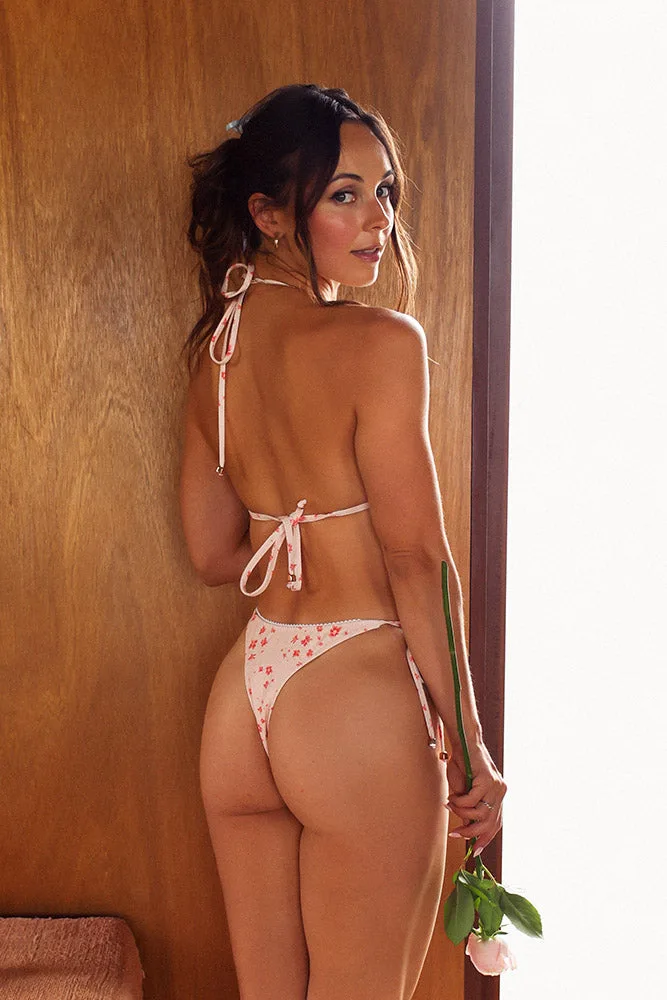
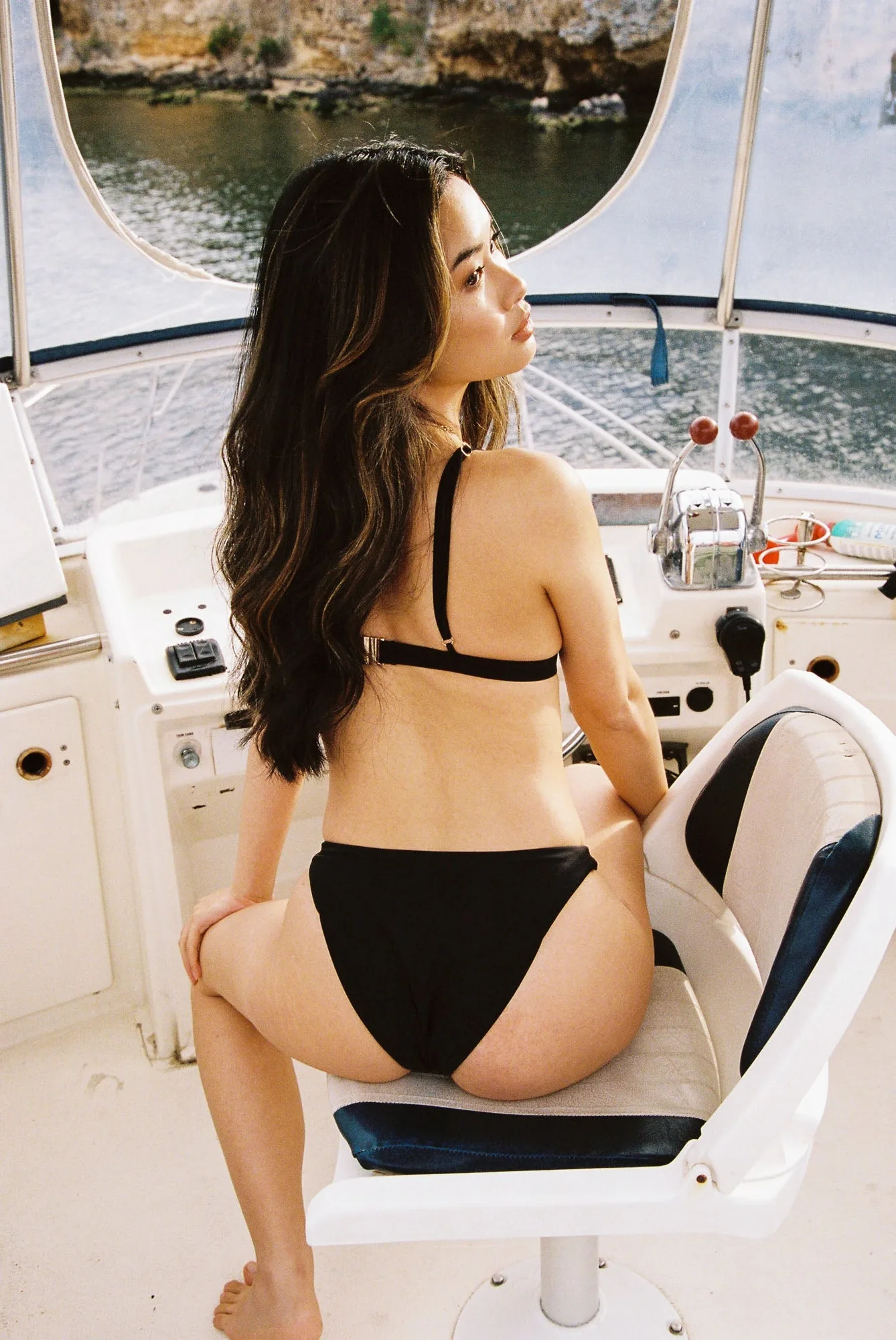
- MIA Bottoms [Clearance]: Cheeky coverage bottoms with a high-cut leg and non-adjustable double straps on the side, double lined with sustainable fabric made with REPREVE® recycled plastic bottles. This is the minimal end of the range: the high-cut leg changes how the back sits, and the fixed straps mean sizing must be right the first time.
- LUCIA Bottoms: High-waisted silhouette that sits at the natural waist, moderate coverage, signature textured jacquard-style weave, and a seamless finish. A structured weave plus moderate coverage is the middle path: it holds its shape and sits smoothly without digging, which suits both swimming and lounging.
Who each coverage level suits
Best for
- Swimmers and active beach days where the bottom must stay put
- Anyone who prefers a higher waistband that sits at the natural waist
- Shoppers who want a seamless finish to avoid pinching and digging
Not for
- Anyone who wants the smallest possible tan line and minimal fabric
- Shoppers who dislike a waistband sitting at the natural waist
- Anyone unwilling to check the size carefully before ordering a fixed-strap cut
![MIA Bottoms [Clearance]](https://xilands.com/api/media/sync/c0/c04c94230215196a4108d8bb957d96a4a8873f08344caf90370eaa2ca3aae356.webp)