Quick answer
If you want the lightest, simplest way to carry binoculars for short sessions, choose a neck strap. If you need all-day comfort, stability, and quick access during active use, choose a harness.
Comfort and weight distribution
A neck strap concentrates the weight of your binoculars on the back of your neck. This can cause fatigue and soreness during long birding hikes or all-day observation sessions. A harness spreads the weight across your shoulders and chest, reducing strain and keeping the binoculars snug against your body.
For short walks or casual backyard viewing, the simplicity of a neck strap is hard to beat. But if you're covering miles or glassing for hours, the even weight distribution of a harness makes a noticeable difference.
Stability and accessibility
With a neck strap, binoculars swing freely and can bounce as you walk, which can be annoying and risky in rough terrain. A harness holds the binoculars close to your chest, minimizing movement and keeping them secure. Many harnesses feature a slide system that lets you raise the binoculars to your eyes and drop them back into place without adjusting the straps.
If you need to use your hands for other tasks—like holding a field guide or a spotting scope—a harness keeps the binoculars out of the way and ready when you need them.
Switching between carry styles
Some users want both options. If you choose a neck strap and a harness that use the same connector clips, you can switch between them in seconds. This flexibility lets you start the day with a neck strap for convenience and swap to a harness for longer hikes or active birding.
Check whether the connector clips are compatible before buying, so you don't end up with two separate systems.
Trade-offs at a glance
- Weight distribution: Neck straps concentrate weight on your neck; harnesses spread it across shoulders and chest. Choose a harness for long sessions or heavy binoculars.
- Stability: Neck straps allow swinging; harnesses hold binoculars close and reduce bounce. A harness is better for active use or rough terrain.
- Convenience: Neck straps are lighter and simpler; harnesses offer hands-free security and quick access. If you switch often, look for compatible connector clips.
Product comparison
-
Bino-Pac Binocular Neck Strap - Black - BPBS-BK-2013: The Bino-Pac Neck Strap uses the same connector clips as the Bino-Pac Binocular Harness, making switching between the two simple. You can start with the lightweight neck strap and swap to a harness for longer sessions without changing accessories.
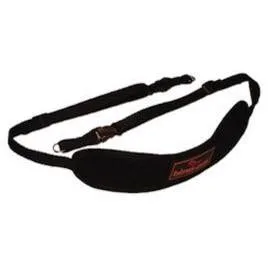
Bino-Pac Binocular Neck Strap - Black - BPBS-BK-2013
-
Bino-Pac Suspension Harness - Mountain Shadow Camo - BPSH-KMS-2010: The Bino-Pac Suspension Harness fits closely to your body and features an innovative slide and attachment system for easy access. The close fit keeps binoculars stable and secure, while the slide system lets you raise and lower them quickly during active use.
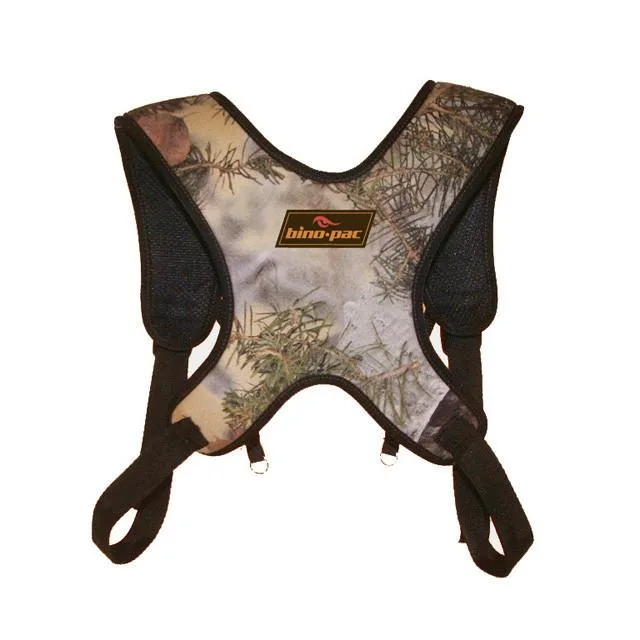
Bino-Pac Suspension Harness - Mountain Shadow Camo - BPSH-KMS-2010
Which should you choose?
Best for
- Casual birders and backyard observers who want a lightweight, simple carry option
- People who prefer to switch between a strap and harness using compatible clips
Not for
- Hikers and active birders who need all-day comfort and stability
- Anyone using heavy binoculars or covering long distances