Quick answer
Choose biothane if your dog swims, works in mud, or you want a leash that wipes clean and resists odor. Choose nylon if you want proven durability, easy color and width options, and a lower upfront cost. Neither material is universally better; the right pick depends on how often your leash gets wet and how much hardware strength you need.
Water and odor: where the two materials split
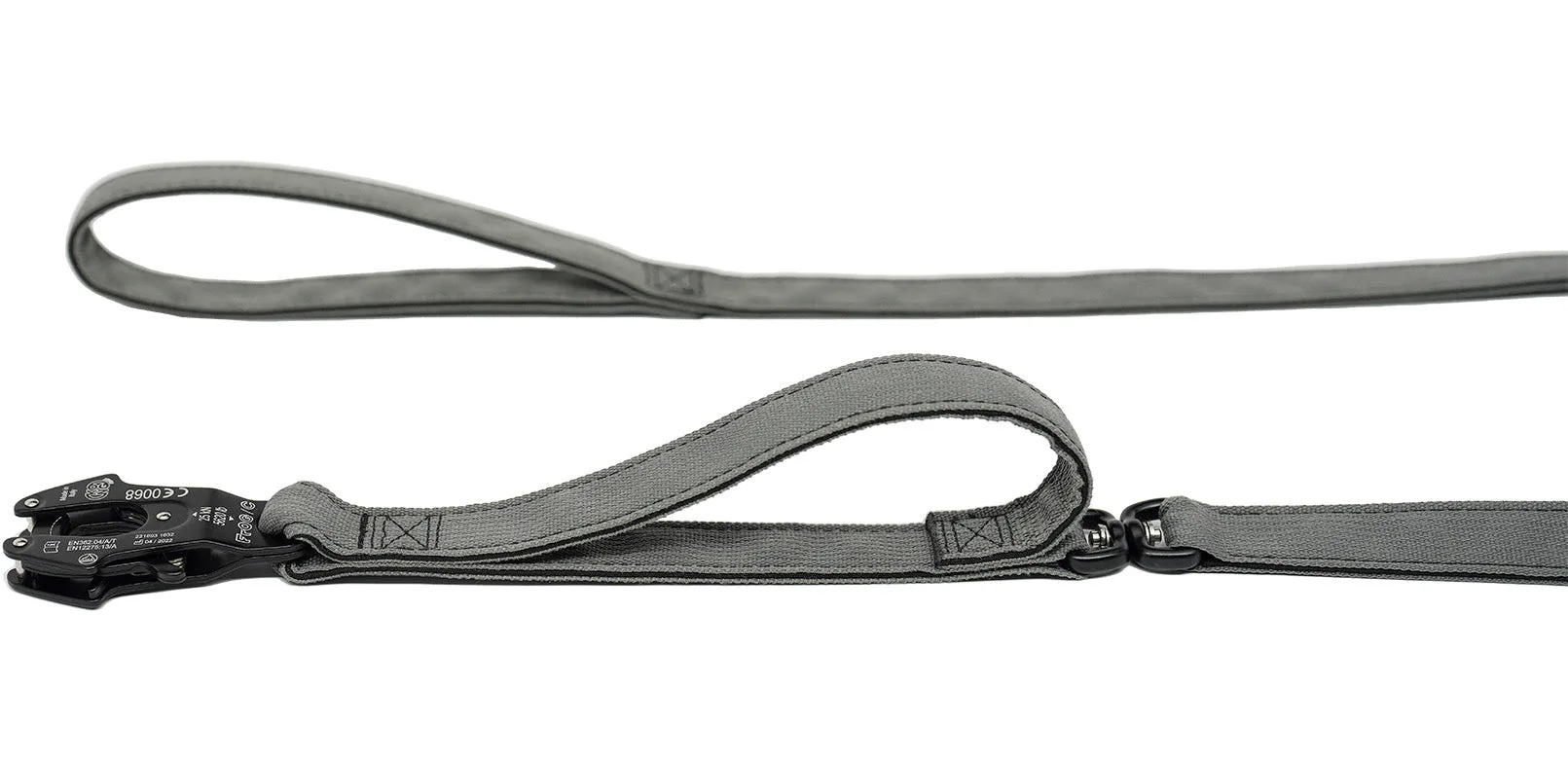
Biothane is a coated webbing: a core of polyester or nylon encased in a waterproof synthetic coating. That coating means water, mud, and slobber sit on the surface instead of soaking in. A quick wipe with a damp cloth is usually enough, and the leash does not hold a wet-dog smell the way a woven leash can. Nylon webbing, by contrast, is woven. It absorbs water, dries slowly, and can trap dirt and odor in the fibers over time. If your routine includes lake days, rainy walks, or field work in wet grass, that difference shows up fast.
Durability and hardware: what actually wears out
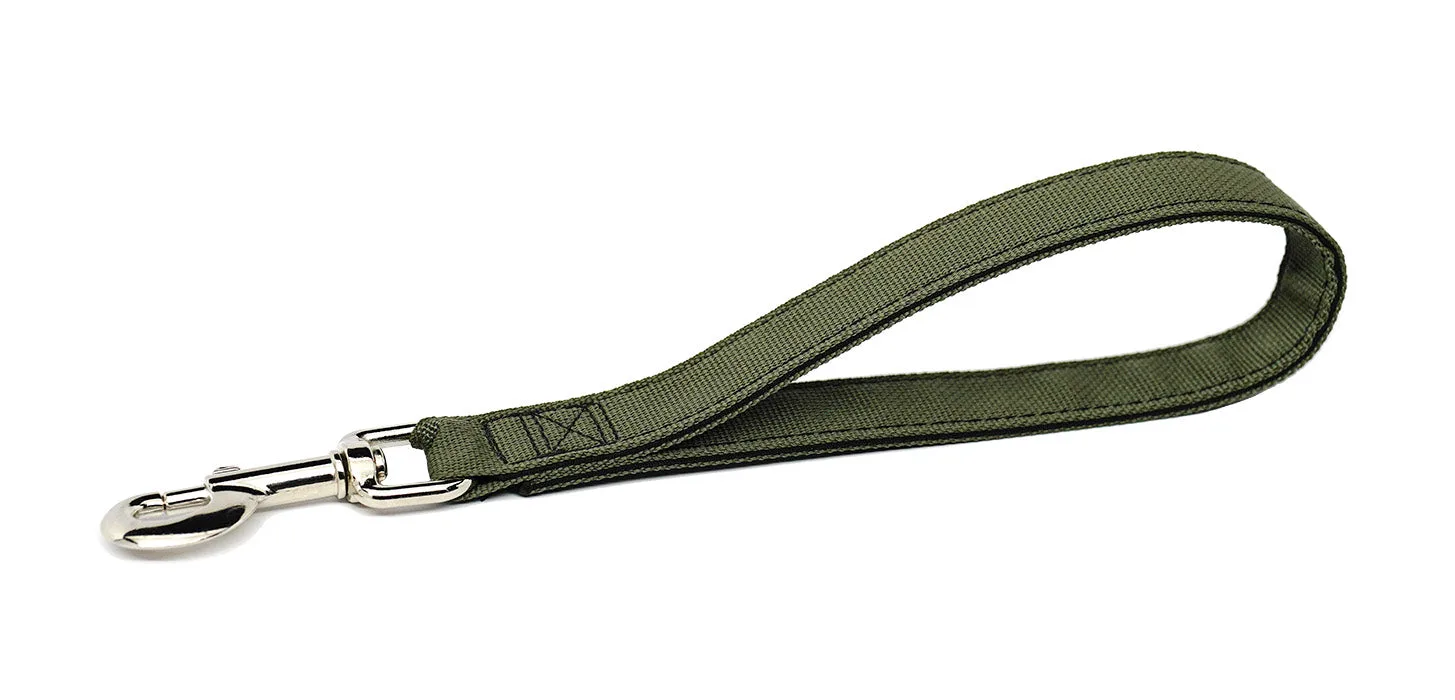
Nylon webbing is strong and abrasion-resistant, and multi-layer construction adds stiffness and load capacity. The Nylon Tab Leash uses three layers of military-grade nylon webbing with a high-quality bolt snap, which is the kind of build that holds up to daily handling and quick control moments. Biothane also resists abrasion, but its weak point is usually the coating: sharp edges or repeated dragging on concrete can nick it. On either material, the clip and stitching tend to fail before the webbing does. That is why hardware quality matters more than the material label alone.
Weight, feel, and training use
Biothane is denser and often heavier than nylon of the same width, so it hangs with less flutter and stays out of the way during heel work or tracking. Some handlers prefer that weight because it gives a clearer tactile signal through the leash. Nylon is lighter and softer in the hand, which many people find more comfortable for long walks. Neither is automatically better for training; it comes down to whether you want a leash that stays put or one that feels lighter on the wrist.
Cost, customization, and repair
Nylon is generally the more affordable option and is widely available in different widths, colors, and patterns. Biothane costs more because of the coating process, and color choices are often narrower. Repair is another split: a frayed nylon leash can sometimes be re-stitched or trimmed, while a badly nicked biothane leash usually needs replacing. If you like to swap gear often or want a specific look, nylon gives you more room to experiment without spending much.
Trade-offs to weigh before you buy
- Water and odor resistance: Biothane wins on waterproofing and easy cleaning because water and mud stay on the surface. Nylon absorbs water, dries slower, and can hold odor in the weave. Pick biothane if your leash gets wet or dirty most days.
- Upfront cost and customization: Nylon is usually cheaper and comes in more widths, colors, and patterns. Biothane costs more and offers fewer color options. Pick nylon if budget or a specific look matters most.
- Hardware and failure points: On both materials, the clip and stitching are the most likely failure points, not the webbing itself. A quality bolt snap or metal buckle matters more than the material name. Match hardware strength to your dog's leash behavior, not just the material.
Tactipup gear that fits this comparison
- Nylon Tab Leash: The Nylon Tab Leash measures 12 inches and is constructed of 3 layers of military grade nylon webbing with a high quality bolt snap. A short tab gives you direct control for on-and-off leash work, and the layered nylon build plus bolt snap is the kind of hardware that resists the wear points common on any material.
- Personalized 1.5" Basic Tactical Dog Collar: The Personalized 1.5" Basic Tactical Dog Collar uses a plastic buckle and is made for people who don't need the strength of Extreme metal buckle collars, suiting dogs that are relaxed on a leash and not known for breaking equipment. If your dog is calm on lead, this collar pairs well with either leash material and keeps the setup lighter and more affordable; if your dog lunges or breaks gear, step up to metal hardware instead.
- American Flag PVC Patch (2" x 1"): The American Flag PVC Patch (2" x 1") is constructed from PVC/rubber with a high-quality hook backing and fits any 1", 1.5" or 2" collar as well as harnesses. A waterproof PVC patch matches the wipe-clean logic of a biothane leash and adds a functional, easy-to-clean identifier to a collar or harness.
Which leash material fits your dog?
Best for
- Dogs that swim, hike wet trails, or work in mud and need a wipe-clean leash
- Handlers who want a leash that resists odor and dries fast between sessions
- Owners who prefer a heavier leash that hangs steadily during training
Not for
- Owners who want the lowest upfront cost and the widest color or pattern choice
- Dogs that are calm on leash and do not need waterproofing, where nylon is simpler and cheaper
- Handlers who frequently drag a leash over rough concrete, where a biothane coating can nick