Quick answer
Use blade and gun oil as a thin, dry-to-touch protective layer after cleaning, not as a wet coating. For a Half Face Blades fixed blade, apply a small amount to the steel, wipe nearly all of it off, and keep oil away from handle texture and sheath interiors. Reapply after wet carry, saltwater exposure, or visible fingerprints.
What blade and gun oil actually does on a knife
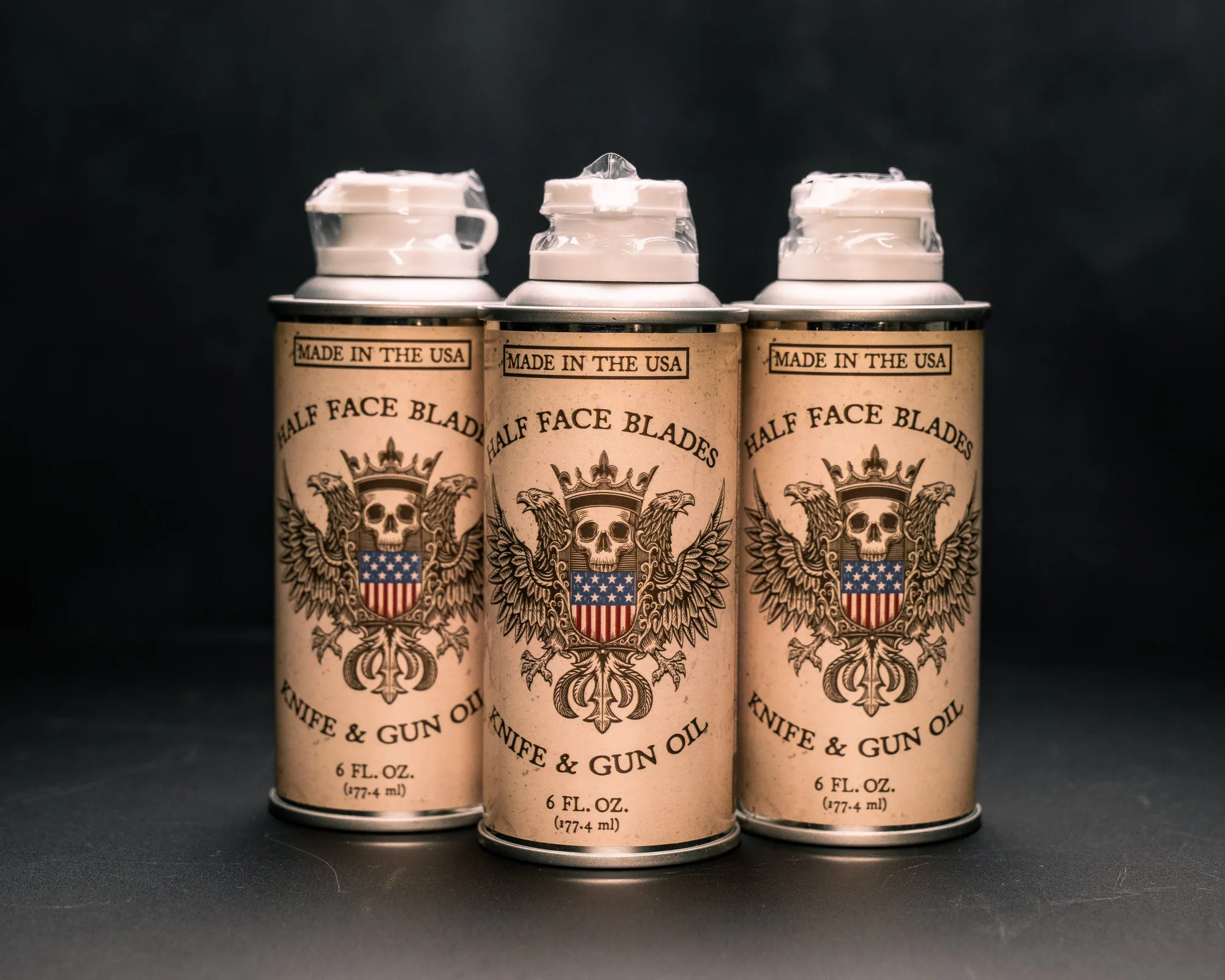
A quality blade and gun oil is a rust preventative and fingerprint neutralizer, not a lubricant you slather on. The useful film is thin enough to feel dry. That matters because thick oil collects dust, lint, and sheath debris, which can abrade an edge or clog a Kydex sheath. Half Face Blades offers Blade and Gun Oil 6oz in the Accessories category, and its catalog facts describe it as a salt water protectant that cleans, lubricates, prevents rust and finger printing, and dries to a no-oily-film finish. It is not food safe, so do not use it on a knife you plan to cut fruit or meat with unless you fully remove it first.
How to oil a knife blade without overdoing it
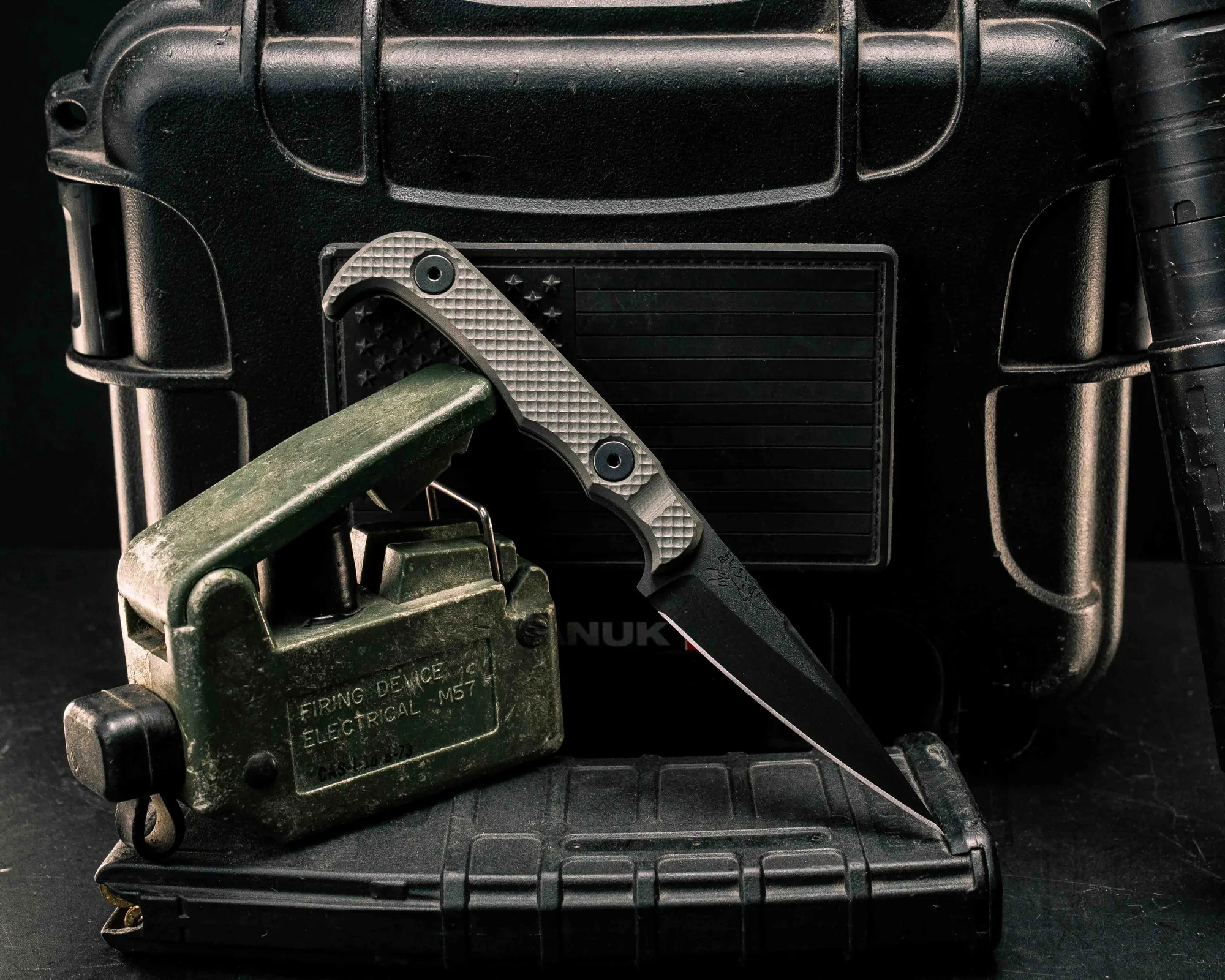
Start with a clean, dry blade. Oil over dirt or dried tape residue just seals the grit in place. Apply one or two drops to a cloth or finger, wipe the steel from spine to edge, then buff with a clean dry cloth until the surface feels dry. For Cerakote finishes, this thin-film approach protects the coating without softening or dulling it. For bare steel, the same film blocks moisture and fingerprints. Avoid soaking the pivot area on folding knives unless the manufacturer calls for it, because excess oil can attract pocket lint. If you carry a fixed blade like the Slender Man- Grey G10, Armor Black Cerakote, Allen Bolts, Textured Grip, a light wipe on the S45VN steel is enough; the textured G10 handle does not need oil and can become slick if you apply it there.
Matching the oil routine to your carry conditions
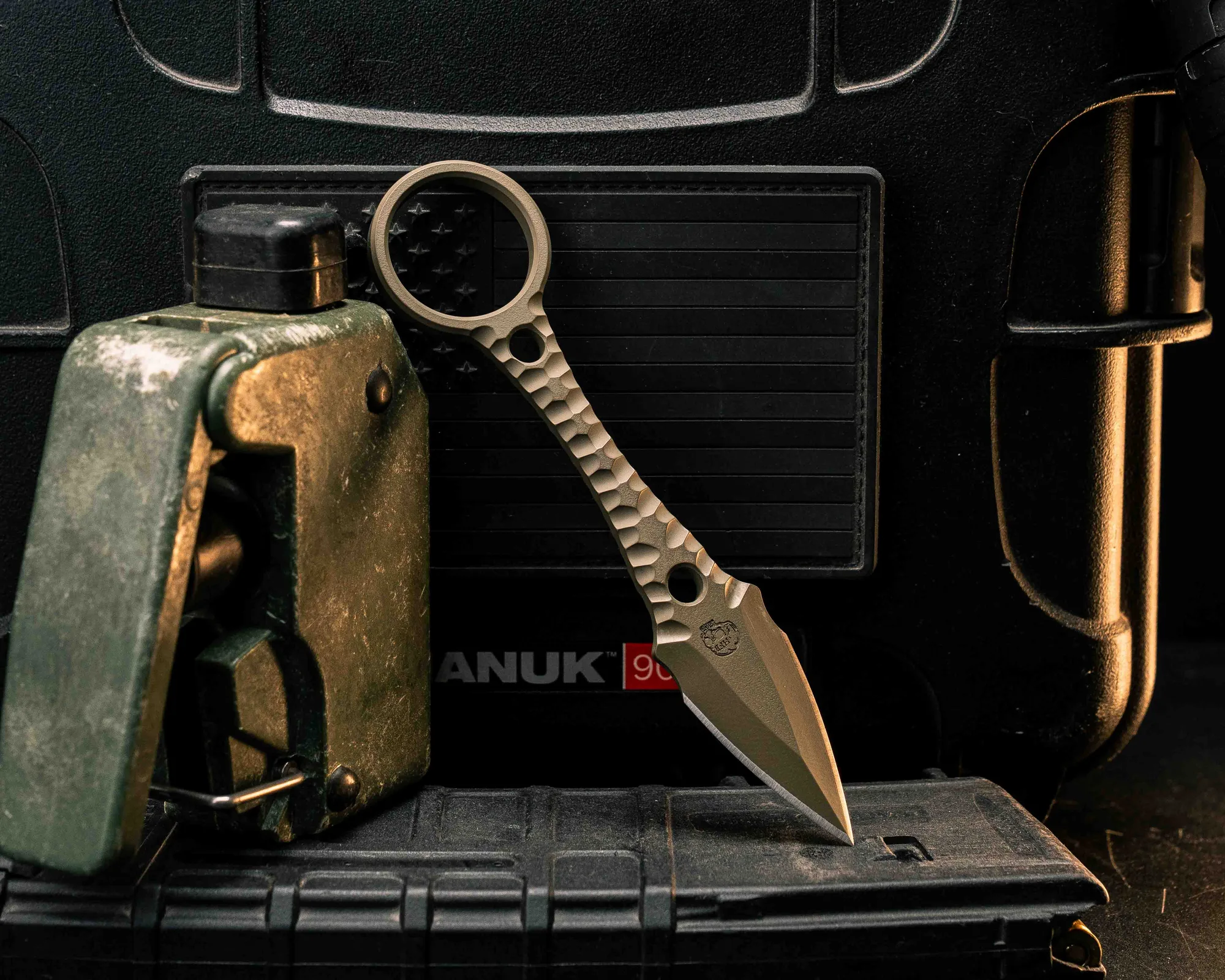
Humidity, sweat, and saltwater are the three conditions that most often defeat a knife care routine. If you carry inside a waistband or against skin, reapply monthly or after any day you notice moisture on the blade. If you carry horizontally on a plate carrier or in a humid climate, check weekly. A low-profile knife like the Ringstrike- FDE Cerakote and Machined Rockwork Handle, with its A2 tool steel and Kydex sheath, benefits from a thin oil film on both sides of the blade because both sides are sharp. Oil the steel, not the sheath. Kydex does not need oil, and oil inside a sheath can trap grit against the edge. If you use horizontal carry straps, inspect the blade more often because it sits closer to body moisture.
Mistakes that make oil work against you
The most common error is treating oil as a one-time fix. A single heavy application does not last longer than a thin one; it just collects more debris. Another mistake is oiling a knife and immediately storing it in a leather sheath. Leather can absorb oil and hold moisture, so let the blade sit dry to the touch before sheathing. Do not use blade and gun oil as a sharpening fluid unless the product label says it is safe for that use. Finally, do not assume an oiled blade cannot rust. Oil slows oxidation, but a scratched Cerakote edge, a chipped coating, or a missed spot near the handle can still rust. Inspect the whole blade, not just the flat.
Your five-step blade and gun oil routine
- Clean and dry the blade: Wipe off tape residue, dirt, and old oil with a dry cloth. If you used the knife on food, wash it with mild soap and water first, then dry it completely. Checkpoint: the blade should feel dry and look free of smudges before any oil goes on.
- Apply one or two drops to a cloth: Put the oil on the cloth, not directly on the blade. This controls the amount and keeps oil out of the handle and pivot. Mistake to avoid: pouring oil directly on the knife, which floods the handle and sheath.
- Wipe the steel from spine to edge: Cover both sides of the blade and the exposed tang. For a double-edged knife like the Ringstrike, work slowly and keep fingers behind the edge. Checkpoint: every part of the steel should have a visible sheen before you buff.
- Buff with a clean dry cloth: Wipe until the surface feels dry to the touch. The goal is a thin film, not a wet layer. This is especially important for Cerakote finishes and textured handles. Mistake to avoid: leaving visible oil, which collects lint and grit.
- Reapply after exposure: Re-oil after sweat, rain, saltwater, or any day you notice fingerprints. For frequent carry, a monthly touch-up is a practical baseline; for humid or coastal use, check weekly. Next step: inspect the edge and coating at the same time, and address rust or chips early.
Product facts that shape this routine
- Blade and Gun Oil 6oz: 6oz can; cleans, lubricates, prevents rust and finger printing; no oily film and dries to the touch; salt water protectant; not food safe; Made In USA. A dry-to-touch film is ideal for EDC because it does not attract pocket lint or sheath grit. The salt water protection matters for coastal or sweaty carry, and the non-food-safe status means you must clean it off before food prep.
- Slender Man- Grey G10, Armor Black Cerakote, Allen Bolts, Textured Grip: Compact fixed blade with 6.7-inch overall length, 3-inch blade, S45VN American steel, and 0.12-inch blade thickness; Grey G10 handle with Armor Black Cerakote and Allen bolts. S45VN is a stainless steel that still benefits from a thin oil film in humid or sweaty conditions. The Cerakote coating should be wiped with oil, not scrubbed, and the textured G10 handle should stay oil-free for grip.
- Ringstrike- FDE Cerakote and Machined Rockwork Handle: 5.5-inch overall length, 1.7-inch blade, 0.19 to 0.20-inch thickness, A2 tool steel, FDE Cerakote, Kydex sheath, both sides sharp, low profile for conceal carry or plate carrier. A2 tool steel is not as stain-resistant as S45VN, so a thin oil film is more important. Because both sides are sharp, apply oil carefully to avoid cutting the cloth or your hand. The Kydex sheath should not be oiled.