Quick Answer
Choose open pins when you want a specific character or design on your board with no guesswork, and choose blind box pins when the chase itself is fun and you are happy to trade or gift duplicates. If you only want one exact pin, buy open. If you enjoy the surprise and the community around swapping extras, blind boxes deliver more repeat value per dollar.
How Blind Box Pins Actually Work
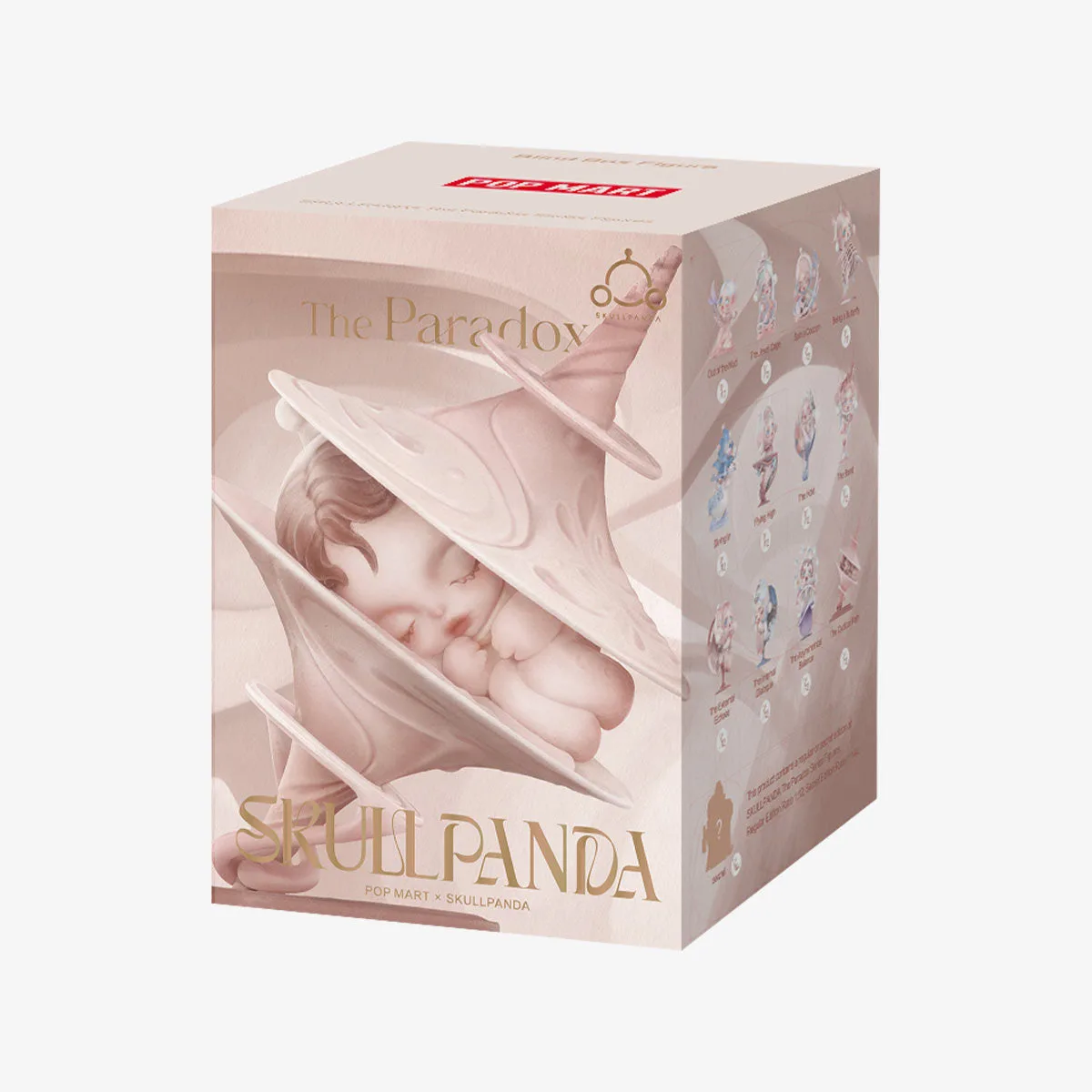
A blind box pin is a sealed package where the design inside is not revealed until you open it. The listing usually tells you the full pool of possible pins, but not which one is in your box. That is the whole mechanic: you are buying a chance at a design, not a guaranteed design.
This matters for budgeting because the price you see is per box, not per desired pin. If a series has six possible designs and you want one specific character, you may need several boxes to get it, or you may get it on the first try. Both outcomes are normal, and neither is a defect. Treat the price as the cost of one attempt, not the cost of the pin you actually want.
What Open Pins Give You That Blind Boxes Do Not
Open pins are listed by the exact design, so what you see is what arrives. That removes the two biggest friction points of blind boxes: duplicates and uncertainty. If you are building a themed board around one character, an open pin is the only format that guarantees the slot gets filled on the first order.
Open pins also make better gifts when the recipient has a specific favorite. You are not handing someone a sealed box and hoping the reveal lands well. The tradeoff is that open pins skip the surprise, so if the fun for you is the unboxing moment, an open pin will feel flat.
The Real Cost of Duplicates
Duplicates are the hidden line item in blind box collecting. If you buy multiple boxes chasing one design, you will likely end up with repeats. Those repeats are not wasted money if you actually use them, but they do change your effective cost per unique pin.
The practical fix is to decide before you buy how you will handle extras. Trading duplicate pins with other collectors, gifting them, or displaying them in a second spot all turn a duplicate into something useful. If none of those options appeal to you, blind boxes will feel like paying for clutter.
Trading Duplicate Pins Without Getting Burned
Trading works best when both sides agree on condition and shipping before anything is mailed. Photograph the pin front and back, note any enamel flaws or bent posts, and confirm the trade in writing. Most friction in pin trading comes from mismatched expectations, not from bad faith.
Start trades inside communities tied to the specific series you are collecting. People chasing the same set are the most likely to have the exact duplicate you need and to want the one you are holding. Keep your first few trades small until you build a rhythm with a trading partner.
Where Each Format Shines on a Display
Blind box series are designed to be shown as a set. The shared art style and matching sizes make a full run look intentional on a board, and the hunt gives you a reason to keep buying from the same series over time. Open pins are better for anchor pieces, the one or two designs that define the theme of a display.
A common approach is to mix both: use open pins for the centerpiece and blind box pins to fill out the surrounding characters. That gives you a guaranteed focal point without giving up the surprise element entirely.
Decision Rules for Choosing Your Format
- You want one specific character: Buy the open pin. A blind box cannot guarantee the design you want, and chasing a single character across multiple boxes usually costs more than the open listing. Specific target equals open pin.
- You enjoy the unboxing moment: Buy the blind box. The reveal is the product, and a series with a defined character pool keeps each box meaningful even when you get a duplicate. Surprise is the value, not the risk.
- You are building a full set: Blind boxes are built for this. Expect duplicates along the way, and decide up front whether you will trade, gift, or display extras so they do not pile up unused. Set collecting needs a duplicate plan.
- You are buying a gift for a specific fan: Open pins remove the risk of an awkward reveal. If you do not know the recipient's favorite character, a blind box is the safer choice because any design from the series still fits their fandom. Known favorite equals open pin; unknown equals blind box.
- You are on a fixed budget: Set a hard cap on blind box attempts before you start. Once you hit it, stop and trade for the missing design instead of buying more boxes. Cap the chase, trade the rest.
Series Examples Worth Knowing
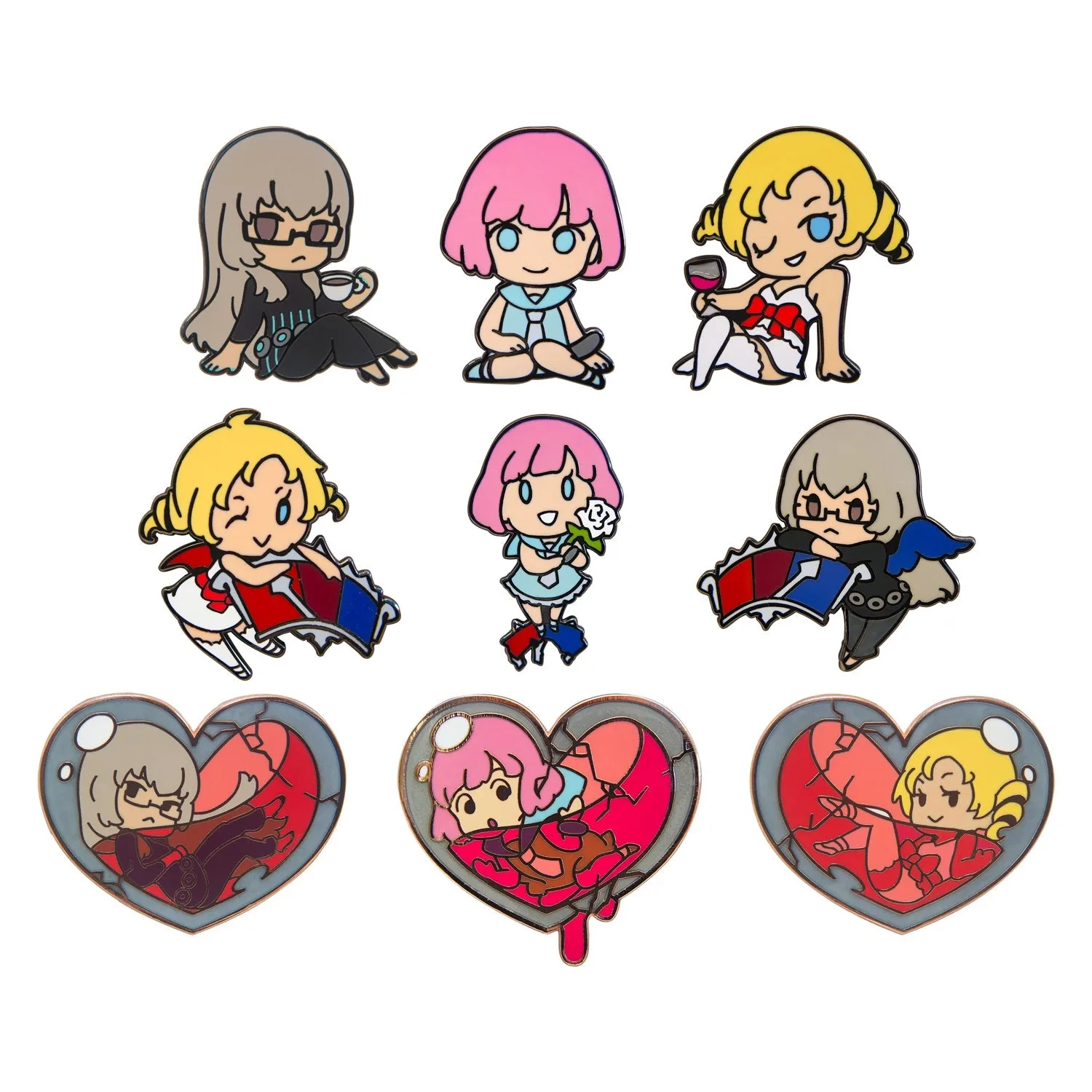
- Catherine: Full Body - Chibi Blind Box Pin: Series 1: Catherine: Full Body - Chibi Blind Box Pin: Series 1 is officially licensed by Atlus and Sega, with sitting pins around 1.53 in tall by 1.37 in wide and meter pins around 1.49 in tall by 1.45 in wide. The series mixes pin shapes, so a full set will not line up in a uniform grid. Plan spacing if you intend to display the whole run together.
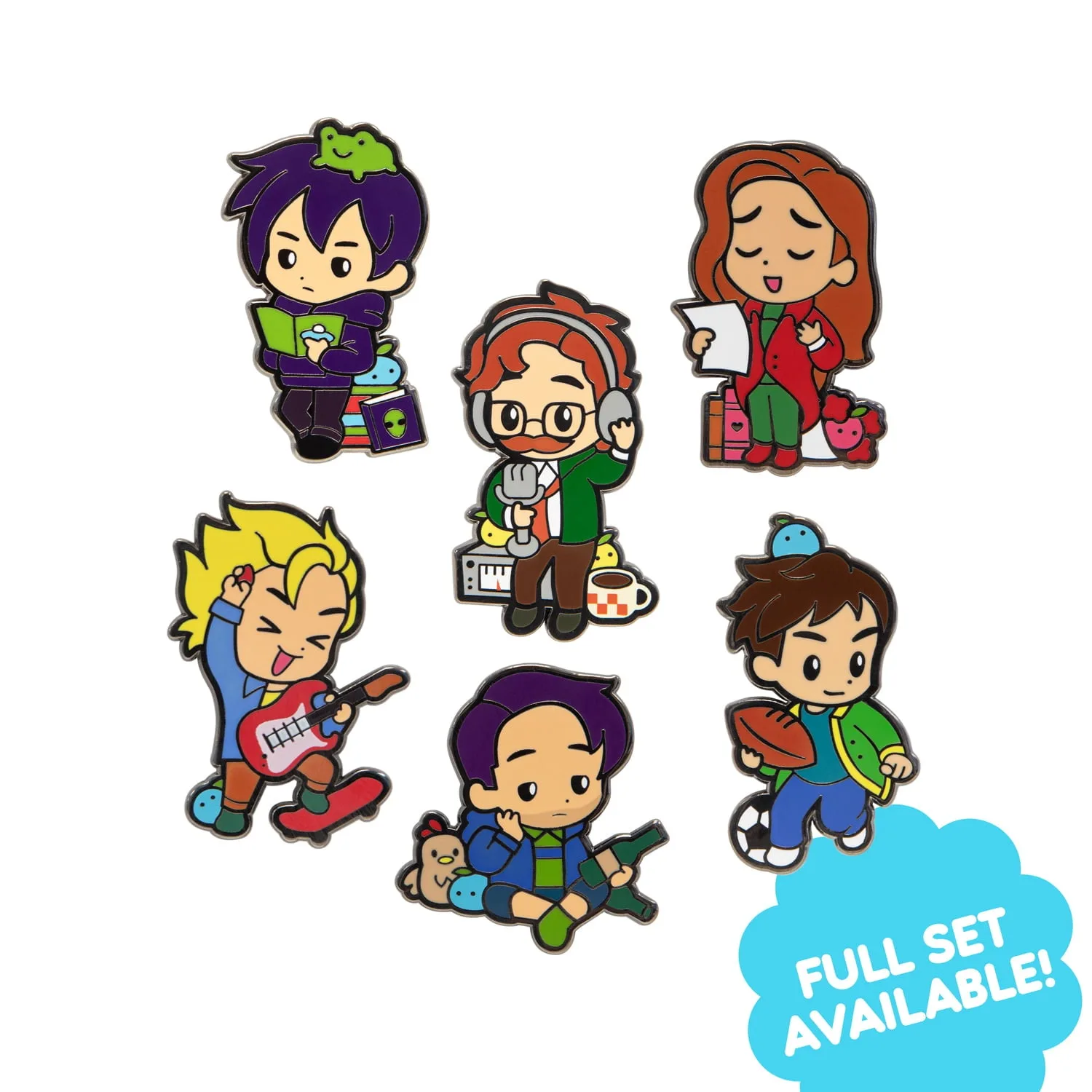
- Stardew Valley - Bachelors Blind Box: Stardew Valley - Bachelors Blind Box includes Alex, Elliot, Harvey, Sam, Sebastian, or Shane, and each pin is approximately the same size. A defined character pool with consistent sizing makes this a strong candidate for set collecting and for trading duplicates with other Stardew Valley collectors.
Which Collector Are You?
Best for
- Collectors who enjoy the surprise of an unopened box and do not mind duplicates
- Fans building a complete set from a defined character pool
- Traders who are active in a series community and can swap extras
Not for
- Buyers who need one exact character and will be frustrated by repeats
- Gift givers who do not know the recipient's favorite design
- Collectors who want a uniform, perfectly matched display with no extras