Why the color change is chemistry, not a trick
The blue pea flower tea myths that spread fastest often start with the same observation: you pour hot water over the dried flowers, get a deep blue cup, then squeeze in lemon and watch it turn purple or pink. That shift is not a sign of artificial dye or a gimmick. It is a pH reaction. The blue color comes from anthocyanins, the same class of water-soluble pigments found in blueberries and red cabbage. When the liquid becomes more acidic, those pigments change structure and the color shifts.
What the catalog does not confirm is a specific pH range, exact shade outcomes, or a guaranteed color for every batch. So treat the lemon reaction as a predictable direction—blue toward purple or pink—rather than a precise color chart. The effect is real, but the final hue depends on how much lemon you add, how concentrated your brew is, and the water you use.
Myths worth retiring before your next cup
- Myth: the blue color means it is artificial: The catalog describes Blue pea flower tea as a naturally caffeine-free herbal infusion made from dried Blue Pea Flowers (Clitoria ternatea), known for its vibrant blue color. The blue is a property of the flower itself, not an added dye.
- Myth: blue pea tea contains caffeine: The product record explicitly calls it a naturally caffeine-free herbal infusion. If you are avoiding caffeine in the evening, this is one of the clearer cases where the label and the ingredient list agree.
- Myth: the lemon reaction proves the tea is fake: The color shift is consistent with anthocyanin pigments responding to acid. It is evidence of plant pigments at work, not evidence of adulteration.
- Myth: you can store it anywhere because it is dried: Dried flowers still fade and pick up odors. The catalog does not supply a shelf life or a specific storage instruction, so the honest position is that you should protect the flowers from light, heat, and moisture—but you should not treat any storage claim as a manufacturer guarantee.
What the Blue pea flower tea record actually confirms
-
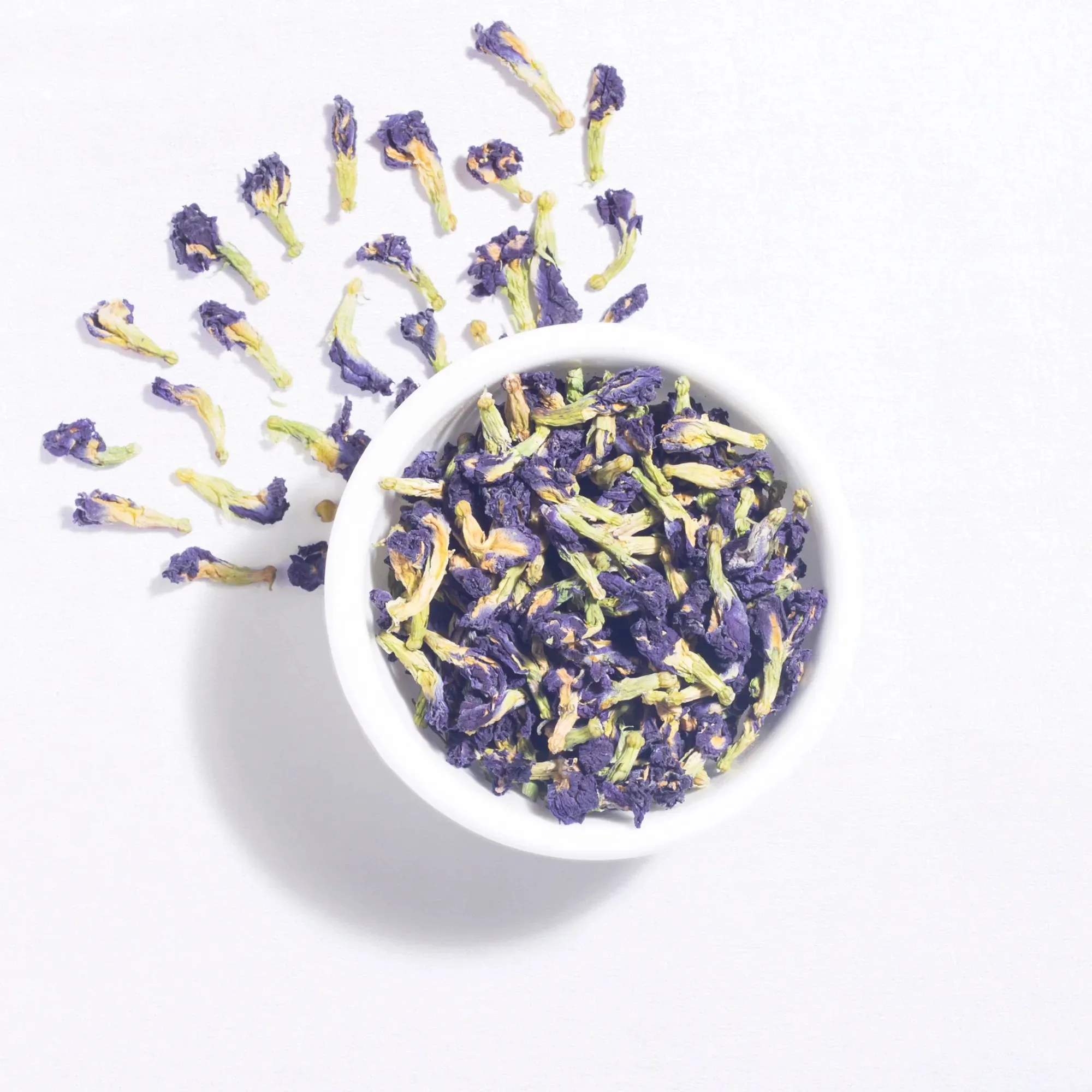
Blue pea flower tea: Dried Blue Pea Flower (Clitoria ternatea) is the listed ingredient, and the infusion is described as naturally caffeine-free. This settles the 'is it natural?' and 'does it have caffeine?' questions without needing to speculate beyond the record.
Blue pea flower tea
-
Blue pea flower tea: The catalog describes the tea as rich in antioxidants like anthocyanins and as traditionally consumed to support healthy skin, hair, and natural glow from within. These are the claims the catalog makes. They are not a promise of a specific health outcome, and the record does not supply clinical evidence—so read them as positioning, not proof.
-
Blue pea flower tea: Tasting notes are mild, earthy, floral, vegetal, and smooth, and the catalog says it is preferred with milk. Flavor expectations are often the real reason people abandon a tea. This tells you what to expect before you buy a larger weight.
The lemon reaction, without the exaggeration
If you want to see the color change for yourself, brew the tea first and add lemon afterward. The catalog's brewing instructions are straightforward: put 1 teaspoon of tea leaves in a cup, pour boiling water into the cup, cover and let it steep for three to five minutes, then strain and serve. Once the cup is brewed, add lemon a little at a time and watch the surface. The shift is usually most visible against a white cup.
One honest limitation: the catalog does not give a recommended amount of lemon, a target acidity, or a guarantee that the color will return to blue if you add something alkaline. So do not treat the reaction as a party trick with a fixed recipe. It is a visual demonstration of plant pigments, and it is fine if your result is more muted than a photo you saw online.
Storage claims that outrun the evidence
- Claim: 'store it for years and it stays bright blue': The catalog does not state a shelf life for Blue pea flower tea. Dried flowers can lose color and aroma over time, but without a supplied shelf life you should not assume a specific number of years—or months.
- Claim: 'refrigeration is required': No refrigeration instruction appears in the supplied record. A cool, dark, dry place is a reasonable default for dried herbal teas, but it is general advice, not a manufacturer instruction for this product.
- Claim: 'the 250g pack is the best value for everyone': The tea comes in 40g, 80g, and 250g weights. Larger packs make sense only if you already know you like the mild, earthy, floral flavor and will finish the tea before it fades. If you are new to it, the smaller weight is the lower-risk way to test the lemon reaction and the milk version.
How to judge the next blue pea claim you read
Ask three questions. First, does the claim match the ingredient list? For Blue pea flower tea, the ingredient is dried Clitoria ternatea flowers, so any claim about added color or caffeine contradicts the record. Second, does the claim describe a direction or a guarantee? The lemon color change is a direction; a specific shade is not confirmed. Third, does the claim rely on a health outcome the catalog only gestures at? The record mentions antioxidants and traditional use for skin, hair, and glow, but it does not supply dosages, timelines, or clinical results.
That last point matters most for the caffeine myth and the health claims around it. A caffeine-free herbal infusion can still be enjoyable and worth buying without being a treatment. The catalog's own language—'may be enjoyed hot or cold' and 'preferred with milk'—is a better guide to what this tea is for than any viral post about detox or overnight transformation.