Quick answer
Use your fingers when you want a sheer, skin-like flush in under a minute and you're working with a buttery formula like Blush Butter Balm. Use a dual-ended cream blush brush like The Blush Brush when you want even, buildable coverage and a more controlled placement. If you're deciding between the two, the brush gives more consistency; fingers give more speed.
How fingers change the finish of a cream blush
Fingertips apply cream blush with pressure and body heat, which softens the formula and pushes it into the skin rather than sitting it on top. That's why finger application tends to look like a natural flush instead of a defined cheek color. The trade-off is control: your fingers cover a broad area, so it's harder to keep the edges crisp or to build intensity in one precise spot. If you're using a buttery, blendable formula, this is rarely a problem. If you're using a more pigmented cream, you may find yourself blending longer than you planned.
What a dual-ended cream blush brush actually does differently
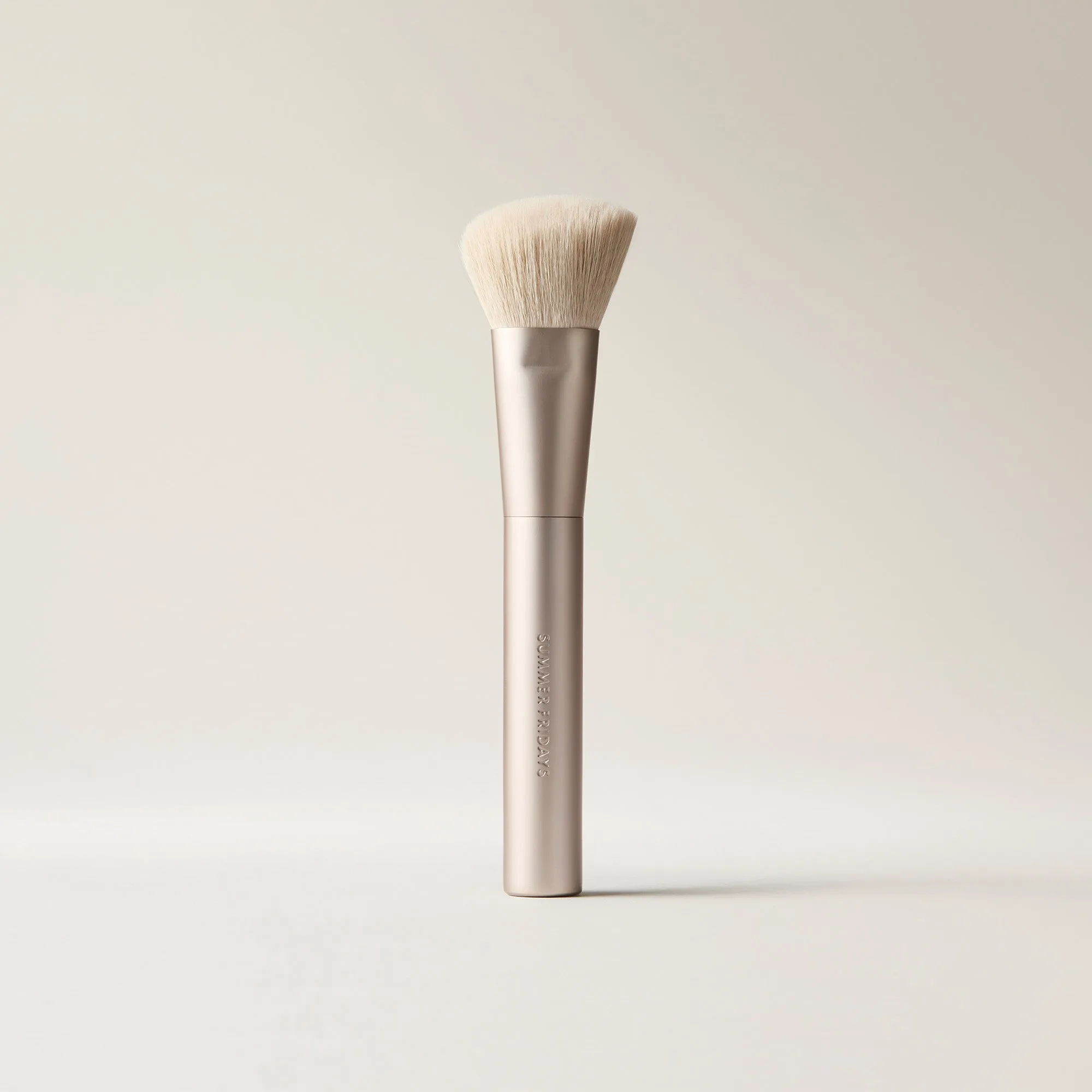
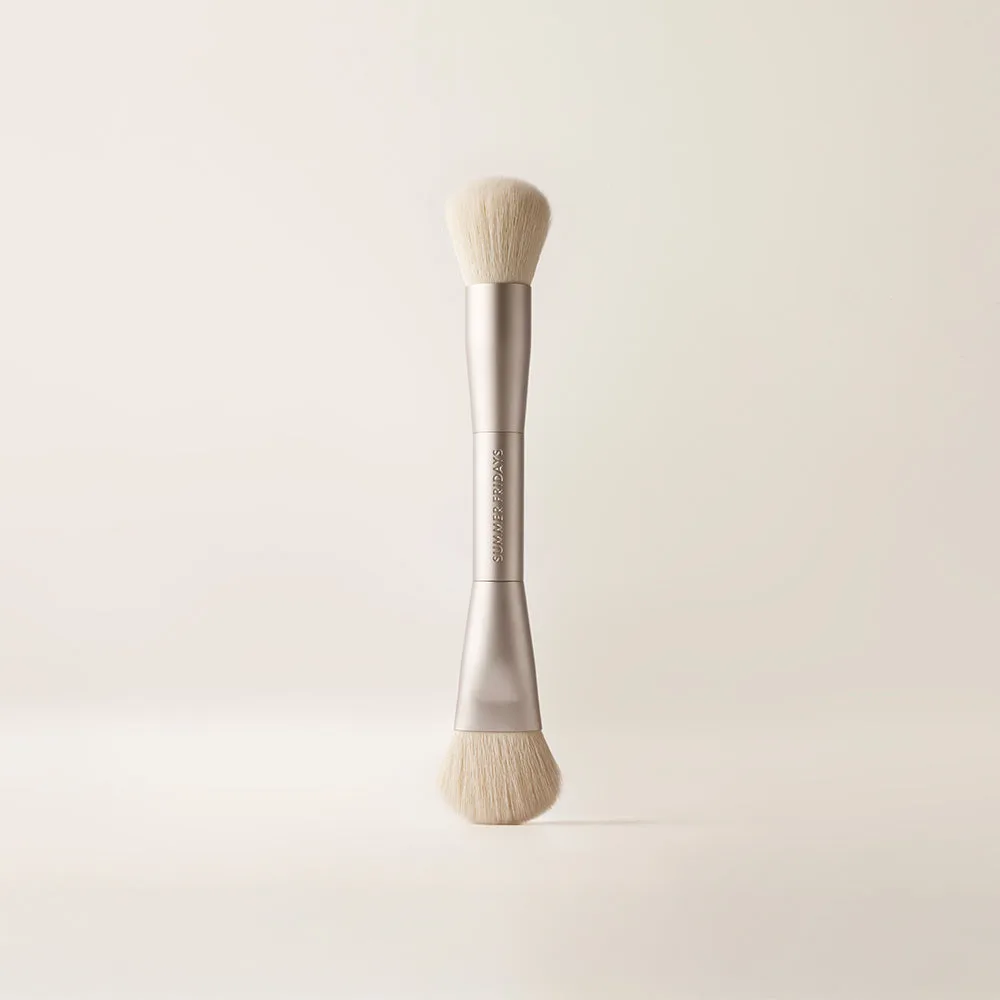
A brush like The Blush Brush is built to pick up cream product and distribute it evenly across the cheek. The dual-ended design gives you two surfaces: one for placing color and one for blending it out, so you're not using the same bristles for both steps. Soft-yet-firm bristles hold their shape against a cream formula without soaking it up the way a very fluffy brush would. The ergonomic handle matters more than it sounds—cream blush is a small-area product, and a handle that sits comfortably in your hand makes it easier to work in short, controlled strokes. The result is smoother, more even coverage than most people get with fingers, especially on both cheeks.
The real trade-off: speed vs. consistency
Fingers are faster. You warm the product, tap it on, and you're done. There's no tool to clean, and you can feel exactly where the color is landing. The downside is that your two cheeks rarely match perfectly, and the finish depends on how warm your hands are and how much pressure you use. A brush is slower to learn but far more repeatable. Once you know how much product the bristles pick up, you can get the same placement every time. That consistency is the main reason to keep a brush in your routine, even if you usually apply blush with your fingers.
How to apply cream blush with each method
With fingers: tap the product onto the apples of your cheeks, then blend outward and slightly upward with light pressure. Don't rub—tap and press. If you're using a buildable formula, add a second thin layer rather than a bigger first one. With a brush: pick up a small amount on the placing end, tap off any excess, then press the color onto the cheek before blending. Use the second end to soften the edges. Work in thin layers; cream blush builds faster than powder, and it's easier to add than to remove.
Where a sponge fits in
A damp sponge sits between the two. It sheers out cream blush and blurs edges well, but it also absorbs some product, so you use more per application. If you already own a sponge and like the finish, there's no need to switch. If you're choosing a first cream blush tool, a brush gives you more control over placement, and fingers cost nothing.
Trade-offs at a glance
- Fingers: speed and a natural flush: Body heat softens cream blush so it melts into skin for a sheer, skin-like finish. You can feel where the color goes and you never need to clean a tool. Best when you're in a hurry or want a barely-there look.
- Fingers: less control and less consistency: Broad fingertip contact makes it harder to keep edges crisp or match both cheeks exactly. Results vary with hand temperature and pressure. Choose a brush if even placement matters more than speed.
- Dual-ended brush: even, buildable coverage: Soft-yet-firm bristles pick up cream product and distribute it smoothly. One end places color, the other blends, so you get repeatable placement and a cleaner edge. Best when you want controlled, buildable color and a consistent finish on both cheeks.
- Dual-ended brush: a learning curve and upkeep: You need to learn how much product the bristles hold, and cream blush brushes need regular cleaning to keep them working well. Worth the extra step if you wear cream blush often.
Products that work with either method
- Blush Butter Balm: Blush Butter Balm is infused with hydrating skincare ingredients and blends effortlessly into the skin for a sheer flush of dewy, long-lasting color. Its creamy formula is non-comedogenic and fragrance-free. The buttery texture is forgiving with fingers because it softens on contact, and it also picks up cleanly on a brush if you want more even placement.
- The Blush Brush: The Blush Brush is an ultra plush, dual-ended cream blush brush with an ergonomic handle and soft-yet-firm bristles that blend cream formulas smoothly and evenly. The two ends let you place color and blend it without switching tools, which is the main advantage over finger application when you want consistent, buildable coverage.
Which should you use?
Best for
- Anyone who wants a fast, sheer, skin-like flush with minimal tools
- People using a buttery, blendable cream blush who don't need precise edges
- Beginners who want to feel the product go on before investing in a brush
Not for
- Anyone who wants identical placement on both cheeks every time
- People applying a highly pigmented cream blush who need more control
- Those who prefer a blurred, diffused edge rather than a natural flush