Quick answer
Buy a bodysuit if you want a smooth, tucked-in base layer for jeans, skirts or tailoring, or a piece that doubles as eveningwear. Buy a bodysuit dress if you want one garment that covers from shoulder to hem without layering. If you are deciding between a bodysuit and a playsuit, the bodysuit is the more versatile layer, while a playsuit gives you shorts and more coverage through the leg.
The real difference between a bodysuit and a bodysuit dress
A bodysuit is a one-piece top that fastens at the crotch, usually with a hook and eye or snap closure. It stays smooth under trousers and skirts because there is no hem to ride up. A bodysuit dress takes that same fitted, snap-fastened construction and extends it into a full dress, so it reads as a dress rather than a top. The snap closure is the detail that separates both from a standard dress or a swimsuit.
Because of that construction, the two pieces solve different problems. A bodysuit solves the tucking and layering problem. A bodysuit dress solves the one-and-done outfit problem. If you already own a bodysuit you love, a bodysuit dress is not a replacement; it is a different category of garment.
When to wear a bodysuit
Reach for a bodysuit when you want a clean line under high-waisted denim, tailored trousers or a pencil skirt. It also works as a standalone piece for evenings, especially in lace or embroidered finishes. A bodysuit is the better choice when you plan to change one part of your outfit, such as swapping a skirt for jeans, without changing the top.
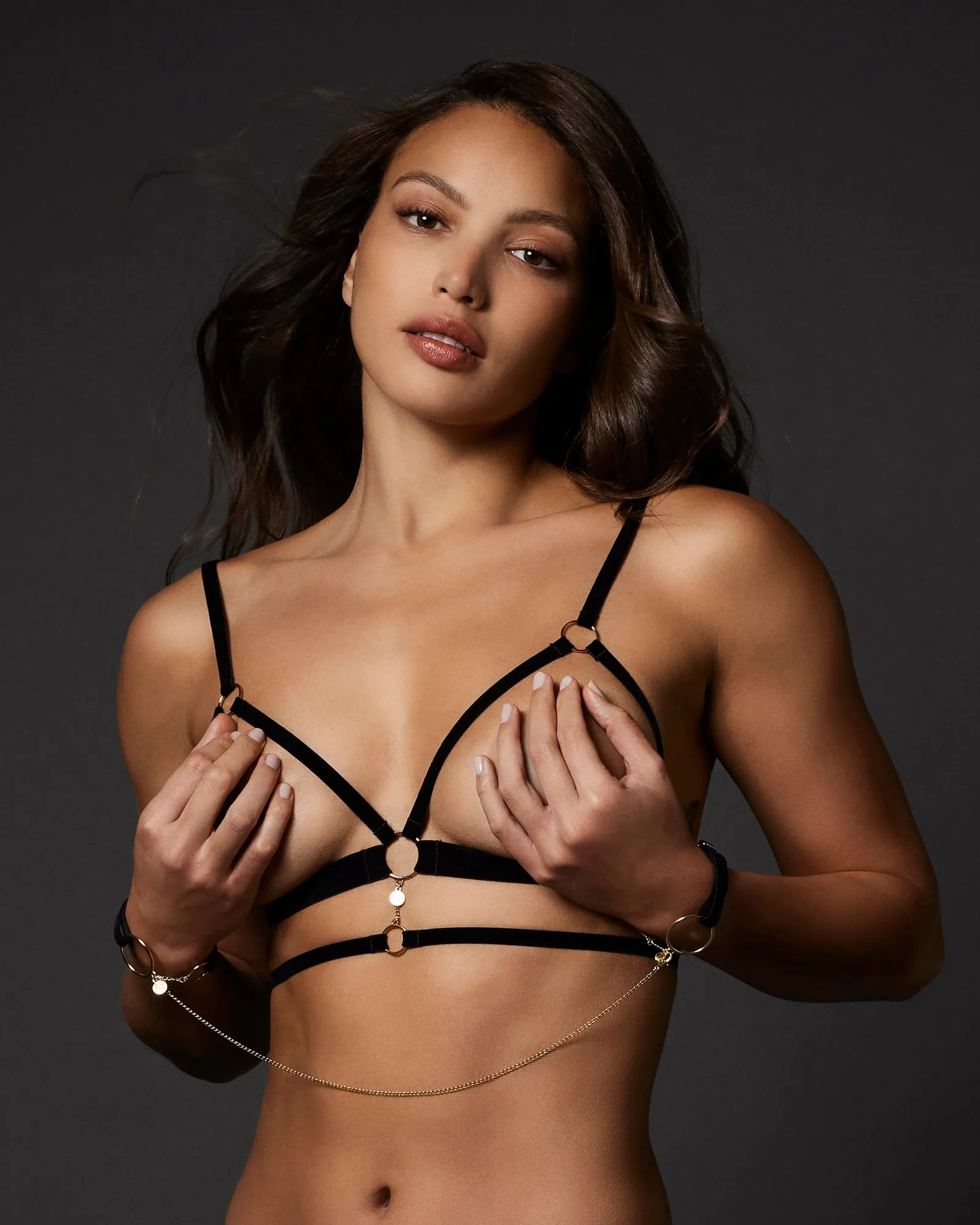
For a lingerie-led look, an open or sheer bodysuit can be styled with a blazer or an oversized shirt. If you want to add a fashion edge, pair it with the Simone Cuffs Black/Gold for a coordinated finish. That styling move works because the cuffs are an accessory, not a layer, so they do not interfere with the bodysuit's fit.
When a bodysuit dress makes more sense
Choose a bodysuit dress for events where you want one piece to do the work: dinners, parties, holidays and evenings when you do not want to think about tucking or layering. It gives you the fitted silhouette of a bodysuit with full dress coverage, so you can add shoes and a bag and be finished.
The trade-off is flexibility. A bodysuit dress cannot be split into two outfits the way a bodysuit can. It also demands a closer fit through the torso, so checking the size chart matters more than it does with a loose dress. If you are between sizes, size up rather than relying on stretch.
Bodysuit vs. playsuit: a quick clarification
A playsuit is a one-piece with shorts, so it gives you more coverage through the leg and often reads as casual daywear. A bodysuit has no leg coverage and is usually worn as a top or as lingerie. If you want a beach-to-bar piece, a playsuit or a swimsuit is the more practical pick. If you want to layer under clothing, a bodysuit wins.
This is why bodysuit outfit ideas often start with what goes over the piece, while playsuit styling starts with the piece itself. Decide whether you are building a base layer or a complete look, and the choice becomes obvious.
Fabric, fit and fastening details that change the decision
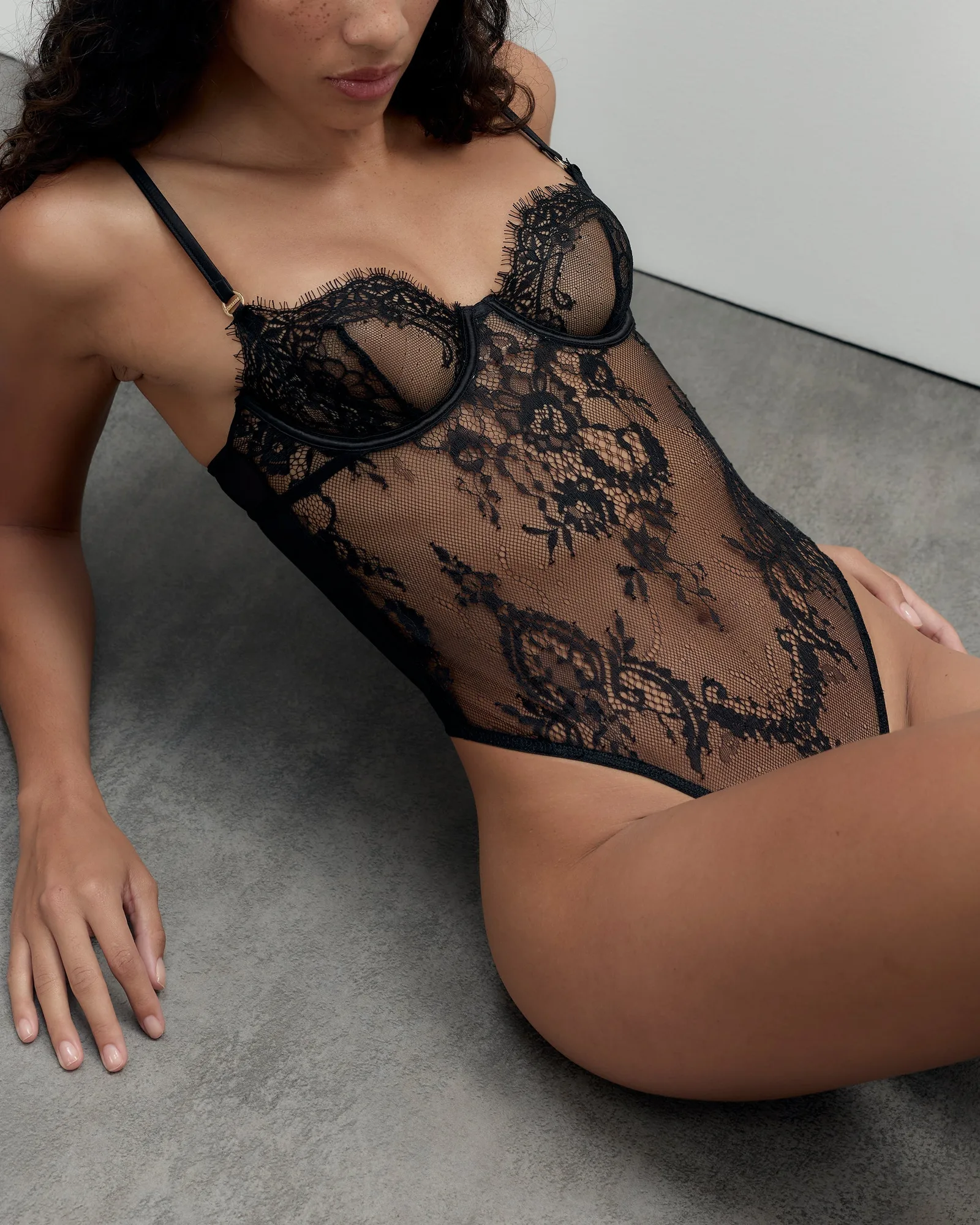
Look at the fastening first. A hook and eye rear fastening, like the one on the Madeline Sheer Lace Bodysuit Black, is secure and adjustable, but it takes a moment longer to close than a snap. Adjustable straps matter if you are between torso lengths, because they let you fine-tune where the cups sit.
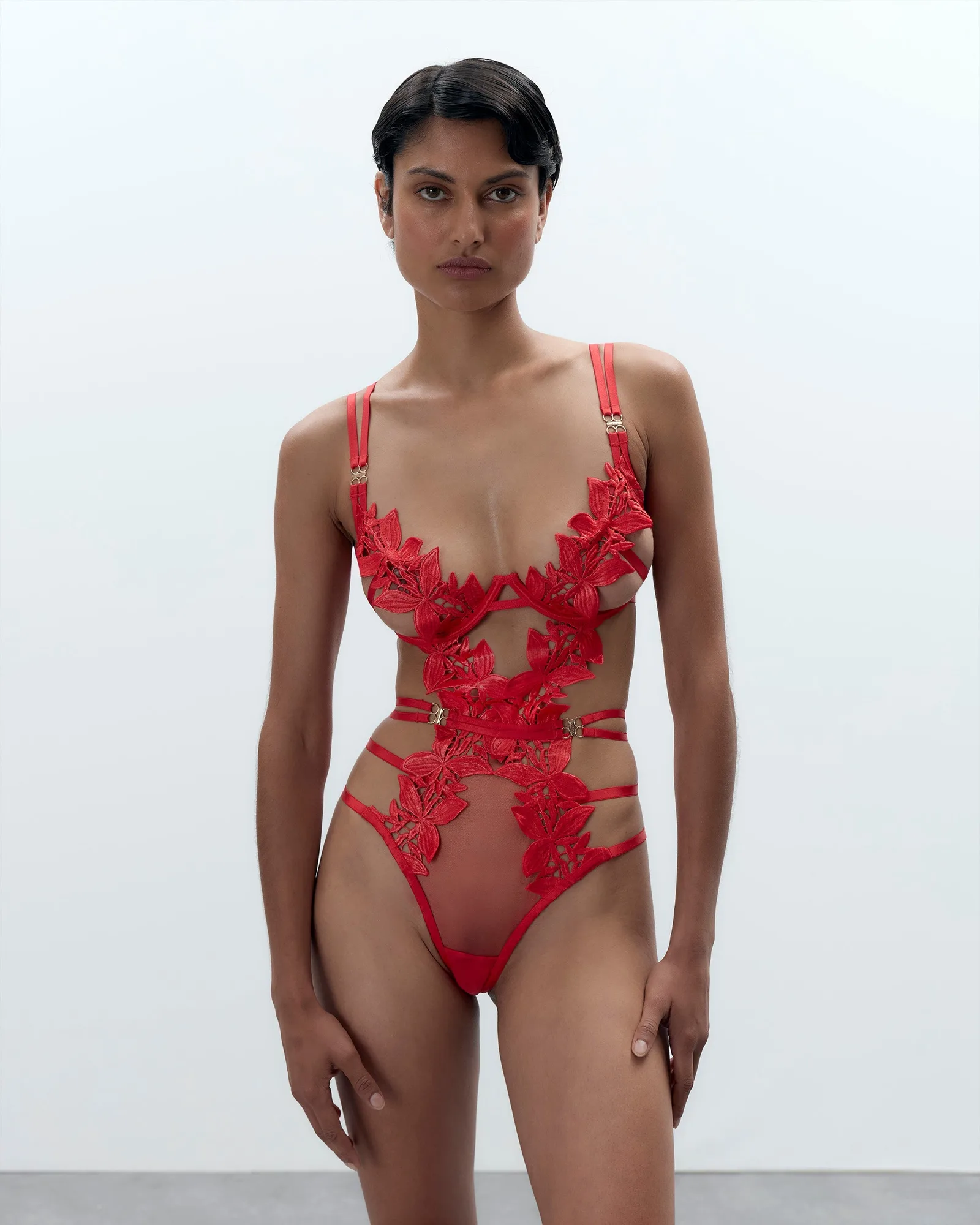
Second, check the cup construction. An underwired cup gives more structure; an open cup, like the one on the Ophelia Open Bodysuit Red, is a deliberate styling choice rather than everyday support. Third, consider the finish: a thong design creates a seamless line under clothing, while a fuller brief gives more coverage. None of these details is universally better; they simply match different outfits and comfort preferences.
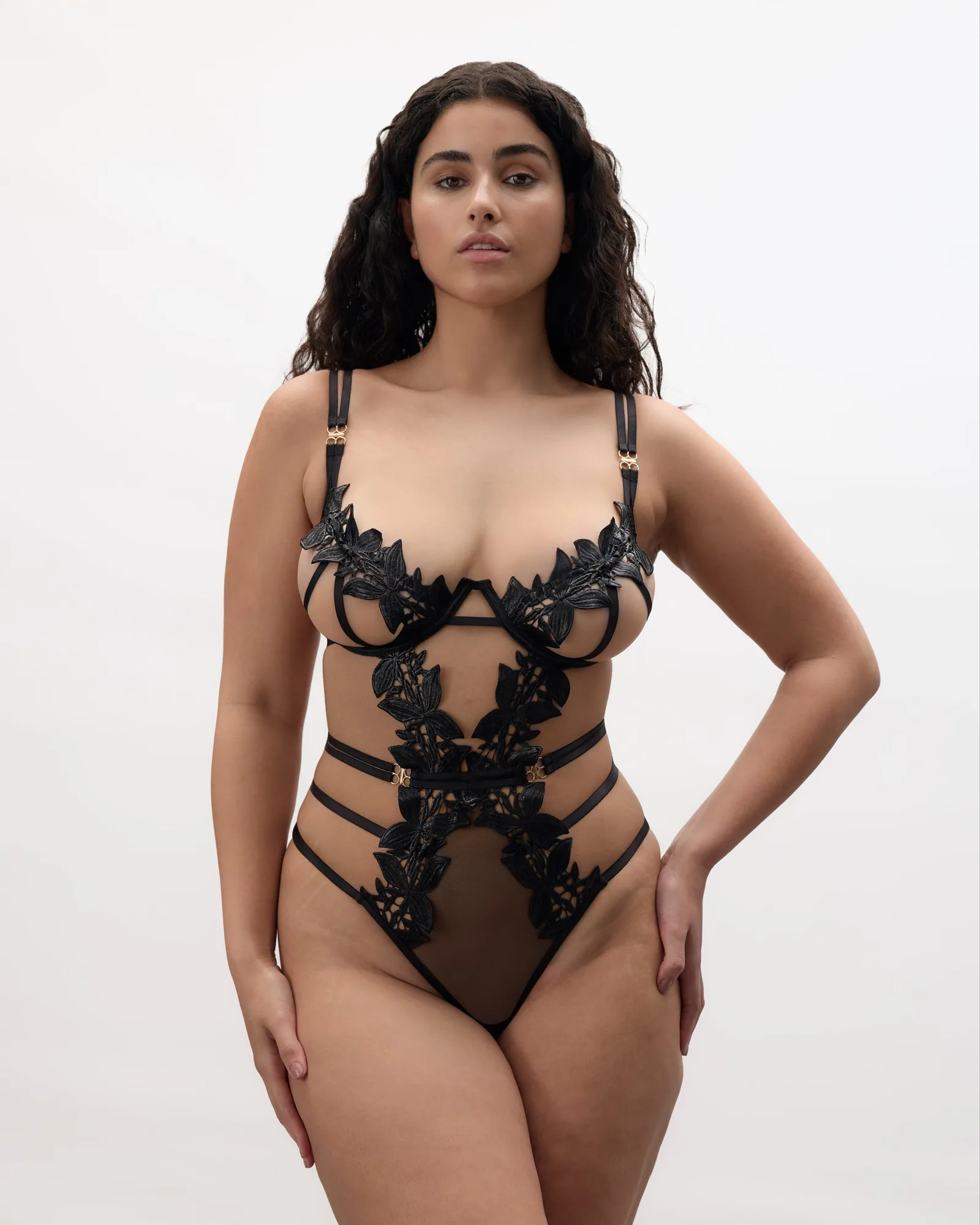
Ophelia Open Bodysuit
Trade-offs to weigh before you buy
- Versatility vs. one-and-done ease: A bodysuit can be layered under jeans, skirts and tailoring, so it earns its place across more outfits. A bodysuit dress is a complete look on its own but cannot be split into separate pieces. Choose the bodysuit if you want more outfits per purchase; choose the bodysuit dress if you want to get dressed in one step.
- Coverage vs. line: A thong-finish bodysuit keeps the silhouette seamless under clothing. A bodysuit dress covers more of the body but puts more emphasis on the fit through the torso, so the size chart matters more. If smooth lines under trousers are your priority, the bodysuit is the safer buy.
- Statement vs. support: An open cup design such as the Ophelia Open Bodysuit Red is built to be seen and styled with matching accessories. An underwired design such as the Madeline Sheer Lace Bodysuit Black is built for structure and adjustable fit. Decide whether the piece is lingerie to reveal or a layer to wear under clothes, then pick the construction that matches.
Two bodysuits that show the range
- Madeline Sheer Lace Bodysuit Black: Featuring embroidered sheer lace with scalloped lace trimming to the underwired cups, adjustable straps, a hook and eye rear fastening and a thong design. The underwired cups and adjustable straps give structure and fit control, while the thong finish keeps lines smooth under trousers or a skirt. It is the more supportive, layer-friendly option of the two.
- Ophelia Open Bodysuit Red: Artfully crafted with floral embroidery guipure lace, an open cup construction, soft mesh panelling, a thong finish and directional strapping with adjustable straps and Bluebella hardware. The open cup and strapping make this a statement piece rather than a daily base layer. Choose it when the bodysuit is meant to be seen, and pair it with the matching choker and cuffs for a complete look.
- Simone Cuffs Black/Gold: Featuring sleek, directional straps and gold-tone hardware, these adjustable cuffs help you introduce a touch of seductive playfulness to nocturnal adventures. They coordinate with the hardware on the Ophelia bodysuit, so they are an easy add-on if you want a matched set rather than a single piece.
Which one fits your wardrobe
Best for
- Anyone who wants a smooth base layer under high-waisted jeans, skirts or tailored trousers
- Shoppers who want one piece they can restyle across several outfits
- Evening looks where an open or sheer bodysuit is meant to be seen
Not for
- Shoppers who want full leg coverage or a casual daywear one-piece, who should look at a playsuit or swimsuit instead
- Anyone who prefers a loose, forgiving fit through the torso, since both bodysuits and bodysuit dresses are cut close to the body
- Buyers who want to avoid crotch fastenings altogether, as both styles rely on them