Why Needle Size Matters for Ribbon Embroidery
Ribbon embroidery depends on the needle's eye and point as much as the ribbon itself. A needle that is too small can crush the ribbon and make it hard to pull through the fabric. A needle that is too large may leave visible holes in delicate woven fabrics.
The BOHIN Ribbon Embroidery Needles come as an assortment of No. 18–22, which gives you a range to match different ribbon widths and thread thicknesses. This guide helps you understand what that range means for your projects and how to choose the right needle from the set.
BOHIN Ribbon Embroidery Needles at a Glance
-
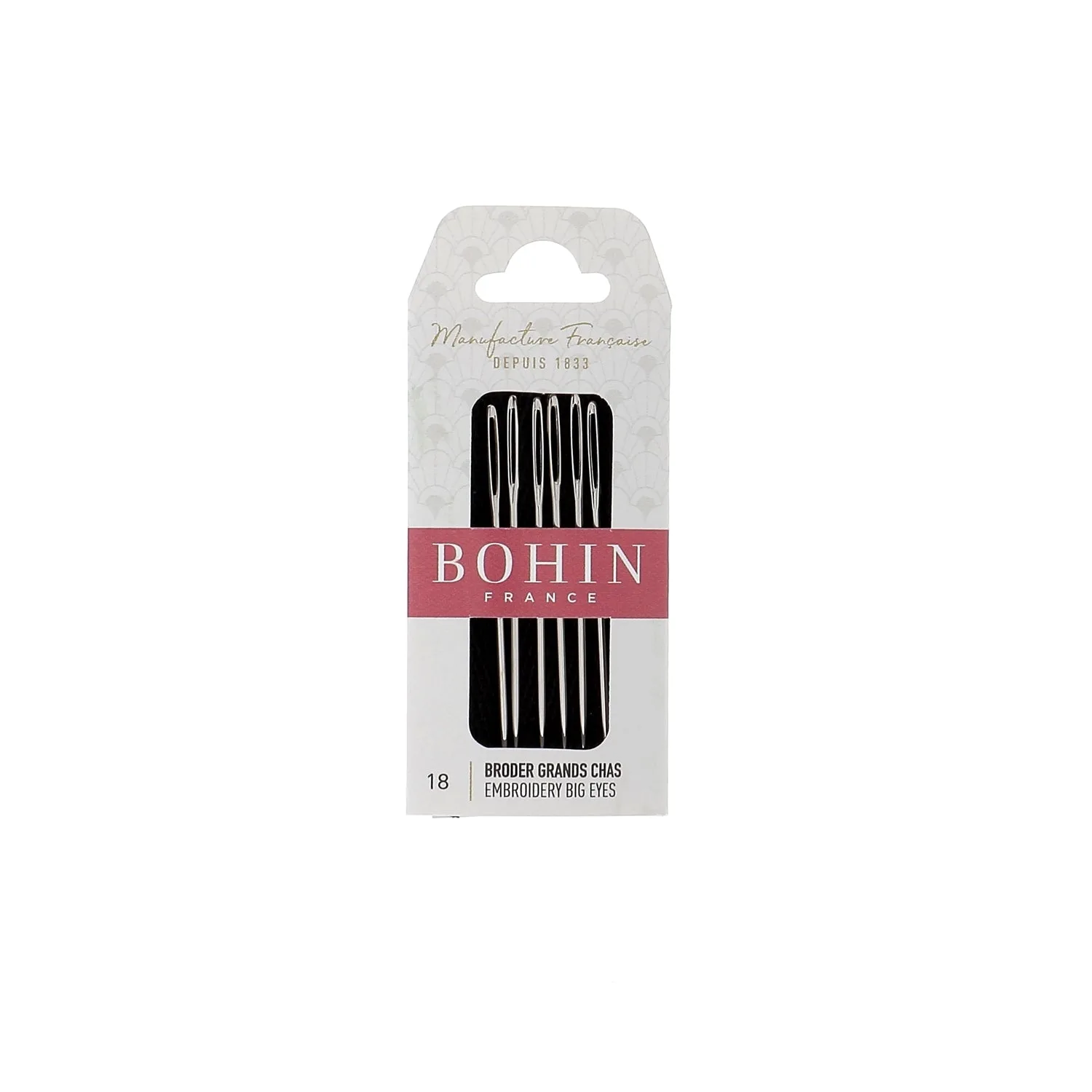
BOHIN Ribbon Embroidery Needles No. 18–22 | 3 Needles | Made in France: The BOHIN Ribbon Embroidery Needles assortment includes No. 18–22 needles, with 3 needles per pack. The range covers several common ribbon widths, so you can experiment with different sizes without buying separate packs.
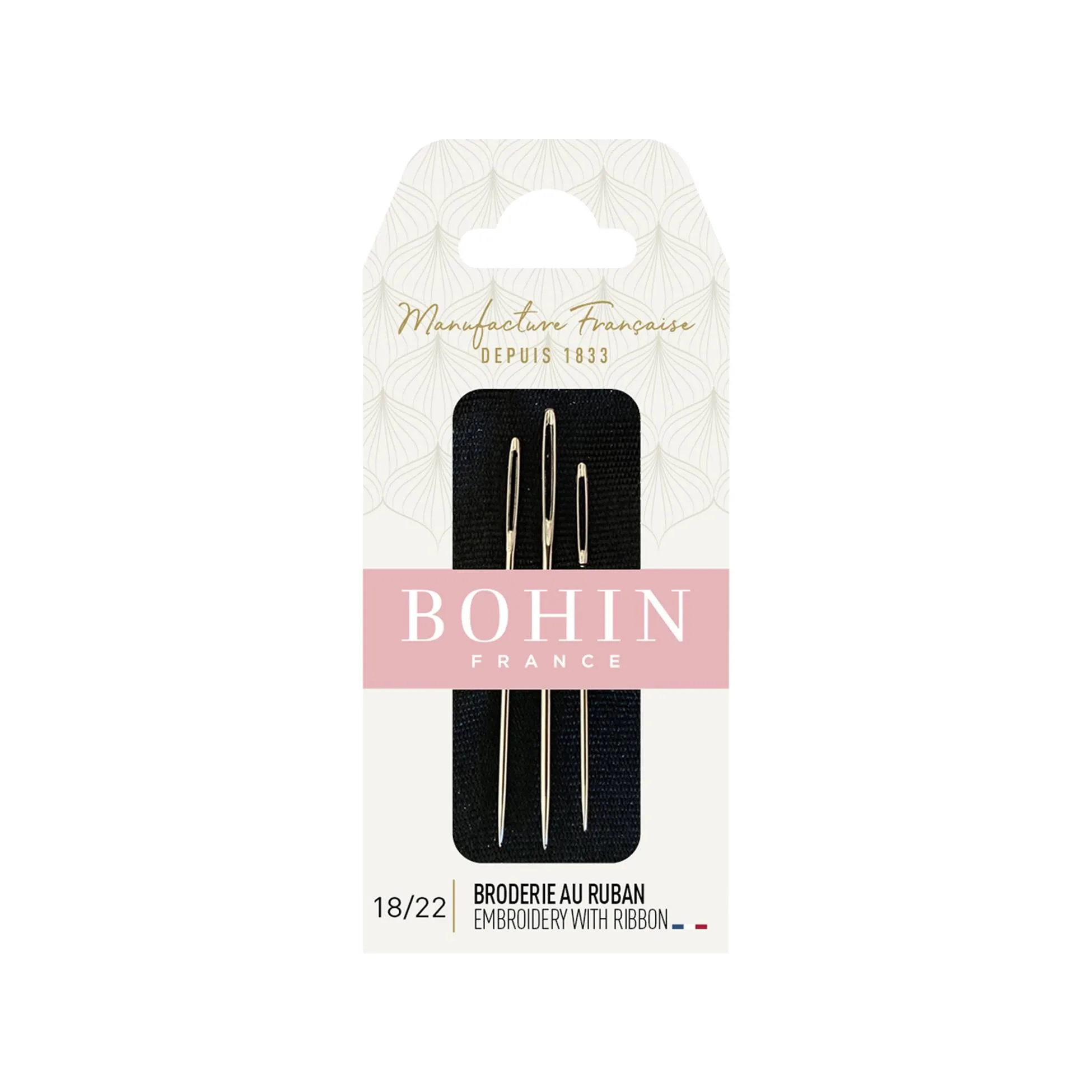
BOHIN Ribbon Embroidery Needles No. 18–22 | 3 Needles | Made in France
-
BOHIN Ribbon Embroidery Needles No. 18–22 | 3 Needles | Made in France: The needles are made from nickel-plated steel and are manufactured in France. Nickel-plated steel gives a smooth finish that helps the needle pass through fabric without snagging, which is important for delicate ribbon work.
-
BOHIN Ribbon Embroidery Needles No. 18–22 | 3 Needles | Made in France: The extra-large eye easily accommodates silk, satin, and embroidery ribbons while minimizing friction and helping preserve delicate fibres. A larger eye reduces wear on the ribbon as it passes through the fabric, so your stitches stay clean and the ribbon keeps its sheen.
How to Match Needle Size to Ribbon Width
The BOHIN assortment covers No. 18–22, which corresponds to a range of needle thicknesses. In general, the lower the number, the thicker the needle. This means the No. 18 needle is the thickest in the set, while No. 22 is the finest.
Use the thicker needle (No. 18) for wider ribbons, such as satin or silk ribbon that needs a larger eye and a sturdier shaft to glide through fabric. Use the finer needles (No. 20–22) for narrower ribbons, traditional hand embroidery, or when you want a more delicate stitch.
Because the set includes three needles in the No. 18–22 range, you can switch between them as you work on different sections of a project. For example, you might use a finer needle for small petals and a thicker one for larger leaves.
The sharp point glides smoothly through woven fabrics, making these needles ideal for creating dimensional flowers, leaves, and textured embroidery designs. If you are working with multiple strands of embroidery floss or thicker specialty threads, the larger eye also accommodates those, so you are not limited to ribbon alone.
Choosing a Needle for Your Project
The table below summarizes how to think about the No. 18–22 range for different ribbon and thread types. Use it as a starting point, then test on a scrap of your fabric to see which needle feels best.
- Wider ribbons (satin, silk): Reach for the thicker needles in the set (No. 18) to provide a larger eye and a sturdier shaft that can handle the bulk of wide ribbon.
- Narrow ribbons and delicate work: The finer needles in the range (No. 20–22) suit narrow ribbon and projects where you want a smaller puncture in the fabric.
- Multiple strands of floss or specialty threads: The extra-large eye works for several strands of embroidery floss or thicker threads, so you can use the same needles for hand embroidery beyond ribbon.
Practical Tips for Using BOHIN Ribbon Needles
When you start a project, test the needle on a scrap of your fabric first. This helps you see how easily the needle passes through and how visible the puncture holes are. If the needle feels tight, move to a finer size in the set.
Thread the ribbon through the eye without twisting it. A twisted ribbon can cause friction and make the needle harder to pull through. The smooth finish of the BOHIN needle helps reduce snagging and thread wear, but your threading technique still matters.
For dimensional flowers and leaves, the sharp point is designed to glide through woven fabrics. Keep your fabric taut but not stretched, and pull the ribbon gently to avoid distorting the weave.
After use, wipe the needles with a soft cloth and store them in a dry place. Nickel-plated steel resists rust, but good care keeps the polish and precision intact.
What to Consider Before You Buy
The BOHIN Ribbon Embroidery Needles are a practical choice if you want a ready-to-use range of sizes for different ribbon widths. The three-needle set covers No. 18–22, which suits many common ribbon embroidery projects, from silk ribbon flowers to decorative embellishments.
If you primarily work with very narrow ribbon or very fine fabric, you might find that the finest needle in the set is still thicker than you prefer. That is not a flaw of the product, but a limitation of the size range. For those cases, you may want to look for individual needles in finer sizes.
Also, because the set includes only three needles, you may need to replace them more often if you do a lot of embroidery. Nickel-plated steel is durable, but no needle lasts forever. Keep that in mind if you plan to use them for heavy, daily stitching.