The thread decides the needle before anything else
If you are choosing between embroidery needles, the most useful question is not which size is 'best' but which thread you plan to put through the eye. A needle that is too fine for a thick thread will fight you at every stitch; one that is too heavy for a fine thread can leave visible holes.
BOHIN's large-eye embroidery needles, the Aiguilles à broder grands chas, are tapestry needles with a point and a long eye. The catalog describes them as ideal for embroidery that uses very thick thread, such as silk chenille, on heavy canvas and fabric. That description is the clearest starting point for a comparison: these needles are built around thick threads and dense supports, not delicate cotton work.
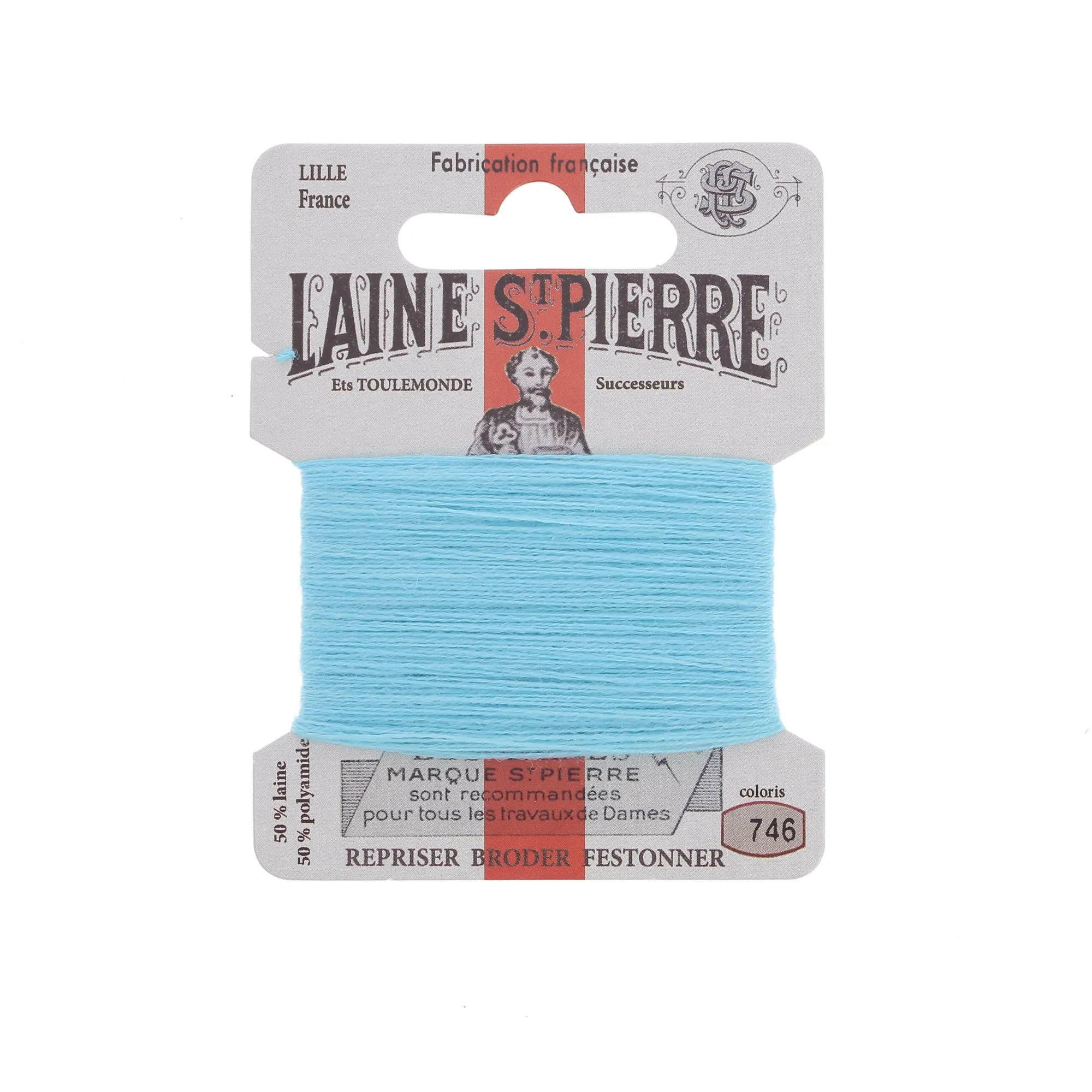
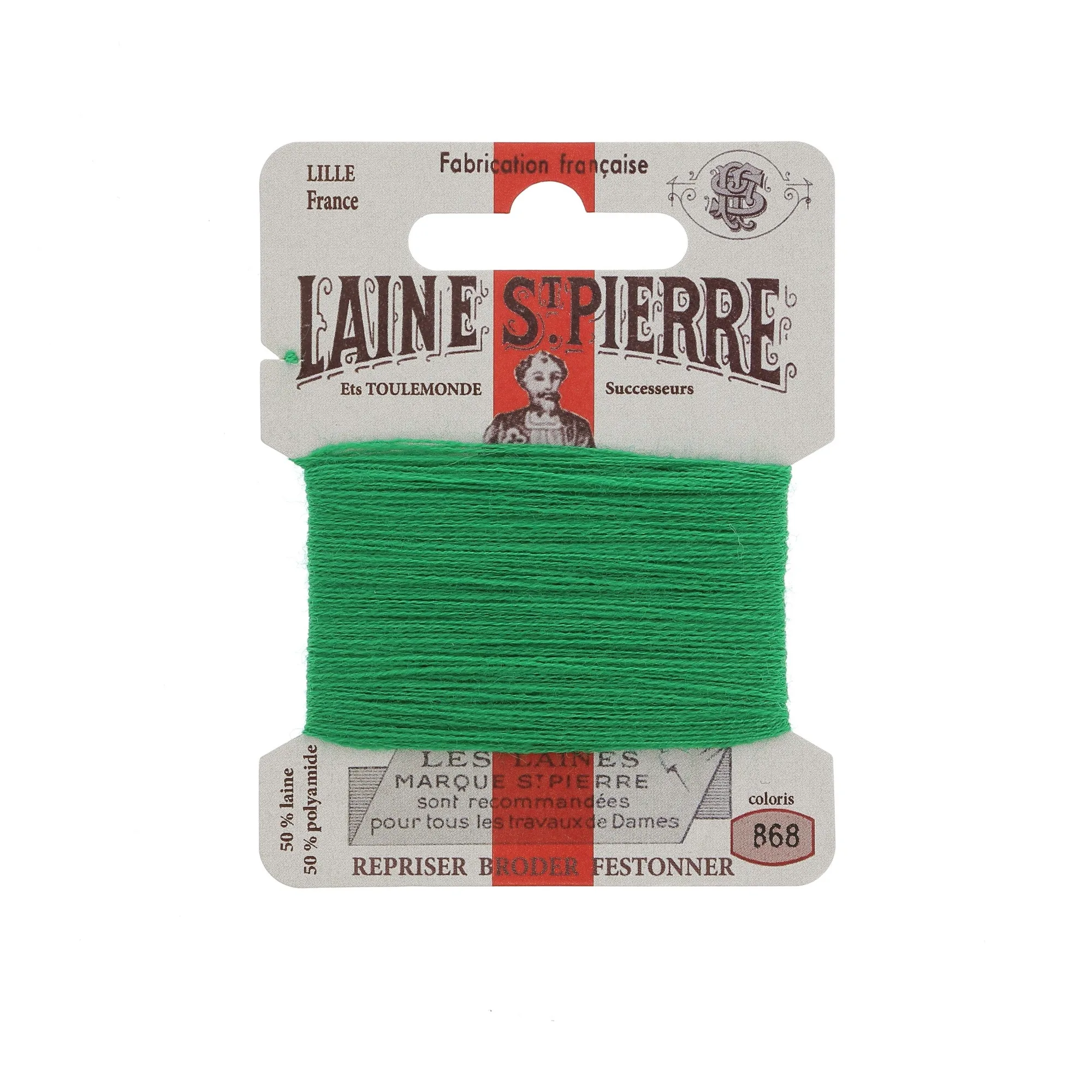
Wool embroidery thread, such as Laine St Pierre from the Collection 1847, sits in a different category. It is a soft, regular wool thread intended for traditional embroidery and cross-stitch, with a matte finish. The catalog recommends choosing classic embroidery needles, large-eye needles or tapestry needles according to your support, so the right choice depends on your fabric and the thickness of the wool you are using.
What the BOHIN large-eye needles actually offer
-
Aiguilles à broder grands chas: Aiguilles à broder grands chas are tapestry needles with a point and a long eye, described as ideal for embroidery with very thick thread such as silk chenille on heavy canvas and fabric. The long eye is the feature that lets you thread a thick yarn without splitting it, and the point matters if you are working on heavy, closely woven fabric rather than open canvas.
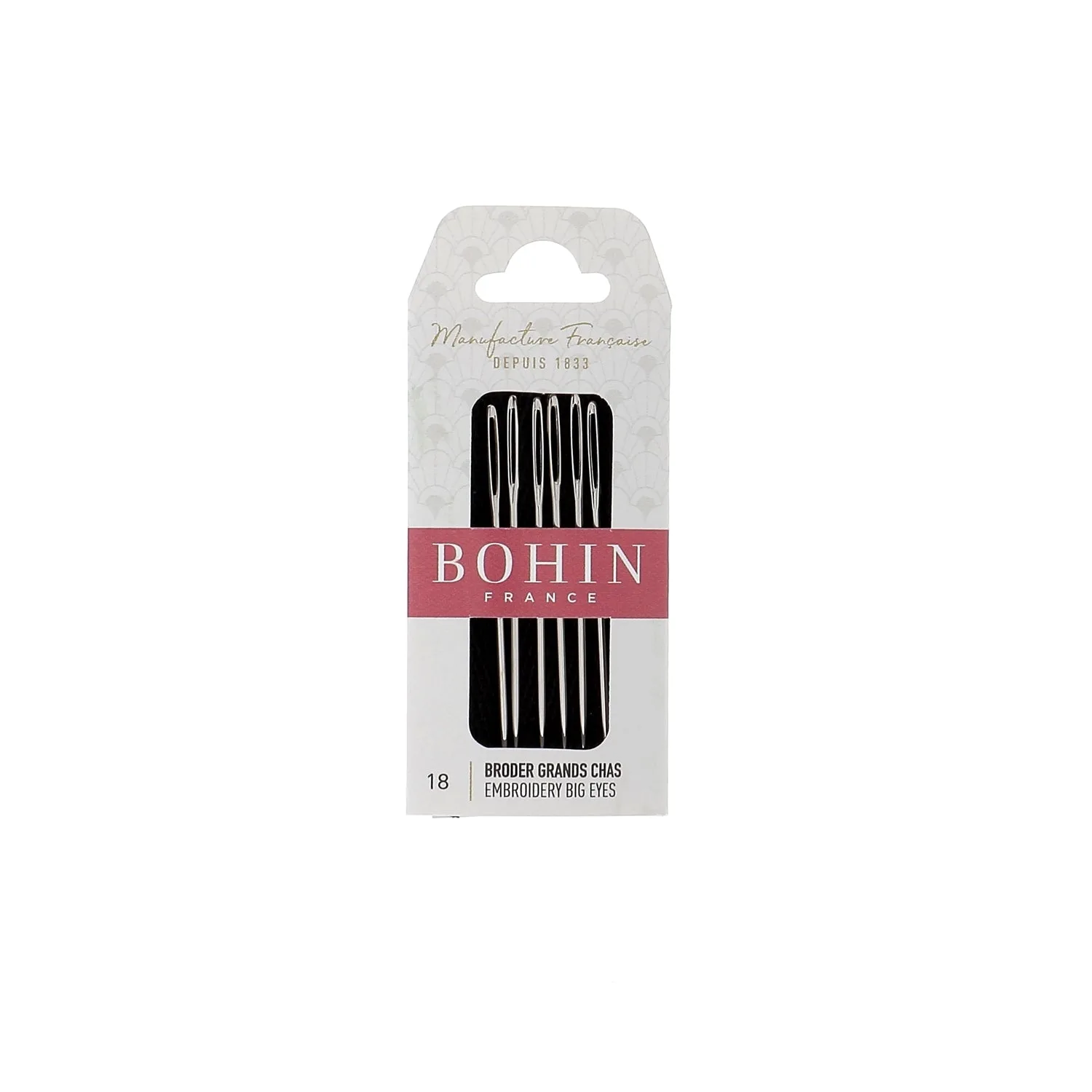
Aiguilles à broder grands chas
-
Aiguilles à broder grands chas: The numbering runs from N°18, the longest and thickest in the series, to N°24, the shortest and finest; sizes N°18, N°20, N°22, N°24 and N°26 are available, along with mixed packs N°18/22 and N°18/20/24. This is the core of a size decision: a thicker thread and heavier fabric push you toward N°18 or N°20, while a finer wool or a lighter support may suit N°22 or N°24.
Large-eye needle vs. a standard embroidery needle
The comparison that matters for most embroiderers is not between two similar needles but between a large-eye tapestry needle and a standard embroidery needle. The catalog does not list a standard needle alongside these, so this section compares the roles each plays rather than specific models.
- Large-eye BOHIN needle (N°18–N°24): Best suited to thick threads and heavy supports. The long eye makes thick yarn easier to thread, and the point is designed for canvas and heavy fabric. Sizes N°18 to N°24 let you step down as your thread gets finer, but the series remains oriented toward substantial threads.
- Standard embroidery needle: The catalog recommends classic embroidery needles as one option for Laine St Pierre wool, without specifying a size. A standard needle is the usual choice for finer cotton embroidery thread, where a large eye and thick shaft would be unnecessary. The supplied information does not give a size range for standard needles, so treat this as a direction rather than a precise recommendation.
Where Laine St Pierre wool fits in the decision
Laine St Pierre is a wool thread, and wool behaves differently from cotton: it has a matte finish and a soft, regular texture. The catalog describes it for traditional embroidery and cross-stitch, and also for creative mending. It comes in a Rose & Violet color card with shades such as Chair 565, Rose 586, Violette 540 and Cassis 618, and other color cards are available separately.
Because the thread is wool, the needle choice should follow its thickness in your hand rather than a fixed rule. The catalog's own accessory note says to choose classic embroidery needles, large-eye needles or tapestry needles adapted to your support. That means the fabric you are stitching on, not just the thread, should guide you between a large-eye BOHIN needle and a standard one.
Laine St Pierre thread facts that affect needle choice
-
Fil à broder - Laine St Pierre: Laine St Pierre – Collection 1847 is a soft, regular wool thread for traditional embroidery and cross-stitch, with a matte finish, also suitable for creative mending. A soft wool thread can compress in a small eye, so a needle with enough eye room helps avoid fraying the thread as you stitch.
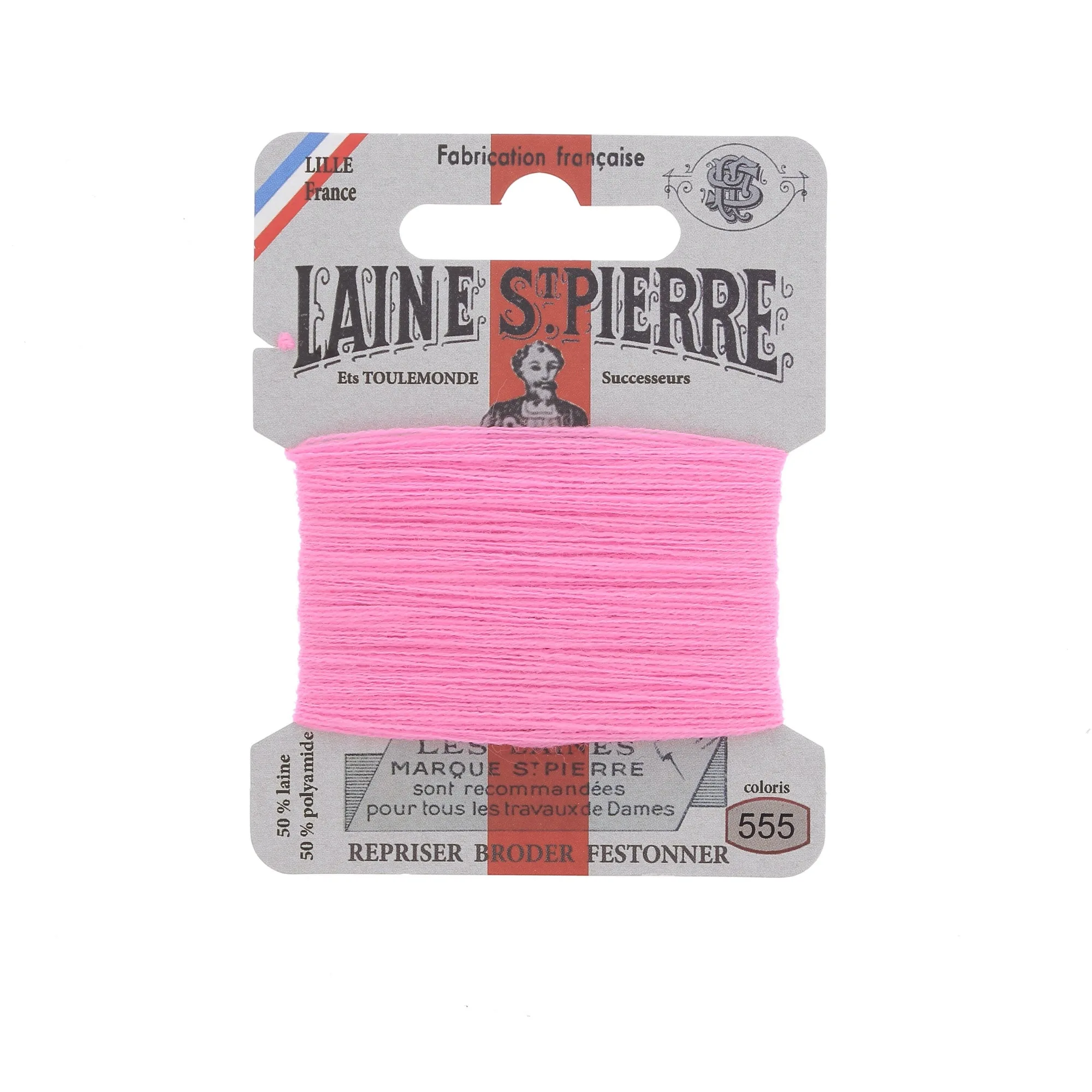
Fil à broder - Laine St Pierre
-
Fil à broder - Laine St Pierre: The catalog recommends classic embroidery needles, large-eye needles or tapestry needles adapted to your support, along with a hoop and BOHIN embroidery scissors. This confirms that large-eye needles are a legitimate option for this wool, but it does not prescribe a single size. Your fabric and the wool's thickness remain the deciding factors.
A practical way to pick a size
- Start with the thickest thread you plan to use: If you are working with silk chenille or another very thick embellishment thread on heavy fabric, begin with N°18 or N°20 from the BOHIN large-eye series. These are the longest and thickest in the range.
- Step down for finer wool or lighter fabric: If your Laine St Pierre wool is on the finer side, or your support is lighter than heavy canvas, try N°22 or N°24. The catalog describes N°24 as the shortest and finest in the series.
- Use a mixed pack if you are unsure: The N°18/22 and N°18/20/24 packs let you test two or three sizes on a sample of your actual fabric before committing to a full pack of one size.
- Check the eye with your thread before stitching: Thread a short length through the eye and pull it gently. If the wool bunches or sheds, the eye is too small; move up a size. If the needle leaves a visible hole in your fabric, move down.
What the supplied information does not settle
The catalog does not give a specific needle size for Laine St Pierre wool, nor does it list a standard embroidery needle size range. It also does not state recommended needle sizes for particular fabric weights beyond the general note about adapting to your support. Those gaps mean you should treat the size suggestions above as a starting point, not a manufacturer's prescription.
The large-eye needles are described for thick threads and heavy supports, so they are not the obvious first choice for fine cotton embroidery thread. If you mainly stitch with fine cotton, a standard embroidery needle is the more conventional direction, though the supplied information does not specify which standard size to choose. For wool and thick embellishment threads, the BOHIN large-eye series gives you a clear numbered range to work from.