Start with the job, then the weight
Thread weight is a number that tells you how fine or thick a thread is, but the number alone does not tell you which spool to pick. The useful question is what you want the thread to do: hold a seam together, add visible quilting texture, or run fast in an embroidery machine. Once you know the job, the weight and fiber choice become much clearer.
For most piecing and everyday quilting, a fine cotton thread is the default starting point. For utility seams and all-purpose sewing, a polyester all-purpose thread is the practical workhorse. For high-speed embroidery or when you want a smooth, strong polyester thread, Isacord is the specialist option. The sections below explain how to match those choices to your project.
What thread weight actually means
In general sewing terms, a higher weight number means a finer thread, and a lower number means a thicker thread. That is why 50wt cotton is considered fine and is often used for piecing and detailed quilting, while heavier weights are used when you want visible topstitching or a bolder stitch line.
The supplied product records in this store do not list a weight for every thread, so do not assume a weight from the brand name alone. Check the spool label or the product description. If a weight is not stated in the supplied information, treat it as unconfirmed rather than guessing.
A fine cotton option for piecing and quilting
-
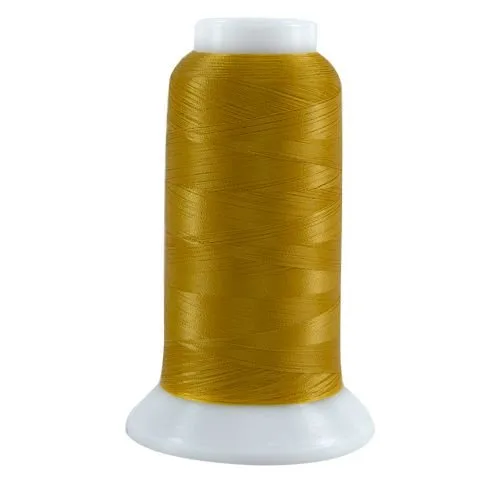
Cotton Makó 50wt 1422yds 2540 Medium Lavender Thread: Aurifil Cotton Makó 50wt is described as the finest of the cotton Makò threads, mercerized for high sheen and washing resistance, and recommended for piecing and quilting in both top and bottom. This is the closest match in the supplied catalog to a dedicated piecing and quilting cotton, and the 50wt number gives you a fine thread for detailed work.
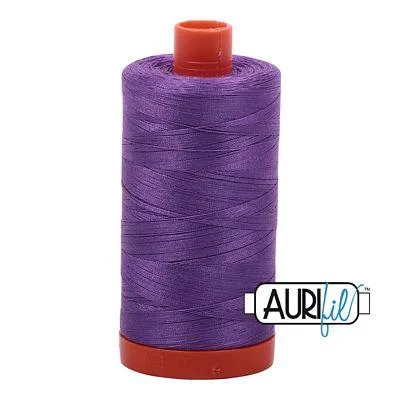
Cotton Makó 50wt 1422yds 2540 Medium Lavender Thread
-
Cotton Makó 50wt 1422yds 2540 Medium Lavender Thread: The same thread is described as excellent for machine appliqué, fine machine quilting stitch, and miniature patchwork projects. If your project involves small pieces or appliqué, a fine 50wt cotton keeps seam allowances and stitching from becoming bulky.
When a polyester all-purpose thread is the better call
Polyester all-purpose thread is designed for general sewing rather than a single specialty. The Gütermann creativ Sew-all Thread in the supplied catalog is described as suitable for machine and hand sewing, compatible with all stitch types, and intended for closing and top stitch seams, decorative stitches, and all fabrics and woven fabrics. That breadth is exactly why it works as a default spool for utility sewing and mixed projects.
The tradeoff is that a general-purpose polyester is not described as a dedicated quilting thread. For piecing and quilting where you want a fine cotton with a matte finish, the Cotton Makó 50wt is the more specific choice. For seams that need to hold up and for everyday mending, the all-purpose polyester is the practical pick.
All-purpose polyester at a glance
-
Gutermann - Polyester All Purpose Thread - 100m/110yds - #536 - Tan: Gütermann creativ Sew-all Thread is 100% polyester, uses Micro Core Technology®, and is listed with a universal needle size NM 70–90. The needle range gives you a concrete starting point for matching the thread to common universal needles, and the polyester construction suits general seams and decorative stitches.
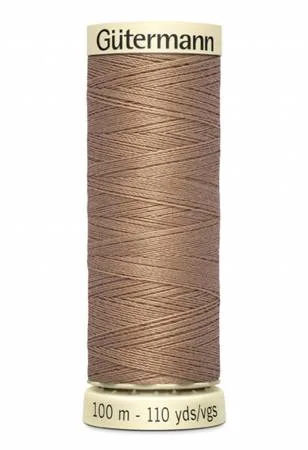
Gutermann - Polyester All Purpose Thread - 100m/110yds - #536 - Tan
-
Gutermann - Polyester All Purpose Thread - 100m/110yds - #536 - Tan: The product is described as ideal for both machine and hand sewing and compatible with all stitch types. If you do not want to keep separate spools for hand and machine work, this is the flexible option in the supplied catalog.
Isacord polyester thread uses: speed and embroidery
Isacord is a 100% polyester thread described in the supplied record as the thread of choice for maximum productivity and the highest quality embroidery. It is stated to be nearly twice the strength of rayon thread and engineered with enough elasticity for high-speed running without looping or puckering while virtually eliminating thread breaks. Those are embroidery and high-speed machine claims, not a promise about quilting performance.
Use Isacord when your priority is smooth, strong performance in an embroidery machine or when you want a polyester thread with that strength profile. For piecing and fine quilting, the supplied evidence points back to the 50wt cotton. The Isacord record does not state a weight, so do not treat it as a substitute for a labeled 50wt cotton without checking the spool.
Isacord facts that matter for machine work
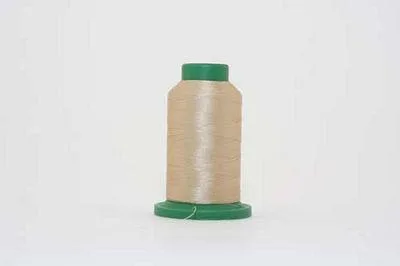
- Isacord 1000m Polyester 0651 Cornsilk Thread: Isacord 1000m polyester thread is available in 423 brilliant colors and comes on 1,000 meter mini-king spools with a snap-down base for clean and easy storage. A wide color range helps with thread color matching fabric, and the snap-down base is a small but real storage advantage for machine embroiderers.
- Isacord 1000m Polyester 0651 Cornsilk Thread: The thread is described as engineered to provide just the right amount of elasticity for high-speed running without looping or puckering while virtually eliminating thread breaks. If your machine work is fast and embroidery-focused, this is the supplied reason to choose Isacord over a general-purpose polyester.
Quilting thread vs piecing thread: a practical split
The same spool can sometimes do both jobs, but the priorities differ. Use this split when you are deciding what to load on top and in the bobbin.
- Piecing thread: Choose a fine, strong thread that keeps seam allowances flat. The supplied Cotton Makó 50wt record specifically recommends it for piecing in both top and bottom.
- Quilting thread: Choose based on the look you want. A fine 50wt cotton gives detailed stitching and is described as fantastic for fine machine quilting stitch; a polyester all-purpose thread is better reserved for utility seams unless you have tested it on a sample.
- Embroidery thread: Isacord is the supplied specialist for high-quality embroidery and high-speed running, with a strength claim of nearly twice that of rayon thread.
- All-purpose backup: Gütermann Sew-all is the flexible spool for hand sewing, machine sewing, decorative stitches, and all fabrics, but it is not described as a dedicated quilting thread.
Thread color matching fabric without guessing
Color matching is easier when you decide the effect first. For piecing, many quilters prefer a thread that blends into the fabric so seams recede. For quilting, you may want a thread that either blends or deliberately contrasts to show the stitch pattern. The supplied records give you real color names to work from, such as Medium Lavender in the Cotton Makó line, Cornsilk in Isacord, and Tan in the Gütermann all-purpose thread.
Take a fabric swatch to your thread stash or compare the spool against the fabric in the same lighting you will sew under. The supplied information does not include a color-matching chart or a guaranteed match, so treat any online color as a starting point and verify against the actual spool.
A simple way to choose your next spool
Use these checkpoints in order. They are based on the supplied product descriptions, not on a universal rule for every machine.
- Name the main job: Piecing, fine quilting, embroidery, or general seams. The job narrows the fiber and weight more than brand loyalty does.
- Check the stated weight and fiber: The Cotton Makó record states 50wt cotton; the Gütermann record states 100% polyester; the Isacord record states 100% polyester but does not state a weight in the supplied information.
- Match the needle guidance you have: The Gütermann record lists a universal needle NM 70–90. If your chosen thread does not come with needle guidance in the supplied information, test on a scrap of your fabric before sewing the project.
- Test top and bobbin together: The Cotton Makó record recommends the thread for both top and bottom. If you mix brands or fibers, sew a sample first and adjust tension only as your machine manual allows.