Quick answer
For most piecing, use a 50 wt cotton thread: it is strong, low-lint, and presses flat. For machine quilting where you want the thread to show, choose 40 wt cotton or polyester; for invisible detail work, step down to a 100 wt extra-fine polyester like MicroQuilter. Buy one quality 50 wt cotton for piecing and one 40 wt for quilting, then add specialty threads only when a project calls for them.
Thread weight is the number one spec that determines how your quilt looks and behaves. The higher the number, the finer the thread; the lower the number, the thicker it is. That single fact explains why a 100 wt thread disappears into applique while a 40 wt thread creates visible texture.
This guide gives you a practical decision framework. You will learn how to match thread weight to the job, when cotton beats polyester, and how to avoid the most common thread mistakes. We will use real examples from the Piece N Quilt catalog to show how specific threads fit specific tasks.
Thread weight basics: what the number actually means
Thread weight is a ratio: it tells you how many meters of thread weigh one gram. A 50 wt thread is finer than a 40 wt thread, and a 100 wt thread is extremely fine. For quilting, the practical range is 40 wt to 100 wt. Lower numbers like 30 wt or 12 wt are decorative and create bold lines.
Weight does not tell you fiber or ply. A 50 wt cotton and a 50 wt polyester can behave differently. Always check the fiber and ply count alongside the weight. For example, MicroQuilter is a 100 wt, 2-ply extra-fine polyester designed for invisible machine applique and detail quilting. That combination of high weight and polyester fiber gives it unique properties.
- Higher number = finer thread = less visible in the quilt.
- Lower number = thicker thread = more texture and coverage.
- Weight is not the same as strength; fiber and ply matter too.
Match thread weight to the task: piecing, quilting, and applique
For piecing, you want a thread that is strong but fine enough to press flat and not create bulk in seams. A 50 wt cotton is the standard choice. It has enough strength for seams and enough fineness to keep seam allowances flat. If you piece with a 40 wt thread, seams can feel thicker and may show through light fabrics.
For machine quilting, the best thread for machine quilting depends on the look you want. A 40 wt thread is the workhorse: it shows up nicely in quilting lines and is strong enough for free-motion and ruler work. If you want the quilting to blend into the fabric, use a 50 wt or even a 60 wt thread. For micro stippling, miniatures, or invisible applique, a 100 wt extra-fine polyester like MicroQuilter is the preferred choice because it renders virtually invisible with a very small needle.
- Piecing: 50 wt cotton.
- Everyday quilting: 40 wt cotton or polyester.
- Blending quilting: 50–60 wt.
- Invisible detail: 100 wt extra-fine polyester.
Cotton vs polyester: how fiber changes the decision
Cotton thread is the traditional choice for piecing and quilting. It has a matte finish, presses well, and ages like the fabric. It is also less elastic than polyester, which helps seams stay put. However, cotton can produce more lint and is not as strong as polyester for the same weight.
Polyester thread is stronger and more elastic. It is a good choice for quilting that needs to resist pulling and for invisible applique where you want the thread to disappear. Extra-fine polyester like MicroQuilter is designed for detail work and can be sewn with a very small needle. The trade-off is that polyester has a slight sheen and does not press as flat as cotton, so it is less ideal for piecing seams that need to be pressed open.
- Choose cotton for piecing and traditional quilting.
- Choose polyester for strength, elasticity, and invisible applique.
- Avoid polyester for piecing if you press seams open and want them flat.
A simple decision path for your next project
Start by asking what the thread needs to do. If it is holding seams together, choose 50 wt cotton. If it is creating visible quilted texture, choose 40 wt cotton or polyester. If it is meant to disappear, choose 100 wt extra-fine polyester. If you are quilting a show quilt or a miniature, the finer the thread, the more detail you can pack in without bulk.
Next, consider the fabric and batting. Busy prints hide thread well, so you can use a contrasting 40 wt for texture. Solid fabrics show every stitch, so a matching 50 wt or 60 wt may be better. High-loft batting rewards thicker thread because the quilting lines sink in; low-loft batting shows fine thread more clearly.
- Write down the job: piecing, quilting, or applique.
- Pick the weight that matches visibility and strength needs.
- Test on a small quilt sandwich before committing to the whole quilt.
Decision rules for choosing quilting thread weight
- For piecing seams: Use 50 wt cotton. It is strong enough for seams, fine enough to press flat, and does not add bulk. If you only buy one thread for piecing, make it a 50 wt cotton.
- For visible machine quilting: Use 40 wt cotton or polyester. It shows up well in quilting lines and is strong for free-motion and ruler work. Match the thread color to the fabric if you want texture without a contrasting line.
- For invisible detail work: Use 100 wt extra-fine polyester like MicroQuilter. It is designed for invisible machine applique and detail quilting, and can be sewn with a very small needle. This is the choice for micro stippling, miniatures, and applique where thread should not show.
- For blending into the fabric: Use 50–60 wt thread in a matching color. It is less visible than 40 wt but still strong enough for most quilting. If you want the quilting to be felt more than seen, go finer and match the color.
Threads from the Piece N Quilt catalog
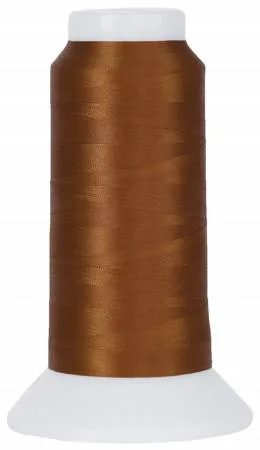
- MicroQuilter #7027 Copper Cone: MicroQuilter is a 100 wt, 2-ply extra-fine polyester thread designed for invisible machine applique and detail quilting. It can be sewn with a very small needle that renders the thread virtually invisible. Each cone is wound with 3,000 yds. This is the thread to choose when you want your quilting to disappear, such as micro stippling, miniatures, or applique where you do not want stitch lines to show.
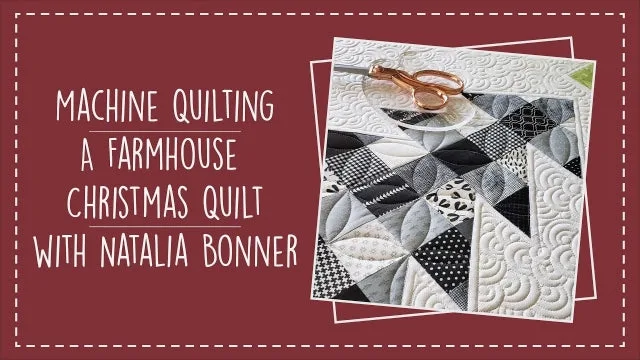
- Machine Quilting a Farmhouse Christmas Quilt: In this PNQ Academy video, Natalia Bonner demonstrates machine-quilting farmhouse Christmas trees and multiple designs, and shows how to add a vibrant rainbow background filler. Seeing how a professional quilter combines different thread weights and designs in one quilt helps you understand when to switch threads for contrast versus blending.
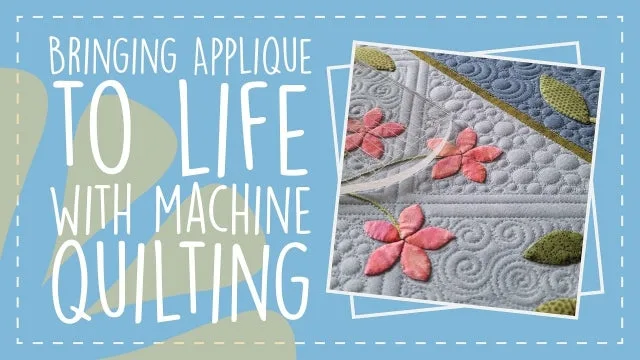
- Bringing Applique to Life with Machine Quilting: In this PNQ Academy video, Natalia walks through how to bring applique to life with quilting. She marks applique shapes, then uses quilting rulers to quilt straight lines along the background and through the applique shapes. If you quilt through applique, thread weight matters: a finer thread like 100 wt keeps the applique from looking heavy, while a 40 wt adds visible structure.
Who should use this guide
Best for
- Quilters who want a clear rule for 50 wt vs 40 wt thread.
- Anyone piecing a quilt and unsure which thread weight to buy.
- Machine quilters who need a thread that disappears for detail work.
Not for
- Quilters looking for decorative threads like 12 wt or metallic for bold effects.
- Shoppers who only want a thread weight chart without practical guidance.
Choosing the right quilting thread weight comes down to the job: 50 wt cotton for piecing, 40 wt for visible quilting, and 100 wt extra-fine polyester for invisible detail. Start with those three, test on a small sandwich, and let the project tell you when to switch.