Quick Answer
For most piecing, choose a 50wt cotton thread because it presses flat and keeps seams accurate. For quilting where you want the stitching to show, move to 40wt or 30wt. Buy one spool of each weight you are considering and test on a quilted sample before committing to a whole project.
Thread weight is the number that tells you how thick a thread is, and it is the single easiest way to change how your quilting looks and behaves. Lower numbers mean thicker thread; higher numbers mean finer thread. A 50wt thread is fine, a 40wt is medium, and a 30wt is thick enough to read as a design element.
That one fact explains most thread decisions. Fine thread disappears into seams and lets your piecing do the talking. Thick thread makes quilting lines visible, which is wonderful for texture and terrible for hiding imperfect stitches. This guide gives you decision rules for matching weight to the job, plus the tools that keep each weight running smoothly.
What Thread Weight Actually Measures
Weight is a density measure: it describes how many meters of thread it takes to weigh one gram. A 50wt thread is finer than a 40wt, which is finer than a 30wt. That is why 50wt cotton is the default for piecing and why 30wt thread stands out so strongly when you quilt with it.
Weight does not tell you fiber, strength, or how a thread will behave in your machine. A 50wt cotton and a 50wt polyester can feel completely different under the needle. Read weight and fiber together, then test the exact spool you plan to use.
- Lower number = thicker thread = more visible stitching.
- Higher number = finer thread = flatter seams and subtler quilting.
- Weight says nothing about fiber, so always check the label for cotton, polyester, or a blend.
50wt vs 30wt Thread: The Core Trade-Off
The 50wt vs 30wt thread question comes down to visibility versus coverage. A 50wt thread is fine enough that piecing seams press flat and intersections stay accurate. A 30wt thread is thick enough that every quilting line becomes a visible design choice, which is exactly what you want for bold texture and exactly what you do not want if you are trying to hide stitch imperfections.
There is a practical middle ground. Many quilters piece with 50wt and quilt with 40wt, which shows up without overwhelming the piecing. If you only want to buy one weight to start, buy 50wt cotton. It is the most versatile weight for piecing, machine quilting, and binding.
- Piece with 50wt, quilt with 40wt or 30wt when you want the stitching to show.
- Thicker thread fills the bobbin faster and needs a larger needle, so plan for both.
- If you are unsure, test the same quilt design in 50wt and 30wt on two scrap sandwiches.
Match Weight to Fiber Before You Buy
Weight and fiber work together. Cotton thread has a matte finish that blends into cotton fabric, which is why 50wt cotton is the standard for piecing. Polyester thread is stronger and more elastic, which helps in high-stress seams and in quilting that will be washed often. A 30wt polyester thread gives you both visibility and durability, though the sheen may stand out against matte cotton.
If you are quilting a wall hanging that will not be washed, cotton in any weight is a safe choice. If you are quilting a bed quilt that will see regular laundering, consider polyester or a cotton-wrapped polyester for the quilting lines. The weight still controls how the stitching looks; the fiber controls how it wears.
- Cotton: matte, blends into cotton fabric, presses well.
- Polyester: stronger and more elastic, good for quilts that get washed often.
- Do not assume a thread is cotton just because the weight matches your favorite spool.
Needles, Tension, and Thread Weight
Thicker thread needs a larger needle and a looser top tension. A 50wt thread usually runs well with a 70/10 or 80/12 needle. A 40wt thread often wants an 80/12 or 90/14. A 30wt thread generally needs a 90/14 or larger, and sometimes a topstitch needle with a larger eye to prevent shredding.
If your thread keeps breaking, check the needle size before you change the thread. If your stitches look loose or loopy, adjust tension in small steps and test on the same fabric and batting you are using. Write down the needle and tension settings that worked so you can repeat them next time.
- Match needle size to thread weight, not to the fabric alone.
- Change the needle when you change thread weight.
- Keep a test sandwich of your actual quilt layers next to the machine for quick checks.
Where Each Weight Belongs
Use 50wt cotton for piecing, machine appliqué, and binding. It is fine enough to keep seams accurate and strong enough for everyday quilts. Use 40wt when you want quilting to read clearly without dominating the piecing. Use 30wt for decorative quilting, big-stitch effects, and any place where the thread itself is part of the design.
For hand quilting, many quilters prefer 28wt or 12wt because the thread needs to be visible and strong enough to pull through layers. For machine quilting, 40wt and 50wt are the most common choices. If you are working with a specialty thread like a 50wt Aurifil cotton, treat it as a fine piecing and detail thread rather than a bold quilting thread.
- Piecing and binding: 50wt.
- Everyday machine quilting: 40wt or 50wt.
- Decorative quilting and visible texture: 30wt or thicker.
How to Test a New Thread Weight
Before you commit a whole quilt to a new weight, make a small sample. Layer the same fabric and batting you plan to use, then quilt a few inches with the new thread. Check the front and back for tension, look at how the thread sits on the fabric, and run your hand over the stitching to feel the texture.
Wash the sample if the quilt will be washed. Some threads shrink or bleed, and some fibers change character after laundering. A ten-minute test saves hours of unpicking and keeps your thread weight guide grounded in what actually happens on your machine.
- Test on the same fabric, batting, and needle you will use.
- Check both sides of the sample for tension balance.
- Wash the sample if the finished quilt will be washed.
Decision Rules for Choosing Thread Weight
- Rule 1: Choose 50wt for anything that must disappear: Use 50wt cotton for piecing, appliqué, and binding. It presses flat and keeps seam allowances accurate. If you only buy one weight, buy 50wt cotton.
- Rule 2: Choose 40wt when you want quilting to show but not shout: 40wt is the middle ground for machine quilting. It reads clearly on the quilt surface without overwhelming the piecing. Use 40wt for an all-over quilting design you want noticed.
- Rule 3: Choose 30wt when the thread is part of the design: 30wt thread is thick enough to create visible texture and bold lines. It needs a larger needle and looser tension. Skip 30wt if you want to hide stitch imperfections.
- Rule 4: Match fiber to how the quilt will be used: Cotton blends into cotton fabric and presses well. Polyester is stronger and more elastic for quilts that get washed often. Choose fiber for durability and weight for appearance.
- Rule 5: Test before you commit: Quilt a small sample with the exact fabric, batting, needle, and thread you plan to use. Wash it if the finished quilt will be washed. A ten-minute test prevents hours of unpicking.
Thread and Tool Facts That Help You Decide
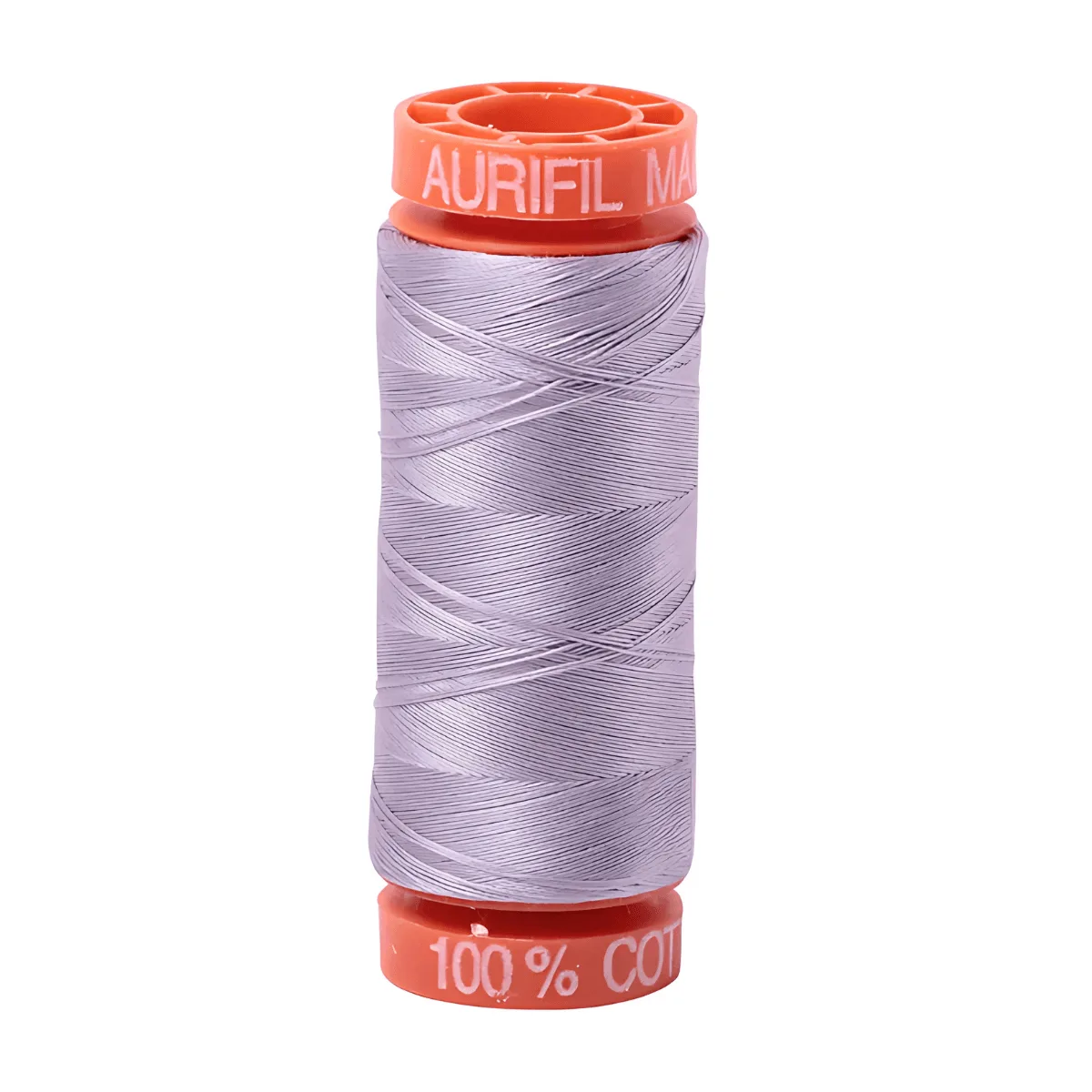
- 50wt Aurifil 220yd Soft Lavender 2562 - 100% Cotton Thread: 50wt, 100% cotton thread known for smooth, tangle-free stitching and vibrant, long-lasting color. A fine cotton thread like this is a strong default for piecing, appliqué, and detail work where you want the thread to blend into the fabric.
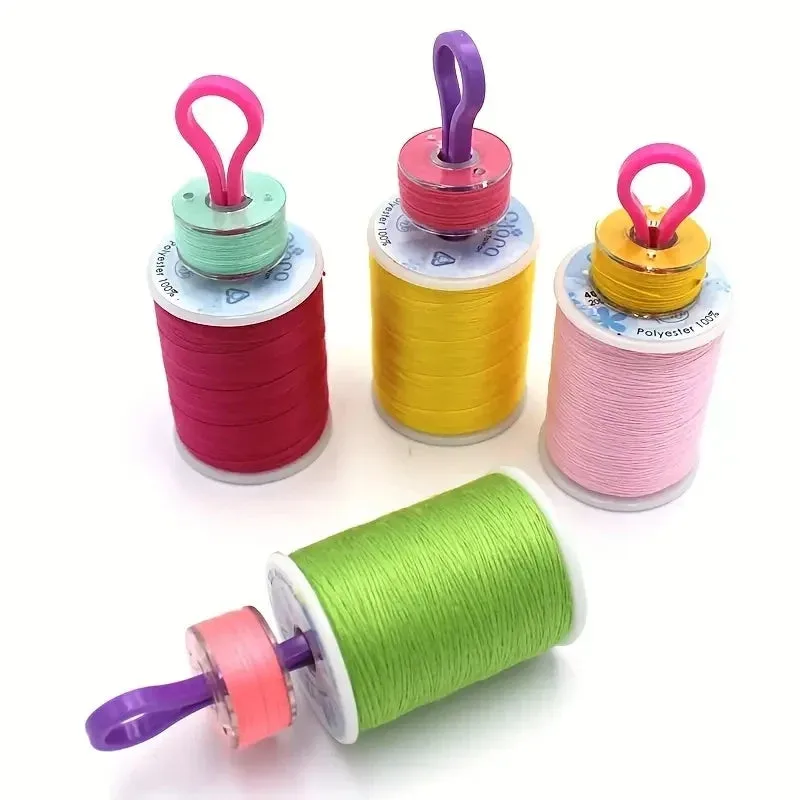
- 50 Pcs Bobbin Clips for Thread Spools: Clips attach bobbins to the top of thread spools to keep threads tangle-free and accessible. When you keep multiple weights on hand, matching the bobbin to the spool prevents the wrong thread from ending up in the machine.
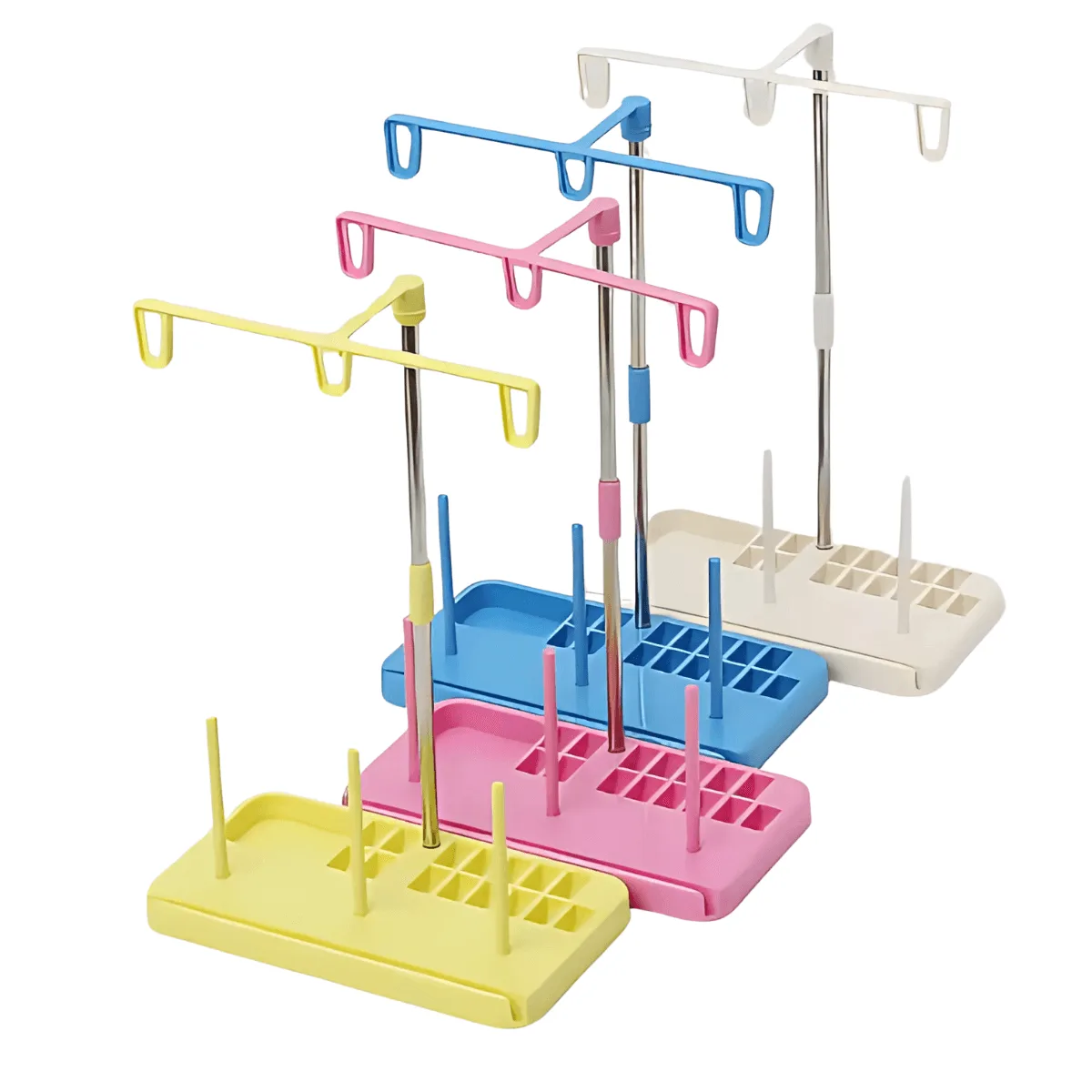
- Compact Thread Holder Station: Holds multiple thread spools securely and is available in multiple colors. Keeping 50wt, 40wt, and 30wt spools visible and separated makes it easier to switch weights without mixing them up mid-project.
Is This Thread Weight Right for Your Project?
Best for
- Quilters who want a single versatile thread weight for piecing and everyday quilting
- Projects where you want the quilting to show as a design element and are willing to adjust needle and tension
- Quilters building a small thread stash and wanting clear rules for what to buy first
Not for
- Quilters looking for a single thread that works for every technique without testing
- Projects that require specialty threads like 12wt hand-quilting thread or metallic decorative thread
- Anyone who cannot test tension and needle size before starting a full quilt
Thread weight is a simple number with a big effect. Start with 50wt cotton for piecing, add 40wt for visible quilting, and reach for 30wt when you want the thread itself to be the design. Test each new weight on a sample, match your needle to the thread, and keep your spools organized so you can switch weights without second-guessing.