Quick answer
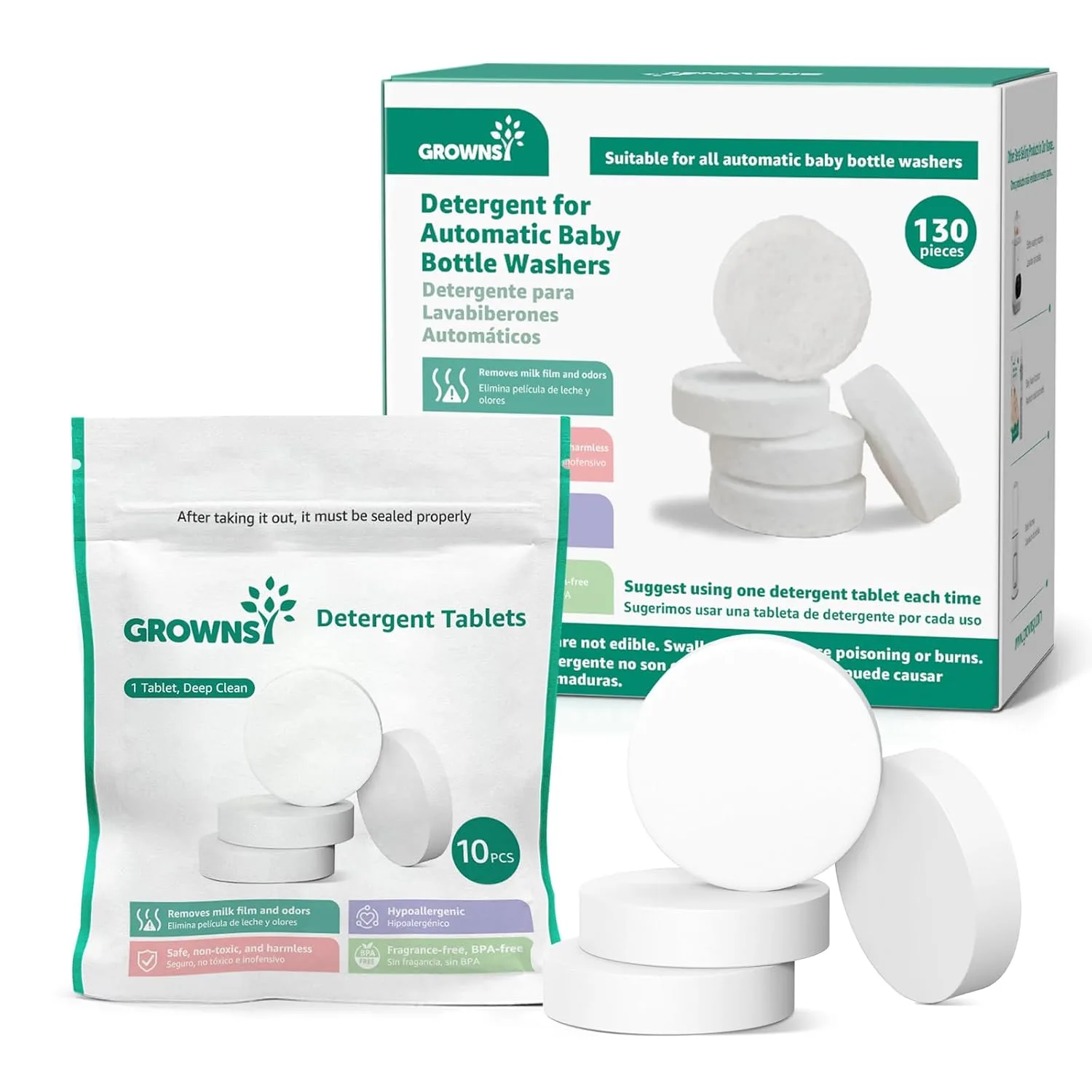
For deep cleaning baby bottles, bottle washer tablets win on convenience and consistent enzyme power, especially if you use a bottle washer. Liquid soap is better for hand-washing and tight budgets. If you want a spotless clean with less effort, choose tablets like GROWNSY Bottle Washer Tablets; if you prefer manual control and already have a soap you trust, liquid soap works.
Cleaning power: enzymes vs surfactants
Bottle washer tablets typically use a natural enzyme formula that breaks down milk residue, stains, and odors. GROWNSY tablets pack 2.6x more cleaning ingredients than other brands, according to the catalog. Liquid soap relies on surfactants to lift fats and proteins, which works well for fresh messes but may need extra scrubbing for dried milk film. For deep cleaning baby bottles, tablets offer a more targeted approach.
Safety for newborns: residue and ingredients
Safe bottle cleaning for newborns means minimizing chemical residue. Tablets are pre-measured and designed to rinse clean in a bottle washer cycle, reducing the risk of leftover soap. Liquid soap can leave a film if not rinsed thoroughly, especially in narrow bottles. However, some liquid soaps are formulated for sensitive skin and may be gentler if your baby has reactions. Always check labels and follow dilution instructions.
Dosage and convenience: pre-measured vs free-pour
Bottle washer tablet dosage is simple: one tablet per cycle, no measuring. This eliminates guesswork and saves time. Liquid soap requires you to pour and measure, which can lead to overuse or underuse. If you use a bottle washer, tablets are designed for the machine and dissolve fully. For hand-washing, liquid soap gives you more control over concentration. Consider your daily routine: tablets streamline the process, while soap offers flexibility.
Eco-friendliness: packaging and formulation
Eco friendly bottle cleaning tablets often come in recyclable packaging and are concentrated, reducing plastic waste from large liquid soap bottles. Tablets also lower shipping weight, cutting carbon emissions. Liquid soap, however, may come in bulk sizes that use less packaging per wash if you buy large containers. Check for biodegradable ingredients and recycled packaging in both options. Neither is perfect, but tablets generally have a smaller footprint for machine washing.
Trade-offs at a glance
- Cleaning power: Tablets use enzymes to break down milk residue; liquid soap uses surfactants that may require scrubbing for dried messes. Tablets win for deep cleaning without scrubbing.
- Safety and residue: Tablets are pre-measured and rinse clean in a washer; liquid soap can leave film if not thoroughly rinsed. Tablets reduce residue risk for newborns.
- Convenience and dosage: One tablet per cycle vs measuring liquid soap; tablets eliminate guesswork but cost more per wash. Tablets save time; soap saves money.
- Eco-friendliness: Tablets often have recyclable packaging and lower shipping weight; liquid soap may use less packaging in bulk. Tablets are generally greener for machine washing.
Product facts
- Bottle Washer Tablets | Detergent Tablets for Bottle Washer 130 Count, Safe & Deep Cleaning: Natural enzyme formula that deeply breaks down milk residue, stains, and odors; packed with 2.6x more cleaning ingredients than other brands. Delivers a spotless clean and is engineered for baby bottles and feeding accessories, making it a strong choice for deep cleaning.
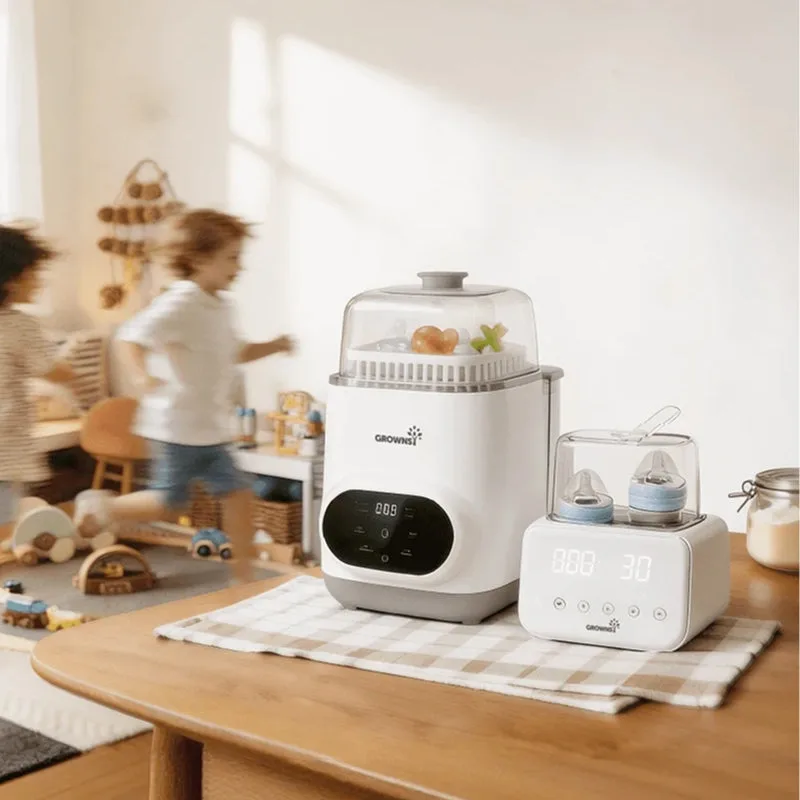
- Grownsy Baby Bottle Warmer + Feeding Bottle Washer Pro: Grownsy Baby Bottle Warmer + Feeding Bottle Washer Pro addresses bottle preparation to cleaning and sterilization in one go, with smart warming and automatic washing. Pairs well with tablets for a complete feeding cycle solution, saving time for busy families.
Which should you choose?
Best for
- Parents using a bottle washer who want a no-measure, deep clean
- Those seeking safe bottle cleaning for newborns with minimal residue
- Eco-conscious families preferring compact, recyclable packaging
Not for
- Hand-washing only, where liquid soap gives more control
- Budget-focused households willing to measure and scrub
- Babies with specific sensitivities to enzyme formulas (consult a pediatrician)