Quick answer
Set up your inflatable bounce house on a flat, clear surface, stake it down, inflate in under two minutes, and always supervise active play.
Why location matters for safety and fun
A level patch of grass is ideal. Avoid slopes, driveways, or areas with overhead branches or power lines. The bounce house needs at least 8 feet of clearance on all sides to prevent rubbing against fences or walls.
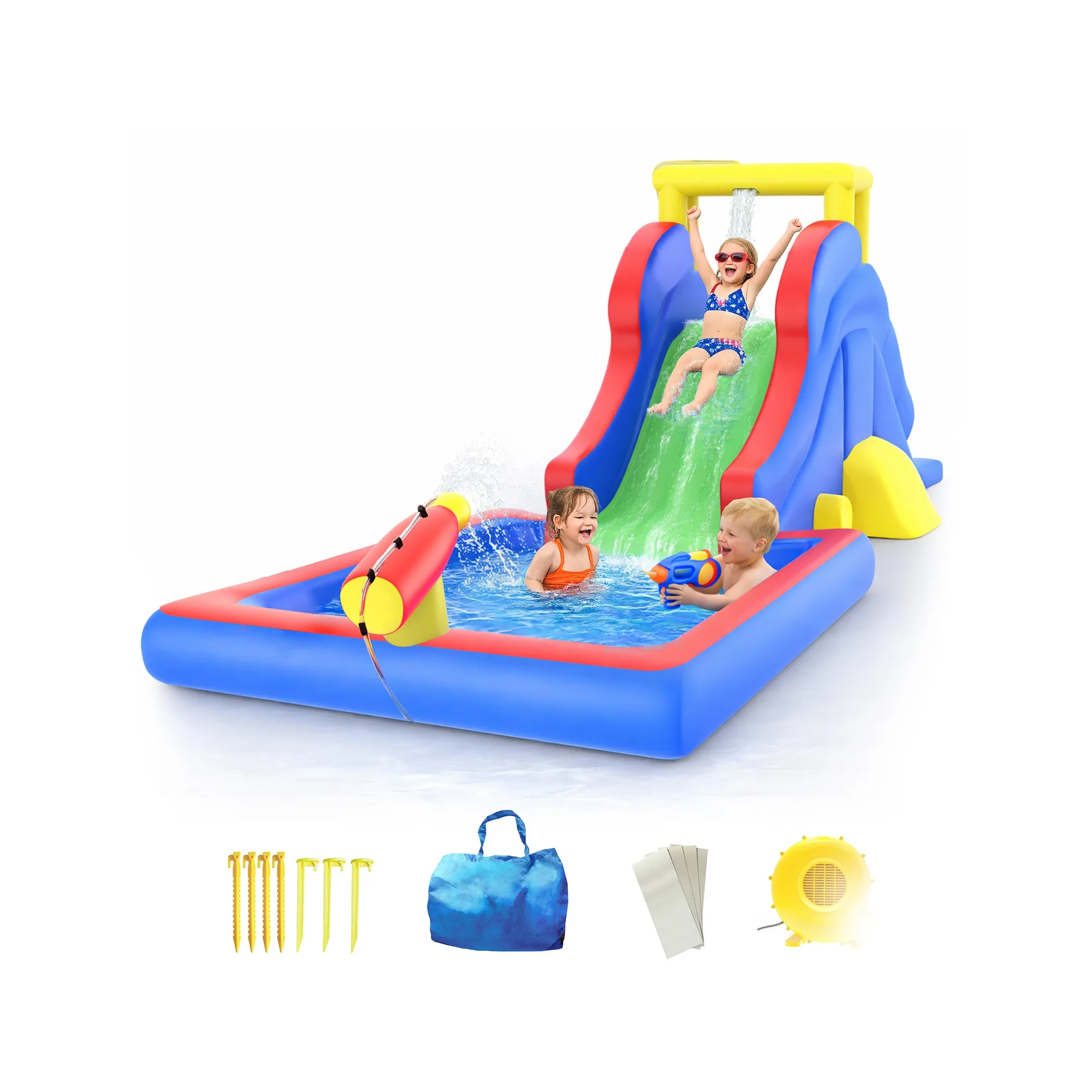
If using a water slide model like the PicassoTiles Inflatable Water Slide Bounce House, place it on grass where water can drain naturally. A tarp underneath helps keep the bottom clean and reduces wear.
Inflation time and power source
All PicassoTiles bounce houses inflate in under two minutes using the included blower. Plug the blower into a grounded GFCI outlet and keep the cord out of walking paths. A long extension cord rated for outdoor use may be needed if the outlet is far.
The blower must run continuously during use. If the unit deflates, children can be trapped inside. Never turn off the blower until everyone is out.
Weight limits and age recommendations
Each model has a maximum weight capacity printed near the entrance. Overloading can cause seams to tear or the unit to tip. A good rule is no more than 4–6 children at a time, depending on their size.
Mix ages carefully. Toddlers and older kids bouncing together increases collision risk. Designate separate play times for different age groups if possible.
Step-by-step setup checklist
- Choose and prepare the ground: Clear the area of rocks, sticks, and sharp objects. Lay a tarp if desired. Unfold the bounce house and position it so the entrance faces away from obstacles. A quick sweep with a rake prevents punctures from hidden debris.
- Stake down the unit: Use the included ground stakes at every anchor loop. Drive them fully into the ground at a 45-degree angle. On hard or dry soil, dampen the ground slightly or use weighted sandbags as an alternative. Skipping stakes is the most common cause of tip-overs in wind.
- Attach the blower and inflate: Secure the blower tube to the intake valve with the drawstring or strap. Plug the blower into a GFCI outlet and turn it on. The bounce house should be fully inflated within 90 seconds. Check that all seams are tight and no sagging areas exist. If the unit does not inflate fully, check for twists in the blower tube or a blocked intake vent.
- Secure the blower and cord: Place the blower on the ground next to the bounce house and stake it down if possible. Run the extension cord along the edge of the play area, not across it. Tape down cord connections with electrical tape to prevent accidental unplugging. A cord cover or heavy mat over the cord reduces tripping hazards.
- Test and supervise: Before children enter, do a quick walk-around: check stakes, seams, and the blower connection. Establish rules: no flips, no pushing, no shoes, and no food or drinks inside. An adult must stay within arm's reach at all times. For water models, test the water cannon and shower sprays briefly to ensure they work before adding children.
Products mentioned in this guide
-
PicassoTiles Inflatable Bounce House Jump & Slide with Pit Balls: PicassoTiles Bounce house with slide (SKU: KC106) features 50 colorful pit balls and provides an 8' x 7' feet exercising jumping area. The built-in pit balls add counting and dodging games, turning active play into a learning activity without extra equipment.
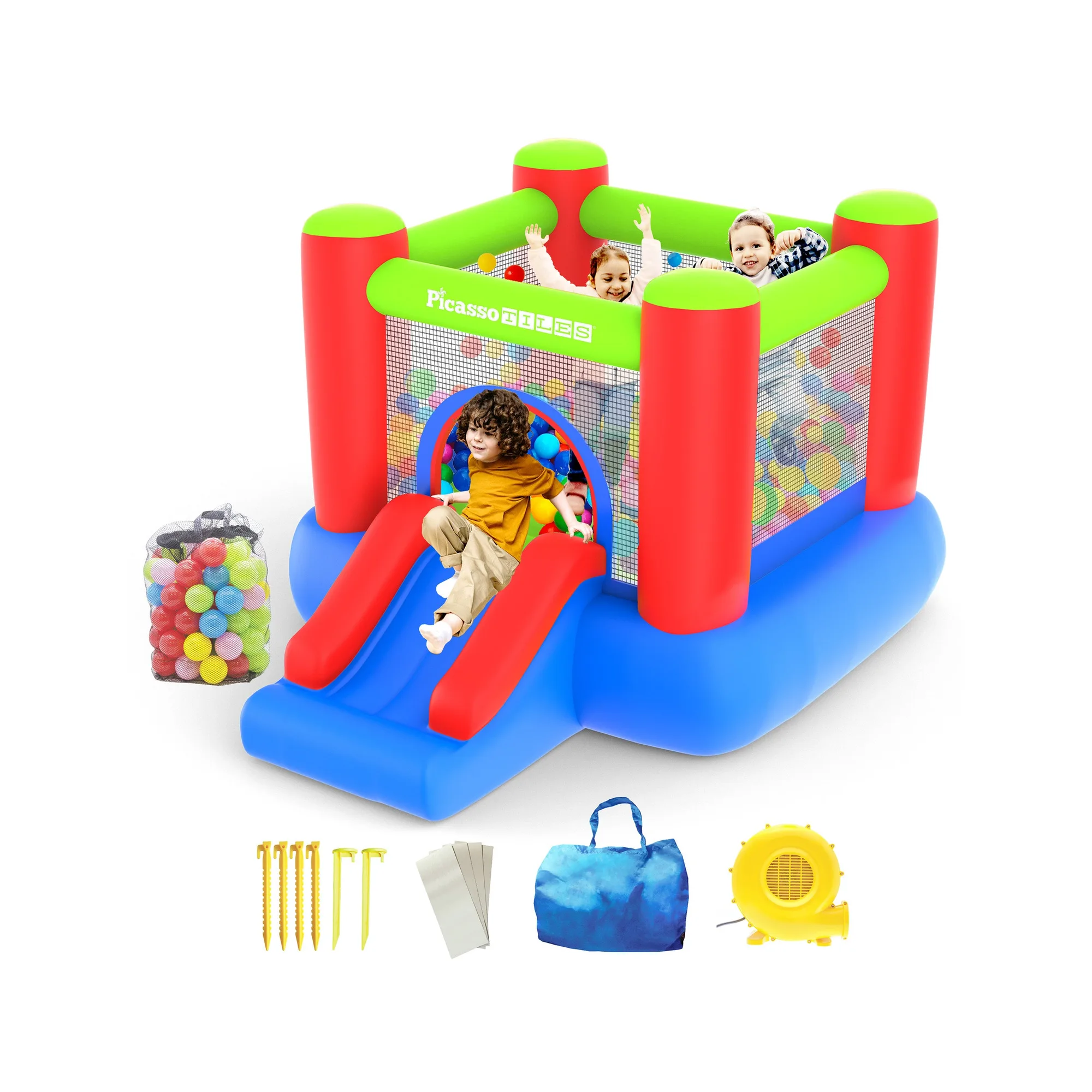
PicassoTiles Inflatable Bounce House Jump & Slide with Pit Balls
-
PicassoTiles Inflatable Jump Slide Dunk Bounce House: PicassoTiles Inflatable Jump Slide Dunk Bounce House (KC102) sets up in under 2 minutes and includes a built-in basketball rim, 4 sports balls, and a retractable shade cover. The shade cover keeps the jumping area cooler on sunny days, and the basketball rim adds a goal-oriented activity that extends playtime.
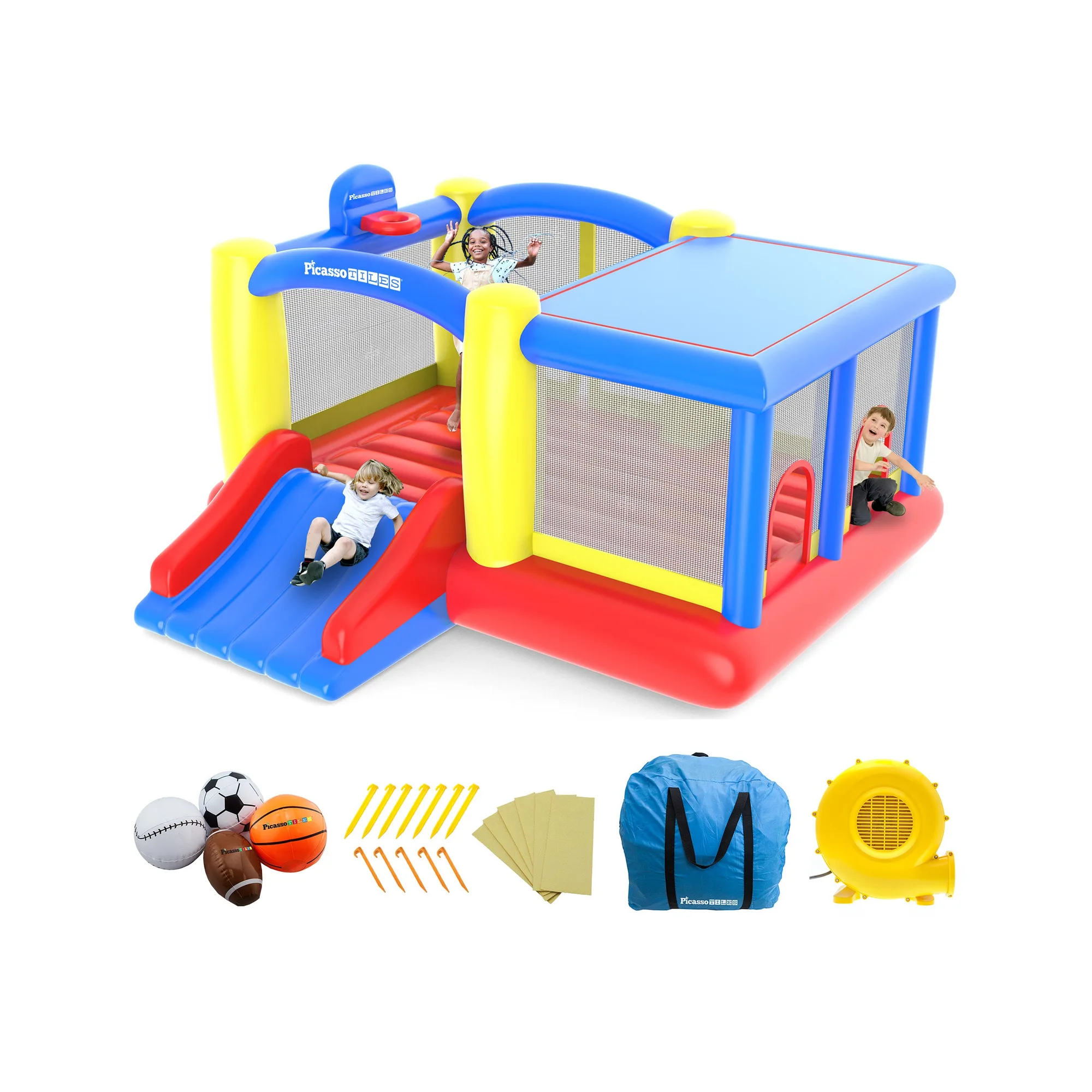
PicassoTiles Inflatable Jump Slide Dunk Bounce House
-
PicassoTiles Inflatable Water Slide Bounce House w/ Pool Area: PicassoTiles inflatable water slide bounce house (KC108) features a climbing wall, water cannon, shower sprays, and splash pool, and is ETL certified. The ETL certification confirms it meets safety standards for electrical components, giving you peace of mind when using the water features.