Quick answer
The Boxer Board Scoreboard is a dual-sided scoring board that lets you measure, score, and fold cardstock with pin-point accuracy for 3D boxes and card blanks. Use it when you need consistent, crisp folds without guessing.
Why use a dedicated scoreboard instead of a ruler and bone folder?
A dedicated scoring board like the Boxer Board gives you pre-marked guides and a built-in scoring tool, so every fold line is straight and evenly spaced. With a ruler and bone folder, you have to measure each line manually, which increases the chance of misalignment, especially when making multiple identical boxes or card bases.
The trade-off is that a scoreboard takes up more desk space than a single ruler. If you only fold a few cards a month, a ruler and bone folder might be enough. But for regular card makers or anyone making 3D boxes, the speed and consistency of a scoreboard save time and reduce waste.
Imperial vs. metric: which side should you use?
The Boxer Board Scoreboard is double-sided, with imperial measurements on one side and metric on the other. Which side you use depends on your cardstock size and personal preference.
If you primarily use A4 or A5 cardstock, the metric side is more natural. If you use US letter or 12x12 inch paper, the imperial side will match your existing measurements. There is no performance difference between the two sides—just pick the one that matches your usual paper size.
What the Boxer Board does not include
The Boxer Board Scoreboard is a scoring and folding tool, not a cutting mat or trimmer. It does not have a built-in blade or rotary cutter. You will still need a separate trimmer or craft knife to cut your cardstock to size before scoring.
Also, the board does not include a stylus or scoring tool in the package. You will need to supply your own bone folder or scoring stylus to run along the grooves. If you are new to scoring, a basic bone folder works well.
Decision rules for using the Boxer Board Scoreboard
- When to choose the Boxer Board over a ruler: Choose the Boxer Board if you make more than 5 card bases or boxes per session, or if you need to repeat the same fold line across multiple pieces. The pre-marked grooves eliminate measuring errors.
- Setting up your first score line: Place your cardstock on the board so the edge aligns with the desired measurement mark. Hold the paper firmly with one hand, then run your bone folder or scoring stylus along the groove from top to bottom in one smooth motion. Apply even pressure—too light and the fold will be weak; too heavy and you risk tearing the paper. Practice on scrap cardstock first to find the right pressure for your paper weight.
- Folding after scoring: After scoring, fold the cardstock along the scored line away from the groove (the scored side should be on the outside of the fold). Use the edge of the board or a bone folder to crease the fold sharply. For 3D boxes, score all lines before folding any of them.
- Cleaning and storing the board: Wipe the board with a dry cloth after each use to remove paper dust. Store it flat or upright in a dry area. Avoid leaving it in direct sunlight, as prolonged heat can warp the plastic. A clean board ensures accurate scoring every time.
Product facts
-
Crafters Companion The Boxer Board Scoreboard: The Boxer Board Scoreboard is double-sided with both imperial and metric measurements, allowing you to measure, score, and fold with pin-point accuracy. You can switch between measurement systems depending on your cardstock size, making it versatile for both US and metric paper sizes.
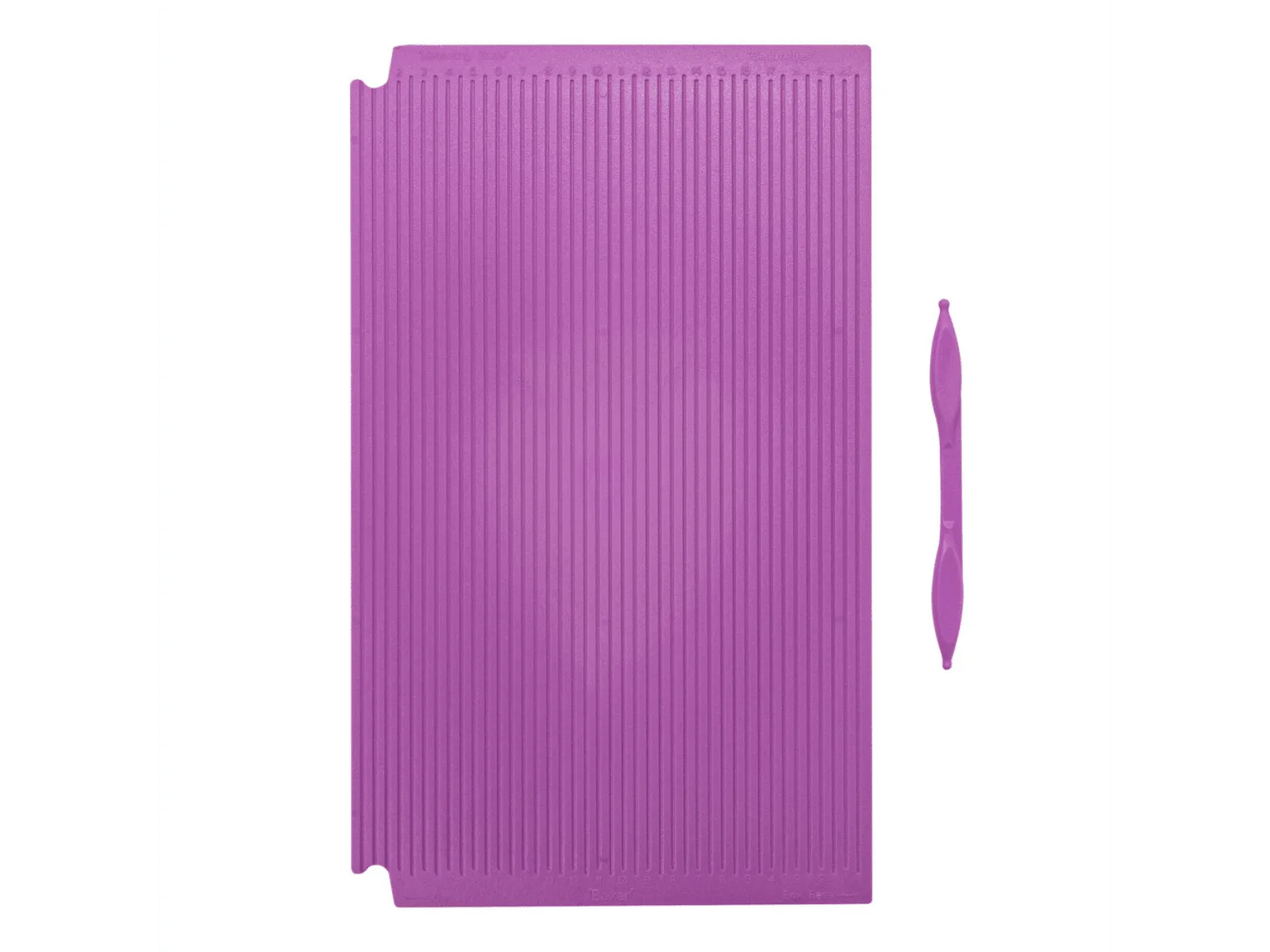
Crafters Companion The Boxer Board Scoreboard
Is the Boxer Board Scoreboard right for you?
Best for
- Card makers who create multiple identical card bases or 3D gift boxes
- Crafters who want consistent, straight fold lines without measuring each time
- Anyone working with both imperial and metric paper sizes
Not ideal for
- Crafters who only fold a few cards occasionally and prefer a minimalist tool kit
- Users who need a cutting mat or trimmer built into the same board