Quick answer
Use the PlanToys Braille Numbers 1-10 set as a hands-on, two-sided tool: one side shows the numeral and its Braille cell, the other has impressed leaves for counting. Start with one number at a time, let your child trace the raised dots with a light finger, and pair it with the leaf side to connect quantity to symbol. Keep sessions short and playful.
Why a two-sided tactile tile works for number learning
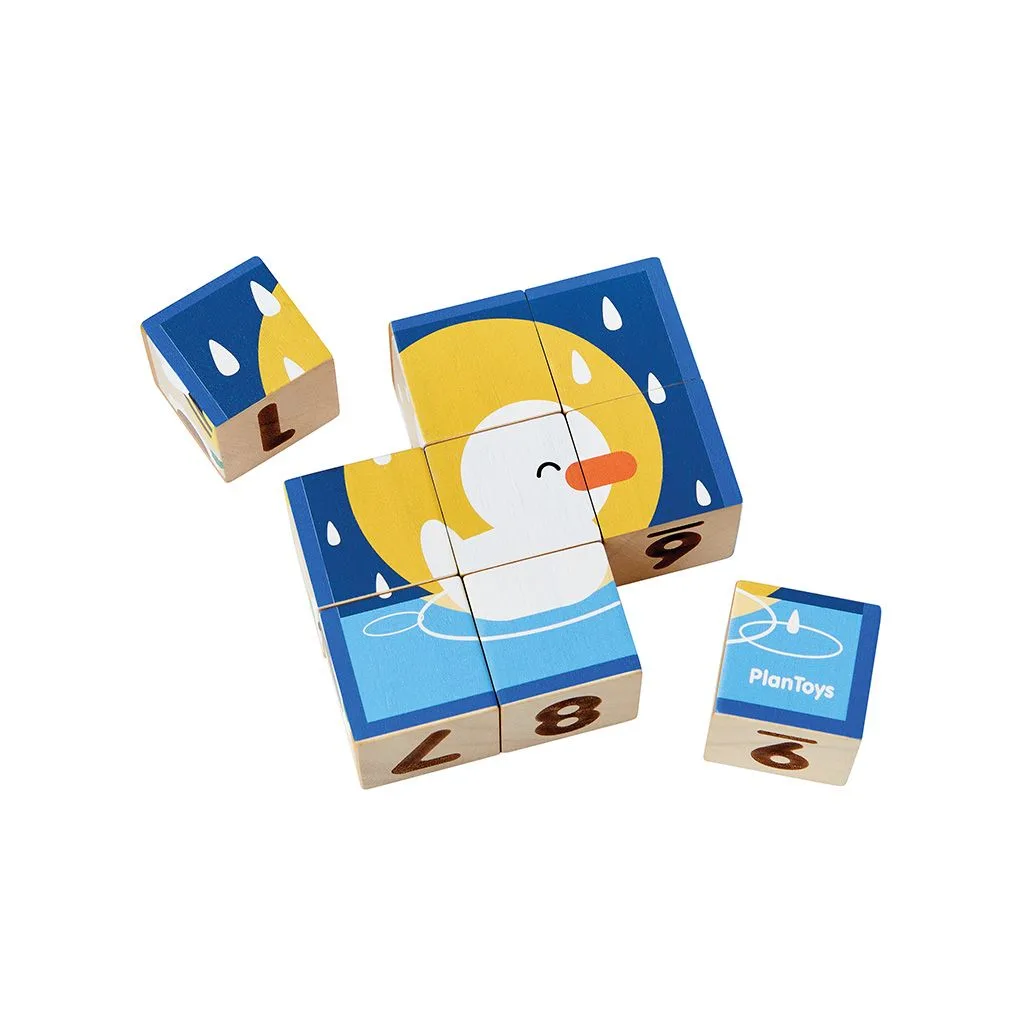
The PlanToys Braille Numbers 1-10 set is a 10-piece wooden tile set with numbers 1–10 on one side and matching imprinted leaves on the other. That design lets you move between three representations of a number: the printed numeral, the Braille cell, and a countable picture. For a sighted child, it builds number sense and early awareness of Braille. For a child with a visual impairment, it offers a consistent tactile format that can be explored by touch alone. Because the tiles are wooden and chunky, they stay in place on a table or tray, which matters when small hands are still developing fine motor control.
Setting up a distraction-free learning space
Choose a quiet spot with a non-slip mat or a shallow tray to keep tiles from sliding. Work under good lighting if your child has some vision, but remember that the Braille dots are meant to be read by touch. Keep only the tiles you plan to use within reach; a full set of 10 can be overwhelming at first. If you are introducing Braille to a sighted child, sit beside them rather than across, so you can guide their finger together.
How to introduce the first three numbers
Start with numbers 1, 2, and 3. Place the tile with the numeral and Braille cell facing up. Say the number, then gently guide your child’s index finger over the raised dots from left to right. Let them feel the shape of the cell. Then flip the tile to the leaf side and count the leaves together, touching each one. Repeat the sequence: see the numeral, feel the dots, count the leaves. Do this for a few minutes, then put the tiles away. Short, frequent sessions work better than one long lesson.
Building from recognition to matching
Once your child can identify 1–3 by touch or sight, add 4 and 5. Mix the tiles and ask them to find a specific number by feeling the Braille cell or by looking at the numeral. Then turn all tiles leaf-side up and ask them to match the leaf count to the correct numeral tile. This matching game reinforces the link between quantity and symbol. For a child who is learning Braille formally, you can also practice tracking from left to right across the row of dots, which is the same motion used in reading Braille text.
Adapting for different ages and abilities
For toddlers, focus on the leaf side and simply count aloud as they touch each leaf. For preschoolers, introduce the numeral side and the Braille cell as a matching activity. For early elementary children, use the tiles to practice sequencing numbers 1–10 in order, or to play a guessing game where you feel a tile behind your back and describe the dots. If your child has a visual impairment, keep the tiles in a consistent orientation and use verbal descriptions of the dot positions. The set is designed for children roughly 3 and up, but always supervise if your child still mouths objects.
Step-by-step: teaching Braille numbers 1–10 at home
- Start with one tile: Place the tile for number 1 in front of your child. Say 'one,' then guide their finger over the Braille cell from left to right. Flip to the leaf side and count the single leaf together. Checkpoint: your child can point to or name the number after a few repetitions.
- Add numbers 2 and 3: Introduce the next two tiles one at a time, always pairing the numeral, the Braille cell, and the leaf count. Keep the three tiles in a row and practice finding each number on request. Common mistake: rushing to all ten numbers before your child is comfortable with the first three.
- Mix and match: Shuffle the three tiles and ask your child to find a specific number by touch or sight. Then turn them leaf-side up and ask them to match the leaf count to the correct numeral tile. Checkpoint: your child can match at least two numbers correctly without help.
- Expand to 4–6: Add the next three tiles using the same see-feel-count routine. Continue mixing and matching, and begin sequencing the tiles in order from 1 to 6. Common mistake: correcting too quickly—let your child self-correct by counting the leaves.
- Complete the set to 10: Introduce the remaining tiles. Practice ordering all ten tiles from 1 to 10, then play a game where you hide one tile and your child identifies which number is missing. Checkpoint: your child can sequence 1–10 with the numeral side up and with the leaf side up.
- Make it part of routine: Keep the tiles accessible for a few minutes of daily play. Rotate between free exploration and short guided sessions. Store them in a small cloth bag so your child can reach in and identify a tile by touch alone. Next step: try a simple Braille tracking game where your child follows a row of dots with a finger while you read the number aloud.
Product facts
- Braille Numbers 1-10: This 10-piece wooden tile set features numbers 1–10 and the corresponding Braille cells on one side, with impressed leaf illustrations on the other side for counting. The two-sided design lets you teach the numeral, the Braille cell, and the quantity in one compact tool, which supports both sighted and visually impaired learners.
- Braille Numbers 1-10: The set is vibrantly colored and made from sustainable wood. The colors help with visual discrimination for sighted children, while the wooden construction gives a warm, tactile feel that is easy to grip and stack.