Quick answer
When a wooden brain teaser stops moving, stop pushing. Set the puzzle down, look at the gaps and grain direction, and try a different piece or a rotation you have not tested yet. If a piece still will not move with light pressure, the solution is almost never more force — it is a different sequence.
Why forcing a wooden puzzle backfires
Wood is not metal. It flexes slightly, then cracks or shears along the grain. A piece that feels stuck may only be a few degrees out of alignment, but steady pressure can turn a solvable puzzle into a broken one. The goal is to keep every move reversible.
If you hear creaking or see the wood lighten at a joint, that is a warning, not progress. Ease off and reset the piece before trying again.
Read the puzzle before you move it
Turn the puzzle in your hands and look at where the gaps are. On a peg puzzle, the pegs and holes must line up before a piece can drop. On an interlocking puzzle, every piece usually has one entry angle that clears the others. Rotate the puzzle, not just the piece, to see those openings.
Check the grain direction on each piece. Pieces cut from the same board often slide more smoothly in one direction than another. If a piece catches, rotate it 90 degrees and try the same move again.
A safe testing routine for stuck pieces
Work one piece at a time. Apply light pressure with two fingers, not your palm, so you can feel the moment a piece binds. If it does not move within a second or two, stop and try a different piece.
Keep a mental list of moves you have already tried. Most stuck puzzles are not missing a move — they are repeating one that almost worked. Rotating a neighbor piece or lifting a different piece first often frees the one you were fighting.
- Test with light finger pressure, never a fist or tool.
- If a piece binds, rotate it 90 degrees before pushing again.
- Change which piece you move first, not how hard you push.
- Take a five-minute break; fresh eyes catch alignment errors.
When to stop and choose another puzzle
If a piece has not moved after several gentle attempts and you have tried rotating both the piece and the puzzle, stop. Some puzzles are designed for a specific skill level, and a mismatch is not a failure — it is information. Put it on the shelf and come back in a day or two.
If you see a crack, a splinter, or a joint that no longer sits flush, stop immediately. Continuing will only make the damage worse. A puzzle that has been forced is harder to solve later because the pieces no longer align the way they were cut.
Diagnose why your puzzle is stuck
- Symptom: A piece will not slide at all: Likely cause: The piece is rotated a few degrees off its entry angle, or a neighboring piece is blocking the path. Corrective action: Rotate the stuck piece 90 degrees, then try again with light pressure. If it still will not move, remove the last piece you placed and re-check the order. Stop if the piece does not move after two gentle attempts.
- Symptom: A piece moves partway, then binds: Likely cause: The puzzle is slightly out of square, or you are pushing against the grain. Corrective action: Ease the piece back, rotate the whole puzzle 90 degrees, and try the same move. Stop if you feel the wood flex or hear creaking.
- Symptom: Nothing moves and you are frustrated: Likely cause: You have been repeating the same near-miss move, or the puzzle is above your current skill level. Corrective action: Set the puzzle down for at least an hour. If it still resists, try a different puzzle with a clearer entry point. Stop before you use tools or extra force.
Puzzles that reward patience, not force
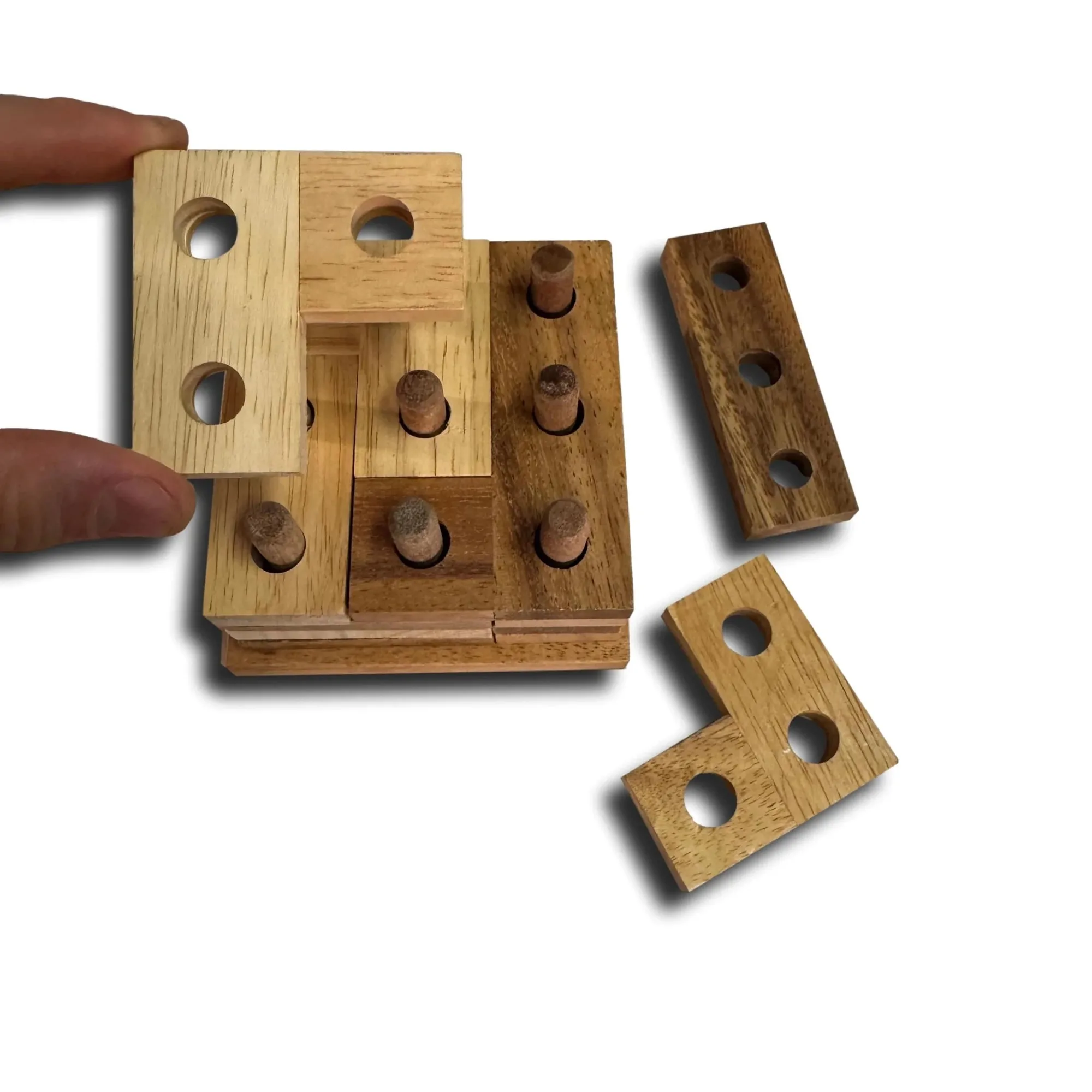
- Ghost Tower Puzzle - Wooden Peg Brain Teaser: The Ghost Tower Puzzle is a wooden peg brain teaser where each piece must be placed in a specific order to build the tower. Because the order matters, forcing a piece early can block the pieces that need to go in later. If a peg will not drop, the fix is usually to remove the last piece you placed and try a different sequence.
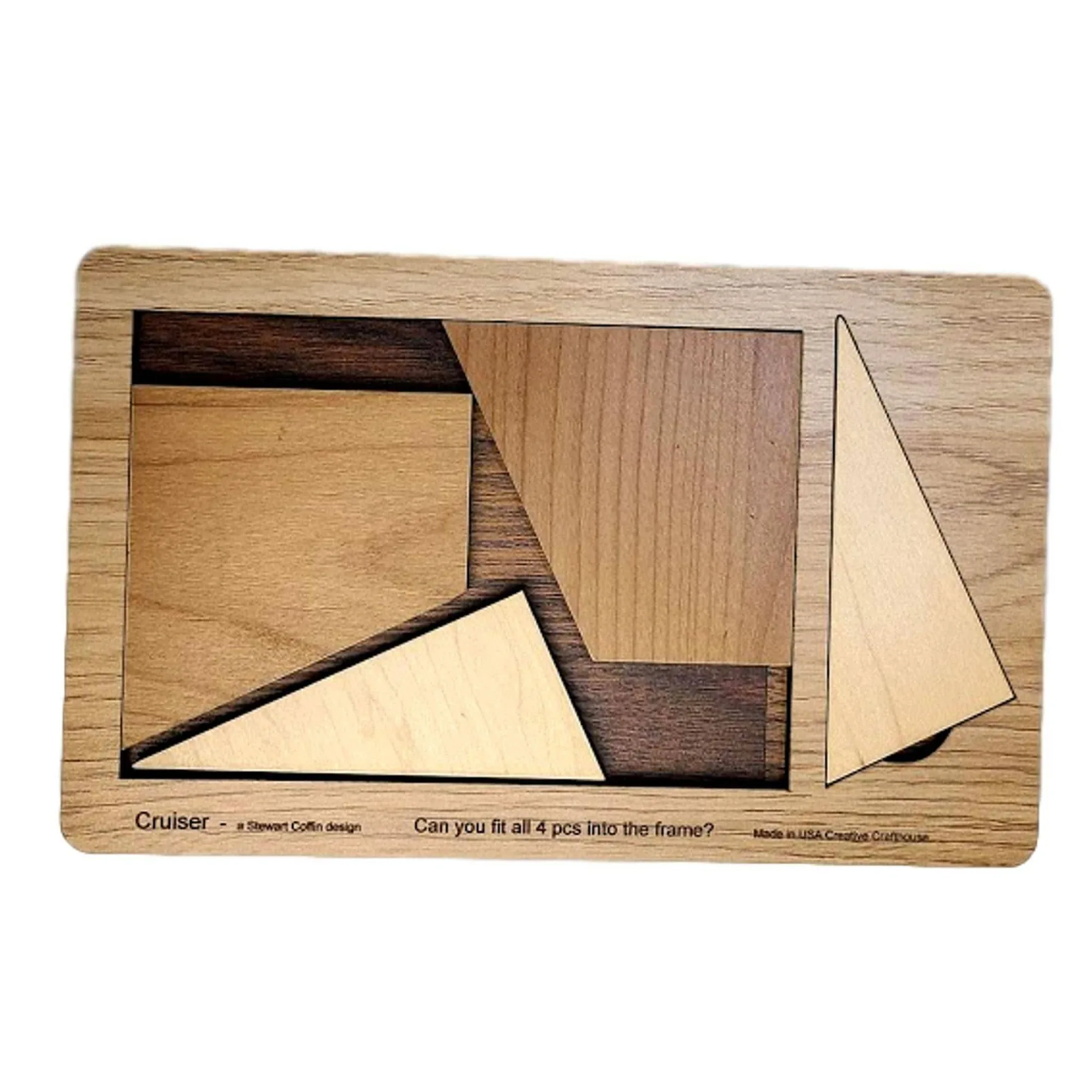
- Cruiser Large | Stewart Coffin 4-Piece Wood Puzzle: Cruiser Large is a 4-piece wooden puzzle designed by Stewart Coffin, scaled up for desk display, with precision laser-cut hardwood pieces and a smooth lacquer finish. The larger scale gives you more room to see the gaps and rotate pieces, which makes it easier to test moves gently instead of forcing. The lacquer finish also means the pieces should slide with light pressure when aligned correctly.