Quick Answer
Choose a bralette when you want soft, unstructured comfort and your bust is small to medium; choose a demi bra when you want shaping, lift and a defined neckline. The Ianthe Bralette is the purest bralette pick here, while the Jasmin Jade Demi Bra and Satine Demi show what a structured demi does differently. If you are between the two, let your daily activity decide: desk days favor a bralette, fitted tops favor a demi.
What Actually Separates a Bralette From a Demi Bra
A bralette is built like a soft crop: no underwire, no molded cup, and support that comes from stretch fabric and adjustable straps rather than structure. A demi bra covers roughly the lower half of the bust, sits lower on the chest, and uses a shaped cup plus a band to lift and separate. That single design difference explains almost every comfort and support trade-off you will feel.
The Ianthe Bralette illustrates the bralette approach: a periwinkle Chantilly lace scalloped edge soft bra with a full Italian stretch net back and a metal center front closure. There is no underwire in the supplied description, so its support is best described as light and relaxed. The Satine Demi and Kelani Demi take the opposite route with a sheer demi cup, which is where shaping and a cleaner neckline come from.
Comfort: Where Each Style Wins
Bralettes usually feel lighter because there is no wire to press against the ribcage and no rigid cup edge to dig in. The Ianthe Bralette's grosgrain elastic and fully adjustable straps let you fine-tune tension without fighting a molded shape, which is why it works well for long, low-effort days.
Demi bras trade some of that ease for hold. The Jasmin Jade Demi Bra uses a scalloped French lace demi cup with grosgrain elastic and decorative picot elastic trim, so it stays structured while still feeling soft against skin. If you have ever felt a bralette go slack by mid-afternoon, that structure is the reason a demi holds its shape longer.
Support: What Each Style Can and Cannot Do
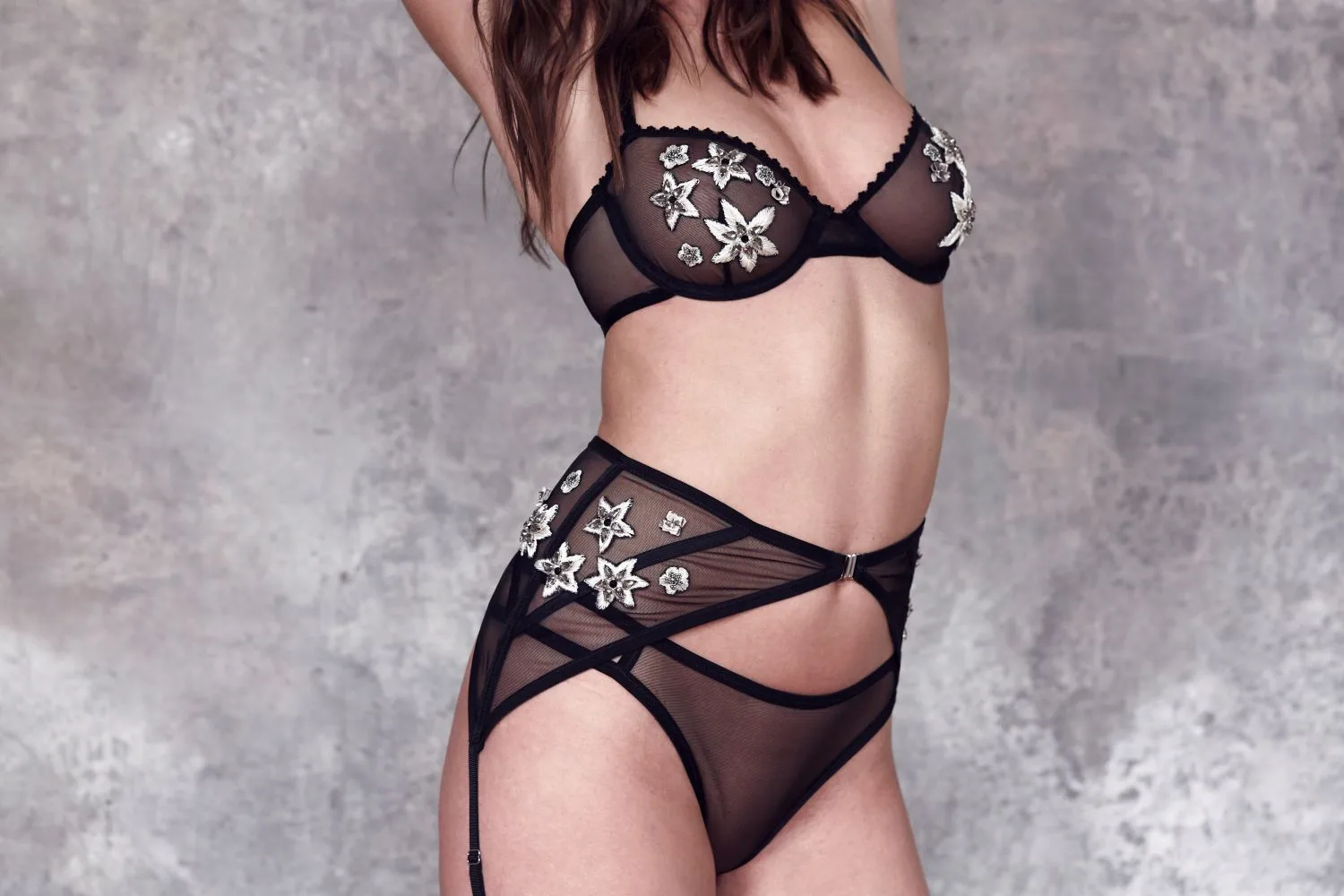
Support in a bralette comes from the band and straps, so it is best for smaller busts or for days when you do not need lift. A bralette support guide is simple: if you want separation, a defined silhouette or serious hold, a bralette is not the tool. The Satine Demi shows the demi alternative, with a sheer Italian stretch net cup, grosgrain adjustable straps and hand appliquéd embroidered stars along the cups.
The Kelani Demi is another structured option: a sheer stretch tulle demi cup bra with contrasting fully adjustable grosgrain elastic straps and trim along the cups. Note that it is listed as final sale, so if you are unsure between sizes, treat it as a commitment rather than a trial. Neither bra's supplied description states an underwire, so if that detail matters to you, confirm it before ordering rather than assuming.
Fit Check: How to Tell Which One Is Right
Start with your usual size and judge the band first. In a bralette, the band should sit level and stay put when you raise your arms; if it rides up, size down. In a demi, the band should feel firm but not tight, and the cup should sit low enough that the top edge does not cut across breast tissue.
Then check the straps. Fully adjustable straps on both the Ianthe Bralette and the Jasmin Jade Demi Bra let you correct for a shorter or longer torso, which is often the real cause of a bad fit. If the demi cup gapes at the top, the cup is too large or the shape is wrong for you; if it spills, go up a cup size. For a bralette, mild stretch is normal, but constant readjusting means the band is too loose.
Trade-Offs at a Glance
- Comfort vs. lift: A bralette like the Ianthe Bralette gives soft, wire-free ease but light support; a demi like the Satine Demi gives shaping and a defined silhouette but a more structured feel. Pick comfort for low-key days, lift for fitted outfits.
- Small bust vs. fuller bust: A demi bra for a small bust can look empty at the top edge if the cup is too large, while a bralette on a fuller bust may not separate or hold. Match the style to your bust rather than to the trend. Small busts often do best in a bralette; fuller busts usually do best in a demi with a firm band.
- Everyday wear vs. occasional wear: A lace bralette buying guide usually points to all-day wear because there is no wire, but the Kelani Demi's final sale status means it is a poor choice for testing a new size. Buy the bralette first if you are unsure; commit to the demi once you know your size.
The Styles Compared
- Ianthe Bralette: Periwinkle Chantilly lace scalloped edge soft bra with a full Italian stretch net back, metal center front closure, grosgrain elastic and fully adjustable straps. A true soft bralette: best for relaxed comfort and smaller busts, with a front closure that is easier to fasten than a back hook.
- Jasmin Jade Demi Bra: Scalloped French lace demi cup with grosgrain elastic, adjustable straps and decorative picot elastic trim, available in emerald or jade. The structured demi choice: more shaping than a bralette, and the color option lets you match it to the Kharis jade thong.
- Satine Demi: Sheer Italian stretch net cup with grosgrain adjustable straps, decorative picot edge elastic and hand appliquéd embroidered stars along the cups. A demi with visible detail, so it works as a layered piece; the sheer cup gives shape without heavy padding.
- Kelani Demi: Sheer stretch tulle demi cup bra with contrasting fully adjustable grosgrain elastic straps and trim along the cups. Final sale. A lighter demi with a graphic strap contrast; because it is final sale, confirm your size before ordering.
Which Should You Choose?
Best for
- Small to medium busts that want soft, wire-free comfort all day
- Relaxed days, working from home or layering under loose tops
- Anyone who prefers a front closure and easy adjustability
Not for
- Anyone who needs strong lift, separation or a defined neckline
- Fitted tops and dresses where you want a smooth, shaped silhouette
- Shoppers who are unsure of their size and want to test a style before committing