Quick Answer
Choose a bread knife when you regularly slice large loaves, cakes, or other wide items that need a long blade. Choose a serrated utility knife for smaller, everyday tasks like slicing rolls, tomatoes, or fruit. Both have serrated edges, but the blade length and handle design make them suited to different jobs.
Blade Length and Cutting Reach
The most obvious difference between a bread knife and a serrated utility knife is blade length. A bread knife typically has a longer blade, often 8 inches or more, which lets you slice through wide loaves in a single, smooth stroke. A serrated utility knife usually has a shorter blade, around 5 to 6 inches, making it more maneuverable for smaller items like rolls, tomatoes, or fruit.
This length difference matters practically. When you cut a large sourdough loaf, a short blade can force you to saw back and forth, creating uneven slices. A longer bread knife glides through with less effort. Conversely, a longer blade can feel unwieldy when you're trying to make precise cuts on a small tomato or a bagel half.
Serrated Edge Design and Cutting Performance
Both knife types feature a serrated edge, but the size and spacing of the serrations can differ. Bread knives often have larger, more pronounced serrations that grip crusty exteriors and soft interiors without crushing them. Serrated utility knives typically have finer serrations, which are ideal for cleanly slicing through delicate items like ripe tomatoes or firm fruit without tearing.
The fine serrations on a utility knife also work well on dry sausage or cheese, making it a versatile option for lunch prep or a charcuterie board. However, for very crusty bread, a dedicated bread knife with its longer blade and robust serrations usually performs better.
Versatility and Kitchen Role
A serrated utility knife is often described as a workhorse for everyday tasks. It can handle sandwiches, vegetables, fruit, and even small roasts. Its compact size makes it easy to control, and it's a common choice for packed lunches or brunch setups.
A bread knife, on the other hand, is more specialized. Its primary job is slicing bread, but it also excels at cutting cakes, melons, or other large items with a tough exterior and soft interior. If you bake often or buy crusty loaves, a bread knife is a worthwhile investment.
Many kitchens benefit from having both. The utility knife covers daily small tasks, while the bread knife steps in for larger slicing jobs. If you're limited on space or budget, consider which tasks you do most frequently.
Trade-Offs to Consider
- Blade Length vs. Maneuverability: Longer bread knife blades handle large loaves but can feel clumsy for small items. Shorter utility blades offer precision but require more strokes on wide cuts. Choose based on your most common slicing task.
- Serration Size vs. Food Type: Bread knives often have larger serrations for crusty bread, while utility knives have finer serrations for delicate produce and meats. Match the serration to what you slice most.
- Specialization vs. Versatility: A bread knife excels at bread but is less versatile. A serrated utility knife handles a wider range of daily tasks but may struggle with very large loaves. If you do both, consider owning both knives.
Product Facts
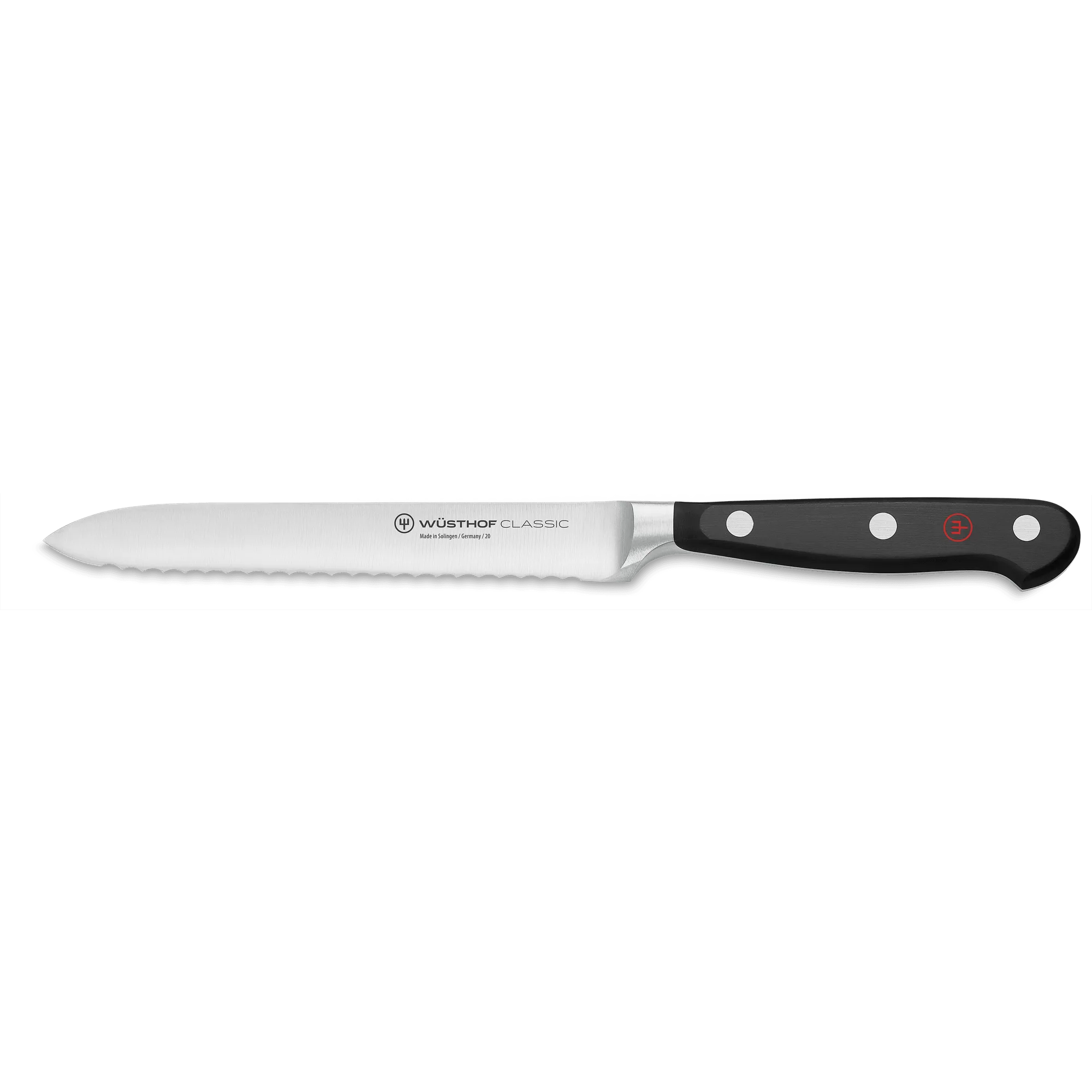
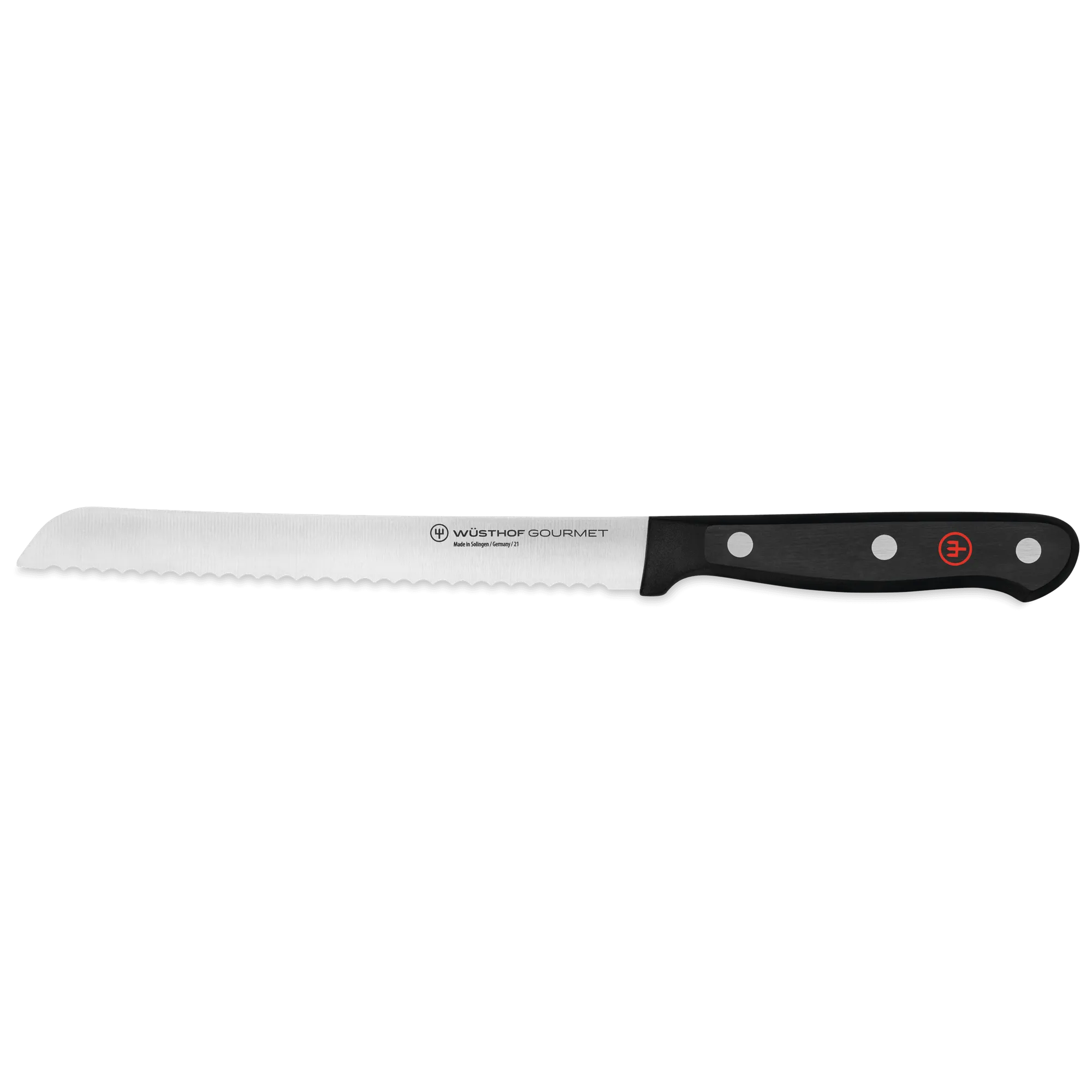
- Gourmet 6" Serrated Utility Knife: The Gourmet 6" Serrated Utility Knife has a fine serrated edge that cuts cleanly through rolls without tearing, and is also suitable for vegetables (such as firm tomatoes), fruit, or dry sausage. This makes it a versatile everyday knife for lunch prep, brunch, or quick snacks, especially when you need a compact blade for smaller items.
- Classic 5" Serrated Utility Knife: The Classic 5" Serrated Utility Knife features a fine serrated edge that slices rolls without tearing and handles vegetables, fruit, or dry sausage with ease. With a slightly shorter blade, this knife offers even more control for precise cuts on small items, making it a great choice for detailed work.
Which One Should You Choose?
Best for
- Home bakers or frequent bread eaters who slice large loaves
- Anyone who regularly cuts cakes, melons, or other wide items
Not for
- If you mostly slice small items like rolls, tomatoes, or fruit, a serrated utility knife is more practical
- If you have limited storage and need one knife for many tasks, a serrated utility knife offers more versatility